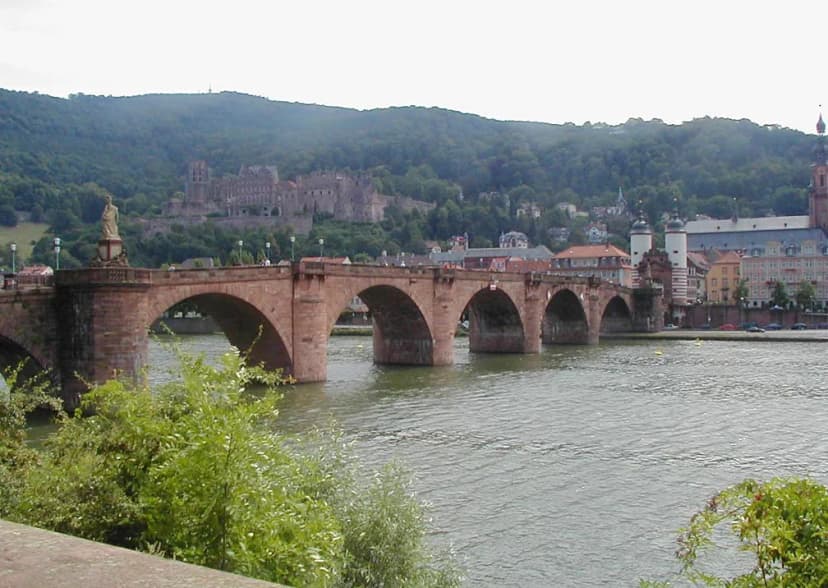
The photograph that defines Heidelberg is not taken inside the castle. It is made from the far bank of the Neckar, where the sandstone ruin, the Old Town roofs, the Church of the Holy Spirit and the river stack into one frame. That photograph is free to make, and as a planning figure one walking account suggests allowing thirty to sixty minutes for the Philosophenweg path itself at a leisurely pace, plus another twenty to thirty minutes each way if you climb up from the Old Town.
Heidelberg Marketing lists the castle, the Old Bridge, the Philosopher's Walk and the Neckar meadows as separate city sights, and the view that connects them does not come from the castle itself. The Old Bridge is public ground, so you can scout your angle the evening you arrive and return when the light suits you. Start with the city's own overview if you want the official sight list before choosing a route.
Why the Castle Photographs Better From Across the River
From the far bank you are photographing the castle as part of a city, with the Neckar leading the eye and the Old Town roofs providing scale. The Old Bridge is fully pedestrianised, so you can stand on it and look up at the castle above the river and the tiled roofs of the Old Town. The bridge is described as a public historical site open to the public around the clock, with no tickets, booking or registration required for a walk across it.
The castle sits on the slope of the Königstuhl opposite the northern bank, so the sun crosses your subject rather than sitting behind it for most of the day. That is why side light around sunrise and warm light near sunset read so differently in the same composition. Treat yourself as a landscape photographer first and a castle visitor second.
If your goal is the interior visit, the courtyard and the terrace, those arrangements belong to the castle operator rather than to photographers. For the ticket scope, the funicular and the grounds, use the Heidelberg Castle visitor guide and check current details on the operator's own pages. The river plan here is what you build around that visit, not a replacement for it.
The Core Vantage Points: Old Bridge, Riverbank and the Philosophenweg
The Old Bridge is the easy win. From its pedestrian section the classic picture unfolds: the Neckar below, Heidelberg Castle on the hill and the Old Town spread out at its feet. A simple crossing with a few photographs is estimated at thirty to sixty minutes, while a slower visit with the sculptures and the bridge gate can take up to around an hour and a half.
The riverbank on the Neuenheim side gives low, wide angles across the water. Trees interrupt long stretches, so walk until you find a clean gap rather than stopping at the first opening. This bank also lets you put the bridge itself into the frame as a foreground element, which is a different picture from the bridge view back toward the castle.
The Philosophenweg on the Heiligenberg slope is the high angle, explicitly on the opposite side of the Neckar from Heidelberg Castle. It is described as an approximately two-kilometre path on the sunny slope, offering a view of the Old Town, river and mountains together, so it rewards a longer lens as well as a wide one. Because it is high and set back, it places the castle within the town rather than isolating it.
Light Timing: Sunrise and Sunset Are Two Different Photographs
Sunrise at the riverbank is about soft, even light and low crowds. One walking account recommends sunrise and sunset as the best bets for both good views and solitude on the Philosophenweg. Those two windows give different pictures: morning light tends to be clean and cool across the Old Town, while late light warms the sandstone and the roofs. Decide which you want before you decide which bank to stand on.
Do not build a plan around an official site opening time as a photographic fact; light and access hours are separate questions. The Philosophenweg is described as free and an option at any time of day, and the Old Bridge is likewise open around the clock, so neither view depends on a ticket window. Check the date, the cloud forecast and the sun's direction on the day, then choose the bank that suits the light you actually have.
Getting Up to the Philosophenweg: the Schlangenweg Climb or the Gentler Approach
From the Old Town, cross the Old Bridge and follow signs for the Schlangenweg, the zigzag path of steps that climbs to the Philosophenweg. It is steep and includes many steps, with benches along the way for breaks. One walking account recommends this direction if you only have time for one direction, because cresting the steps brings the Old Town, the Neckar and the castle into one frame across the river.
The gentler alternative avoids most of the steps by approaching from the western side of town, crossing the Theodor-Heuss-Brücke and climbing gradually through residential streets and past university buildings. It still gains height, so you trade steps for a longer, more gradual walk, and you keep an eye on traffic for part of the way. Another practical option is a car or taxi drop-off near the start of the path, which removes the climb entirely.
If you want the classic castle-above-Old-Town composition and have only one attempt, the climb is the effort that buys it. If you are carrying heavy gear or travelling with someone who finds steps difficult, take the gradual approach and accept a slightly different arrival. Neither route is the only correct one, and the view at the top is the same.
The Philosopher's Garden and the Merianblick Stretch
Continue past the first viewpoint and the path runs almost level through the Philosopher's Garden, with busts and memorials to poets and thinkers among exotic plants. The slope is described as a climate island and one of the warmest places in Germany, where plants such as palms, pines and lemons thrive. This is where you slow down: benches, flower beds and plaques give you foreground detail instead of another wide shot of the same skyline.
Further along, the Merianblick stretch offers another framed view of the Old Town with benches to sit on while you wait for light. Allow roughly thirty to sixty minutes for the path itself at a leisurely pace, plus the climb from the Old Town if you walk up. Budget the time as a planning suggestion rather than a fixed schedule and you will not rush the section that produces your best frames.
Beyond the garden the route continues toward monastery ruins and older sites further up the Heiligenberg, which is a different trip with different footwear. Keep the castle composition as your priority and treat the upper sites as a bonus if the light fails early. That way a cloudy afternoon still ends with usable photographs rather than a long walk and nothing to show.
Framing Choices: Castle Alone or Castle With the Old Town, Church and River
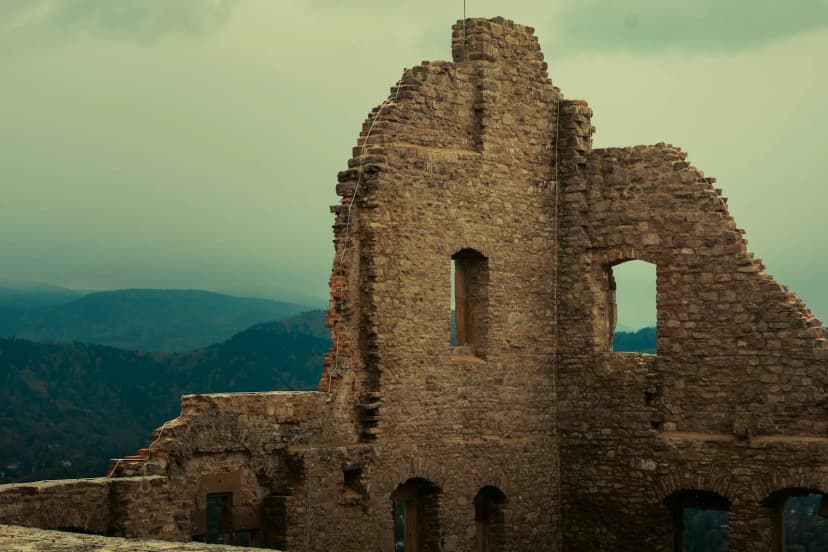
The castle alone needs a longer focal length and a tighter crop, and it works best when the light separates the sandstone from the wooded slope behind it. The wider composition includes the Old Town roofs, the Heiliggeistkirche spire and the river, and it tells the viewer where they are. Decide which one you are making before you set up, because the two need different positions and different light.
Including the Old Bridge as foreground adds a strong diagonal and a human scale reference, but it also competes with the castle for attention. The bridge is decorated with sculptures including the bronze monkey with its mirror at the south entrance, and small details such as the two bronze mice reward a close-up lens. A few steps left or right usually settles the wider composition without changing lens.
The university library sits in the Old Town near this route, and its façade and reading rooms are noted as highlights for photography, with restrictions possible in some areas. If you want the broader city picture, the Heidelberg photography guide covers the Old Town, the Neckar and the market square in more depth. Check the library's own visitor pages for current access and photography rules before you plan around it.
A Suggested Half-Day Photo Walk and a Fuller Day Version
For a half day, start on the Old Bridge in the last hour before sunset, shoot the castle across the water, then walk the Neuenheim bank for a low river angle. Cross back and finish in the Old Town with the bridge gate and the monkey statue as foreground details. This keeps you close to the river, requires no climb, and still covers three distinct compositions.
For a full day, shoot sunrise from the riverbank, spend the middle hours on the Old Town streets and the bridge, then climb to the Philosophenweg for the late light. One walker observed that large tour groups clustered near the bridge and largely stayed on the Old Town side, leaving the northern bank quieter. The result is a morning and an evening picture from two different banks rather than repeats of the same frame. Further visitor details appear in Walking the Philosophenweg in Heidelberg: Our Tips.
If you are in the city for two days, put the castle visit and the river photography on separate days so weather cannot ruin both. A two day itinerary gives you a spare window for the climb, and the riverbank works as a fallback when the hill is in cloud. Build the plan around light windows, not around a fixed hour for each spot.
Weather, Seasons and What to Do When the Light Fails
Overcast light flattens the castle and the river but it is not wasted: it is the best condition for detail in the Old Town streets, the bridge towers and the church façade. Move into the town, shoot architecture and texture, and come back to the long view when the sky opens. One walking account notes spring and early summer as the best time to see the plants and flowers along the slope at their best.
Autumn adds mist over the river and lower sun angles, while winter shortens your usable window sharply. The Philosophenweg is described as free and available at any time of day, so seasons change the light rather than the access. In winter, choose one bank and one picture rather than attempting both.
If the forecast fails completely, the Kurpfälzisches Museum is an indoor alternative in the Old Town, and it states that it is open Tuesday to Sunday from ten to six and closed on Mondays and on certain holidays including 24, 25 and 31 December, 1 January and 1 May. Treat a wet day as a chance to research your next morning's position rather than forcing a shot through rain. Check the museum's own visiting page for current times instead of relying on a third party listing.
Practical Notes: Footwear, Hazards After Dark and Crowd Timing
After dark the Philosophenweg has real tripping hazards and some drop-offs, so a headlamp and shoes with tread matter more than any camera accessory. One walker who took the path in autumn found the descent slippery with wet leaves and would wear hiking boots next time. If you are shooting a night view, plan the way down before you start the way up.
Tour groups concentrate around the bridge and the Old Town, and one walker noted that almost none of them cross the Neckar, which makes the northern bank noticeably quieter at the same hour. Early morning and evening are calmer in town as well, since many visitors do not stay overnight. Schedule your wide shots for those windows and use the busy middle hours for details and interiors.
The path and the bridge are free public ground, so there is no ticket or booking to arrange for the view itself. Distinguish that from paid interiors elsewhere in the city, which have their own tickets and rules and should be checked individually. Carry water, check the weather, and keep your kit light enough to climb comfortably.
What to Photograph on the Bridge Itself and in the Old Town Foreground
The bridge is not only a viewpoint, it is a subject: the medieval gate with twin towers on the Old Town side, the statues of Karl Theodor and Minerva, and the bronze monkey with its mirror near the south entrance all make useful detail frames. Look for the small bronze mice beside the monkey, which are easy to miss and make a nice storytelling shot. These are close-up pictures, so switch lenses before the light goes.
In the Old Town, the Church of the Holy Spirit and the market square give you vertical elements and warm stone that work in both sun and cloud. Use the narrow streets to frame the castle between rooftops when you want something other than the river view. The city's own sight list confirms the church, market square and the old university as core Old Town stops, useful when you are stringing a route together.
A wide frame from the bridge with the gate in the foreground and the castle behind is the one image that explains Heidelberg in a single shot. Shoot it early in your trip so you have a result in hand, then spend the rest of your time chasing better light on the harder compositions. The full landmark guide covers the wider city options if you want to extend the walk.
Plan Your Visit
Decide first whether you want the castle alone or the castle with the town, then choose the bank that delivers it: the bridge and the Neuenheim riverbank for the wide river composition, the Philosophenweg for the high view over the Old Town. Add the climb only if you have the time and the legs, because the riverbank delivers a strong frame with far less effort. Check the weather on the day and let the forecast pick your bank rather than sticking to a fixed plan.
Nothing about the river viewpoints needs a ticket, so the only real costs are time and shoe leather. Verify any castle interior or museum details on the operator's own page before you travel, since those rules and times change independently of the view. If you want to see how this stop fits a longer stay, the Heidelberg city guide links the city's sights into workable routes.
Frequently Asked Questions
What is the best time of day to photograph Heidelberg Castle?
Sunrise and sunset give the most useful light, but they produce different pictures rather than one best moment. Early light tends to be soft and cool across the Old Town, while late light warms the sandstone and the rooftops. One walking account recommends both windows for views and for quieter paths. Check the cloud forecast and the sun's direction on the day and pick the bank that suits the light you actually get.
Where do you stand to photograph Heidelberg Castle across the river?
The Old Bridge, the Neuenheim riverbank and the Philosophenweg slope are the three main positions. The bridge gives you the castle above the Old Town with the river below, the northern bank gives low wide angles across the water, and the Philosophenweg gives the high view with the whole town in frame. Walk until you find a clean gap in the trees rather than settling for the first opening.
How long does the Philosophenweg walk take?
Allow roughly thirty to sixty minutes for the path itself at a leisurely pace, plus about twenty to thirty minutes each way if you walk up from the Old Town. The climb is the slow part, not the path along the slope. Treat those figures as planning suggestions and add time for the garden and for waiting on light.
Is there a fee to photograph Heidelberg Castle from the Philosophenweg?
No, the path and the river viewpoints are free public ground and there is no ticket or booking for the view itself. That is separate from paid interiors elsewhere in the city, which have their own admission and their own photography rules. Check the relevant operator's own page for anything you plan to enter.
How do you get up to the Philosophenweg from the Old Bridge?
Cross the Old Bridge, turn left and look for signs to the Schlangenweg, the zigzag stepped path that climbs to the Philosophenweg. It is steep and includes many steps, with seating on the way. A gentler alternative approaches from the western side of town and gains height more gradually, and a car or taxi drop-off near the path avoids the climb entirely.
Which side of the Neckar is best for castle photos?
The northern bank, opposite the castle, gives you the classic composition with the Old Town and the river in the frame. The Old Bridge and the Neuenheim riverbank are the easiest northern positions, while the Philosophenweg higher up offers the elevated version of the same view. The Old Town side is better for street detail and for the bridge itself as a subject.