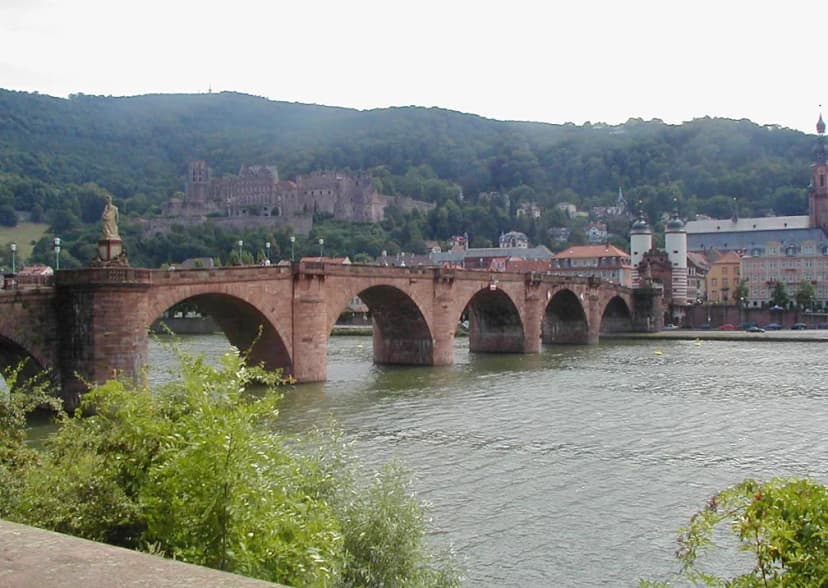
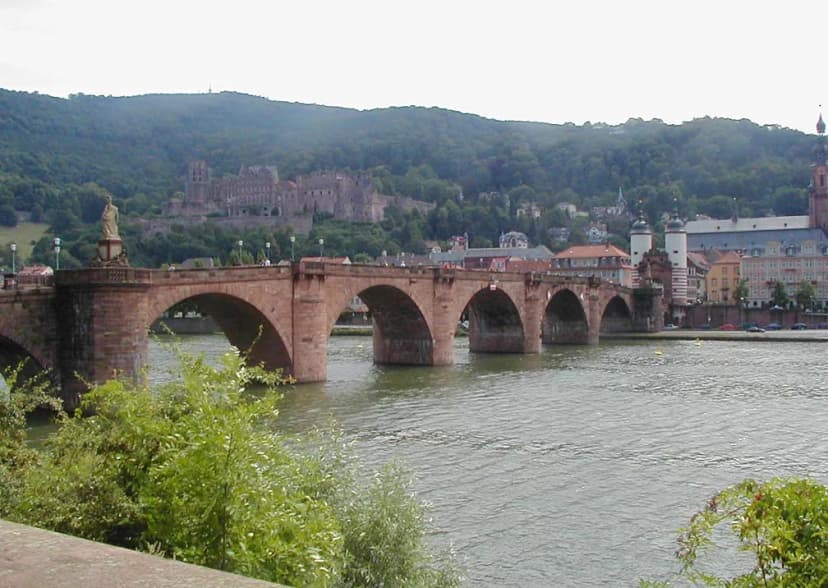
Heidelberg Castle draws around a million visitors a year to a red sandstone ruin that has overlooked the Neckar valley for centuries, and its silhouette has stood for Romanticism since the early nineteenth century. The operator lists the Barrel Building, with its 220,000 litres of wine, among the castle's named highlights, which is a useful signal that the cask is a destination in its own right rather than a footnote on the way through. Here is a starting point for planning: allow roughly two to three hours on the ground for the outdoor areas, the Barrel Building and the Apothecary Museum at a relaxed pace, an editor's suggestion rather than an official figure. Adding a special tour or lingering in the museum extends that.
The castle itself is a Renaissance ensemble built in succession by the prince electors, then broken by late-seventeenth-century warfare and finished off by lightning in 1764. What remains is a courtyard ringed by surviving facades, with ruined wings that frame long views down to the old town. The official castle page presents the site as the world-famous ruin above the valley and groups its highlights into the Ottheinrich's Wing, the Barrel Building, the figures on Friedrich's Wing and the garden. Knowing that grouping upfront helps you plan the order of your own walk.
Anyone who wants the full picture of how entry, ticketing and the ascent work should start with the separate Heidelberg Castle tickets and funicular planning page before fixing a time. This article keeps to the visit itself: what the terrace gives you, what the barrel is, and why the Apothecary Museum deserves its own slot.
Orient Yourself: Courtyard, Terrace and Garden Terraces
The outer spaces of Heidelberg Castle connect more smoothly than the names suggest. You pass through the castle courtyard, ringed by the surviving Renaissance facades, and from there reach the terrace level where the ruin opens out toward the valley. The garden terraces of the Hortus Palatinus sit on the hillside below, the last commission of the prince electors and a project that was never completed.
The garden was celebrated in the seventeenth century as an eighth wonder of the world, which is worth remembering when you see how little of it survives. Remaining landscaped terraces and scattered vestiges still hint at the original scale, and they are the reason a walk down from the castle proper feels like a separate experience rather than an extension of the courtyard. If you only budget for the built ruin, you will miss the layer that made the site famous across Europe.
The Barrel Building fits into this loop as an interior stop inside the courtyard rather than a detour elsewhere on the hill. That makes a natural route: outdoor areas first while the light is good, then the Barrel Building, then the museum as its own visit. It is a suggestion, not a rule, and reversing the order works just as well if you prefer to start indoors.
The Castle Terrace and the View
The terrace is where the castle's ruined silhouette does its real work, because what you are looking at is a frame as much as a view. Broken wings and open arcades channel sightlines down over the old town, the river and the wooded shoulder of the Königstuhl behind. Photographers tend to gravitate here, and the reason is structural: the ruin gives the valley a foreground that a bare overlook would lack.
Because the terrace and garden terraces are outdoor ground, they behave differently from the interiors in terms of pacing. Weather and daylight matter more here than anywhere else in the complex, so it pays to check the terrace early in your visit and return if clouds shift. The castle's own visitor pages are the place to confirm what is currently open to walkers and whether any part of the outdoor circuit is restricted on your date.
The terrace also carries a second life as an event venue. The state palaces and gardens administration markets the castle terrace as a setting for stand-up receptions and celebrations, which tells you something about how the space reads in person: broad, level and generous rather than cramped. That is useful context if you are weighing whether the outdoor level alone justifies the climb, or whether you want to add interiors on top of it.
The Great Barrel: 220,000 Litres of Wine
The headline figure is the one the operator publishes: the Barrel Building holds 220,000 litres of wine in a single barrel. The castle presents it as one of its named highlights rather than an incidental curiosity, which is a fair signal of how much space it occupies in the building. Standing beside something of that scale is the point, and it is why the barrel tends to be remembered longer than any single facade.
Look at the cask as palace engineering rather than a photo stop. Building and maintaining a vessel that size required coopers, joiners and a dedicated structure around it, and the building exists essentially to house the object. That framing changes what you notice: the scale of the staves, the reinforcing bands, the walkway level, and the sheer volume of timber involved.
The giant barrel was also a prestige project in a wider rivalry among the German electors, each of whom wanted the largest cask. It functioned as a statement of wealth and technical confidence as much as a storage solution, which is why it was displayed and celebrated rather than simply used. If you want the broader barrel-building context and how wine was stored in this corner of Germany, the city's itineraries and travel guides are a sensible next stop when shaping a longer day.
The Apothecary Museum as Its Own Stop
The German Apothecary Museum occupies a different register entirely from the barrel and the terrace. It is a museum collection within the castle complex, which means it rewards a slower, read-the-labels approach rather than a quick glance on the way past. Visitors who treat it as a corridor on the route to something else usually come away wishing they had given it more time.
Treat it, in other words, as a third decision rather than part of the castle admission question. The operator's own visitor navigation lists the German Apothecary Museum as a distinct area under the castle's visitor experience, which is a useful hint that it is its own thing to plan for. Whether it is covered by the same ticket as the rest of the castle is a detail to confirm directly with the operator rather than assume either way.
Practical consequence: if the museum matters to you, build in a separate block of time and check its status before you climb the hill. The attraction's own pages and the visitor information section are where current access arrangements are stated. If you are still deciding how much castle to take on, the wider Heidelberg Castle visitor guide walks through the site's other rooms and areas.
The Imperial Hall: A Different Kind of Access
The Imperial Hall is the clearest example of why 'inside the castle' is not one category. The operator states that Prince-Elector Ottheinrich had the ceremonial hall built inside the Ottheinrich's Wing between 1556 and 1559, and that it was named in honour of Emperor Maximilian II's visit to Heidelberg. Original column shafts, door frames and carved sandstone ornaments survive, along with cross-vault edges visible on the ceiling.
Access is the distinguishing factor: the operator states the hall can be viewed as part of a special tour, not as part of an ordinary walk through the complex. That means you cannot assume it appears on a standard route, and you should not plan your day around seeing it unless you have confirmed the arrangement in advance. The rest of the castle complex can still be enjoyed fully without it.
The room's later history explains its current character. The operator notes that the second floor of the Ottheinrich's Wing was re-roofed in the 1950s after the fire damage of the eighteenth century, creating a space now used for exhibitions and events, including weddings. Seeing it therefore depends on the event and tour calendar rather than on the castle's regular opening pattern, which is why scheduling matters more here than anywhere else in the complex.
Deciding between a general visit and a special tour is a genuine trade-off. If you want room-level detail and the sandstone sculpture, the guided option is the one that reaches it; if you mainly want the terrace and the barrel, a focused route may serve you better. Readers weighing that choice can compare the case for and against on the Heidelberg Castle guided tour worth it decision guide.
Decision Guide: How to Split Your Visit
If views are your priority, head for the terrace and the garden terraces first, then leave. The outdoor level alone justifies the climb, and the ruined wings do more for the panorama than any single interior. Budget an hour or so for that alone as an editor's suggestion, with no need to commit to anything beyond the grounds themselves.
If the barrel is the draw, go straight to the Barrel Building and give it unhurried time, reading it as a feat of coopering and prestige rather than a quick snapshot. Adding the museum afterwards makes sense because it sits in the same complex and rewards the same appetite for objects and context. This pairing is the most efficient route for a short visit.
If you want all three, sequence them outdoors, barrel, museum, and leave the Imperial Hall decision for last because it depends on tour availability. That ordering keeps the fixed-time element at the end, so an unplanned tour slot cannot derail the rest of your morning. It is simply a planning logic, not a required itinerary.
For anyone extending the stay beyond the castle, the wider region rewards a second day. A Schwetzingen Palace day trip from Heidelberg pairs well with a castle morning because it swaps a ruin for a formal garden at a different scale, though it is a full outing in its own right. Readers mapping a longer stay can start from the Heidelberg landmark visitor guides hub for the city as a whole.
Practical Planning: What to Confirm Before You Go
Admission prices, opening hours and any seasonal closures change, and this guide deliberately does not quote them because they cannot be verified from here. Check the operator's own pages for the current figures on the date you plan to travel, including any last-entry rules. That is also where you will find the authoritative answer on how the castle's individual areas are ticketed.
The most common assumption worth correcting is that one ticket covers everything. Whether the terrace, the Great Barrel and the Apothecary Museum share one admission or are handled separately is not something to guess at from third-party guides, because the arrangements change and the stakes are high if you have limited time. Confirm the scope of what you are buying when you book or arrive, and treat the museum as a separate question.
Getting up the hill and any access provisions are likewise best checked against current operator information rather than older descriptions. The mechanics of the ascent can meaningfully change how the day feels, especially if you are travelling with luggage or limited mobility. Plan it before you commit to a start time, and leave slack for the return.
Finally, note that the castle is an active event venue as well as a monument, with weddings, conferences and photoshoots hosted on site. Occasional restrictions follow from that, and they are announced through official channels rather than travel blogs. The Heidelberg Castle tickets and funicular page is a reasonable starting point for assembling the logistics before you finalise anything.
Plan Your Visit
Heidelberg Castle works best when you stop treating it as a single attraction. The terrace and garden terraces give you the valley framed by a ruin, the Barrel Building gives you 220,000 litres of wine and a lesson in Renaissance prestige engineering, and the Apothecary Museum gives you a slower, collection-driven stop. Add the Imperial Hall only if a special tour fits your dates.
Set your order around what you actually care about, verify prices, hours and ticket scope with the operator, and leave room for the hill itself. Everything else is a matter of pacing rather than rules.
Frequently Asked Questions
Is the castle terrace free to visit?
That depends on how the operator is ticketing access on your date, and the arrangements are not something to assume from older guides. The terrace and the garden terraces are outdoor areas of the complex, while the castle interiors are treated differently. Check the official castle website before you travel to see what is currently open and how admission is structured on the day you plan to visit.
Do the terrace and the Great Barrel need separate tickets from general castle admission?
Whether the Great Barrel and the terrace are covered by the same admission as the rest of the castle is a detail the operator does not settle in general descriptions, and third-party summaries often disagree. Rather than guess, confirm the scope of what you are buying at the point of booking or on arrival. The official visitor pages carry the authoritative answer for your date.
Is the Apothecary Museum inside Heidelberg Castle included in the castle ticket?
The German Apothecary Museum is a distinct area listed under the castle's visitor experience, which suggests it should be treated as its own stop rather than an automatic add-on. Whether it shares one ticket with other parts of the complex, or is handled separately, should be confirmed directly with the operator. Plan time for it as a separate block if the collection interests you.
Can you see the Imperial Hall without a special tour?
No, not on a standard walk-through. The operator states that this ceremonial hall in the Ottheinrich's Wing can be viewed as part of a special tour. It is also used for exhibitions and events, so availability varies. If it matters to you, plan around a tour rather than assuming you can simply walk in.
How long should you set aside for the terrace, the barrel and the museum?
An editor's suggestion is roughly two to three hours on the ground for the outdoor areas, the Barrel Building and the Apothecary Museum at a relaxed pace. This is not an official figure, and adding a special tour or spending real time with the museum collection will extend it. Allow more if you want to sit with the view or explore the garden terraces.
What is the story behind the giant barrel at Heidelberg Castle?
The Barrel Building houses a cask holding 220,000 litres of wine, which the operator lists among the castle's highlights. It belongs to a longer tradition of oversized barrels built by the prince electors, who competed to outdo one another in scale and craftsmanship. Reading it as a prestige project and a feat of coopering makes the stop far more rewarding than a quick photo.