
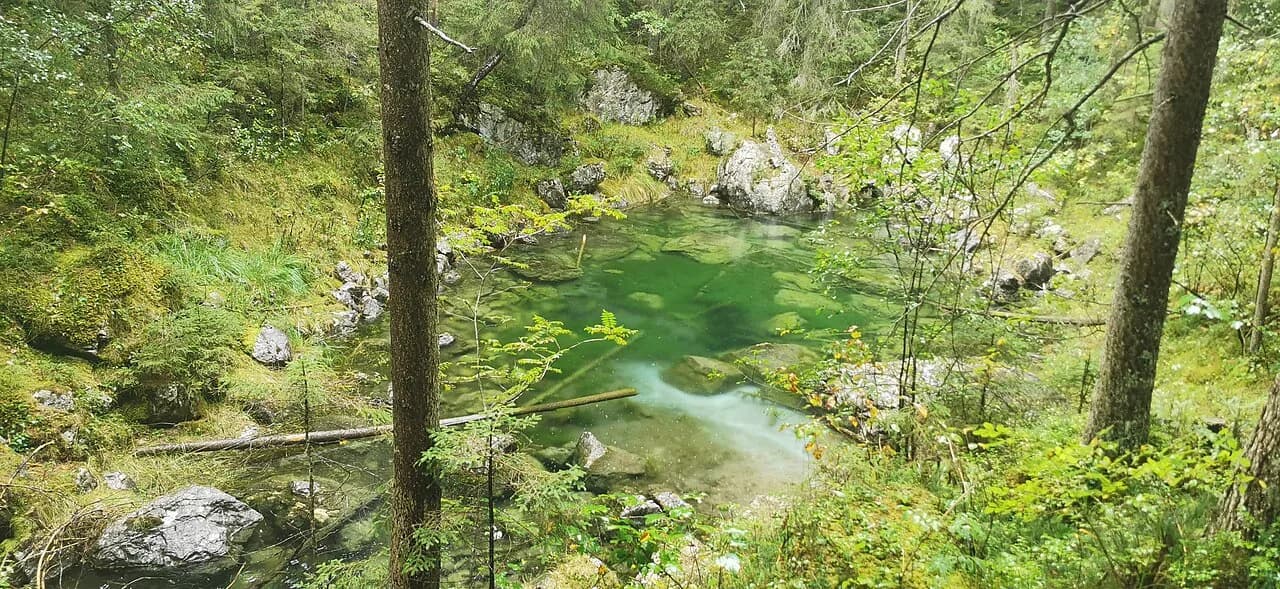
Garmisch-Partenkirchen sits between the Wetterstein mountains and a valley floor of meadows, lakes and painted houses, so one day can move from water-level reflections to a summit panorama. A classic first stop is the Eibsee: the lake is private property belonging to the Eibsee Hotel even though it is accessible for everyone, and anyone wanting to fly a drone needs permission from the hotel, according to The Globewanderin. That detail matters because aerial plans should start with a request, not a flight. Your Eibsee Lake Visitor Guide covers swimming, walking and Zugspitze views in more depth.
Work in time buffers rather than fixed times. A suggested half-day for a lake or gorge session is editorial planning advice, not an official timing, and in this valley the light often decides the schedule. Photographers who sort subjects by the conditions they need — still air, soft overcast, or clear high air — waste fewer frames than those working down a popularity list. Use this page for those subject-by-condition decisions; the city guide pages handle where to sleep, eat and move between shoots. Garmisch-Partenkirchen: Itineraries and City Travel Guides is the right starting point for that side of the trip.
Why Light and Season Matter More Than the Location List
Spring brings flowering meadows against lingering snow; high summer fills the classic car parks and paths long before sunrise photographers are finished; autumn reduces visitor pressure and adds warm colour to the lower slopes; winter turns the same viewpoints into snow-and-ice compositions that demand different grip and exposure habits. The Globewanderin notes that spring (April to May) is a good time for blooming meadows but too cold to swim in the lakes, while summer (June to August) is warm and sunny but brings crowds, and autumn (September to November) is quieter and colder. That seasonal rhythm should shape which subject you chase, not just how you pack. For wider planning, see Garmisch-Partenkirchen Viewpoints. Further visitor details appear in A Travel Guide to Garmisch-Partenkirchen - Things to do in Bavaria Germany - The Globewanderin.
The valley also has a strong weather gradient, so the town can sit under cloud while summits stand in sun, or the reverse during an inversion. The tourism office publishes live cameras at several points in the area, including at the Kongresshaus, the Olympiaschanze at the Olympic Ski Stadion and the Rathaus, plus a live feed of open cable cars and lifts, as listed on its website. Those feeds are a faster reality check than any forecast when you are deciding whether your planned subject will actually be visible. Further visitor details appear in Discover Vacation in Garmisch-Partenkirchen.
Treat the season as a constraint on the subject, not only on comfort. Meadow foregrounds peak in late spring, gorge water is at its most dramatic after rain, and summit haze is thinnest on cold, clear mornings. Wanderlog counts Partnachklamm among the region's top photo spots and notes its waterfalls and spray, while The Globewanderin describes how little waterfalls appear from the rock edges after rain; both support timing a gorge visit around wet weather. Planning around one of those windows usually beats arriving at a famous spot at an arbitrary hour. See the hiking trails guide for seasonal route planning.
Reading the Weather: Overcast, Clear and Inversion Days
Overcast is not a lost day in this valley. A uniform grey sky acts as a giant softbox for the gorge, for village streets and for painted facades, removing the hard contrast that midday sun creates. It also flatters close-up work among trees and along streams, where dappled light would otherwise fragment the image.
Clear days reward altitude and distance, so they suit the summit platforms and the long view across the Wetterstein range. The trade-off is that clear skies often mean a cloudless, colourless sunrise unless you use the blue hour before the sun clears the ridge. Arriving early, or staying late for warm light on rock faces, matters more than chasing a midday panorama.
An inversion is the prize condition: a sea of cloud fills the valley while the peaks stand clear above it. Inversions cannot be booked, but they are most plausible in the colder half of the year after a calm, clear night. If the town is foggy and an upper webcam shows blue sky, that is your signal to head uphill rather than stay in the valley.
Eibsee: Reflections, Lakeside Framing and the Crowd Problem
Eibsee is the region's headline reflection subject, a mountain lake at the foot of the Zugspitze with islands and shoreline foreground interest. Reflections need still air, which is most likely early before valley winds build. The Globewanderin describes a 7.5 km hike around the lake that took about two hours and rates it very easy with amazing views; treat that as a rough walking figure, not an official timing, and plan a half-day with photo stops rather than a quick visit. Wanderlog describes Eibsee as a mountain lake in the Wetterstein Mountains known for crystal-clear, deep blue water, with a hiking loop and boating on offer, which is a useful cross-check when you are deciding how to rank it against the more remote alternatives.
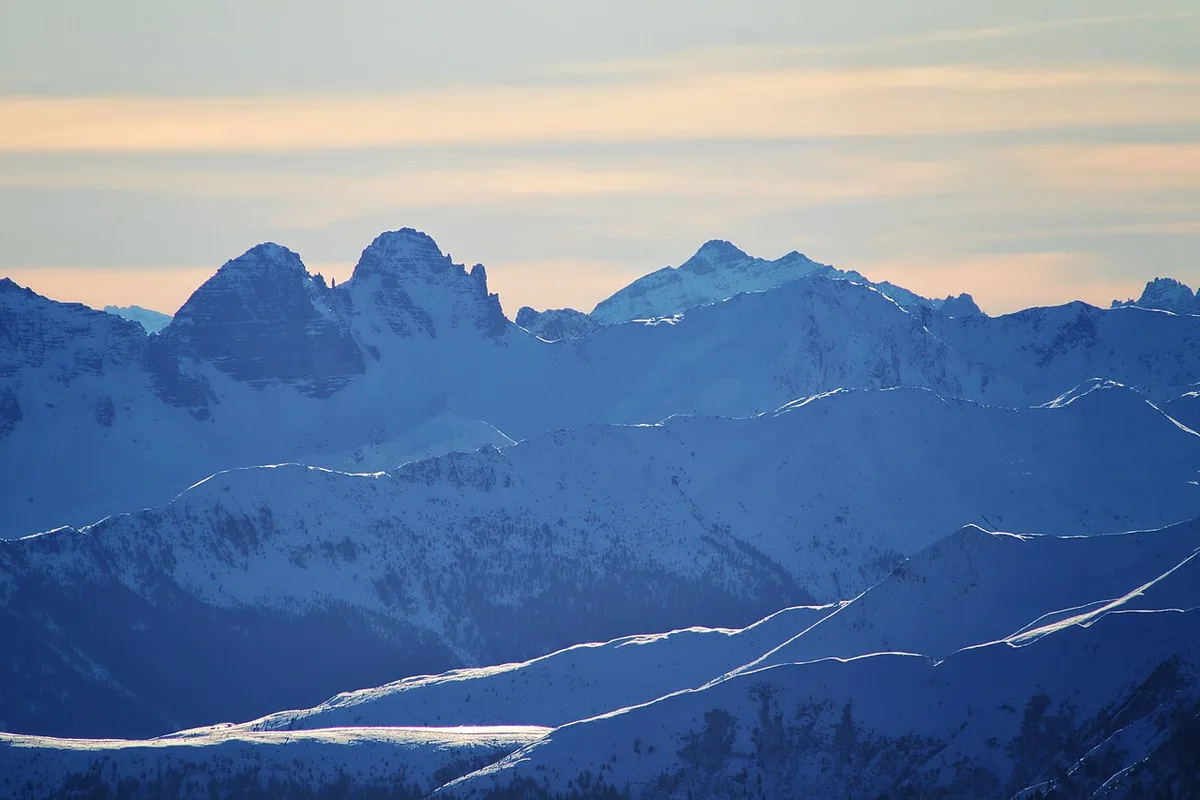
Crowds are the main photographic obstacle, not the light. Arriving before the first big wave of hikers gives a short window of clean water and empty jetties; after that, boat traffic and swimmers break the surface and tripod space at the best-known corners disappears. The Globewanderin notes that the lake is a famous spot for reflections of the Zugspitze at the right time and that the side with the islands close by and mountains in the background is especially photogenic.
Access is not unconditional. The lake belongs to the Eibsee Hotel and is accessible for everyone, but drone flights need the hotel's permission, as The Globewanderin reports. Check current rules and any seasonal restrictions with the operator or the tourism office before travelling with a drone.
Partnach Gorge: Interiors, Water and Low-Light Technique
Partnach Gorge is the opposite kind of subject from the lake: a narrow, wet corridor where the river has cut a channel roughly 700 metres long and up to about 80 metres high, as described in a Wanderlog summary of the gorge. Rain or recent rain is an advantage here, because run-off feeds the waterfalls and spray that make the interior dramatic. The trade-off is a hostile environment for gear, with dripping rock above and mist settling on front elements within minutes. The Partnachklamm visitor guide walks through the approach and practicalities.
Technically, you are shooting a high-contrast scene in near-darkness, so a fast lens, a cloth and a stable stance matter more than a long zoom. Waterproof covers and a dry bag are worth the weight, and a polarising filter helps cut glare on wet rock when there is ambient light. Expect to shoot at high sensitivity and accept some noise rather than blur the rushing water.
The gorge is a popular route and can be cold, as The Globewanderin notes, so warm layers and caution are sensible. Confirm whether the walkway is open on your planned day and check current entry and access arrangements directly with the operator, because winter ice and maintenance can affect the route. The Olympic ski stadium and its grounds sit at the start of the approach walk, so the two subjects can be combined in one outing.
Zugspitze and AlpspiX: Summit Platforms, Haze and Scale
The Zugspitze is Germany's highest peak, reachable by cable car or cog railway, with a high platform and a glacier area below the summit. The Globewanderin describes the view as impressive when weather is good, notes that a live webcam on the website lets you check visibility, and adds that even on a day with a poor forecast they had an amazing view from the glacier and the cable car itself. Use that webcam as the single most useful decision tool before committing to an ascent. For wider planning, see Zugspitze Visitor Guide.
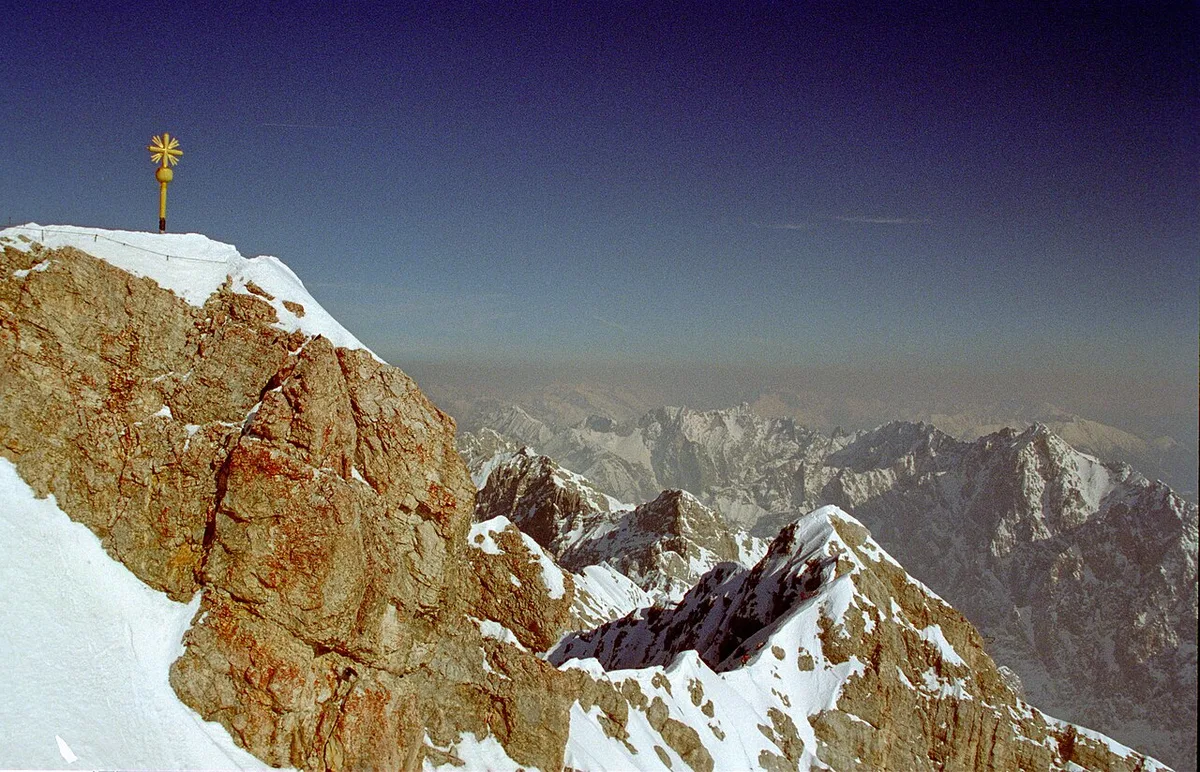
Altitude haze and distance flatten summit views in bright midday sun, so the best frames usually come from first or last light, or when clouds below the platform give a sense of height. Cold is a constant factor: batteries drain faster and metal railings are uncomfortable on bare hands, so carry spares and gloves that let you work the dials. Fares, seasonal operation and glacier access vary, so confirm them with the operator rather than relying on older figures.
AlpspiX is the other high viewpoint, a platform jutting out over the Alpspitze area with a different geometry from the Zugspitze. Wanderlog features it among the region's known photo spots alongside Wank, Grainau and Wagenbrüchsee, so it is worth building into a high-viewpoint day. It is exposed to wind, which makes a tripod less useful than a fast shutter and a steady grip. Check that the lift and platform are running before you commit to the ascent, since Alpine installations close for maintenance and wind. Further visitor details appear in The 28 best photo spots in Garmisch-Partenkirchen.
Riessersee and the Olympic Ski Jump Stadium as Foreground Subjects
Riessersee is a small lake close to the town that works as a calm, low-effort foreground, with reflections of the surrounding slopes and a shoreline path that is easy to work with a tripod. Wanderlog notes that it served as the venue for skating and ice hockey events during the 1936 Winter Olympics, which gives context to the modest scale of the water. Early morning and evening give softer light than the middle of the day, and the calm surface makes it a good subject for shallow reflections of the Wetterstein slopes. Further visitor details appear in The 28 best photo spots in Garmisch-Partenkirchen.
The Olympic Ski Jump stadium is a built subject rather than a natural one, and it photographs best when you include scale: a person on the ground, the stadium bowl, or the ramp silhouetted against the mountains. The Globewanderin states that the stadium and grounds can be accessed for free and that the walk to the Partnach Gorge starts here, which makes the two easy to combine in one day. Confirm event days, because a competition or concert changes both access and the background.
Wagenbrüchsee, Grainau and the Rural Foregrounds
Wagenbrüchsee, near Gerold, is the classic alpine pasture composition: cabins, grazing land, a small clear lake and mountains behind. Wanderlog describes it as one of the best photo spots in South Germany because of exactly those elements — mountain cabins, meadows and a mountain backdrop. It rewards an early start because the same qualities that make it photogenic make it popular, and light across the pasture is best before the day warms up.
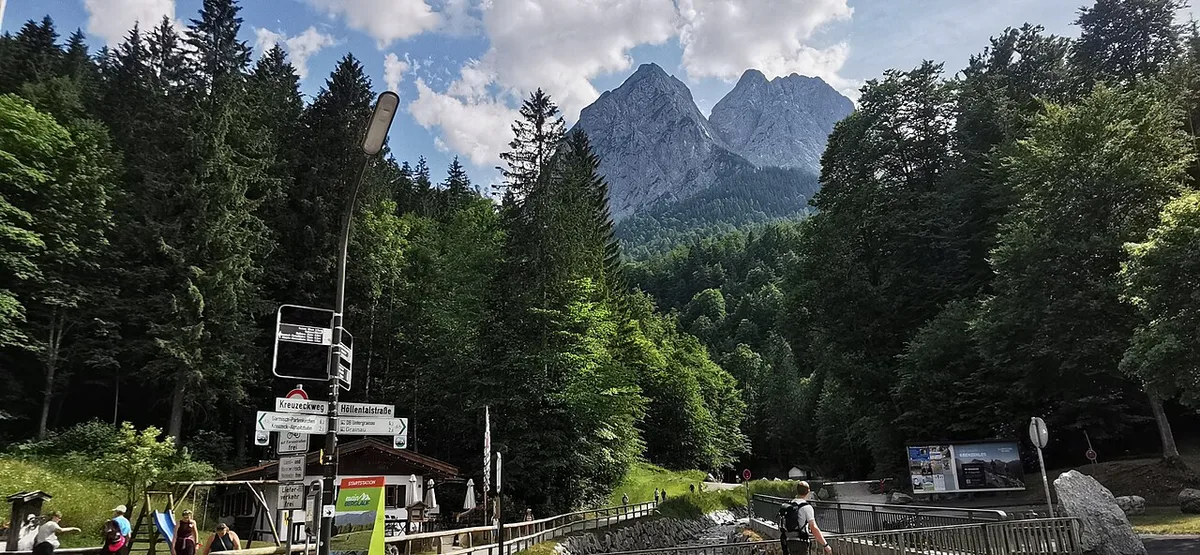
Grainau sits at the foot of the Zugspitze and works as a base and a subject in its own right, with village edges and pastures framing the mountain above the lake area. It is quieter than the town centre and easier to shoot without other visitors in the frame. It also offers pasture foregrounds below the Zugspitze, which can pair with a lake visit on a clear morning.
At village level, the meadows and traditional houses around Garmisch and Partenkirchen supply the foregrounds that make a mountain picture read as a place rather than a postcard. Farms, fences, chapels and single trees give depth and human scale to the peaks behind them. Working these at golden hour, when low light rakes across the grass, is usually more productive than shooting the summits themselves.
Seasonal Colour: Spring Meadows, Summer Crowds, Autumn Light and Snow
Spring turns the valley green while snow still hangs on the high faces, and that contrast of fresh meadow against white peaks is one of the most distinctive images this region offers. The Globewanderin notes that April to May brings blooming meadows with temperatures good for hiking but too cold for swimming. The window is short and weather-dependent, so keep an eye on the webcams and be ready to move when the meadows and the snowline align.
Summer delivers the most reliable access but also the heaviest use of the classic spots. The Globewanderin describes June to August as warm and sunny but crowded. The practical response is to shoot the famous locations at the edges of the day and use the middle hours for interiors, wooded streams and village detail. Summer also brings the longest usable window of warm evening light for lake and meadow work.
Autumn is often the most comfortable compromise: fewer people, softer air and warm colour on the lower slopes, with the first snow possible on the summits. The Globewanderin notes September to November is much quieter but colder, with leaves changing colour. Winter converts the landscape but increases risk, with ice on paths and short daylight hours that punish poor planning.
Building a Shooting Plan Around a Realistic Daily Rhythm
A workable rhythm is to photograph water and meadows at first light, retreat to the gorge, town or a museum during the flat middle of the day, and return outdoors for the evening. This uses the two good light windows and treats the low-contrast hours as a chance to shoot subjects that actually benefit from them. It also reduces the pressure to be in a famous place at a poor time.
Group locations by direction and altitude rather than by fame, so that you are not crossing the valley repeatedly and burning daylight in transit. A summit day should stand alone, with a valley or gorge day as a buffer either side, because weather often closes the high options without warning. Garmisch-Partenkirchen: Landmark Visitor Guides covers individual sites if you want to add a museum or a built landmark to a wet-weather buffer.
Build in a spare half-day for the shot that the weather did not allow, and treat the forecast as guidance rather than a commitment. The official visitor site lists open cable cars and lifts plus webcams, which is the most direct way to see what is actually running before you leave.
Practical Kit and Grip for Wet Rock, Cold Platforms and Long Walks
A wide zoom covers most of the landscape work here, with a fast prime for the gorge and a telephoto for compressing layers from the summits. A polariser is genuinely useful on water and wet rock, while a neutral-density filter lets you slow moving water in the gorge or smooth a lake surface. Weight matters because many of the best frames require walking, and a heavy bag slows you down at exactly the times light is best.
Protection is not optional. Rain covers, microfibre cloths, spare batteries kept warm inside a jacket and a dry bag for the gorge interior will save a shooting day. On high platforms, gloves that allow dial operation and a lens hood to cut flare make more difference than an extra lens.
Footwear with real grip is the most important piece of kit, because wet gorge walkways, icy meadow paths and groomed winter routes all punish smooth soles. Trekking poles help on steep descents with a camera bag, and a head torch is sensible for pre-dawn starts outside built-up areas.
Where to Verify Access and Transport Before You Commit
Before any photography day here, check three things: whether the site or lift is open, how you will reach it, and what the webcam shows right now. The tourism office maintains current information on open cable cars and lifts, visitor guidance and live cameras, which is the fastest way to avoid a wasted trip to a closed platform or a flooded gorge.
Prices, timetables and seasonal closures are the details most likely to change and the least safe to plan around from memory. Confirm them with the operating company or the tourist information office close to your travel date, and treat any figure you read online as a starting point rather than a fact.
Plan the light first, the logistics second, and leave room for the weather to rewrite the schedule. That approach turns a fixed itinerary into a set of options, which is how the best mountain frames usually happen.
Frequently Asked Questions
What is the best time of day to photograph Eibsee reflections?
Reflections depend on still air, and calm conditions are most likely in the early morning before valley winds build. Arriving at first light also gives you the cleanest water and the fewest people in the frame. The lake is private property belonging to the Eibsee Hotel but accessible to everyone, and drone use requires the hotel's permission, so plan any aerial work in advance.
Can you shoot Partnach Gorge in dull or wet weather?
Overcast and wet conditions often suit the gorge better than bright sun, because flat light controls the extreme contrast inside the rock corridor and rain feeds the waterfalls and spray. Protect your gear with a rain cover and cloths, expect to work at high sensitivity, and confirm the walkway is open before setting out, as ice and maintenance can affect the route.
Is the Zugspitze worth visiting on a cloudy day?
It can be, depending on where the cloud sits. If the valley is under fog while the upper station is above it, you get a strong inversion view; if the summit itself is in cloud, you may see very little. Check the operator's live webcam before buying a ticket, and accept that the ascent itself can still offer interesting frames.
Where can you find meadow and village foregrounds near Garmisch-Partenkirchen?
The pastures around Grainau and the outlying hamlets, plus farmland on the slopes below Wank, give the classic combination of meadow, cabin or village and mountain backdrop. Wanderlog highlights Wagenbrüchsee near Gerold for cabins, meadows, a small clear lake and mountain views, and Grainau for its position at the foot of the Zugspitze.
Which Garmisch-Partenkirchen photo spots work best in autumn?
Autumn favours the lower and middle elevations, where colour changes across the slopes while the first snow appears on the peaks. The Globewanderin notes September to November is much quieter but colder, with leaves changing colour. Lakes and meadow foregrounds benefit from softer air and reduced crowds, though summit plans still depend on the day's visibility.


