

The Zugspitze rises 2,962 metres above the Bavarian Alps, directly south of Garmisch-Partenkirchen and on the border with Austria. Grainau's tourism site confirms that visitors reach the summit by the modern Zugspitze cable car or by the combination of cogwheel and glacier railway, and that a round trip can be arranged as one ticket covering three railways: the rack railway, the glacier railway and the cable car, in either direction.
The real planning question is not which railway exists, but which combination matches your available time, your tolerance for queues and your interest in the journey itself. A suggested minimum of three to four hours from valley to valley works for a cable-car round trip, while the cogwheel train from Garmisch-Partenkirchen and time on the Zugspitzplatt plateau can easily consume a full day. Treat every duration in this guide as a planning estimate, not an official timetable.
This guide treats the round-trip ticket as a scope question, explains how the three railways link up, and points you to the operator for current rates and seasonal validity rather than quoting figures that change. It also covers arrival logistics at Eibsee, where parking fills early on peak days, and separates the comfortable summit terrace from the exposed final climb to the golden cross. Start with the Garmisch-Partenkirchen: Landmark Visitor Guides for the broader destination context, then drill into the Zugspitze decision below.
The three railways that make up a Zugspitze round trip
A Zugspitze round trip is not a single vehicle but a chain of three railways operated by Bayerische Zugspitzbahn Bergbahn AG. According to Grainau's tourism site, the cogwheel train runs from Garmisch-Partenkirchen through Hausberg, Alpspitz-/Kreuzeckbahn and Hammersbach to Grainau, then continues to Eibsee and via Riffelriss into the Zugspitz tunnel to the Zugspitzplatt at roughly 2,600 metres. From the plateau, the Gletscherbahn cable car covers the last 360 metres of elevation to the summit in about five minutes, and has been carrying guests since the end of 1992.
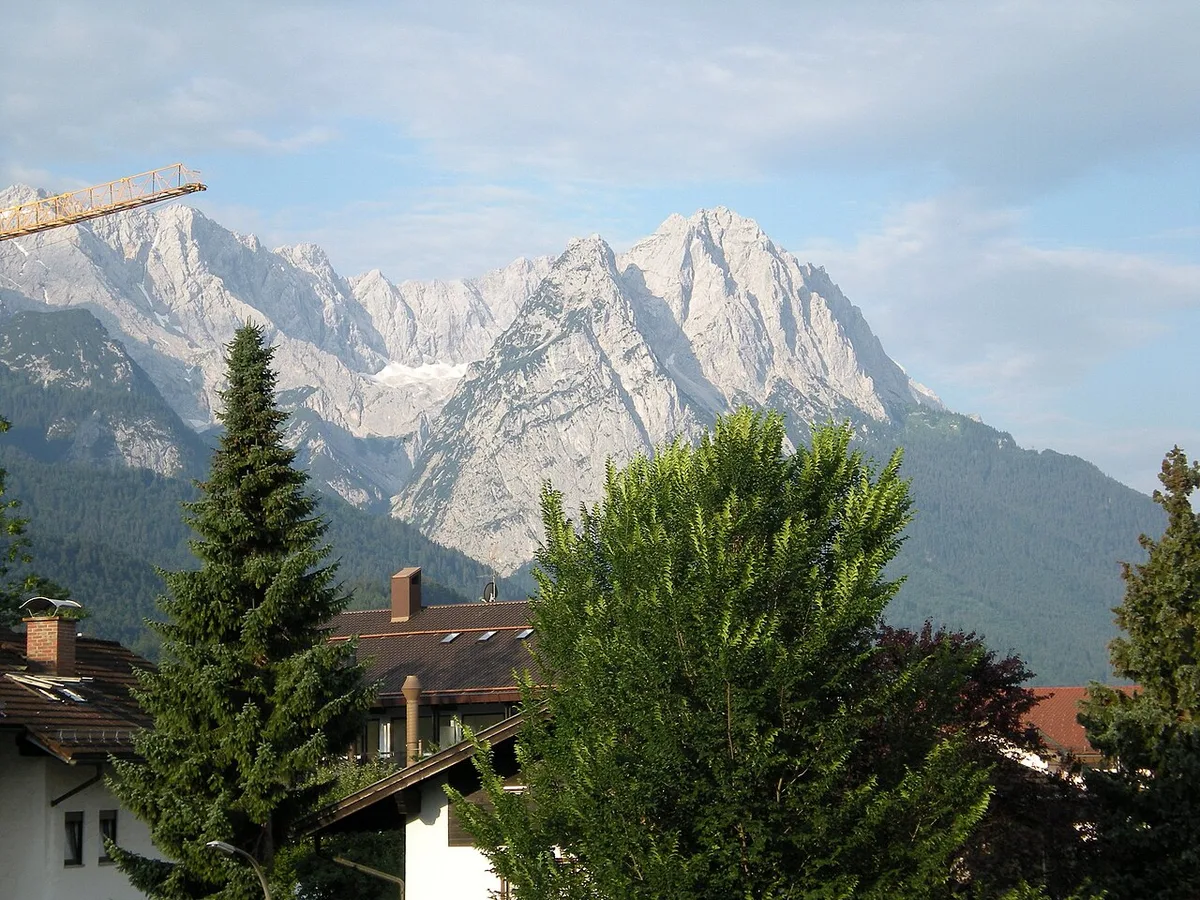
The operator's own description of the round trip makes the flexibility clear. The new Eibsee cable car went into operation in December 2017 and is described as a record-breaking cable car for three reasons: the highest structural steel support at 127 metres, the longest span of 3,213 metres from the support to the summit station, and the largest total height difference of a railway at 1,945 metres. The cogwheel railway has been running for almost a century, built in three stages between 1928 and 1930, and remains one of the few cog railways still operating in Germany.
The technical figures help you picture the scale. The total cogwheel route from Garmisch-Partenkirchen to the Zugspitzplatt is 19.5 kilometres, of which 7.5 kilometres run from Garmisch to Grainau, 3.2 kilometres from Grainau to Eibsee, 4.3 kilometres from Eibsee to Riffelriss and 4.5 kilometres through the Zugspitz tunnel. Maximum speed is 70 km/h. These numbers come from Grainau's published description of the operator's technical data and are useful when deciding whether the train journey itself is part of the experience you want.
Route options from Garmisch-Partenkirchen
From the Bayerische Zugspitzbahn station in Garmisch-Partenkirchen, the cogwheel train is the most direct mountain railway departure. Journey times differ by boarding point: the operator's published data gives about an hour from the Zugspitze railway station in Grainau and 40 minutes from Eibsee to the Zugspitzplatt. Passengers boarding in Garmisch-Partenkirchen, Hausberg or Kreuzeck-/Alpspitzbahn face a maximum journey time of half an hour to Eibsee, after which the cogwheel train continues to the plateau.
If you want the classic combination, ride the cogwheel train up for the tunnel and plateau experience, then descend by cable car for the lake views. The reverse, cable car up and cogwheel down, gives you the quick ascent first and a slower, more varied descent. The Eibsee cable car takes about ten minutes from valley to summit, while the cogwheel train from Garmisch-Partenkirchen takes noticeably longer. Both directions are covered by the same round-trip ticket scope.
If you only want the cogwheel train, you can board at Garmisch-Partenkirchen, Hausberg, Kreuzeck-Alpspitzbahn or Grainau and stay with the railway all the way to the plateau, then use the glacier cable car to the summit. That option suits visitors who prefer a gradual ascent with stations along the way. For a fuller comparison of the valley's broad range of lifts, see the Garmisch-Partenkirchen Cable Cars & Lifts: Which One to Ride guide, which covers Zugspitzbahn, Alpspitzbahn, Wankbahn and Hausbergbahn options.
What one round-trip ticket covers
The round-trip ticket is a scope question, not a single price. The operator's site lists round-trip tickets and multi-day passes with seasonal validity dates, so the exact validity window matters when you plan. Grainau's tourism site describes the arrangement as one ticket, one price, three railways, which means the cogwheel train, the glacier cable car and the Eibsee cable car are all included in a single round-trip purchase. That is the key fact to confirm on the operator's site before you travel.
Prices are not published in the sources used here, and rates change between seasons and ticket categories. Check the operator's ticket pages for current adult, child, family and group rates, and read the validity dates carefully because they differ between the Zugspitze, Garmisch-Classic and Mount Wank areas. Do not assume that a ticket bought for one area covers another; the operator sells them separately with their own seasonal windows.
It is also worth checking whether your ticket includes the cogwheel train from Garmisch-Partenkirchen or only from Eibsee, since the scope can affect both price and routing. If you hold a Grainau guest card, local travel between Garmisch-Partenkirchen and Eibsee on the Bavarian Zugspitzbahn is free, but you still need a ticket from Eibsee for the cogwheel and glacier railway ascent to the summit, as Grainau's tourism site explains. The operator's site is the place to verify these details.
Eibsee access, parking and arrival timing
Eibsee is the pinch point for most visitors driving to the cable car. Grainau's tourism site states that there is only one access road and limited parking, with two public paid parking areas at the valley station: one at the Eibsee Hotel and one at the Bavarian Zugspitzbahn. On peak days, weekends and public holidays the lots fill early, and information boards at the end of the motorway indicate when spaces are gone and point to alternative parking along the railway line.
One practical strategy is to park farther out and ride the cogwheel train or bus 323 to Eibsee. According to Grainau's tourism site, bus 323 runs on the Garmisch-Partenkirchen to Grainau to Eibsee route and operates roughly every half hour on weekends during the summer months, while the Bayerische Zugspitzbahn runs on the hour. Guests with a valid Grainau guest card travel free on bus 323 and on the Bavarian Zugspitzbahn between Garmisch-Partenkirchen and Eibsee, but still need a mountain ticket for the ascent. That combination can make Grainau a smarter base than driving to the valley station.
If you are staying in Grainau, the Zugspitzbahn journey to Eibsee takes 18 or 15 minutes from Hammersbach or Grainau Zugspitzbahn stations respectively, according to Grainau's tourism site. There is no blanket answer to when the mountain is least busy, but getting up early is consistently worthwhile. Note too that bicycles cannot be carried on the bus or cogwheel train due to capacity limits, and night parking is prohibited in all lots at the valley station.
Reaching Eibsee without a car
Deutsche Bahn does not run to the Eibsee cable car valley station. Grainau's tourism site confirms that DB operates trains to Garmisch-Partenkirchen station, and from there it is a few minutes' walk to the Bayerische Zugspitzbahn station and the bus stop. The journey with Deutsche Bahn from Munich Central Station to Garmisch-Partenkirchen takes approximately 90 minutes according to the same source. From Garmisch-Partenkirchen, bus 9840 or the Bavarian Zugspitzbahn complete the trip toward Eibsee.
The Deutschlandticket is a frequent source of confusion here. Grainau's tourism site states that with the Deutschlandticket you can only travel as far as the Grainau stop on the Bayerische Zugspitzbahn, and the Eibseebus 323 is not included. That means anyone planning to ride to Eibsee or ascend the mountain needs a separate ticket for the mountain railway. Check the operator's FAQ before relying on the Deutschlandticket for the final leg.
For walkers, there are trails from Grainau to the cable car valley station that take about an hour and a half with only a few metres of elevation gain, according to Grainau's tourism site. If you are combining the Zugspitze with other local attractions, the Garmisch-Partenkirchen: Itineraries and City Travel Guides hub can help you sequence the days.
Suggested time budget for a summit visit
A sensible planning minimum for a Zugspitze visit is three to four hours from valley to valley, but the breakdown depends on your route. The Eibsee cable car takes about ten minutes each way according to the operator, so a straightforward up-and-down trip leaves more time on the summit. The cogwheel train takes roughly an hour from Grainau, plus the five-minute glacier cable car, so the journey itself eats into your available summit time. All figures here are suggested planning estimates, not official schedules.
Once at the summit station, you are not yet at the highest point. The terraces, church, exhibition and refreshment stops can occupy most visitors for an hour or more, and the short climb to the golden cross can add more time if there is a queue. The operator lists Germany's highest church, an exhibition on the history of the Zugspitzbahn, a glacier trail in summer and sledding year-round among the summit experiences. If you also want to linger on the Zugspitzplatt, add at least an hour to your plan.
A half-day is realistic for most visitors using the cable car or a mixed route. A full day makes sense if you take the cogwheel train from Garmisch-Partenkirchen, spend time on the plateau, and combine the summit with a walk around Eibsee. The Eibsee Lake Visitor Guide covers the lake circuit, and pairing the two works well if you descend by cable car.
At the top: terraces, border and the summit cross
The summit station straddles the border between Germany and Austria, with terraces on both sides connected by a walkway. You can cross between the two without any formalities, and each side has its own restaurant and viewing areas. According to Grainau's tourism site, the summit offers a 360-degree panorama with views of over 400 peaks in Austria, Italy, Switzerland and Germany, plus Germany's highest church, a history exhibition and refreshment stops.
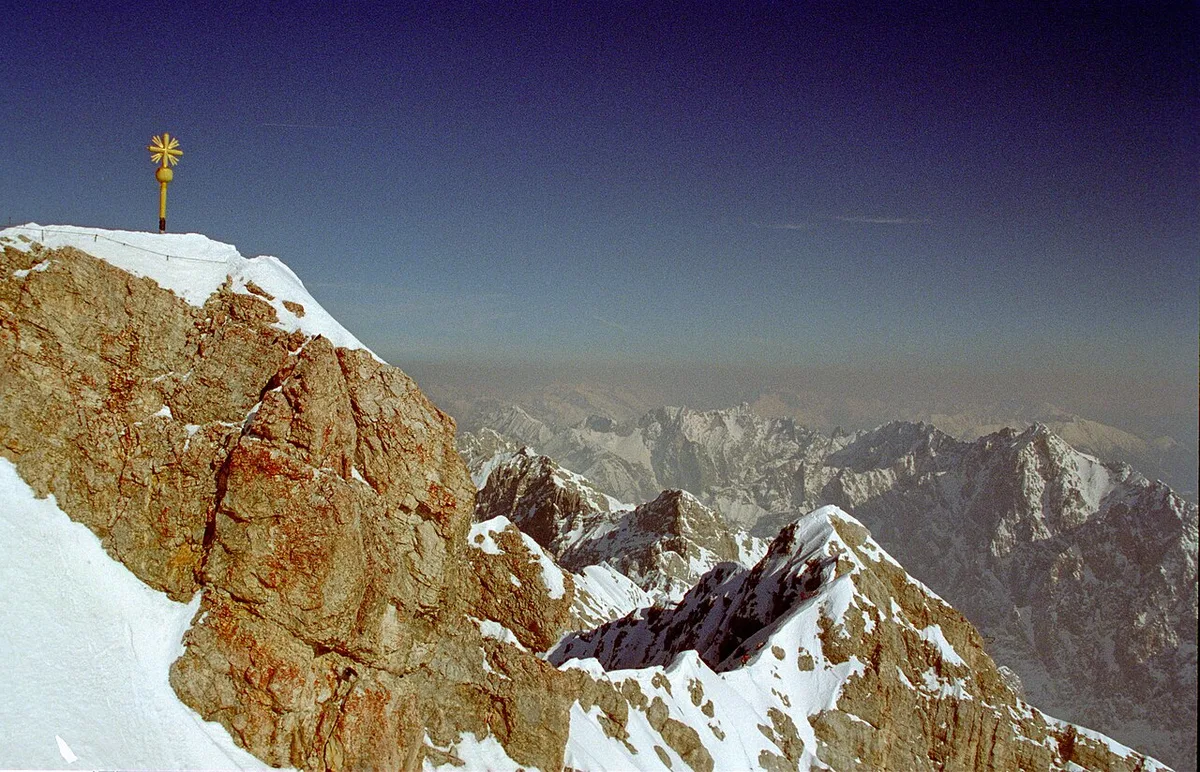
The golden summit cross marks the true high point and sits a short but exposed scramble above the main terrace area. Visitor reports describe chains and ladders assisting the climb, with warning signs about the danger and the possibility of slipping on rock. Queues can form during peak season, so waiting your turn is part of the experience. This final section is a personal judgement call, not a formality, and some visitors choose to enjoy the views from the terrace instead.
Even in midsummer the summit can be cold and windy, so layers, a jacket, sunglasses and sun protection are worth carrying regardless of the valley weather. The summit is high enough that UV exposure is stronger than most visitors expect. Refreshment stops exist both at the summit and in the valley, though availability varies with the season.
Weather and seasonal planning
Clear weather matters more than the calendar. The main reason to ride to the summit is the panorama, and cloud or rain can erase it entirely. Picking the clearest day of your stay, even if that means rearranging your itinerary, is consistently worthwhile advice. The operator publishes webcams and current conditions, which are worth checking on the morning of your visit before committing to a ticket.
Seasonal validity matters as much as daily weather. The operator lists separate validity windows for Zugspitze tickets, Garmisch-Classic tickets and Mount Wank tickets, and these windows change from year to year. Rather than assuming a fixed season, check the operator's opening hours and timetable page for the dates you plan to travel. In snow or ice, the summit terraces can be slippery and the climb to the cross may not be advisable.
The glacier cable car and Eibsee cable car operate year-round in normal conditions, but revisions and weather closures do occur. The operator publishes revision times, and Grainau's tourism site directs visitors to those notices rather than relying on old schedules. Always confirm the day's status before setting out.
Alternative plans when the summit is clouded in
If the Zugspitze is socked in, the Eibsee circuit is the most rewarding low-altitude substitute. The lake trail runs about seven kilometres around the shoreline and offers views back up to the Zugspitze massif, with swimming and boat rentals in summer. The Eibsee Lake Guide covers the practical details for a half-day at the lake.
The Partnach Gorge and Höllental Gorge are popular alternatives, though both can close in heavy rain or storms for safety reasons, as Grainau's tourism site notes. The Partnach Gorge walk follows a wooden boardwalk along the river and is accessible from Garmisch-Partenkirchen. Check locally before walking in, and treat any closure notice as final.
In town, the AlpspiX viewing platform offers a different high viewpoint with an exposed lattice floor, reached by the Alpspitzbahn cable car. The Zugspitzbad in Grainau is an indoor and outdoor swimming option that works regardless of weather. If you want a lower-effort, lower-risk day, the Olympia-Skisprungschanze Garmisch-Partenkirchen Visitor Guide covers the 1936 Olympic ski jump site just outside the town centre.
Plan Your Zugspitze Visit
The Zugspitze rewards planning more than most alpine attractions because the decision is not just whether to go, but how to go. Choose the Eibsee cable car for speed and the lake views, the cogwheel train for the tunnel and plateau experience, or combine both on a single round-trip ticket. Confirm current rates, validity dates and operating status on the operator's site, and treat the weather forecast as the deciding factor for which day you ride.
Arrive early, especially if you are driving to Eibsee, and consider the cogwheel train or bus 323 if parking is full. Budget three to four hours for a cable-car round trip and longer if you take the cogwheel from Garmisch-Partenkirchen or linger on the Zugspitzplatt. Build in a backup plan for cloudy days, and remember that the summit terrace and the golden cross are two different experiences with very different exposure.
Frequently Asked Questions
Can you take both the cable car and the cogwheel train on one Zugspitze round-trip ticket?
Yes. Grainau's tourism site describes the arrangement as one ticket, one price, three railways: the rack railway, the glacier railway and the Eibsee cable car can be combined in either direction on a round trip. A common approach is to ride the cogwheel train up to the Zugspitzplatt, take the glacier cable car to the summit, then descend by the Eibsee cable car. Confirm the current scope and validity on the operator's ticket pages before you travel, because rates and seasonal windows change.
How long does the Eibsee cable car take compared with the cogwheel train and glacier cable car?
The operator states that the Eibsee cable car covers the valley-to-summit run in about ten minutes. The cogwheel train takes about an hour from the Zugspitze railway station in Grainau and 40 minutes from Eibsee to the Zugspitzplatt, then the glacier cable car adds about five minutes from the plateau to the summit. Times can vary with operations and weather, so treat them as planning estimates rather than fixed schedules.
How much time should you plan for at the Zugspitze summit?
Allow at least three to four hours for a round trip from the valley, including the ascent and descent, as a suggested planning estimate. On the summit, terraces, church, exhibition and refreshment stops can occupy an hour or more. Add extra time if you want to climb to the golden cross, because queues can form, or if you plan to walk the glacier trail and explore the Zugspitzplatt.
Where do you park for the Eibsee cable car and how early should you arrive?
Grainau's tourism site notes two public paid parking areas at the valley station: one at the Eibsee Hotel and one at the Bavarian Zugspitzbahn. The site states there is only one access road and limited parking, and that on peak days, weekends and public holidays the lots often fill early. Information boards at the end of the motorway indicate when spaces are gone and where alternative parking along the railway line is available. Arriving early or using the cogwheel train and bus 323 from Grainau or Garmisch-Partenkirchen are the most reliable strategies.
Is the Zugspitze worth visiting on a cloudy day?
The main reason to go is the panorama, so heavy cloud can reduce the value of the trip. If the forecast is marginal, check the operator's webcams before buying a ticket. On a cloudy day, the Eibsee lake circuit, Partnach Gorge or the AlpspiX platform may be better uses of your time, though Grainau's tourism site notes that the gorges can close in heavy rain or storms for safety reasons.
Can you reach the golden summit cross without climbing equipment?
The operator's website does not present the final climb to the golden cross as safe, easy or officially accessible for all visitors. Visitor reports describe an exposed scramble assisted by chains and ladders, with warning signs about the risk of slipping and queues forming in peak season. Whether to attempt it is a personal judgement, and many visitors choose to enjoy the summit terrace views instead. For current conditions and any access guidance, check the operator's website before you travel.


