
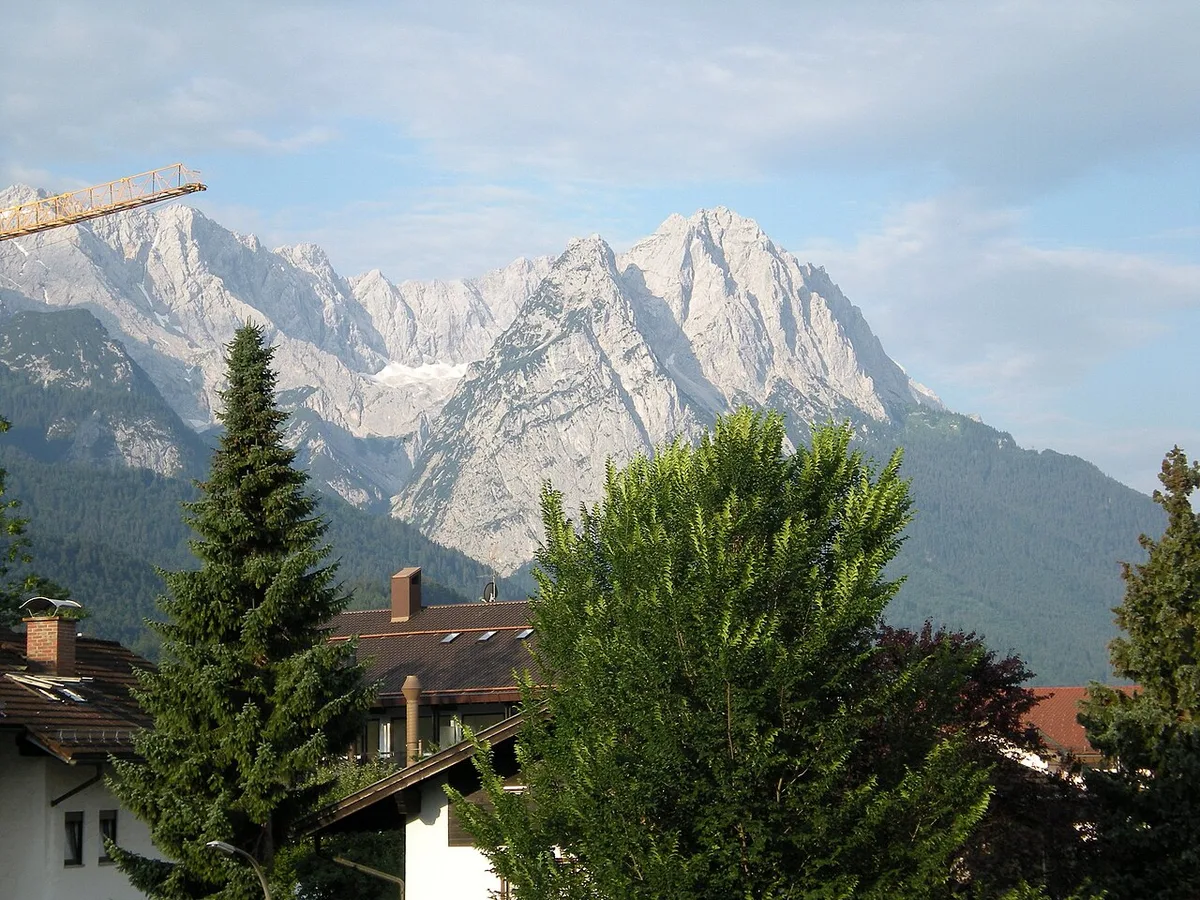
Two days in Garmisch-Partenkirchen split most naturally into one high-mountain day and one gorge-and-village day, because the biggest single variable is cloud cover at altitude. The town sits in the Bavarian Alps between the Wetterstein range, the Bavarian Pre-Alps and the Ammergau Alps, with Germany's highest peak, Zugspitze, rising directly above it. A suggested half-day (as little as two hours) is enough for the flat Eibsee shoreline loop if you treat the lake as a bonus rather than a scheduled block.
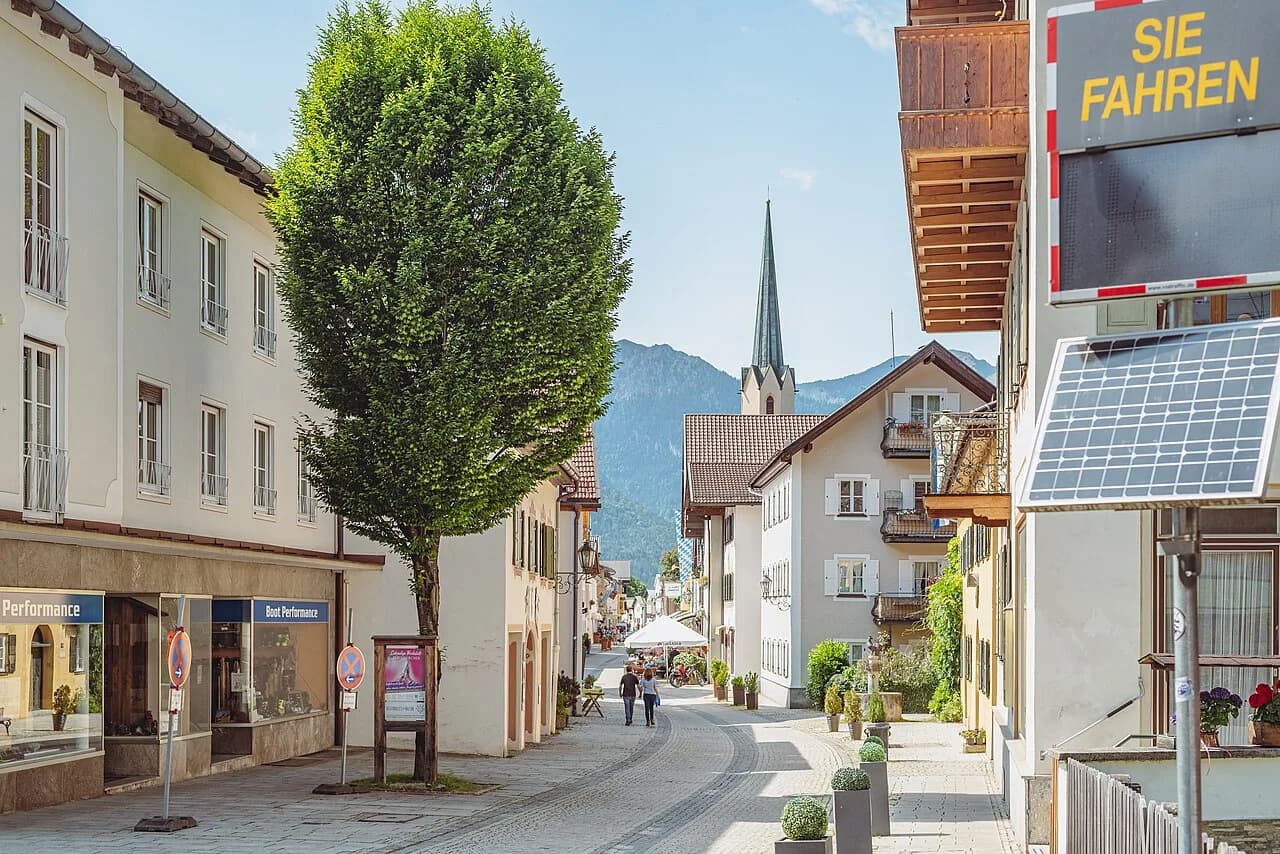
Built as one destination, Garmisch-Partenkirchen is really two historic centres: Garmisch and Partenkirchen were separate towns until they merged in 1935, separated by the Partnach River. That matters for planning because part of the sightseeing is simply walking between them, crossing the river bridges, and noticing Ludwigstrasse's painted facades on the Partenkirchen side. Before you commit to any lift or gorge, treat the official tourism site as your status check for open lifts, the Partnach Gorge and weather-dependent operations.
The plan below is a suggestion, not a rule, and it deliberately keeps one main summit objective rather than stacking Zugspitze and Alpspitze on the same day. It folds Lake Eibsee in as a flexible add-on because it sits at the base of the Zugspitze approach near Grainau, and it pairs Partnach Gorge with the town centres and the Olympic ski jump area because they cluster on the same side of town. If you have only one day, the One Day in Garmisch-Partenkirchen Itinerary covers the essential single-day shape.
At a Glance: The Two-Day Shape
Day one: one high-mountain objective, either Zugspitze or the Garmisch Classic loop around Alpspitze, with Eibsee as an optional half-day at the base. Day two: Partnach Gorge first, then a two-centre town walk that crosses from Garmisch into Partenkirchen, and the Olympic ski jump area as an easy add-on because it sits on the same route. Treat both days as suggestions you can swap.
The most common way up Zugspitze is a cable car from near Eibsee, though a combination of the historic cogwheel railway and a cable car is also possible, and a guided or self-guided hike is a third option for fit walkers. If you would rather compare the full menu of lifts before choosing, Garmisch-Partenkirchen: Landmark Visitor Guides collects operator-by-operator detail on the cable cars and mountain railways.
How to Read the Weather and Decide Which Day Goes First
The single most useful habit for two days here is to check the mountain webcams on the morning you plan to go up. The official tourism site publishes livecams at the Kongresshaus, the Olympia ski stadium and the Rathaus, and separate open cable cars and lifts listings, so you can see cloud and lift status before you commit. If the summit is socked in but the valley is clear, flip the days and do the gorge first.
Flipping is easy because the two days are not geographically tied to each other: the gorge and town sit close to the centre, while the mountain day starts from the Zugspitze or Alpspitze valley stations. Traveller reports in the Trip.com community thread for Zugspitze describe exactly this problem: one contributor rode up early into thickening fog and reached the top in a complete whiteout. That is not a reason to skip the mountain, but it is a reason to keep a swap day in reserve.
Snow, ice and high winds affect high-mountain lifts in ways that lower valley walks do not, so never treat a webcam image as a guarantee for the afternoon. The organiser publishes operational status and weather information; use that rather than a forecast app alone when deciding whether to ride up in the late afternoon. Further visitor details appear in the Trip.com Garmisch-Partenkirchen travel guide, which is updated with traveller reports and attraction listings.
Day 1 Option A: Zugspitze, With Eibsee Folded In
Zugspitze is Germany's highest mountain at 2,962 metres, sitting on the German-Austrian border, and on a clear day the summit terrace opens onto a panorama across four countries. A frequent traveller approach is a loop: ascend one way and descend the other, so you get the historic cogwheel railway and the modern cable car in the same day. Whichever direction you choose, the summit itself is not at the top of the lift: reaching the golden cross involves a short secured section where queues can form.
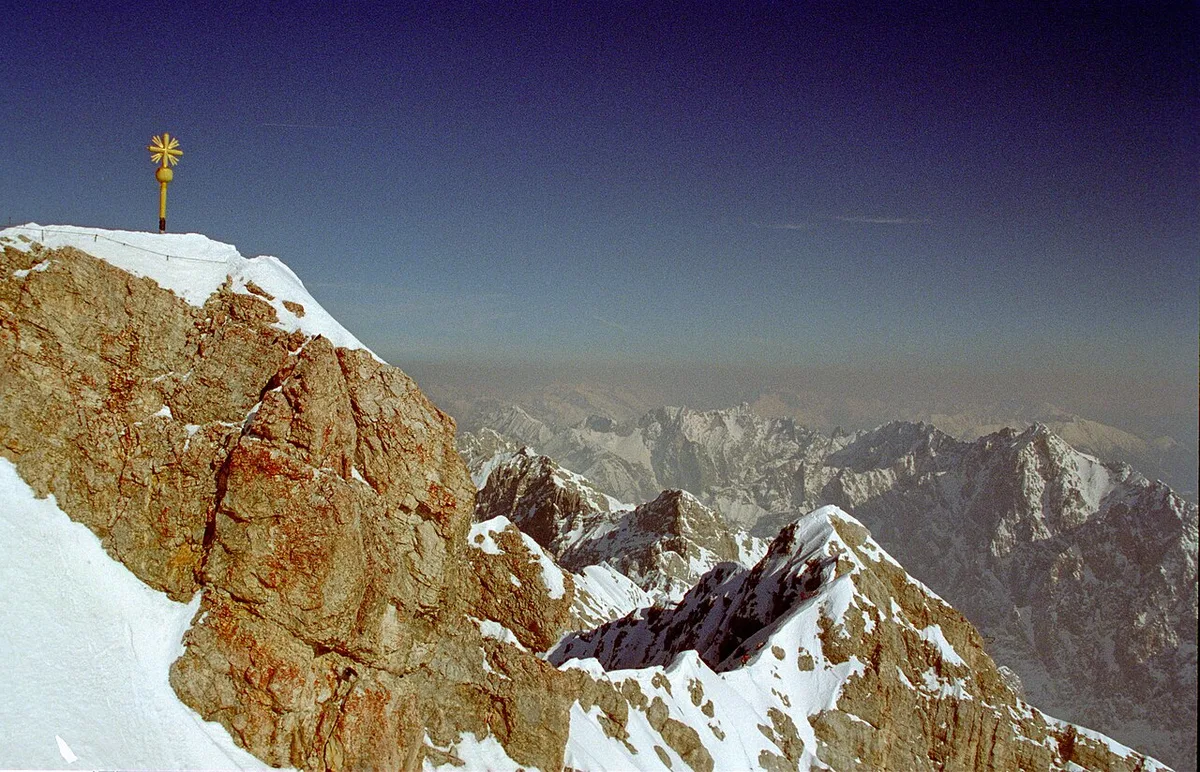
From the valley, the Zugspitze cable car lifts from near Lake Eibsee to the summit in roughly ten minutes, while the cogwheel route climbs through Grainau and Eibsee before entering the Zugspitztunnel and reaching the glacier plateau. Allow most of the day once you include travel, queues and time at the top, and do not try to add a second summit. The 3 Days in Garmisch-Partenkirchen Itinerary keeps Eibsee as a standalone morning if you would rather not compress it into the mountain day.
Eibsee is open around the clock and can be visited on foot or by car from the Grainau side, so it works as a before-or-after stop rather than a fixed block. The shoreline trail around the lake is popular and takes a couple of leisurely hours, and the western shore has picnic spots and a lakeside restaurant near the Eibsee Hotel. If you have had enough altitude for one day, simply walk a short stretch of the shore instead of the full loop.
Day 1 Option B: Alpspitze and the Garmisch Classic Loop
If Zugspitze looks crowded or clouded, the Alpspitze side offers a lower-commitment alternative with its own high viewpoints. The Alpspitzbahn rises to Osterfelderkopf, where the AlpspiX viewing platform, an X-shaped structure extending about 25 metres over the drop, is the main draw. From there the Garmisch Classic connects three cable cars: Alpspitzbahn, Hochalmbahn and Kreuzeckbahn, with the loop walkable in either direction.
The true Alpspitze summit is not at the top of the cable car; it requires a hiking trail or a via ferrata route with proper equipment, which is a different commitment from a viewpoint visit. For a two-day trip, treating Osterfelderkopf and AlpspiX as the mountain objective is the more sensible use of the day. The cable car hub guide goes into each lift's character if you want to weigh Alpspitze against Zugspitze in more detail.
Day 2: Partnach Gorge, Two Town Centres and the Ski Jump
Start early at Partnach Gorge, which runs roughly 700 metres along the Partnach River on a wooden boardwalk set into walls around 80 metres high. Access is on foot or by bus from the town centre, and the walk itself is short, so the main risk is arriving into a queue or into wet, slippery conditions after rain. You can return the way you came or continue onto a longer loop trail outside the gorge.
The Olympiaschanze, the Olympic ski jump that hosted the 1936 Winter Games ski jumping competition, sits near the Partnach Gorge route, which is why the two combine well on the same morning. After that, cross into town and walk both centres rather than treating Garmisch-Partenkirchen as one grid. Garmisch vs Partenkirchen: Neighbourhood Orientation Walk explains how the two halves differ and how to sequence the crossing.
In Partenkirchen, Ludwigstrasse is the street most visitors remember, with painted facades and lettering on the buildings. On the Garmisch side, the Michael-Ende-Kurpark is an easy place to sit and slow down, and the town also has points associated with composer Richard Strauss, including the Strauss Villa and the Richard Strauss Institute with its exhibition space and library. None of this needs a ticket to enjoy from the outside, though indoor collections have their own access arrangements.
Where to Eat and How to Time Meals Around Lifts and Gorges
Build meals around the two long blocks of the trip rather than around a clock. On the mountain day, eat a proper breakfast before you go up, plan a mid-afternoon break once you are back at valley level, and treat a summit or mid-mountain restaurant as optional rather than a fixed stop. Traveller accounts describe summit dining as noticeably more expensive than town, which is a reason to decide in advance whether the view is worth the premium to you.
On the gorge-and-village day, eat before or after the gorge rather than midway, because the boardwalk section is narrow and you will not want to queue behind your own lunch. Keep the town walk loose enough that a cafe stop in Partenkirchen or a beer garden in Garmisch can absorb an hour without breaking the plan. The tourism site's culinary pages list what is currently open, which is more reliable than a fixed list written months earlier.
Rain, Low Cloud and Snow: What to Swap
The official tourism site runs a dedicated bad-weather ideas section, which is the cleanest starting point when the forecast turns. Museums and exhibitions in town, the Michael-Ende-Kurpark, and the Richard Strauss Institute's exhibition and library are all lower-altitude options that do not depend on a clear sky. If the cloud is low but not raining, a valley walk between the two centres still works and costs nothing.
If snow closes high ground, do not assume the gorge is a safe substitute; wet, icy boardwalks change the character of that walk considerably and conditions should be checked with the organiser before setting out. A sensible rain plan keeps one indoor half-day and one flexible outdoor half-day rather than trying to substitute one outdoor attraction for another. Munich and Innsbruck are both reachable as day trips if the weather closes in completely, but that is a different trip shape.
Eibsee as a Flex Half-Day, Not a Fixed Stop
Eibsee sits at the foot of the Zugspitze near Grainau and works best as the thing you do when you have spare time, not as a scheduled block. The loop trail around the lake is roughly 7.5 kilometres and mostly flat, which makes it a reasonable low-energy option if the mountain day has already taken a lot out of you. In warm months you can swim or rent a boat at the shore, in winter it often turns icy and photogenic; availability of rentals changes with season, so check locally rather than assuming.
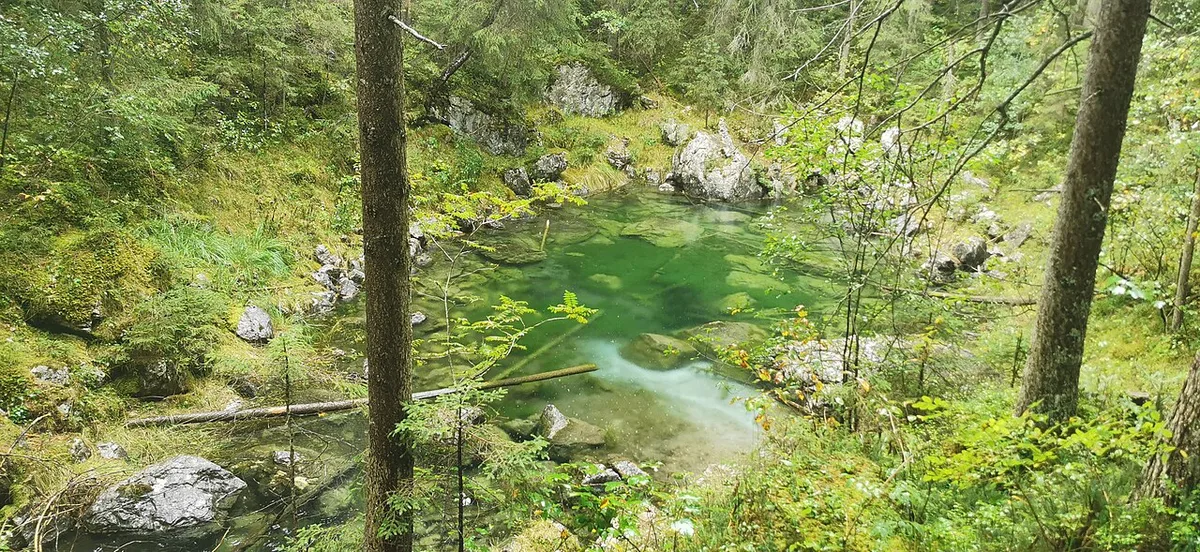
If you are arriving by train, the walk from Grainau station to the lake is short, and there are limited dining options directly at the shore, so bringing snacks is sensible. Morning and late afternoon give the best light and the smallest crowds. The two-day shape does not break if Eibsee drops off entirely; it is a bonus, not a load-bearing part of the itinerary.
Family and Low-Energy Version of the Same Two Days
For a slower version, drop the true Alpspitze summit and keep Osterfelderkopf and AlpspiX as the mountain high point, since they are reached by lift and involve minimal walking. On the second day, do a shorter gorge section and spend the saved energy on the Kurpark and a shorter walk through one town centre rather than both. This preserves the two-day structure without asking anyone to hike for six hours.
Families with younger children should treat the gorge as the day's main event rather than an add-on, because the boardwalk is the part children tend to remember. Lift and gorge operations can change with weather and maintenance, so confirm what is running on the official tourism site the day before. If you want a longer, less compressed version of this shape, the 3 Days in Garmisch-Partenkirchen Itinerary spreads the same ideas over an extra day.
Getting Around Without Over-Scheduling
The town is compact enough that the two centres, the Kurpark and the ski jump area can be covered on foot, which removes the need to plan bus connections in detail. For the Zugspitze and Eibsee side, the cogwheel railway and the valley bus network both serve the approach, and the Eibsee car park fills on busy days in summer. Build in slack: treating transport as a soft constraint rather than a strict timetable is what makes a two-day trip survive a delayed lift or a longer-than-expected gorge queue.
Public transport in the region is organised around the local guest card system, which typically covers certain buses and trains for guests staying in participating accommodation. Coverage rules and what is included change, so check the terms you receive at check-in rather than assuming a card covers every lift or train. That distinction matters most on the mountain day, where the main lifts are usually separate from any guest-card transport.
Should You Add a Third Day or a Day Trip?
A third day makes sense if you want the Hollental Gorge as well as Partnach, or if you want a genuine rest day between two big ones. If you would rather leave the valley, Linderhof Palace sits outside Garmisch-Partenkirchen and is a possible day trip rather than part of this two-day core; it is reachable by road to the north and is visited by guided tour. Linderhof is not in Garmisch-Partenkirchen and should not be folded into the two-day plan.
Other day trips include Munich, Innsbruck, Neuschwanstein Castle and Berchtesgaden, all of which are better as separate travel days than as add-ons to the mountain or gorge days you have already built. If you are comparing how two-day trips work in other German cities, the 2 days in Berlin itinerary and the 2 days in Dresden itinerary show how the same one-anchor-per-day logic plays out elsewhere.
Plan Your Visit
Two days in Garmisch-Partenkirchen work because the town gives you two very different kinds of day without a long transfer between them. Keep one day for altitude and one day for the gorge and the two centres, hold both loosely, and check the organiser's livecams and lift status before you commit. The Garmisch-Partenkirchen: Itineraries and City Travel Guides page collects the surrounding planning detail if you want to build outward from here.
Leave the exact prices, timetables and opening hours for the day you go, because lift, gorge and museum operations change with season and weather. The tourism site is the authoritative place for current status; your itinerary just needs to be flexible enough that a cloudy Zugspitze morning becomes a gorge morning without derailing the trip.
Frequently Asked Questions
Is two days enough for Garmisch-Partenkirchen?
Two days is enough to do one high-mountain objective and one gorge-and-village day without rushing. You will not cover everything in the region, and you should not try to stack Zugspitze and Alpspitze on the same day. A third day is useful if you also want the Hollental Gorge or a genuine rest day.
Can you visit Zugspitze and Partnach Gorge in the same day?
It is technically possible but not recommended. The mountain day already consumes most of the day once you include travel, queues and summit time, and the gorge involves a separate walk with its own conditions. Keeping them on separate days also means you can swap them when the summit is clouded in.
Should you do Zugspitze or Alpspitze if you only have one mountain day?
Choose Zugspitze for the highest point in Germany and a broader panorama, and choose Alpspitze and the Garmisch Classic loop for the AlpspiX platform, a shorter lift-based day and a less crowded feel. The true Alpspitze summit requires hiking or via ferrata equipment, so a viewpoint visit is the realistic version on a two-day trip.
What should you do in Garmisch-Partenkirchen if the summit is covered in cloud?
Swap the mountain and gorge days. The tourism site publishes livecams and an open lifts listing, so you can check cloud and operations before deciding. If both high and low ground are wet, use the bad-weather ideas section for museums, the Kurpark and other indoor options.
How do you fit Eibsee into a two-day itinerary?
Treat Eibsee as a flexible half-day attached to the mountain day rather than a separate scheduled block. The shoreline loop is around 7.5 kilometres and mostly flat, and the lake sits near Grainau at the base of the Zugspitze approach. If time runs short, a short stretch of shore is a reasonable substitute for the full loop.


