

The Richard Strauss Institut occupies a quiet corner of Garmisch-Partenkirchen that many visitors pass without noticing, yet it holds one of the town's more unusual cultural offerings. It is both a public exhibition venue and a working research centre devoted to the composer's life and legacy. The operator lists opening hours of Monday to Friday, 10:00 to 16:00, closed on public holidays, so a weekday slot is the only reliable option.
The practical case for going is simple: small scale, central location in the Garmisch half of town, and a clearly defined focus on Strauss himself. The trade-off is that this is not a full-day attraction, and it does not try to be. If you arrive expecting a large museum with interactive displays, you may leave disappointed; if you want context on the composer's later life in Bavaria, it earns its place in a half-day itinerary.
Why the Richard Strauss Institut Matters in Garmisch-Partenkirchen
Richard Strauss spent decades of his working life in Garmisch-Partenkirchen, and the town treats that association as part of its cultural identity. The institute's role is to document and research that legacy rather than simply to celebrate it. Its collections are used by musicologists, musicians and opera practitioners from around the world, which shapes what you find inside.
One error worth correcting before you go: some secondary sources, including a local tourism page, describe Garmisch-Partenkirchen as Strauss's birthplace. He was born in Munich, and the town's claim rests on his long residence rather than his birth.
Address and Getting Oriented
The institute sits at Schnitzschulstraße 19 in the Garmisch side of town, reachable on foot from the central streets. Note the spelling: Schnitzschulstraße, not the more common Schnitzschule. If you plan to combine it with Partenkirchen's sights, the two halves of town are a short walk or bus ride apart, so treat this as a Garmisch stop rather than a Partenkirchen one.
Because the institute keeps weekday hours only, it fits best into a morning or early-afternoon slot before other plans. A neighbourhood orientation walk is useful if you have not yet worked out which side of town you are on. The Garmisch vs Partenkirchen: Neighbourhood Orientation Walk explains the geography so you are not backtracking later.
The Building: Villa Christina of 1893
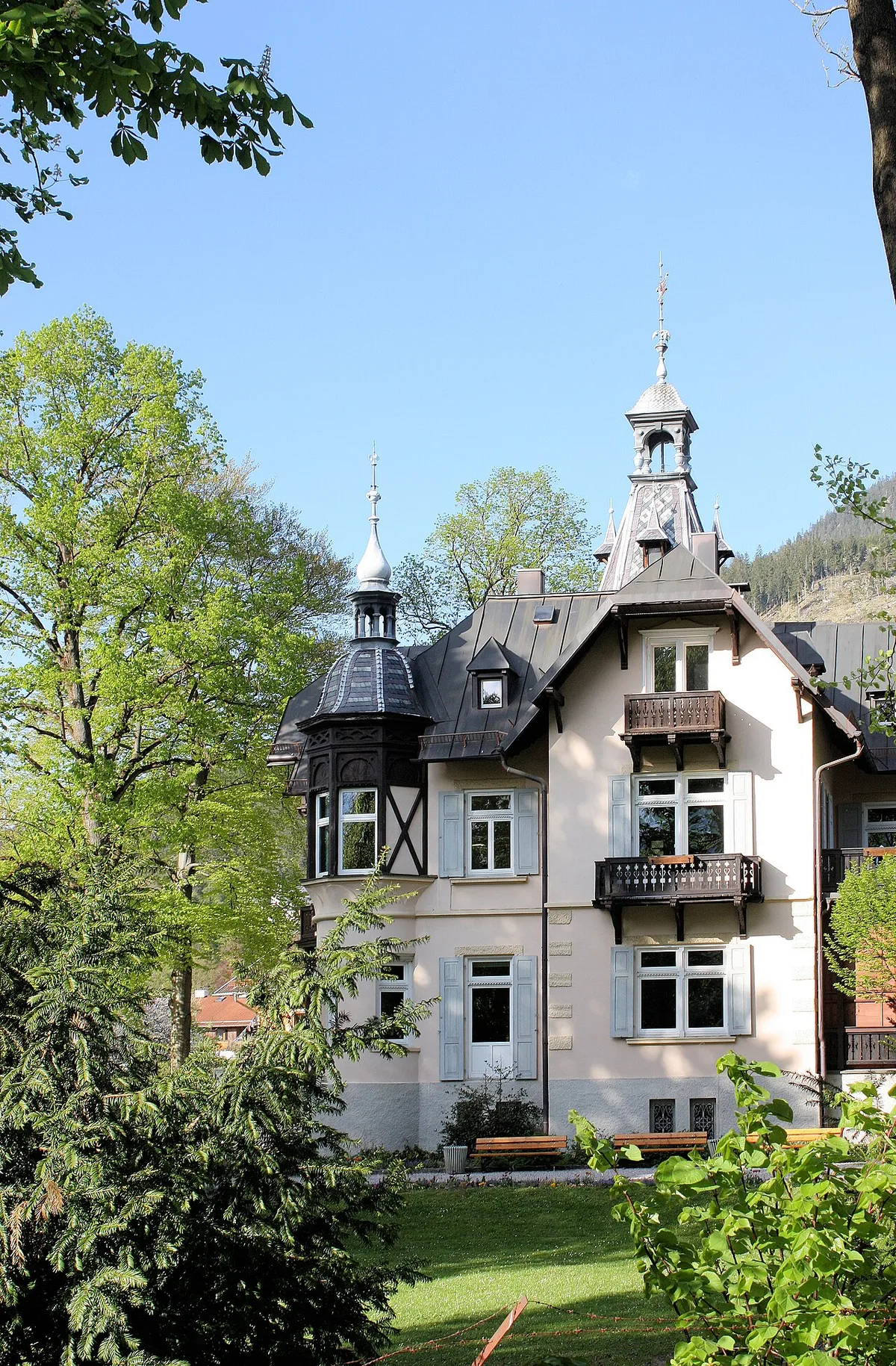
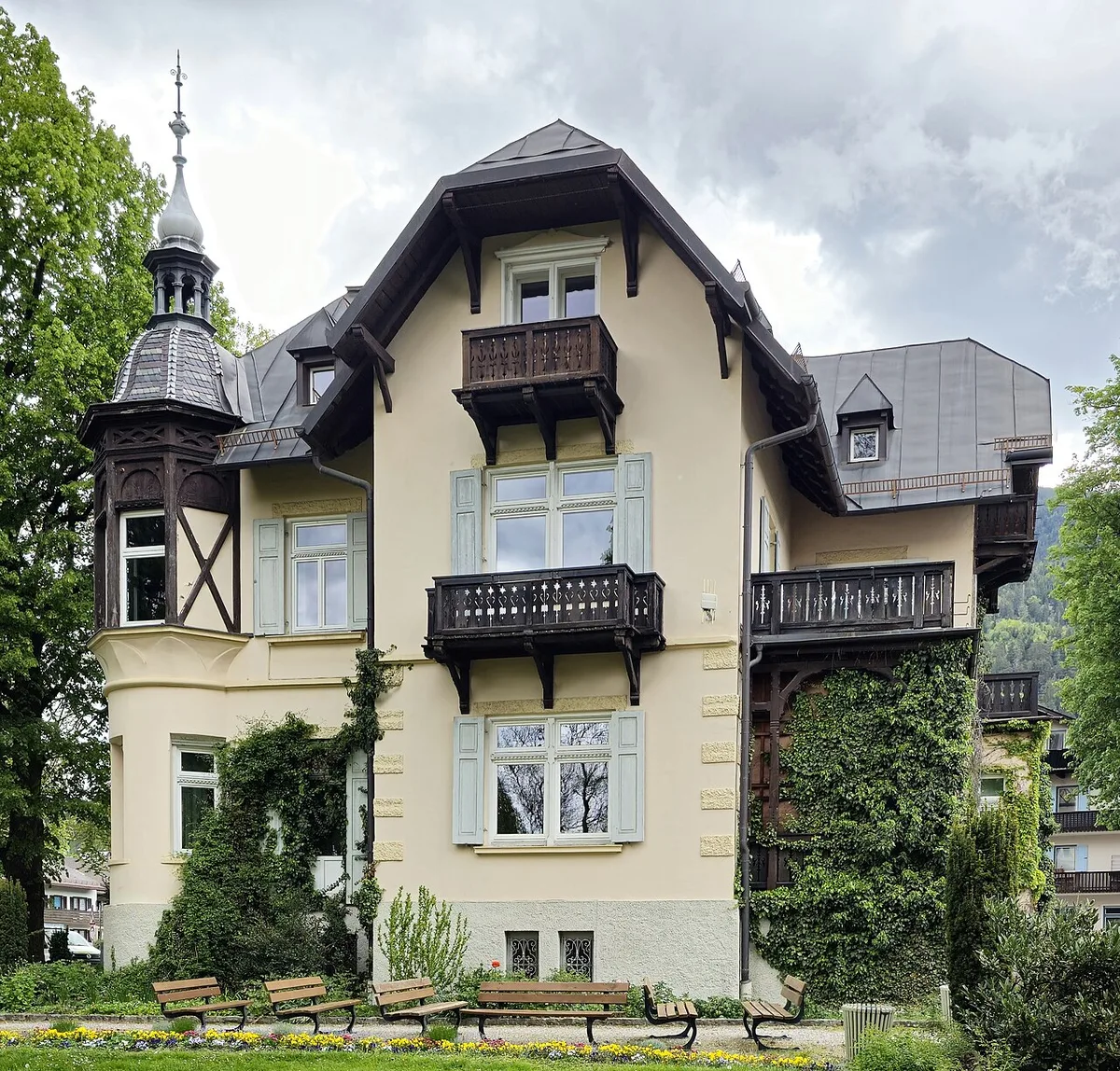
The institute occupies the Villa Christina, a house built in 1893 for the cigar manufacturer Beorg Ludwig Mayer-Doss. That date places the building in the same period as Strauss's own rise to prominence in German musical life. The villa is a private-looking townhouse rather than a purpose-built museum, which sets expectations for scale.
The same source notes that the exhibition covers Strauss's life and work alongside Hermann Levi, the conductor and close collaborator. That pairing is worth knowing before you arrive, because Levi is often overlooked in general Strauss material.
The Permanent Exhibition: Strauss as 'Mensch & Musik'
The permanent exhibition is presented under the title Strauss! Mensch & Musik, which signals its angle: the person as much as the composer. Themes include Strauss as conductor and cultural-political figure, as a member of the educated bourgeoisie, and as a family man.
Expect a compact presentation rather than a chronological blockbuster. The operator's own framing emphasises facets of the man, so the exhibition rewards slow reading of labels over rushing through rooms. If you normally skip text panels, this is one place where skimming will cost you most of the value.
Library and Archive: A Research Centre, Not a Drop-In Room
The institute is, first and last, a research institution. Its library and archive are used by scholars, musicians and opera practitioners from around the world, and the operator describes the collections in those terms rather than as public reading rooms. That distinction matters: you should not plan to turn up and browse the archive on a whim.
If you have a genuine research need, contact the institute directly before travelling and explain what you want to consult. The published contact address is rsi@gapa-kultur.de and the listed phone number is +49 8821 180-7900. For a casual visit, treat the exhibition as the visitable part and the library as a specialist resource.
Opening Hours and Museum Entry
The operator states opening hours of Monday to Friday, 10:00 to 16:00, closed on public holidays. These are subject to change, so check the institute's own site shortly before your trip rather than relying on a cached listing. A Thursday or Friday visit avoids the weekend closure entirely.
The operator lists museum entry at 3.50 EUR and notes that payment is cash only. Bring coins or a small note, because card payment is not described as an option. Do not assume concessions, family rates or combined tickets with other Garmisch attractions: none are stated in the operator's own information, and each site in town prices separately.
Deciding Whether to Go
Three different visitor types get different value here. If you already know Strauss's music, the exhibition gives biographical texture you will not find in programme notes. If you are a general sightseer with limited time, the small scale means it is an easy add-on rather than a destination in itself. If you need archival material, the visit only makes sense after making contact in advance.
A suggested time window, not an official figure, is roughly forty-five minutes to an hour for the exhibition alone. Add time if you read German-language panels carefully, since the material is presented in the local language. If that sounds too thin for a dedicated trip, fold the institute into a wider Garmisch-Partenkirchen itinerary instead, where the neighbourhood clusters make the walk worthwhile.
Combining It With Nearby Sights
A rainy day in Garmisch-Partenkirchen is a good reason to prioritise indoor stops like this one. A wet-weather plan that strings together two or three small museums works far better than committing to a single one. Garmisch-Partenkirchen on a Rainy Day: Indoor Plans covers how to sequence them without long exposed walks.
For a contrasting outdoor pair, the Werdenfels Museum and the Olympic Ski Stadium both appear in regional sight lists; the stadium is described as open to the public free of charge, while the Werdenfels Museum is a separate ticketed collection. Do not assume one ticket covers both. If you want altitude instead of history, the Olympia-Skisprungschanze Garmisch-Partenkirchen Visitor Guide covers the ski jump, and the AlpspiX Viewing Platform Visitor Guide is the bigger excursion.
Plan Your Visit
The Richard Strauss Institut works best as a focused, short stop during the working week rather than a headline attraction. Check the operator's own hours and the stated cash-only entry before you set out, and decide in advance whether you are there for the exhibition or for research access. That single decision shapes everything else about the visit.
To build the rest of the day around it, start with the Garmisch-Partenkirchen: Landmark Visitor Guides overview and then pick one or two nearby stops rather than trying to cover the whole town. Garmisch-Partenkirchen: Itineraries and City Travel Guides has full-day and half-day routes to slot this into.
Frequently Asked Questions
What are the opening hours of the Richard Strauss Institut?
The operator lists Monday to Friday, 10:00 to 16:00, closed on public holidays, and these are subject to change. Always confirm on the institute's own website before travelling, particularly around Bavarian holidays when the house may be shut.
Can I pay by card at the museum?
The operator states that only cash payment is possible for museum entry. Bring a small amount in cash and do not rely on card acceptance. If you need current pricing, check the operator's page rather than a third-party ticket site.
Do I need to book to visit the exhibition, library or archive?
No visitor information confirms online booking for the exhibition. The library and archive are used by scholars, musicians and opera practitioners, so treat them as a specialist resource you arrange in advance by contacting the institute directly rather than a public drop-in space.


