

Garmisch-Partenkirchen looks like one long town on a map, but the hyphen carries a merger history. Garmisch and Partenkirchen were separate towns until 1935, when they were combined so the area could host the 1936 Winter Olympics. One travel account describes the two halves as different in mood and architecture, which is why a short orientation walk pays off before you commit to a hotel.
The practical version of the comparison is simple enough to hold in your head. Partenkirchen is the quieter, more traditional side with painted houses and small chapels along its main street, while the Garmisch side acts as the busier centre, with more shops, traffic and public buildings near the Rathaus. Knowing which side suits your trip matters more than memorising street names.
The town's official visitor site is the place to check seasonal openings, lift status and guest-card details before you travel. Note also a local convention worth respecting: residents of the Partenkirchen side are known to prefer the full double name over the shorthand Garmisch for the whole town.
What the Hyphen Hides: Two Towns and One Post-1935 Name
The double name is not decorative tourism branding. Garmisch and Partenkirchen existed side by side as separate towns before they were merged in 1935 to create a settlement large enough to stage the 1936 Winter Games, a decision travel sources note was unpopular with residents at the time. Around ninety years later, locals still use the two half-names in daily speech.
The division also has a physical boundary rather than just an administrative one. The Partnach River runs between the two halves, and bridges carry pedestrians and traffic from one side to the other. That makes the walk between the centres genuinely short, even though it changes the atmosphere noticeably.
Local shorthand can be genuinely confusing for first-time visitors. Many people outside the region call the entire town Garmisch because the full name is unwieldy, even though that label only properly covers one half. Using the full name is the safer habit once you are in town.
Once you accept that the hyphen marks a real border, the rest of the visit gets easier. You are not choosing between two competing day-trip towns but between two neighbourhoods of the same settlement, with different evening rhythms and different starting points for walks.
Partenkirchen vs Garmisch at a Glance: Quiet Tradition Against a Busier Centre
Travel writers consistently describe Partenkirchen as the more traditional and noticeably quieter half, with fewer evening options beyond a handful of restaurants. Garmisch, by contrast, reads as the main centre, with more modern buildings, more shops and more through traffic. Neither description is a criticism: they simply describe two different kinds of evening.
Architecture underlines the difference. Partenkirchen's main street is famous for Lüftlmalerei, the fresco-style painting applied to house facades, and the buildings carry rural and religious scenes in colour. On the Garmisch side, the same craft shows up mainly on standout buildings such as the town hall rather than on street after street of houses.
Greenery sits firmly on the Garmisch side. Michael-Ende-Kurpark is a landscaped park in the heart of that half, with flower beds, paths, a café-restaurant and an amphitheatre used for concerts and events. One travel account notes the park keeps set visiting hours and is locked outside them, so treat an early or late stroll as something to verify locally.
Cultural associations sharpen the contrast further. Garmisch is the half linked to composer Richard Strauss and to children's author Michael Ende, whose names appear on venues and public spaces, while Partenkirchen holds the older ecclesiastical buildings. Recognising those anchors stops the two centres blurring into one another.
For a broader look at individual sights across both halves before deciding what to prioritise, the landmark visitor guides for the area separate free public spaces from ticketed interiors and museums, which matters when you are budgeting a short stay.
To understand the full city context, including itineraries and seasonal ideas, the broader city travel guide for Garmisch-Partenkirchen is a useful starting point.
Where to Stay: Matching a Base to the Half That Suits Your Days
Choose Partenkirchen if you want a quiet base with traditional streets on your doorstep and are content with a limited evening scene. One travel account that stayed on that side highlights the short walk to the historic painted street and the calm after dark as the main advantages. It suits travellers who plan early starts more than late nights.
Choose the Garmisch side if you would rather be near the busier centre, the Rathaus and the main transport corridors. One writer describes deliberately landing in the middle ground, roughly along the connecting road, to keep both halves within easy walking distance. That compromise position is worth considering if you cannot decide. For wider planning, see Getting Around Garmisch-Partenkirchen.
Accommodation type tends to follow the same pattern. The Garmisch half and the connecting middle carry the larger, more resort-style properties with restaurants, bars, spa facilities and parking, while Partenkirchen leans towards smaller guesthouses. If you are arriving by car, confirm parking with the property rather than assuming it.
The town is compact enough that your choice mostly decides your evenings, not your sightseeing. Both halves sit within a walk of the river bridges, so a hotel on either side still leaves the whole town reachable on foot. Base your decision on the mood you want at the end of each day.
Before booking, check that the address you are considering genuinely sits in the half you want. Postcodes, property names and map pins in the merged town do not always make the distinction obvious. The town's official accommodation listings show each property's location, which resolves the question quickly.
Walking Route, Part One: Ludwigstrasse Murals, Chapels and Viewpoints in Partenkirchen
Begin on the Partenkirchen side, where the walking is at its most rewarding. Ludwigstrasse is the historic spine of that half, and its buildings are covered in painted facades and lettering. Allow time to look up rather than treating the street as a corridor towards the river.
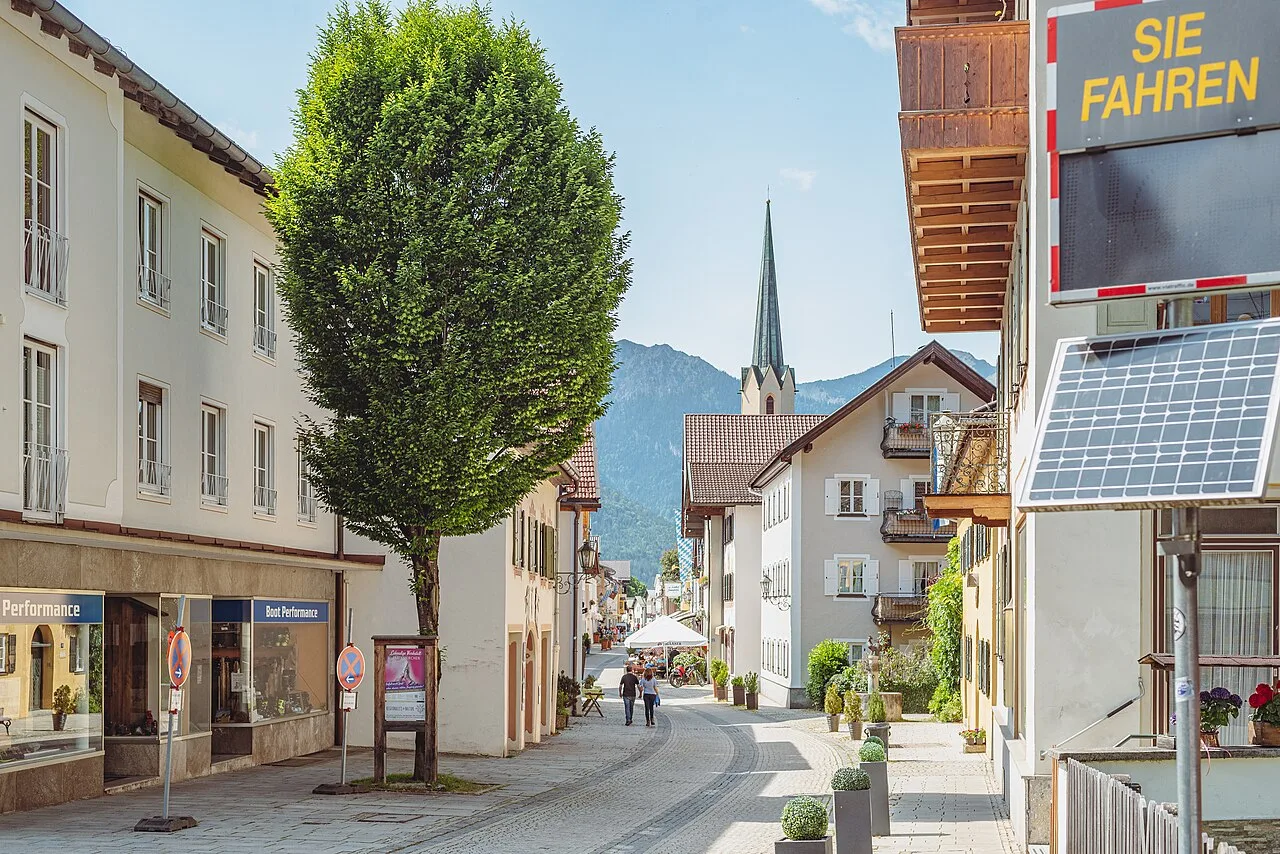
The churches and chapels on this side are where the walk starts to feel local rather than scenic. The Church of the Assumption dominates Ludwigstrasse, while smaller chapels sit at either end of the street and reward the short detours away from the through-route. Travel accounts describe the oldest of these as small, colourful and decorated with frescoes.
Hillside viewpoints are the payoff for the uphill minutes. The Gsteig Chapel sits above the main street and looks back over the rooftops of Partenkirchen, and a travel account notes its origins in the sixteenth century with later renewal in the nineteenth. Treat the climb as part of the experience rather than an obstacle.
Detours are where most walkers get value for effort, and the museum quarter is one of them. The Werdenfels Museum occupies one of the oldest buildings in the district and covers local history across several floors, though translation is limited, so a translation app helps. It is an interior visit rather than a street sight.
Shops and cafés along the street follow irregular schedules. One traveller found that several businesses opened for only a few hours on selected days, so a plan built around browsing specific shops can easily come apart. Window-shopping along the painted facades works at any hour, which makes that the safer default.
Crossing Over: The Partnach River Bridges and the Connecting Road
The two halves meet at the Partnach River, and the crossing is one of the more pleasant stretches of the walk. Several bridges carry people between the districts, and the connecting road curves past the Rathaus before it reaches the water. Views open up in both directions along the valley as you cross.
Triptins describes the pre-1935 settlement pattern as two towns separated by the Partnach, which explains why the river feels like a psychological border even now. Walking across puts you in a different district without any sense of leaving town. That continuity is exactly why the route works on foot.
The connecting road is convenient but not the most interesting part of the day. Once you leave the main street joining the halves, the neighbourhoods behind it turn quiet and residential, which is where the cafés with quiet patios sit. Consider walking one block off the road in each direction.
If you would rather shorten the crossing, the local bus network links the two centres and the wider valley. The transport guide for the area explains the routes and how the guest card interacts with them. A one-way bus leg plus a one-way walk is a reasonable way to pace the day.
Take the crossing slowly if you have time, because it is where the comparison becomes obvious. The shift from painted gables to wider, busier streets happens over a few hundred metres. That transition is the answer to the question of which half is which, delivered on foot rather than on a map.
Walking Route, Part Two: Michael-Ende-Kurpark and the Strauss Sites on the Garmisch Side
Once across the river you are in the busier half, and the walking changes character. Michael-Ende-Kurpark is the obvious anchor, with landscaped beds, paths, an amphitheatre and a café-restaurant on site. It is public ground, so strolling the paths costs nothing, while specific events there may be ticketed and should be checked separately.
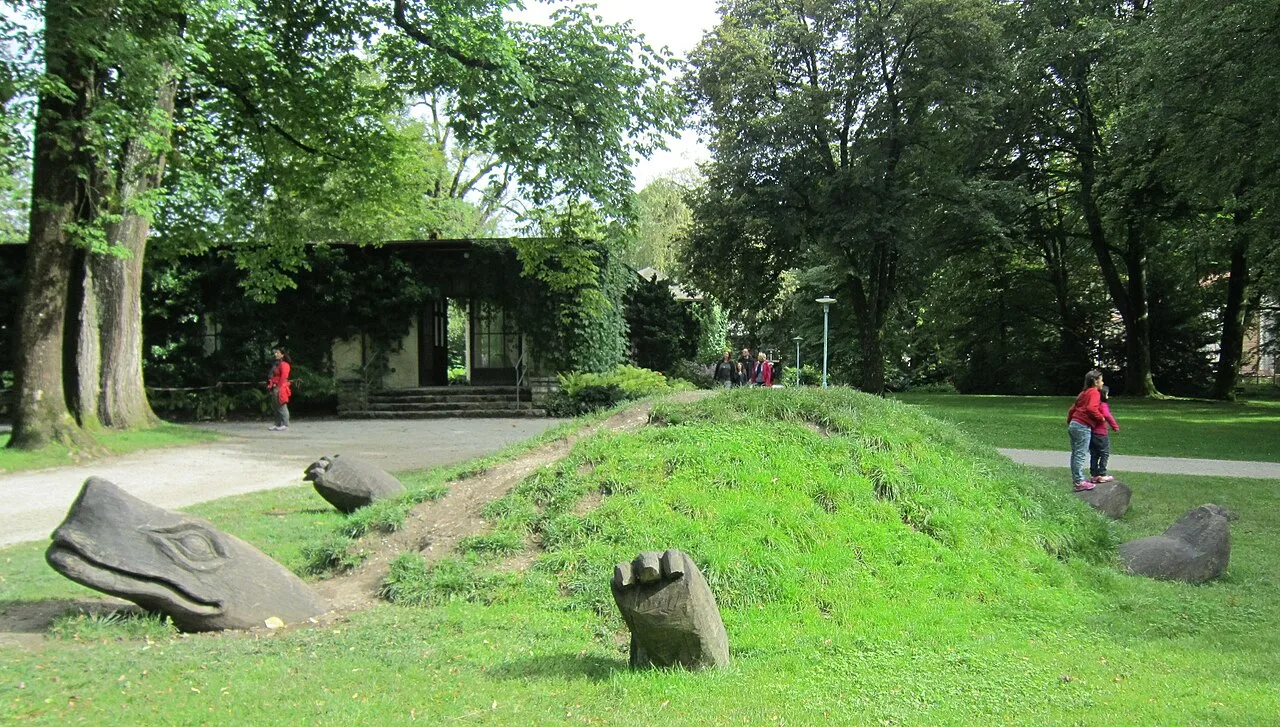
One travel account warns that this particular park has fixed opening hours and is locked outside them, unlike many public parks elsewhere. That is one writer's observation rather than a general rule, so confirm the current schedule with the town's visitor information before planning an early or late visit.
The Richard Strauss sites cluster in the same half and are easy to fold into the walk. Triptins notes a Strauss villa and the Richard Strauss Institute, where an exhibition area, concert hall and library can be found. These are indoor stops with their own schedules, so they are best treated as optional add-ons rather than guaranteed inclusions.
The town hall on the Garmisch side carries its own painted facade and is worth a look as you pass. From there, the streets become more commercial and traffic-heavy, which is precisely the contrast with Partenkirchen. If you are flagging by this point, this is the natural place to stop for the day.
Suggested Duration and How to Split the Day
A reasonable suggestion, not an official figure, is around two to three hours for the full route at an unhurried pace, with longer if you stop inside a museum or chapel. The town's tourism office does not publish a duration for this particular walk, so treat any timing you see as an estimate. Your own pace and detours will matter more than the number.
Splitting the walk in two often works better than forcing it into one block. Wander Partenkirchen in the morning when the painted facades catch the light, then cross the river for the park and the busier streets later. That order also puts you closer to public transport if the weather turns.
Building the walk into a longer stay gives you room to repeat it. If you have a few days in town, you can treat this route as the orientation on arrival and then branch out to the mountains and lakes on later days. A multi-day framework helps you avoid cramming the valley into a single afternoon.
Weather and daylight decide the practical window more than any published schedule. Shops and smaller attractions keep irregular hours, so an itinerary pinned to specific openings on a specific day is fragile. Build in slack and keep the walk itself as the fixed element.
Mistakes Walkers Make With the Two Halves
The most common mistake is using Garmisch as a shorthand for the whole town in conversation with residents. Travel accounts flag that people from the Partenkirchen side do not care for it, which is reason enough to use the full name while you are there. It costs nothing and avoids an awkward start to a conversation.
The second mistake is treating the two centres as separate excursions and taking transport between them. The river crossing is short and walkable, and the walk itself is the point of the comparison. Jumping on a bus for that stretch skips the most useful part of the day.
A third error is assuming large attractions share a single ticket or opening pattern. The park is free public ground, museums and institutes have their own arrangements, and mountain transport is separate again. Check each site's own current information rather than relying on a combined assumption.
Finally, walkers often assume that everything stays open through the day. Several shops on both sides keep partial hours, and even the main park has fixed hours according to one account. Plan the walk around the streets and views, which are always available, and treat interiors as bonuses.
Plan Your Visit
The clearest way to answer the Garmisch versus Partenkirchen question is to walk the two halves in one go. Start among the painted facades and small chapels of Partenkirchen, cross the Partnach on foot, and finish in the busier centre around the park and the Rathaus. By the end, the choice of where to sleep usually makes itself.
Pick Partenkirchen for quiet evenings and traditional streets, or the Garmisch side for a livelier centre with more services close by. Either way, check current opening details with the town's official visitor information before you travel, since shop hours, park access and mountain transport change with the season. Your accommodation address will decide your evenings far more than the walk does.
Frequently Asked Questions
What is the difference between Garmisch and Partenkirchen?
They were separate towns until 1935, when they were merged ahead of the 1936 Winter Olympics hosted in the area. Partenkirchen is generally described as the quieter, more traditional half, with painted facades and small chapels along its main street. Garmisch is the busier centre, with more shops, traffic and public buildings near the town hall, plus the main landscaped park and the Richard Strauss venues.
Which is better to stay in, Garmisch or Partenkirchen?
It depends on your evenings rather than your sightseeing. Partenkirchen suits travellers who want quiet streets and traditional surroundings after dark, with a limited choice of restaurants nearby. The Garmisch side and the connecting middle suit those who prefer a busier centre, larger resort-style accommodation and more services within walking distance. Both halves are close enough that the walk between them is short.
How long does it take to walk from Partenkirchen to Garmisch?
There is no official published duration for the route. As a rough suggestion, allow around two to three hours to cover the main streets, the river crossing and a stop or two, and longer if you visit a museum or chapel. Treat that as an estimate rather than an operator figure, and check current conditions and opening details with the town's visitor information before you set out.
Is Ludwigstrasse in Garmisch or Partenkirchen?
Ludwigstrasse is on the Partenkirchen side and is that half's most famous street, lined with buildings decorated in the traditional painted style known locally as Lüftlmalerei. The Church of the Assumption stands on the same street, with smaller chapels at either end. It is the natural starting point for a walk through the quieter half.
Why were Garmisch and Partenkirchen merged into one town?
Travel sources state that the two separate towns were combined in 1935 so the area could host the 1936 Winter Olympics, and that the decision was not popular with residents at the time. The new settlement simply joined both names with a hyphen. The two halves retained distinct characters, and locals still refer to them separately today.


