

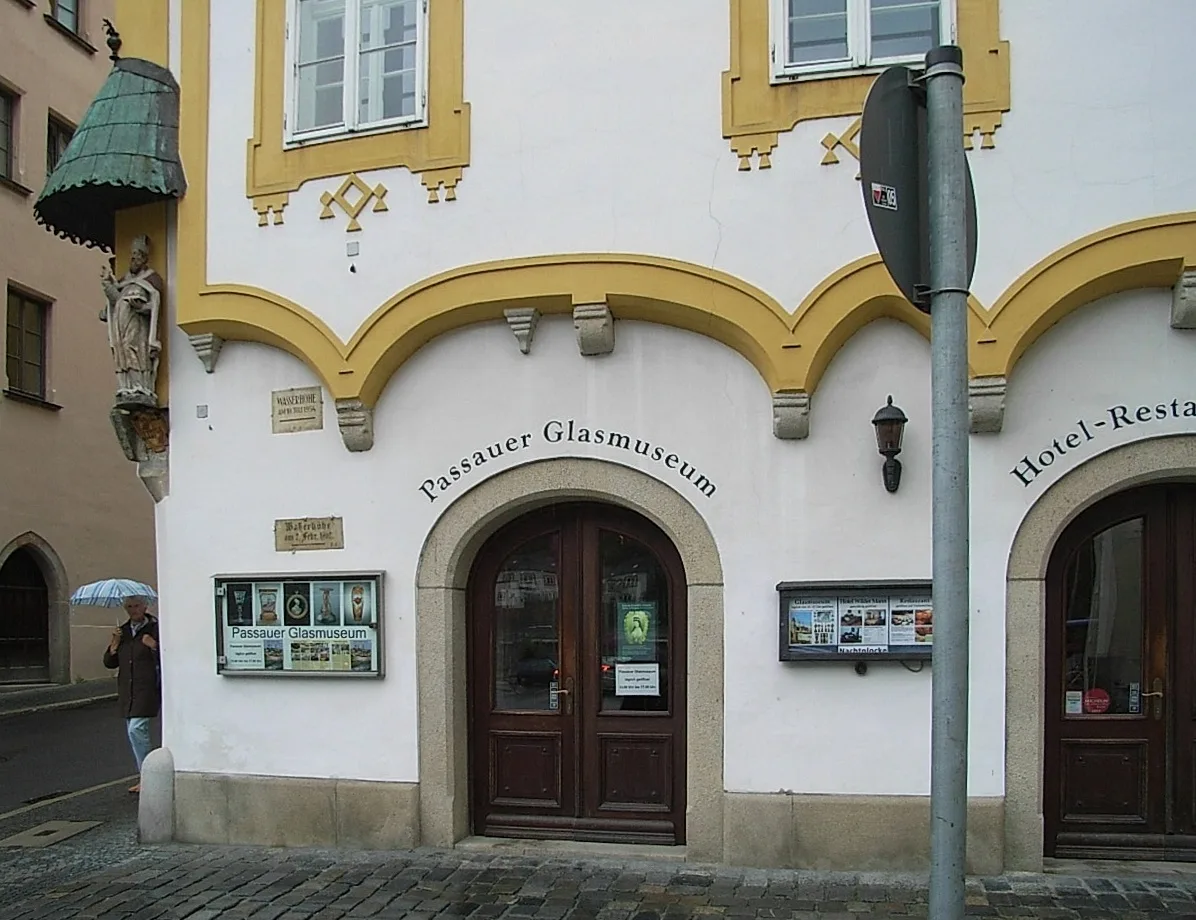
The Glasmuseum Passau sits at Schrottgasse 2 on the corner of Rathausplatz, inside the old town rather than up on the fortress hill, and Passau Tourism lists roughly 15,000 pieces on display. The collection reaches from 1650 to 1950 and is drawn from Bavaria, Bohemia, Austria and Silesia, which makes it a far larger proposition than a single-room cabinet. As an editorial suggestion rather than an official figure, allow about sixty to ninety minutes for a proper look, and longer if you use the audioguide throughout.
The easiest way to decide whether it earns a slot is to know what kind of visitor you are. Glass specialists and design-minded travellers can spend far longer here than the average river-cruise passenger with one afternoon for the whole old town, because the Bohemian and Art Nouveau material rewards slow looking. The Passau: Itineraries and City Travel Guides collection is the place to build the surrounding day once you have fixed your museum time.
What the Glasmuseum Passau Actually Is
This is a museum of European glassmaking rather than a decorative-art side room, and its stated span runs from about 1650 to 1950. Passau Tourism describes the exhibits as showing the art and variety of glass production in Bavaria, Bohemia, Austria and Silesia, with masterpieces that were shown at 19th-century world exhibitions and pieces made for European royal families. Those four regions give you a mental map before you walk in, because the rooms are effectively organised around centres of production rather than strict chronology.
The centre of gravity sits in the 19th century and the Art Nouveau period, described by the tourism board as the golden age of glass, which is worth knowing if your interests run earlier or later. The operator's sister hotel describes the whole holding as more than 30,000 pieces with 17,000 of those on display, so treat any single number as approximate rather than an official count. The practical point is the same either way: this is a large collection, not a fifteen-minute stop.
One frequently quoted compliment comes from the Swiss writer Friedrich Dürrenmatt, who called it the most beautiful glasshouse in the world; Passau Tourism repeats that line as an attributed description rather than an objective ranking. Read it as an indication of quality, not as a benchmark you can verify. The phrase is best used as a reason to look closely at the display craft as well as the objects.
Where It Sits in the Old Town
The address is Schrottgasse 2, at the corner of Rathausplatz, which places the entrance inside the densest part of the Altstadt rather than up on the fortress hill. That matters because you can fold the museum into a walking loop that already passes the town hall square, and the Altes Rathaus Passau old town hall visitor guide is useful if you want to understand the painted assembly room and flood markings before or after your slot. Nothing about the approach requires transport: this is old-town walking territory.
From the museum you are a short walk from the cathedral at the highest point of the old town and from the Inn promenade that leads towards the river confluence, so the museum sits neatly between the two poles of a classic Passau day. The building also contains the Hotel Wilder Mann, which Passau Tourism notes within the same historical structure. Use Rathausplatz as your anchor point and the rest of the old town falls into place around it.
A Priority Route Through the Collection
Start with the 19th-century exhibition pieces, because that stretch explains why the museum matters to collectors: many are documented as having appeared at world exhibitions or been made for royal households. Move slowly there and through the Art Nouveau rooms, which hold the strongest concentration of Jugendstil material. If you have limited energy, this is the section to protect rather than the earlier rooms.
Specialists rate the Loetz holdings highly, and one collector resource describes the Passau museum as holding the greatest collection of Loetz glass anywhere, with over a thousand pieces including vases shown at the 1900 Paris Exposition. That is a strong claim from an enthusiast site rather than the operator, so weigh it accordingly, but the Loetz rooms are clearly a highlight for Jugendstil fans. Do not, however, treat them as the only worthwhile section: the earlier regional glass and the 19th-century showpieces give the Loetz material its context.
A sensible split is to give the priority rooms the bulk of your time and pass through the remainder at a steady pace, rather than trying to read every label. Glass rewards close attention to colour, cutting and surface treatment, and museum fatigue sets in quickly when cases start to blur. If a section leaves you cold, move on without guilt.
Admission and Ticket Scope
A date-stamped figure published by Passau Tourism lists adults at 10.00 EUR and a reduced rate at 8.00 EUR, with children up to six accompanied by parents free, and names the operator as Rotel Tours. Because entry charges change, check the operator's own page before you travel rather than relying on any listing. The official site at glasmuseum-passau.de is the place to confirm the current figures and opening windows.
Do not assume one ticket covers Passau's other museums. The Oberhausmuseum is run by the City of Passau and publishes its own separate admission, with a family tariff and free entry for children under six, and other collections such as the Wörlen museum and the Roman Museum at Kastell Boiotro have their own operators. The Oberhausmuseum page also mentions showing a shuttle bus ticket for a discount on museum entry, which is specific to that site rather than a city-wide pass.
If you are weighing a sightseeing pass, check the inclusions of the PassauRegioCard and DONAU-Card on the city tourism site, since card coverage is exactly the sort of detail that changes and must be confirmed at source. Treat any claim that a single ticket opens the Glass Museum plus the fortress, the modern art museum and the cathedral museum with caution. Each collection should be budgeted as its own entry unless a card explicitly says otherwise.
Audioguides and Language Support
Passau Tourism states that audioguides are available in German, English and Chinese, which is the key detail for anyone who does not read German labels. Plan to collect a guide at the start rather than halfway through, because the object numbering will make far more sense from the first room. If you prefer reading, allow extra time, since wall texts may not be bilingual throughout.
The operator's own site is published in German, so English speakers should expect to lean on the audioguide and the museum's visual presentation. Translate key German terms in advance, since the four production regions and the Art Nouveau period appear under names such as Jugendstil. A little vocabulary preparation noticeably improves the visit.
How Long to Allow: An Editorial Suggestion
As a recommendation rather than an official figure, allow around sixty to ninety minutes if you want a genuine impression of the 19th-century and Art Nouveau material. Add time if you intend to use the audioguide throughout, since listening to commentary on a collection of this size stretches a visit considerably. Three hours is realistic for a specialist who wants to study cases and take notes.
For a river-cruise port day, a shorter version works: thirty to forty-five minutes, focused on the Art Nouveau rooms and a handful of 19th-century showpieces, is enough to justify the entry. Cruise groups often move through the old town in waves, so starting promptly after docking or waiting until mid-afternoon generally gives calmer rooms. If rain pushes everyone indoors, expect those rooms to be busiest, and the rainy day options around Passau can help you reshuffle the day.
Is It Worth a Slot? Comparing Passau's Museums
The Glass Museum is the strongest choice for anyone drawn to decorative arts, design history or Art Nouveau, and it is unusually specialised for a city of Passau's size. The Oberhausmuseum, by contrast, tells the story of the fortress and the city across exhibitions on medieval life, trade and craft, and adds an observation tower with panoramic views. One is about objects and craftsmanship, the other about place and history.
The Museum Moderner Kunst Wörlen focuses on Georg Philipp Wörlen and modernist groups with temporary shows, while the Roman Museum Kastell Boiotro sits on excavated fort foundations in the Innstadt and displays finds from the region's Roman centuries. Museum am Dom, run by the diocese, covers sacred art near the cathedral. Each of these has a distinct appeal and its own ticket, so pick by interest rather than trying to tick them all off.
The honest answer is that glass enthusiasts should prioritise the Glasmuseum, while visitors with one free afternoon and broad interests may prefer the fortress for its views and wider narrative. If you have two days in Passau, both fit comfortably. If you have one, choose the collection that matches what you actually look at when you travel.
Pairing the Museum With the Rest of Passau
Build a half-day around the old town: the cathedral at the highest point, the Rathausplatz with its flood-marked town hall, the museum itself, then downhill through the artists' lane towards the Inn promenade and the confluence. St. Stephen's Cathedral is worth timing for its organ, and Passau Tourism notes that the instrument has five separate installations and 17,974 pipes, making it the largest Catholic church organ in the world. Organ concerts have traditionally run at midday with limited same-day tickets, so confirm current arrangements and prices with the cathedral music office or the diocese rather than assuming a schedule.
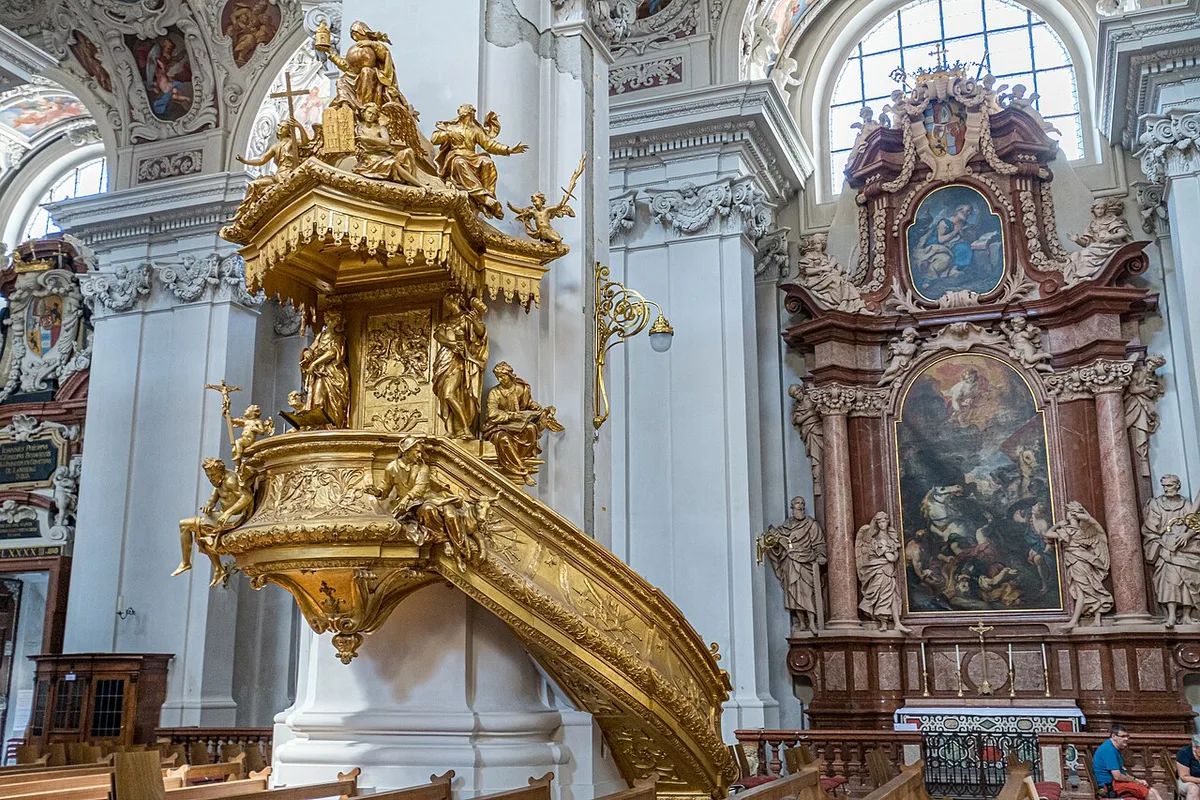
Note also that the cathedral organ has been undergoing restoration in sections, and one regional information page states that it cannot be heard in its full range until roughly 2028, with some scaffolding in the church. That does not remove the reason to attend a concert, but it is worth knowing before you build an evening around it. Verify the latest position through the diocese's music listings.
Finish at the three rivers confluence viewpoint at the tip of the old town, where the Danube, Inn and Ilz meet, and where the different water colours are visible on a clear day. It is a free, open-air ending that costs nothing and needs no ticket. The Passau three rivers confluence viewpoint guide covers the approach and what you are actually looking at.
Common Mistakes to Avoid
The most common error is treating the Glass Museum as a five-minute photo stop between the cathedral and the river. The collection spans three centuries and four production regions, and even a brisk visit needs more than a glance through the doorway. Decide your duration before you enter, or you will leave with only an impression of glass cases.
The second is assuming that one admission covers the other Passau museums, which have separate operators and separate tickets. The third is arriving without a plan for group traffic: river-cruise excursions can fill the old town at predictable times, and museum rooms feel very different when a large party is inside. Check the operator's current schedule and ticket details before you commit, and build in flexibility around the cruise waves.
Plan Your Visit
The Glasmuseum Passau is a genuinely specialised collection with a strong Art Nouveau core, and it rewards visitors who arrive knowing what they want to see and how long they have. Confirm current admission, opening windows and any seasonal closure directly with the operator before travelling, since published figures are date-stamped and can change. Then shape the rest of your day around Rathausplatz, the cathedral and the rivers.
If glass is not your subject, the fortress and the city's Roman and modern art collections offer a different kind of Passau day at their own prices. Either way, treat the museum as one considered stop inside the old town rather than a detour from it. That approach is what makes the visit worthwhile.
Frequently Asked Questions
Is the Passau Glass Museum worth visiting?
It is worth visiting if you care about glass, decorative arts or Art Nouveau, because the collection spans roughly 1650 to 1950 across Bavarian, Bohemian, Austrian and Silesian production and is unusually deep for a city of this size. Visitors whose interests lie mainly in castles, churches and city history may get more from the Oberhausmuseum with its fortress setting and views. Decide on your own interests rather than on a ranking.
How long should you spend at the Glasmuseum Passau?
As an editorial suggestion rather than an official figure, allow about sixty to ninety minutes for a proper look at the 19th-century and Art Nouveau rooms, and longer if you use the audioguide throughout. A focused port-day visit of thirty to forty-five minutes is enough to see the highlights. Specialists studying cases and documentation should budget closer to a half day.
Does one ticket cover the Glass Museum and other Passau museums?
Do not assume so. The Glass Museum and sites such as the Oberhausmuseum, the Wörlen museum, the Roman Museum and Museum am Dom are separately operated, and each publishes its own admission. Sightseeing cards sold through the city tourism office may include certain museums, but inclusion varies, so check the current terms of any card on the tourism site before you buy it.
What kind of glass is in the Passau Glass Museum?
The collection covers Central European glassmaking from about 1650 to 1950, drawn from Bavaria, Bohemia, Austria and Silesia. Passau Tourism describes the emphasis as the 19th century and the Art Nouveau period, with pieces originally shown at world exhibitions and made for European royal households. Enthusiast sources also single out the Loetz and Jugendstil holdings.
Are audioguides available in English at the Glasmuseum Passau?
Yes. Passau Tourism lists audioguides in German, English and Chinese, which makes the museum workable for visitors who do not read German labels. Pick one up at the start so the object references make sense from the first room. If you prefer reading, plan for a little extra time, as wall texts may not be bilingual throughout.
Is the Glass Museum close to St. Stephen's Cathedral and Rathausplatz?
Yes. The museum sits at Schrottgasse 2 on the corner of Rathausplatz, right inside the old town, and the cathedral is a short uphill walk from there at the highest point of the Altstadt. That makes it straightforward to combine the museum, the town hall square and the cathedral in one walking loop. The Inn promenade towards the confluence is also an easy continuation.


