Cologne is a city of two halves, and the Rhine is the line between them. The west bank holds the cathedral, the medieval Altstadt and the dense inner districts, while Deutz sits across the water with the skyline view back towards the spires. A weekend itinerary guide describes Cologne as a city of two halves split by the Rhine but still compact enough to conquer at a leisurely pace in two days, which is a planning benchmark rather than an official figure. As a workable editorial suggestion, one day is enough to see the old town and one adjacent district at an easy pace, while two days lets you add an east-bank afternoon, and a reference map of Cologne confirms the west-bank clustering of the historic core opposite the east-bank position of Deutz.
The practical split is simple: atmosphere and price feel move together, and so does noise. Altstadt puts you inside the postcard but also inside its crowds and higher prices, while the Belgian Quarter, Ehrenfeld and Nippes trade some convenience for calmer streets and a more local rhythm. Deutz offers a different bargain again: riverside space and a fast crossing to the centre rather than old-town charm.
How the Rhine Shapes Your Cologne Base
Think of Cologne as a compact west-bank core with the river as its eastern edge. The Altstadt and the main rail hub sit on that side, so hotels there put the cathedral, the shopping streets and the Rhine promenade within a short walk. That convenience is exactly what makes the area busier and, in general, more expensive for food and drink. An independent backpacker-focused city guide notes that the old town is packed with sights including the cathedral, walkable, but with higher prices especially for food and drinks and noisy nights. A reference map of Cologne confirms the west-bank concentration of the historic core and the east-bank position of Deutz, listing Altstadt and Innenstadt on the western side and Deutz on the opposite bank, alongside neighbourhoods such as Nippes and Ehrenfeld. A first-timer's guide adds that the cathedral itself is free to enter, which softens the cost picture for the single biggest sight.
Crossing to the east bank puts you in Deutz, which reads as a quieter counterpart rather than a second city centre. From there the classic view is back towards the cathedral and the old town, framed by the river. If your priority is photographing the skyline rather than sleeping inside it, that geometry alone can settle the question.
Use the Rhine as your mental divider when you plan walking routes. Almost everything a short-break visitor wants on the west bank clusters within a walkable band, while Deutz is a deliberate crossing rather than a stroll. One independent weekend guide describes Cologne as a city of two halves split by the Rhine but still compact enough to conquer at a leisurely pace in two days, which matches where the sights actually sit. That single distinction explains most of the trade-offs below. For wider planning, see Cologne landmark visitor guides.
Altstadt: The Medieval Core and Its Trade-Offs
Altstadt is the historic heart, where medieval lanes, the Alter Markt and the Rhine promenade sit shoulder to shoulder with the cathedral. It is the most walkable option for a first visit because so much of what you came to see is already outside your door. A backpacker-focused city guide notes that the old town is charming but tourist-priced, with higher costs especially for food and drinks, and that it can get noisy at night. A separate first-timer's guide adds that the Old Town can comfortably be covered on foot in a single day when time is short.
Atmosphere here is loud and social in the evenings, which suits some travellers and exhausts others. If you want quiet nights, plan to sleep a few streets back or in another district entirely. The old town rewards early mornings, when the squares are calm and the cathedral facade catches the light before the crowds arrive.
One genuine draw is the density of Romanesque churches within the old core. Gross St. Martin, the former Benedictine church whose crossing tower became a fixture of the city skyline, stands right in the Altstadt beside the river. Its long history, from a Benedictine abbey founded in the 10th century through wartime destruction to post-war reconstruction, gives the district a depth that the beer halls alone do not. The church's origins are tied to the Benedictine abbey that grew around it, according to a detailed church history. Excavations beneath it between 1965 and 1979 revealed continuous occupation of the site from the first century onwards. The church is typically free to enter, but check current arrangements before you go.
There are twelve Romanesque churches in Cologne, built roughly between 1150 and 1250. One independent city guide states that all are free to enter, and that is a genuine advantage of basing yourself in the old core. Note the distinction: the riverbank and the squares are free to wander, while individual interiors, observation decks and museums are separate paid visits. Treat each ticketed attraction as its own decision rather than assuming one ticket covers a cluster. The city's surviving medieval gates and many public squares, for example, cost nothing.
Belgian Quarter: Cafes, Boutiques and a Local Evening
The Belgian Quarter, the Belgisches Viertel, is the district most often recommended as a place to sleep rather than merely visit. It is known for independent shops, cafes and a bar scene that draws locals rather than tour groups, and it sits close enough to the centre that you can walk or hop on public transport. A first-timer's guide describes it as one of the cooler neighbourhoods, with cafes, boutiques and pretty streets to discover, and recommends it as a base. For travellers who want their evenings to feel less staged, this is the strongest single argument.
Price feel here is generally more moderate than in Altstadt without dropping to the cheapest end of the city. You are paying for character and convenience rather than for a view of the cathedral. Expect small, design-led hotels and apartments rather than large conference properties.
The district works well as a base for a weekend because it lets you split your days cleanly. Walk into the old town in the morning, then return in the evening to eat somewhere that is not competing for the same crowd. Shopping is easy from here too: one independent weekend guide notes that Schildergrasse carries mainstream high-street names, Ehrenstrasse is lined with boutiques and Mittelstrasse hosts luxury brands. For wider planning, see a 2-day Cologne itinerary.
If your trip is built around beer culture rather than shopping, the Belgian Quarter pairs neatly with the city's brewery tradition. Kölsch is the local beer served across traditional houses, and Cologne's brewery culture is part of the experience rather than a footnote. It is worth reading up on the local breweries before you go so you can pick a route rather than wander at random.
Ehrenfeld: Creative, Off-Path and Cheaper
Ehrenfeld sits a little outside the tourist circuit and is best known as a creative quarter with street art, quirky shops and a grassroots cultural scene. Prices for accommodation and everyday food tend to be lower than in the central districts, which makes it a serious option for budget-conscious travellers. A backpacker-focused guide describes it as a creative hub off the tourist path with street art and quirky shops where prices are lower, and it notes that public transport is handy for reaching the city centre and that the area suits longer stays.
This is the district to choose if you would rather see how the city lives than see it perform. Evenings here feel like neighbourhood evenings, not visitor evenings, and the food and drink scene reflects that. Street art tours of Ehrenfeld are a way to see the creative side with local context. If you have the time, the district repays a slow half-day rather than a rushed hour.
The catch is orientation. First-time visitors often underestimate how much time they will spend moving between Ehrenfeld and the sights near the cathedral. If your trip is only one or two nights, weigh that friction honestly against the savings.
Deutz: The East Bank and the View Back
Deutz is the district directly across the river from the old town, and its main draw for visitors is the skyline view back towards the cathedral. The KölnTriangle observation deck puts that panorama high above the river; a weekend itinerary guide describes it as an observation deck 29 storeys up a high-rise on the opposite bank. The trade-off is that Deutz is more commercial and residential than charming.
Because the deck sits on the same side as the district rather than in the old town, it belongs in a Deutz afternoon rather than an Altstadt morning. The classic route crosses the river on foot and pairs the view with a walk along the water. Bear in mind that the deck is a paid attraction with its own visitor arrangements, so check the current terms directly rather than relying on older descriptions.
Deutz also gives you an easy green escape: the Rhine park on the east bank is a broad riverside space with lawns and paths, and it links naturally with a walk back towards the bridges. If you are travelling with children or simply want a slower afternoon, this is a better use of the district than another museum. For wider planning, see Rheinpark Cologne.
The main practical advantage is connectivity. Deutz is a short hop from the central station, and the trade fair grounds sit nearby, which makes it the obvious base if your trip revolves around an event. Otherwise, treat it as a half-day excursion with a view rather than a place to sleep.
Nippes and Residential Cologne
Nippes is the quiet option: a residential district with a relaxed atmosphere and a reasonable price feel rather than a sightseeing hub. A backpacker-focused guide calls it a residential neighbourhood with a relaxed atmosphere, quieter than the centre and well suited to longer stays, families or travellers wanting a local experience, with reasonable prices and good public transport, and it appears among the city's listed neighbourhoods on a reference map of Cologne. It suits longer stays where you want a kitchen, a supermarket and a calm street to come back to, but it is not a base for someone who wants to step out of the door into the postcard.
If you are staying a week or more, the maths shifts in favour of districts like this. You trade a shorter walk to the cathedral for a lower nightly cost and a more ordinary daily rhythm. That is a reasonable trade if the city is a base for exploring the wider region rather than the whole point of the trip.
Botanical gardens and the city's parkland sit within reach of this northern side, which matters if greenery is on your list. Cologne's parks and green spaces are covered in more detail elsewhere. A first-timer's guide notes that the Flora and Botanical Garden is free to enter and holds more than 10,000 plant species across themed areas and glasshouses. Checking current seasonal opening arrangements before you go is sensible, since garden access can vary through the year. The historic Flora building was recently renovated and now serves as an elegant event centre, according to a botanical garden guide. You can also compare the city's public green spaces through the Cologne parks and green spaces overview.
Roman Layers and Surviving City Gates
Cologne's Roman past is not confined to a single museum. The city was a Roman administrative centre, and traces of that grid survive across the modern districts. Beneath Gross St. Martin, excavations carried out between 1965 and 1979 revealed continuous occupation of the site since the first century CE, a detailed church history notes. Reading the city this way turns a walk between districts into a walk through layers.
Three medieval city gates still stand in Cologne: the Hahnentor, Severinstorburg and Eigelstein-Torburg. A first-timer's guide lists exactly those three as the surviving gates, with the original Roman wall and a larger medieval wall preceding them. They are free to look at as you pass, and they make useful orientation markers when you are walking between the old town and the more residential quarters. Because gates and public squares cost nothing, they are a sensible way to fill an hour without committing to a ticket.
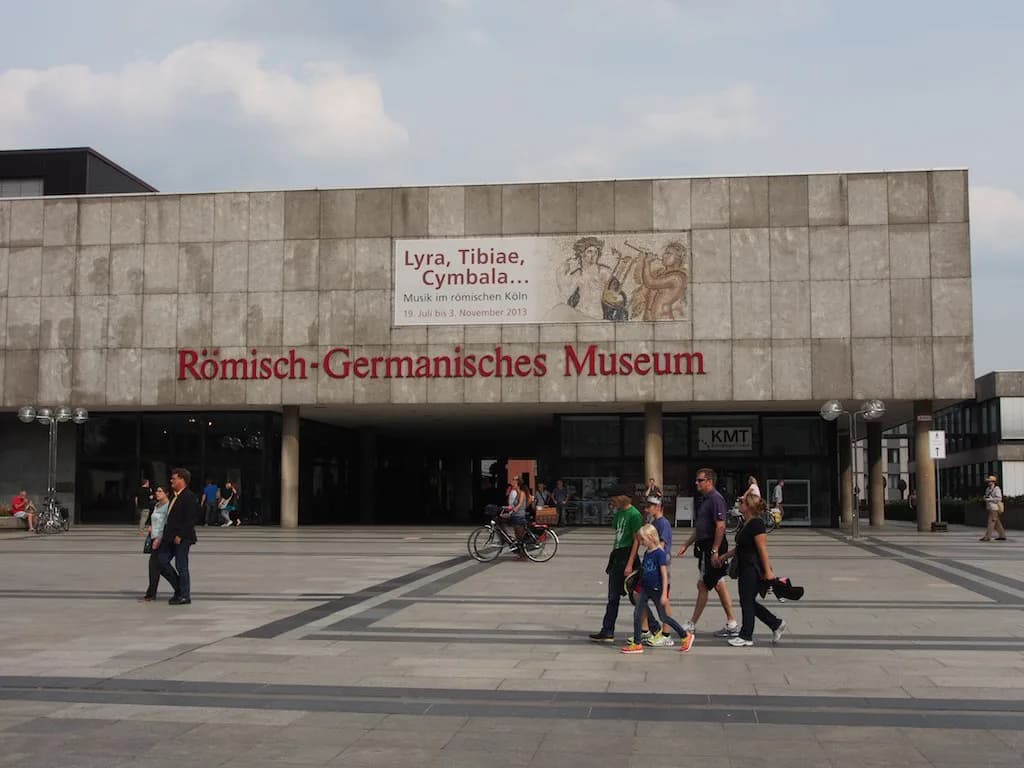
One major archaeological collection is the exception worth planning around. The Romano-Germanic Museum building, which opened in 1974, is in a poor state of repair and is undergoing a complete refurbishment, according to the architects' project page, which gives no reopening date. Confirm the current status and any temporary displays before you build a day around it.
Museum coverage differs sharply between districts, and a single ticket rarely covers everything you might want to see. If you plan to visit several collections in a short window, compare the options before buying individual admissions so you do not pay twice. The Cologne museum pass overview is a useful place to start.
Choosing a Base: Atmosphere, Walkability, Price Feel
Sort the districts by what you actually value. Altstadt wins on walkability and loses on price feel and night-time noise. The Belgian Quarter balances character, access and cost better than anywhere else for most short breaks, and one guide's advice to stay there reflects that. Ehrenfeld is the value play with longer trips to the sights, and Deutz is the special case for views, events and riverside space.
First visit, two or three nights: choose the Belgian Quarter and walk into the old town. Budget trip, four nights or more: Ehrenfeld or Nippes gives you more space per euro. Event-driven trip: Deutz removes the daily crossing. These are suggestions, not rules, and any of the four works if you accept the accompanying compromise.
One recurring trap is assuming the cheapest-looking district is always cheapest in practice. Transport costs and time spent crossing the city can eat the difference, especially on a short trip where every hour counts. Decide which of the two you have more of before you book. The city's transport guide is the place to check how the districts connect before you commit to a base.
For day-by-day planning, compare the districts against a fixed itinerary rather than the other way round. A two-day structure that keeps one day west of the Rhine and one day east will feel calmer than one that zigzags. That structure is worth sketching before you choose a hotel. If you want to push further out, day trips from Cologne are easy to fold into a longer stay.
Suggested One-Day and Two-Day District Routes
With one day, keep everything on the west bank. Start at the cathedral and the Romanesque churches around the old core, drift through the Alter Markt and the Rhine promenade, then finish in the Belgian Quarter for dinner. One independent city guide suggests the old town's main attractions can be walked in a single day if you are short on time. That route gives you the historic layer and the local layer without a single unnecessary crossing.
With two days, give the second day to the east bank. Cross on foot to Deutz, take in the skyline from the observation deck and the riverside park, then return west for an evening in a brewery or a quiet dinner. This keeps the two days distinct instead of repeating the same walk twice.
If you have a third day, use it for Ehrenfeld or Nippes and accept that you will travel to get there. These are the districts where the trip stops feeling like sightseeing and starts feeling like a city. Build in a slow morning rather than another checklist.
Walking is realistic within the old town and the Belgian Quarter, but not between the west-bank core and Deutz at the end of a long day, when public transport is the sensible choice. Cologne is flat and compact, which makes this kind of mixed approach easy. A first-timer's guide notes that most of the main sights are within walking distance of each other, though you will likely use public transport too.
Plan Your Cologne District Visit
Cologne rewards a decision made in advance rather than one made at the station. Pick a district for the kind of evening you want, then let the sights arrange themselves around it. Altstadt for the postcard, the Belgian Quarter for balance, Ehrenfeld for value, Deutz for the view back across the water.
Verify anything that changes before you travel. Observation decks, museum openings and seasonal garden access are the details most likely to shift, and the organiser's own page is the only reliable place to confirm them. Keep your plans flexible around those, and the districts themselves will not disappoint.
Frequently Asked Questions
Where should I stay in Cologne for a first visit?
For most first trips, the Belgian Quarter is the best compromise: it is close enough to walk or ride into the old town, but its cafes, shops and bars are aimed at locals rather than tour groups. Altstadt puts you inside the historic core with the cathedral on your doorstep, but it is the busiest and most expensive-feeling option and can be noisy at night. If your priority is a view of the skyline rather than proximity to the sights, Deutz across the river is the alternative. Decide first whether you want convenience, character or quiet, then match the district to that.
What is Ehrenfeld known for in Cologne?
Ehrenfeld is known as a creative, slightly off-path district with street art, independent shops and a grassroots cultural scene. It sits outside the main tourist circuit, and accommodation and everyday food tend to cost less than in the central areas, which makes it attractive for longer stays and budget travellers. The trade-off is distance: you will rely on public transport or accept longer walks to reach the cathedral and the old town. It is a good choice if you would rather spend your evenings in a normal neighbourhood than in a visitor-facing one.
Is Deutz worth visiting in Cologne?
Yes, primarily for the view. Deutz sits on the east bank directly across from the old town, and the KölnTriangle observation deck gives you the classic panorama back towards the cathedral and the river. The district also has riverside parkland, which makes a pleasant counterpart to the busier west bank. It is more commercial and residential than charming, so treat it as a half-day or an event base rather than a place to stay for atmosphere. Check the observation deck's current visitor arrangements directly, since paid attractions can change their terms.
Is Cologne's Old Town expensive?
The Altstadt has the highest price feel in the city because it is where most visitors concentrate. Food and drink in the squares and along the river are generally pricier than in districts like the Belgian Quarter, Ehrenfeld or Nippes. That said, the public spaces cost nothing: the Rhine promenade, squares such as Alter Markt and the surviving medieval city gates are free to walk through. An independent city guide states that the Romanesque churches, including Gross St. Martin, are free to enter. Budget by assuming higher prices for anything consumed in the old core, and plan your meals elsewhere if cost matters.
How walkable are Cologne's neighborhoods?
The west-bank core is very walkable. The cathedral, the old town squares and the Rhine promenade sit close together, and the Belgian Quarter is a reasonable walk from the centre as well. Deutz is a deliberate river crossing rather than a stroll, so most people walk over the bridge once and use public transport for the return. Ehrenfeld and Nippes are further out and better reached by public transport. The city is flat and compact, so mixing walking with short transport hops usually works best.
What is Nippes like in Cologne?
Nippes is a residential district with a calm, everyday atmosphere rather than a sightseeing one. Prices tend to be reasonable and it is well connected by public transport, which suits families and longer stays where you want space and a quieter street to return to. It is not the right base if you want to step outside into the historic centre. Think of it as the option for a week-long stay or for travellers using Cologne as a hub for the wider region.