Rheinpark is the kind of place that rewards a slow visit rather than a hurried circuit. The park stretches across roughly 40 hectares on the right bank of the Rhine between the Deutz and Mülheim districts, and the grounds are free to enter. That combination of size, free access and river frontage makes it one of Cologne's most useful green spaces for an unstructured afternoon.
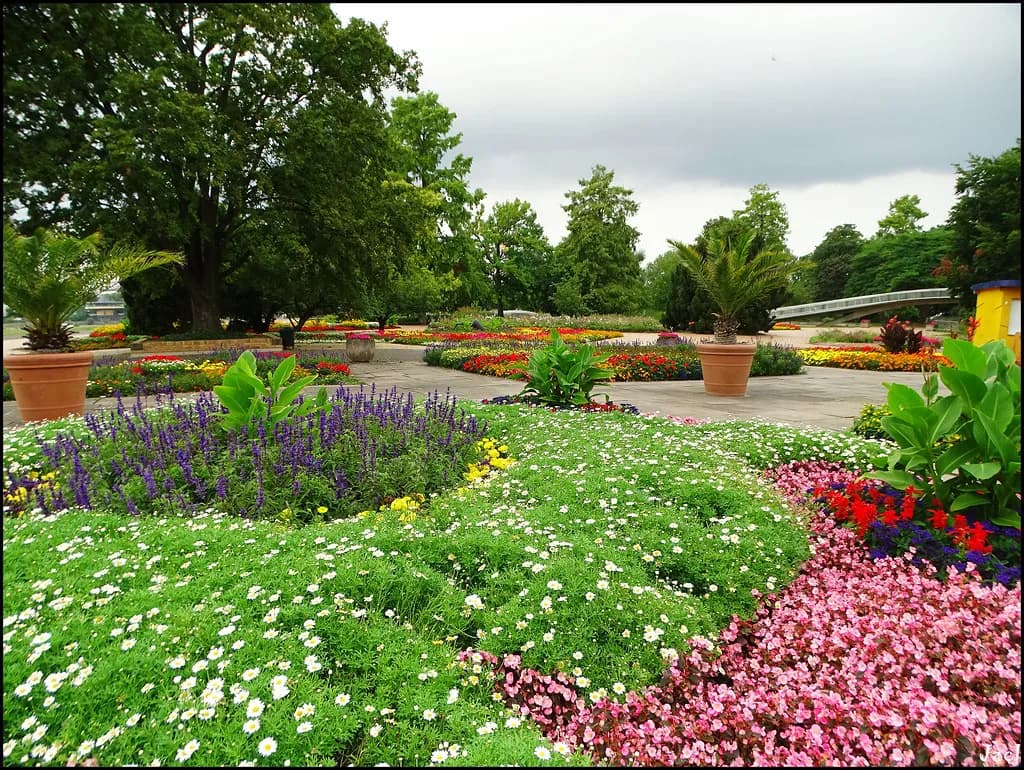
The park took its present shape for the first Federal Garden Show in 1957, with a second garden show following in 1971, and the layout has been a protected monument since 1989. That design history explains why the space feels open and structured rather than incidental: broad lawns, flower beds and water features alternate with shady groups of trees. Walkers who expect a wild riverside meadow will find something more deliberately composed.
As a suggested duration, allow around two hours for a comfortable loop through the main lawns and water features, and closer to half a day if you add the cable car crossing, a picnic or a stop at the Tanzbrunnen. Those timings are a planning suggestion, not an official recommendation. If you want to see how Rheinpark fits alongside the city's other green spaces, the Cologne parks and green spaces overview puts it in context.
Why Rheinpark Suits a Slow Afternoon
The simplest reason to choose Rheinpark over a smaller city square is space. Roughly 40 hectares on the right bank means you can walk for a while without feeling funnelled along a single path, and the Rhine edge gives the walk a natural direction. On a mild day, the wide lawns invite you to sit down rather than keep moving.
The park is described as one of Cologne's most popular recreation grounds, which is worth reading as a practical warning as well as a recommendation. Popular local parks fill up on sunny weekends and public holidays, so a weekday morning or an early afternoon start usually means more room on the grass. If your priority is quiet, arriving early is the single most effective decision you can make.
Because entry is free, there is no ticketed reason to rush through the park to get your money's worth. You can treat it as a base for the afternoon and leave whenever the weather or your energy changes. That flexibility is exactly what makes it a good fit for families, couples and solo walkers with different tolerances for walking.
Where Rheinpark Sits Between Deutz and Mülheim
Orientation matters more here than in a compact city park, because Rheinpark runs along the river rather than around a single centre. It sits on the right bank of the Rhine between the Deutz and Mülheim districts, in the Innenstadt city district. Knowing which end you enter from changes how much of the park you realistically cover.
The park's address is given as Auenweg, 50679 Köln, and it is described as a short walk from Köln Messe/Deutz station. That makes the Deutz side the natural entry point if you are arriving by train or from the city centre. Treat the station as your landmark rather than trying to memorise street names.
Public transport specifics change, so check the current route with the local transport operator or a live journey planner on the day rather than relying on a fixed line number. If you are building a wider Cologne itinerary, the Cologne: Itineraries and City Travel Guides hub is a sensible place to sort out how the right bank fits with everything else.
What You Actually Find Inside
The park's composition is fairly easy to summarise: broad lawns, flower beds and water features alternate with shady groups of trees. That mix means you get open sky for sitting and tree cover for walking when the sun is strong. It also means the park reads differently in each season, from spring bedding to autumn colour.
Among the listed facilities are a playground and water, which makes the park workable for families with young children who need a break from walking. Beyond these confirmed elements, the exact position of individual lawns and play areas is not something the park publishes in detail, so plan to explore rather than navigate to a specific spot.
The park is also noted for detailed design, garden-like paths and a number of works of art scattered through it, which rewards wandering over route-following. If you like garden architecture, the layout itself is part of the attraction rather than just a setting for it.
The 1957 Garden-Show Design and Why It Feels Different
Rheinpark's current form was created for the first Federal Garden Show in Cologne in 1957, with a second show following in 1971. Garden-show design of that era favoured sweeping lawns, structured planting and clear sightlines, which is why the park feels more composed than a typical riverside strip. The result is a landscape that looks deliberately arranged rather than left to grow.
The park has been a protected monument since 1989, a status that constrains how it can be altered. Practically, that means major redevelopment is unlikely, though it says nothing about day-to-day maintenance or temporary installations. Long-term conservation and everyday upkeep are separate questions, so judge conditions on the ground when you arrive.
The park is presented as a well-preserved example of postwar German garden architecture, showing the garden style of the 1950s through its paths and planting. If you have walked other European city parks laid out in the nineteenth century, the contrast in openness and geometry is the main thing to notice. It is a twentieth-century designed landscape, not a remnant of older park tradition.
Free Grounds Versus Paid Extras
This is the budgeting distinction that trips people up. The park grounds themselves are free to enter, but the cable car, the small park railway and events at the Tanzbrunnen stage are separate operations with their own arrangements. Do not assume one ticket covers everything, and do not set aside a single admission budget for the whole visit.
Fares and any charges for the cable car or park railway are not published in the sources used here, so treat them as unconfirmed and check the operator's current information before you travel. Prices for seasonal attractions change, and a figure quoted in an older guide may no longer apply. Confirm on the day or on the operator's page rather than relying on a remembered number.
The Tanzbrunnen open-air stage is listed among the park's best-known features, but its programme is event-based rather than a permanent attraction. Check what is scheduled during your dates if a concert or open-air event would improve or disrupt your visit. A stage day can change the atmosphere of the surrounding lawns considerably.
Crossing the Rhine by Cable Car
Rheinpark's cable car is described as the first aerial cableway in Europe to cross a river, and it links the park across the Rhine to the zoo side. That makes it more than a ride: it is a functional crossing that changes which part of the city you end up in. If you use it one way, plan how you will return.
For itinerary purposes, the cable car effectively connects a free park afternoon with the paid attractions on the opposite bank, including Cologne Zoo. The Cologne Cable Car page explains the crossing in more detail if you want to build it into a route. Treat the ride as a transfer decision rather than an add-on, because it determines where your afternoon ends.
Operating seasons and daily running times for river-crossing cable cars are weather-dependent and can change, so confirm the current status before planning your day around it. The park page does not publish those details. Have a walking or public transport alternative ready in case the cable car is not running when you visit.
Pairing Rheinpark With Nearby Cologne Sights
The most natural pairing is Cologne Zoo, which sits on the opposite bank and is reachable via the cable car crossing. Zoo admission, opening times and seasonal hours are published by the zoo itself, and prices are not repeated here because they change. Check the zoo's current information before deciding whether to combine the two.
If you stay on the right bank, Deutz and the Messe area are close by, and the left bank with the cathedral is a short crossing away. The Cologne Cathedral visitor guide is useful if you want to end the day on the historic side. Keep the two halves of the day separate so you are not crossing the river twice out of indecision.
For travellers watching costs, the free things to do in Cologne roundup is a useful companion because it groups zero-cost options together. Rheinpark belongs in that category for its grounds, even though individual extras inside and around it are not free. Building a day from free anchor points and one paid add-on keeps the budget predictable.
Three Ways to Structure the Visit
The short loop is the simplest version: enter from the Deutz side, walk the main lawns and water features, and leave the same way. This works well if you have an hour or two between other plans and want the park without committing to a full afternoon. It also avoids depending on the cable car being in service.
The half-day version adds the cable car crossing and a look at the zoo side, ending either there or back in the park. This suits visitors who want the river crossing as a highlight and are willing to check the cable car's status in advance. Budget extra time at peak periods rather than assuming a quick turnaround.
The picnic-led version treats the park as the destination: bring food, claim a spot on the grass, and let the afternoon run long. Because the grounds are free and open, there is no ticket pressure to move on. This is the version that best matches what the park is actually good at.
Practical Checks Before You Go
Weather drives everything here, since the appeal is outdoor space with limited shelter. Check the forecast for the day and dress for wind off the river, which can make a mild day feel cooler than expected. If rain is likely, move the park earlier in your trip and keep a museum as a backup.
Seasonal conditions affect what you will see: garden-show planting, water features and tree cover all read differently across the year. The park's own page does not publish opening hours or seasonal closure dates, so do not assume the grounds are always accessible. Check the current city or park information if you are visiting outside the main season.
For the cable car and park railway, confirm running status separately from the park itself, since they are distinct operations with their own schedules. A working park does not guarantee a working cable car. Build in a fallback route across the river so a cancelled service does not derail the day.
Mistakes to Avoid
The most common error is treating Rheinpark as a ticketed attraction with a fixed circuit and a set of must-see stops. It is a large free park, and the best visits are the ones that accept that. Arriving with a rigid checklist usually means walking past the parts you would actually enjoy.
A second mistake is budgeting for a single admission that covers the park, the cable car and the park railway together. These are separate, and the park itself is the free element. Plan your spending around the specific extras you actually intend to use.
A third is assuming the 2007 award naming Rheinpark Germany's most beautiful park reflects current conditions or rankings. It is a historical distinction from that year, not a live verdict. Use it as context for why the park is well regarded, not as a promise about your visit.
Plan Your Visit
Rheinpark works best as a low-commitment afternoon: free grounds, a river edge and enough space to change plans without losing anything. Decide in advance whether the cable car crossing is part of your day, because that single choice determines where you start and finish. Everything else can be decided on the grass.
Before you go, confirm the current status of the cable car and any park railway service directly with the operator, and check the weather for the day you plan to visit. Neither fares nor running schedules are stable enough to rely on from a secondary source. A five-minute check prevents a wasted crossing.
Frequently Asked Questions
Is Rheinpark free to enter?
Yes. The park grounds are free to enter, and the roughly 40-hectare site is open as a public recreation ground on Cologne's right bank between Deutz and Mülheim. The paid elements are separate: the cable car, the small park railway and events at the Tanzbrunnen stage are their own operations. Do not assume one ticket covers the park and these extras together.
How long should I spend in Rheinpark?
As a suggested duration rather than an official recommendation, around two hours covers a comfortable loop of the main lawns and water features. Allow closer to half a day if you add a picnic, a cable car crossing or time at the Tanzbrunnen. The park is large enough that a short visit and a long one feel quite different.
Does the Cologne cable car run through Rheinpark?
The cable car is based at the park and crosses the Rhine to the zoo side, so it functions as a river crossing rather than a loop inside the park. Running seasons and daily times are weather-dependent and not published on the park page, so confirm the current status with the operator before planning your day around it. Keep a walking or public transport alternative in mind.
Which side of the Rhine is Rheinpark on?
Rheinpark is on the right bank of the Rhine, between the Deutz and Mülheim districts, within Cologne's Innenstadt city district. Its address is given as Auenweg, 50679 Köln, and it is described as a short walk from Köln Messe/Deutz station. That makes the Deutz side the most convenient entry point for most visitors arriving by public transport.
Can I combine Rheinpark with Cologne Zoo?
Yes, and the cable car is the natural link because it connects the park with the zoo side of the river. Zoo admission, opening times and seasonal hours are set by the zoo and change over time, so check the zoo's own current information rather than relying on a secondary listing. Treat the combination as a half-day plan at minimum.
What is there to do in Rheinpark besides walking?
The park lists a playground and water among its facilities, and its best-known features include the cable car, the Tanzbrunnen open-air stage and a small park railway. Lawns, flower beds and tree groups give you places to sit rather than only paths to follow. The stage programme is event-based, so check what is scheduled for your dates.