Cologne packs a UNESCO-listed cathedral, more than thirty museums, a walkable Old Town and a riverfront promenade into a compact centre, which is why two days works better here than in most German cities of comparable size. One concrete detail to know before you plan: the cathedral interior can be entered without an admission fee, while the cathedral treasury sits behind a separate ticket, so you cannot assume one ticket covers both. This itinerary is a suggestion rather than an official schedule, and its order shifts depending on whether you land at midday or leave early on day three.
Before You Start: Arrival Time and the City's Compact Geography
The single biggest variable in a two-day Cologne plan is when you actually arrive. A morning arrival gives you a full cathedral morning and a museum afternoon; an afternoon arrival means you should treat day one as a warm-up and protect the cathedral for day two. Trains from Köln-Bonn Airport run into the centre, and the main station sits directly beside the cathedral, so the city's headline sight is often your first view within minutes of stepping off the platform.
Geographically, the cathedral, the Old Town lanes and the Rhine promenade cluster tightly enough to cover on foot, which removes most transport decisions from your two days. Museum Ludwig sits directly behind the cathedral, and the Chocolate Museum sits south along the river, so both are reachable without planning a route. Save public transport for the green escape west of the centre or for reaching your accommodation with luggage.
Day 1 Morning: Cologne Cathedral and the Treasury Decision
Start at the cathedral before the crowds build, first walking the exterior to take in the blackened Gothic facade and the twin spires that dominate the skyline. Construction began in the thirteenth century and finished only in the late nineteenth, and the interior survived the Second World War bombing that levelled much of the surrounding city. Photography is permitted inside, which is unusual for a major religious site and worth knowing before you leave your camera behind.
The real decision here is whether to add the cathedral treasury, which occupies its own space below the cathedral and requires a separate entrance ticket rather than being included with the free interior. It displays precious reliquaries, vestments and illuminated manuscripts, so it rewards travellers with an interest in medieval religious objects. Anyone on a tight schedule or a tight budget can skip it without losing the cathedral itself.
Treat tower climbing as unverified. One account of the cathedral notes the spire height but admits no climbing entrance or information was found on site, so check current conditions with the cathedral before promising anyone a view from the top.
Day 1 Midday: Museum Ludwig and the One-Museum Strategy
Museum Ludwig sits just behind the cathedral and is dedicated to modern art, holding one of the strongest Pop Art collections outside the United States along with a deep Picasso holding. That combination makes it the natural companion to a cathedral morning, since you can walk from nave to gallery in a few minutes. If you want a wider view of what the city's collections contain, compare options in this guide to the best museums in Cologne worth visiting before committing your afternoon.
The trade-off is depth against breadth. One substantial museum visit will fill the rest of your afternoon once you account for entry, bag checks and the walk between galleries, while three hurried stops leave you remembering signage rather than paintings. Protect the cathedral and one museum as your fixed points and let everything else flex around them.
Check current opening days and admission directly with the museum before you travel, since both change through the year and the museum's own pages carry the reliable figures. Budget for one paid museum rather than several, and put the difference toward a brauhaus dinner instead. If you only have one full day available, the narrower plan in this one day in Cologne itinerary covers the same ground faster.
Day 1 Afternoon: Hohenzollern Bridge, the Rhine and the Old Town Lanes
Walk from the cathedral to the Hohenzollern Bridge, the rail crossing where thousands of love locks line the fence and the classic view back toward the cathedral opens up across the water. One traveller suggests skipping the supposed tradition of throwing the key into the Rhine after attaching a lock, which is a reasonable courtesy given how much metal already hangs there. From the bridge, follow the Rhine promenade north or south depending on where you want to end up.
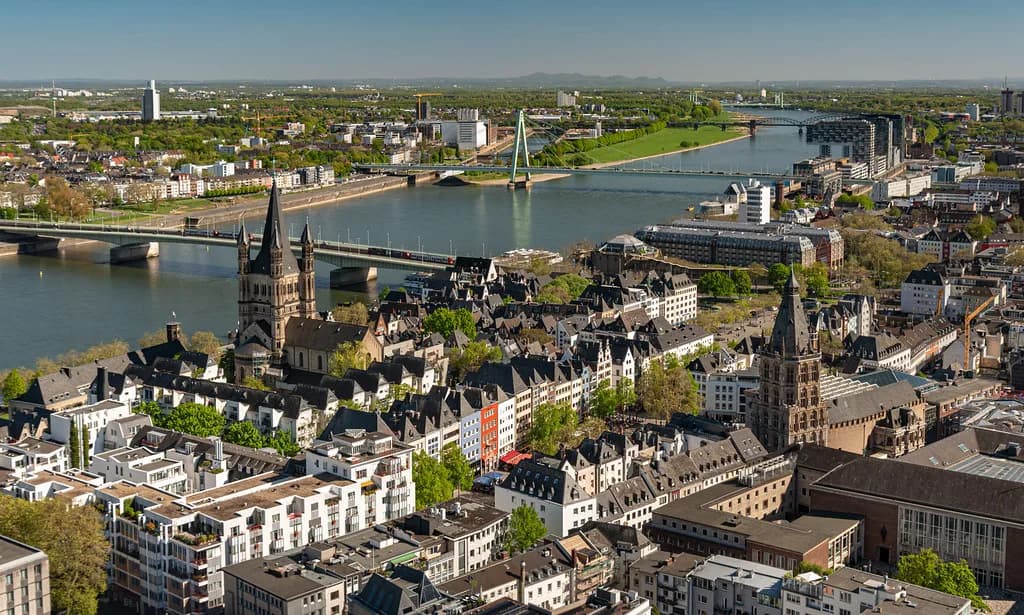
Then turn into the Old Town and its lanes around Great St Martin, the Romanesque church whose tower dwarfs the surrounding buildings. Cologne's centre was almost entirely destroyed in the war, and reconstruction from the late 1940s concentrated on restoring the Romanesque churches and the riverside facades, so the quarter reads as a careful rebuild rather than an untouched medieval core. The narrow alleys between the river and the shopping streets reward slow wandering more than ticking off addresses.
Plan this stretch for late afternoon so the light softens over the river and you finish near dinner. If you want more days to spread this out, a three days in Cologne itinerary absorbs the same landmarks with time for a Rhine excursion.
Day 1 Evening: Brauhaus Dinner and Kölsch Etiquette
End day one in a brauhaus, where the local beer arrives in small glasses and the serving ritual is part of the experience. Servers keep bringing fresh Kölsch until you place your coaster on top of the glass, and the coaster doubles as the tally of how many you have had, so the signal matters more than any verbal request. Ordering an Altbier in Cologne is a deliberate provocation, since that is the Düsseldorf rival style.
Traditional dishes here are hearty: schnitzel, pork knuckle and potato salad all appear on brauhaus menus, and portions tend to be generous enough that a heavy lunch would be a mistake. Carry some cash even if you plan to pay by card, because smaller establishments and food stands may not accept cards. Check menus and opening days directly with whichever brauhaus you choose, since these change and nothing here should be treated as a fixed recommendation.
Day 2 Morning: Chocolate Museum or Wallraf-Richartz
Day two's first choice is a genuine fork rather than a checklist item. The Chocolate Museum sits on its own peninsula jutting into the Rhine south of the centre and covers cocoa cultivation, production machinery and a tropical greenhouse, making it the better pick for families or anyone who wants a lighter, more sensory morning. Wallraf-Richartz suits travellers who want paintings, with an extensive medieval collection of altarpieces rescued during the secularisation of German monasteries and later Baroque, Impressionist and Romantic works filling the upper floors.
Note that these are separate institutions with separate admissions, and neither shares a ticket with the cathedral treasury or with Museum Ludwig. Check each museum's own site for current hours and prices rather than relying on older trip reports. If you have already chosen Museum Ludwig for day one, choosing the Chocolate Museum here gives you two very different experiences instead of two galleries in a row.
Day 2 Midday: Schildergasse and the Old Market
Schildergasse is one of Germany's busiest shopping streets and runs from near the cathedral toward the Neumarkt area, with everything from fast fashion to a Lego store along the way. The critical practical point is that shops close on Sundays, so a Sunday visit means browsing windows rather than buying. If your two days fall on a weekend, put the shopping stretch on Saturday and shift the Old Town wandering to Sunday.
Pair the shopping street with the Old Market area, where the lanes between the Unter Goldschmied and the Rhine hide small courtyards and independent shops. Great St Martin and the historic city hall both date back more than eight centuries and can be entered without charge, though both close on Mondays, which is a useful scheduling constraint if your two days straddle the start of the week.
Day 2 Afternoon: A Green Escape or a Slow Riverside Stretch
For a change of register, the Stadtwald on the city's western side offers trails that feel far removed from the centre, with the Lindenthaler Tierpark animal park in the middle of the woodland. Reaching it requires public transport from the Old Market area, so treat it as a half-day commitment rather than a quick detour. Confirm the current route and service pattern in the local transport app before setting out, since line numbers and connections change.
The lower-effort alternative is to stay by the Rhine, walk the promenade at your own pace and let the afternoon drift toward dinner. That option also keeps you positioned for an early departure the next morning, since you never leave the compact centre. Rheinauhafen and the riverside paths south of the Old Town make the walk easy to extend or cut short as energy allows.
Day 2 Evening: Final Dinner and Positioning for Departure
If you leave early on day three, spend the final evening within walking distance of Köln Hbf so the morning is a short stroll rather than a transit puzzle. Staying near the Old Town costs more than lodging farther out, but the saving in time and stress is usually worth it on a two-day trip. If your hotel is across the river in Deutz, use the bridge or the S-Bahn to cross rather than adding a taxi into the plan.
For a final meal, either return to a brauhaus you liked or pick a quieter neighbourhood restaurant away from the main tourist lanes, where prices and crowds both tend to drop. Verify opening hours and whether reservations are needed directly with the restaurant, since popular places fill up and policies differ. Keep the last evening deliberately loose so a delayed dinner does not threaten your train.
Arrival and Departure Variations: What to Cut First
With a half-day arrival, skip the museum entirely and use the remaining hours for the cathedral, a Rhine walk and dinner. With a half-day departure, do the museum first thing in the morning when it opens and leave the Old Town lanes for a shorter loop before you head to the station. Both versions keep the cathedral, which is the one thing nobody should miss in Cologne.
If you have a third day, use it for a Rhine excursion rather than adding a fourth museum, since the region beyond the city offers a different kind of day. Readers comparing German city breaks can weigh the shape of this plan against a parallel 2 days in Berlin itinerary, where the distances are far longer and the same two days buys much less ground. A 2 days in Dresden itinerary works differently again, with an old town and a new town to split across the days.
Museum Tickets and Budget Logic
Build your budget around one paid museum, one optional paid interior and everything else free. The cathedral interior costs nothing to enter, the treasury sits behind its own ticket, and each museum sells its own admission, so there is no combined pass to lean on. Add a cash float for small purchases and stalls, because card acceptance is uneven outside larger establishments.
Check current prices on each operator's own page in the week before you travel rather than trusting older figures in trip reports. Prices, opening hours and temporary closures shift, and a museum that closed one gallery last year may have reopened it. If you plan around the free cathedral interior and treat every paid interior as optional, a price change will not derail your two days.
Common First-Visit Mistakes
The most common mistake is treating the cathedral and the treasury as a single admission, which leads to surprise at the entrance below. The second is trying to see three museums in two days; you will spend more time at ticket desks and cloakrooms than in galleries. The third is ignoring the Sunday shopping closure and planning a retail afternoon on the one day the shops shut.
Two smaller traps are worth noting. Kölsch service continues until you put your coaster down, so an inattentive table can accumulate a larger bill than expected, and ordering Altbier invites a reaction. And the love lock bridge is a viewpoint rather than an attraction that takes an hour, so do not build a morning around it.
Plan Your Visit
Two days in Cologne works because the headline sights sit within a short walk of each other: cathedral first, one museum properly, then the Old Town and the Rhine at a slower pace. Decide your arrival and departure times before anything else, protect the cathedral and one museum, and treat the rest as flexible. Check current hours, prices and any closures with each operator directly before you go, and your two days will hold together without a rigid schedule.
Frequently Asked Questions
Is two days enough for Cologne?
Two days covers the cathedral, one substantial museum, the Old Town lanes and a Rhine walk without rushing, which is the core of any first visit. It is not enough for the city's full museum landscape or a Rhine Valley excursion, so treat two days as a well-shaped introduction rather than a complete survey. If you can add a third day, spend it outside the centre rather than adding another gallery.
What should I see first in Cologne?
Start with the cathedral, ideally in the morning before the surrounding square fills up. The interior can be entered without an admission fee, while the treasury below requires its own separate ticket, so decide in advance whether to add it. Afterwards, Museum Ludwig sits directly behind the cathedral, which makes it the most efficient next stop.
Can I visit Cologne's museums on a Sunday?
The shopping street Schildergasse closes on Sundays, and some churches and civic buildings close on Mondays, so a weekend visit needs a little reshuffling. Major museums generally keep their own schedules, which vary by season and by temporary exhibition, so check each museum's own site for the days you plan to visit. Put shopping on Saturday and Old Town wandering on Sunday.
How much does a two-day Cologne itinerary cost?
Costs depend on how many paid interiors you add, since the cathedral interior is free, the treasury is separately ticketed and each museum sets its own admission. Rather than budgeting from older trip reports, check current prices on each operator's page shortly before you travel. A practical approach is to budget for one museum plus the optional treasury, and keep a small cash float for food stands and smaller venues.