Cologne suits a short visit because the parts most travellers care about sit within a compact stretch beside the Rhine: the cathedral, the old town squares, the embankment and the Hohenzollern Bridge. That density is what makes a single day realistic even though the wider city is large. One travel writer describes her own condensed Cologne plan as fully walkable, adding that no public transport is needed if you prefer not to use it, and presents this as a suggestion rather than a rule.
The most common planning mistake is treating Cologne Cathedral as a single item on a list. It is really three decisions: entering the nave, climbing the tower, and visiting the treasury, the last two being separately paid. Sort those out before you arrive and the rest of the day falls into place. The Cologne: Landmark Visitor Guides hub is a sensible starting point if you prefer to plan individual sights before building a route.
Why the Old Town Fits Into One Day
Cologne was settled by the Romans, who lived along this stretch of the Rhine for close to five centuries, and it later became a key player in the Hanseatic League, the medieval commercial and defence network. That history is why the historic core still holds so much in a small area. The old town sits directly beside the river, so the cathedral, the squares and the waterfront are effectively neighbours.
Plan around three anchors: the cathedral in the morning, the old town squares and embankment around midday, and a bridge crossing plus lunch in the early afternoon. Everything else is optional filler you can add or drop depending on energy and weather. If you want a slower structure with more breathing room, the 2 days in Cologne itinerary spreads the same ground over two days and shows what a fuller version looks like.
Cologne Cathedral: Three Separate Decisions
The cathedral is free to enter, and it is the busiest single sight in the city, drawing around four million visitors a year according to one long-form old town guide. The same guide notes that by midday a fairly long line can snake out of the front entrance, although waits to get in are rarely long. Arriving earlier in the morning is the simplest way to reduce queuing at the door. Major travel publishers treat the cathedral as the undeniable headline sight of any Cologne short break, which is why it anchors most single-day plans.
Two add-ons sit on top of that free entry. One is the tower climb, up the south tower to the viewing platform. The other is the treasury, which displays liturgical equipment and reliquaries in the medieval cellar beneath the sacristy, according to the same old town guide. That guide treats the treasury as a good choice for repeat visitors rather than a must-see. Because prices and times change, check the cathedral's own site for current figures rather than relying on older travel guides.
Note that the cathedral sits within a cluster of sights that are often confused with it. The Cologne Cathedral visitor guide covers the building itself, while other monuments nearby are separate attractions with their own arrangements. Keep the boundaries clear and you will avoid planning around a ticket that does not exist.
Tower Climb or Treasury? Choosing One
If you only have one day, doing both the tower and the treasury back to back is the classic scheduling error. Each takes meaningful time, and together they can eat the middle of the day you had earmarked for the old town and the Rhine. Pick one, or accept that something later in the day gets cut.
Choose the tower climb if you want the elevated view over the river and rooftops, and accept that it is a physical commitment with a long staircase. Choose the treasury if you prefer objects and context over altitude, or if you have visited Cologne before and want something new. The old town guide's advice points the same way: the treasury is not essential on a first visit, but it suits travellers looking for something different on a return trip. As a rough editorial suggestion, allow an hour for whichever add-on you pick, and treat that as a planning courtesy rather than an official figure.
Great St. Martin and the Rhine Squares
Great St. Martin's Church is the Romanesque church most worth your time if you are only seeing one, largely because its seventy-five-metre spire stands out on the skyline. The old town guide notes it was built during Roman times on what was originally an island, and that reconstruction after the Second World War uncovered the foundations of Roman warehouses beneath it. The crypt preserves some of those original foundations, so it rewards a look if it is open when you pass.
The old town squares each have a different character. Alter Markt is arguably the prettiest of the group, with a fountain in the centre and the historic City Hall on its western side. Fischmarkt takes its name from the fish trade recorded there since the thirteenth century, and it is the one where you turn your back on the river to photograph the brightly painted houses with the church spire rising behind them.
Heumarkt, the old hay market, dates to the Middle Ages and is the largest of the riverside squares. Neumarkt is Cologne's largest square but is not much to look at outside the holiday season. Treat these as free public space you pass through rather than ticketed stops, and let them absorb the slack in your schedule. If you would rather base a whole afternoon outdoors, the Cologne parks and green spaces guide covers riverside alternatives nearby.
Hohenzollern Bridge and the Rheingarten View
Crossing the Hohenzollern Bridge is the simplest way to leave the old town and get the classic Rhine view back toward the city. The old town guide notes the bridge takes its name from Germany's best-known and final ruling family, and that its railings carry thousands of love locks left by visitors. Walking across and back is a straightforward addition to a walking day.
For the photograph most people actually want, head to the Rheingarten near Fischmarkt, which the old town guide names as the best place to view the bridge. This is a free public viewpoint and a natural place to pause before lunch. It also works as a turning point if you are running behind schedule.
Lunch and a Kolsch Stop
Kolsch is brewed in Cologne and served in small two-hundred-millilitre glasses so that each pour stays cold and lively. At a brewery, staff keep replacing your glass until you signal you are finished, traditionally by placing a coaster over the top. The old town guide describes this refill system, which is the single most useful pacing tool in the city, because you decide when the stop ends rather than waiting for a bill.
The old town guide names Paffgen, Malzmuhle and Peters among the established brewhouses with tasting rooms or pubs serving food alongside the beer. Rather than committing to a specific venue, pick whichever is nearest when hunger hits and check current serving times on the day. Brewery hours are not something to plan around from an old guide.
Choosing One Museum, Not Four
The old town holds more museums than a single day can absorb, so the honest approach is to choose one as an indoor backup rather than trying to tick off several. The old town guide lists the Lindt Chocolate Museum, the Farina Fragrance Museum, the Wallraf-Richartz-Museum and the Ludwig Museum among the options. These are separate institutions with separate tickets, so do not assume one entry covers another.
For art, the Wallraf-Richartz-Museum covers the Middle Ages through the nineteenth century, while the old town guide describes the Ludwig Museum as holding Europe's largest Pop Art collection. If you are deciding between several, the best museums in Cologne worth visiting compares them side by side so you can match one to your remaining hours. Check current opening days before you commit, since museum rest days vary.
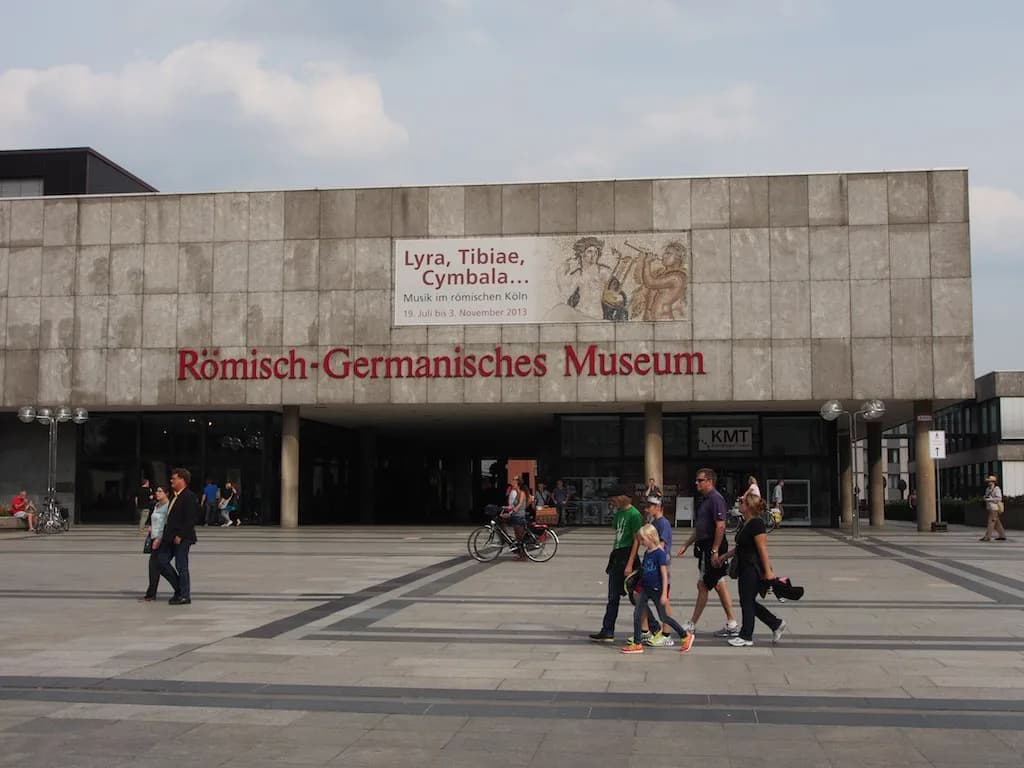
The old town guide notes that the Romisch-Germanisches Museum has been affected by construction, with its displays relocated during the works, and its listed timing for that disruption should be verified rather than trusted as current. Confirm the situation and location before you build your afternoon around it. This is exactly the kind of detail that ages badly in printed guides.
Roman Remains Hiding in Plain Sight
Cologne was a Roman colony, and traces of that city survive in unexpected places rather than behind museum doors. One of the most surprising is a substantial fragment of the original Roman city wall inside the cathedral's parking garage, reachable for free from the Komodienstrasse and Trankgasse entrance opposite the tourist information centre, according to the old town guide. It costs nothing to look at, which makes it a good stop when you need a break from ticketed sights.
Elsewhere, the old town guide says archaeological work in front of the historic City Hall has uncovered the Roman Praetorium, the governor's headquarters, with a small exhibition space nearby that is not always open. A modest archway in front of the cathedral is all that remains of a thirty-metre-wide Roman city gate. Three medieval city gates also survive around the old town perimeter: Hahnentor, Severinstorburg and Eigelstein-Torburg.
Shopping Streets as Shortcuts, Not Highlights
Schildergasse and Hohe Strasse are the two main shopping streets in the centre, and they connect usefully with Neumarkt and the heart of the old town. The old town guide notes that walking the full length of Schildergasse from Neumarkt toward the centre eventually brings you to Hohe Strasse. Use them to move between areas rather than as a destination.
Both streets are dominated by chain stores rather than distinctive local shops, so they rarely justify a place on a one-day plan. The old town guide says as much, recommending them mainly if you need an extra layer to keep warm or a restock of toiletries. Treat them as infrastructure and your itinerary stays focused on the things you came for.
What to Cut When You Are Behind
If the cathedral has taken longer than planned, drop the museum and the shopping streets first, because both are replaceable and neither is unique to Cologne. Keep the embankment squares and the bridge crossing, since they are free, quick and give you the views people remember. A short, unhurried circuit beats a frantic checklist.
In winter, the city's squares change character, with a Christmas market held in front of the cathedral and others in the old town. The old town guide mentions markets at Alter Markt, Heumarkt and Neumarkt specifically, and notes that the Neumarkt version hosts the Angel's Market. Seasonal markets do not run year-round, and their dates shift, so check the city's own listings for the year you are travelling.
Walking Versus Transit
The old town cluster is compact enough that a walking day is a reasonable plan for many visitors, and the route described here does not require public transport. The old town guide's one-day version is described as fully walkable and budget-friendly. Be aware that walking times vary enormously with pace, crowds and how often you stop, so treat any estimate in a guide as rough rather than fixed.
Anyone with limited mobility, young children, or simply a slower preferred pace should plan fewer stops and consider transport for the longer legs. This itinerary is a suggestion, not a standard every visitor should meet. Adjust the number of stops rather than the time spent at each one.
Extending the Day or the Trip
If you have energy left in the evening, a second brewery stop or another look at the Rhine as the light goes is a natural close to the day. If you are staying longer, the 3 days in Cologne itinerary adds the Rhine River side of the city and slower neighbourhood time. Extra days also open up day trips by train, with Dusseldorf, Bonn and Aachen all reachable from the city according to the old town guide.
Plan Your Visit
A single day in Cologne works best when you commit to the cathedral's three separate decisions, keep the free riverside sights as your flexible core, and let one paid interior rather than three fill the middle of the day. Verify ticket prices, opening times and any construction status directly with the cathedral or museum before you travel, because those details change and older guides go stale quickly.
If you are comparing German cities for a short break, the one day in Berlin itinerary and One Day in Dresden show how a single-day plan looks where the sights are more spread out. Cologne's advantage is density, and the plan above leans on exactly that.
Frequently Asked Questions
How much can you actually see in one day in Cologne?
A realistic single day covers the cathedral interior, the old town squares, the Rhine embankment, a bridge crossing and one longer stop, whether that is a paid cathedral add-on, a museum or a leisurely brewery lunch. Trying to include the tower climb, the treasury and a major museum in the same day usually means rushing one of them or dropping the riverside walk entirely. The old town guide's own one-day version is described as walkable and budget-friendly, which is a useful benchmark for scope rather than a promised pace.
Is Cologne Cathedral free to enter?
Yes, entry to the cathedral nave is free according to the old town guide consulted here. The tower climb and the treasury are separate paid options with their own tickets, and neither is included with simple entry. Because prices and opening times change, check the cathedral's official website before your visit rather than relying on older travel guides.
Should you climb the cathedral tower or visit the treasury?
Choose the tower if you want the elevated view over the river and rooftops and are comfortable with a long stair climb. Choose the treasury if you prefer liturgical objects and reliquaries in a medieval cellar, or if you have already seen the cathedral. The old town guide treats the treasury as a good option for returning visitors rather than a first-visit must. Doing both in one day generally costs you the old town and embankment time.
Is Cologne's old town walkable in a day without public transport?
The cathedral, the old town squares, the Rhine embankment and the Hohenzollern Bridge form a compact cluster that many visitors cover on foot without using transit, and the old town guide describes its own one-day itinerary as fully walkable. Walking times depend on your pace, the crowds and how long you linger, so treat any guide's estimates as rough. If you plan to go further out, or your mobility is limited, use the city's tram and rail network for the longer legs.
What should you skip if you only have one day in Cologne?
Shopping streets such as Schildergasse and Hohe Strasse are the easiest things to drop, since the old town guide notes they are almost entirely chain stores with no more than convenience value. Second and third museums are also worth cutting, along with a second Romanesque church. Keep the free riverside squares and the bridge crossing, as they are quick and give you the views most people come for.