Cologne's official tourism board states that over 100 museums, collections and exhibition halls await visitors in the city, so choosing which few deserve your hours matters more than chasing a complete list. A suggested half day at one major collection is this guide's planning estimate, not an official duration.
This comparison treats the big names as competing choices with explicit trade-offs. It separates free outdoor sightseeing from ticketed interiors, flags which collections to consider dropping when time runs short, and avoids inventing opening times or prices that change between seasons.
Quick Answer: The Museums Most First-Timers Should Weigh
If you have room for one art museum, choose between Museum Ludwig for modern and contemporary work and the Wallraf-Richartz-Museum & Foundation Corboud for painting from the medieval period to Impressionism. Cologne Tourism lists Museum Ludwig among its top four Cologne museums, alongside Kolumba, the Chocolate Museum and the City Museum, which is a useful starting signal if you want the city's own shortlist.
If Roman Cologne interests you more than painting, the Roman-Germanic Museum and Kolumba compete for the same slot beside the cathedral. For families, or anyone who wants a sensory stop rather than a gallery, the Chocolate Museum is the other obvious contender, which Cologne Tourism describes as the whole world of chocolate.
How to Choose in 60 Seconds
Sort Cologne's museums along four axes: modern versus medieval art, Roman archaeology versus twentieth-century history, a short guided stop versus a half-day collection, and indoor time versus cathedral-and-Rhine time. Naming your priority first makes the rest of the schedule fall into place without a must-see list.
A realistic short break absorbs one large art collection, one history or archaeology stop, and one lighter experience. Stacking three heavyweight museums into a single day usually produces rushed rooms and tired attention rather than better value.
For cross-city comparison when you are planning a wider Germany trip, the same fit-over-fame logic applies to the best museums in Munich worth visiting and the best museums in Berlin worth visiting, where the collections are larger and the distances between them longer.
Museum Ludwig: The Modern-Art Headline
Museum Ludwig was established in 1976, when Peter and Irene Ludwig donated a substantial modern art collection to the city, according to the Diary of a Mad Hausfrau museum account. Its Picasso holdings are among the largest in Europe, and the Pop Art collection includes works by Andy Warhol and Roy Lichtenstein, as that same account reports.
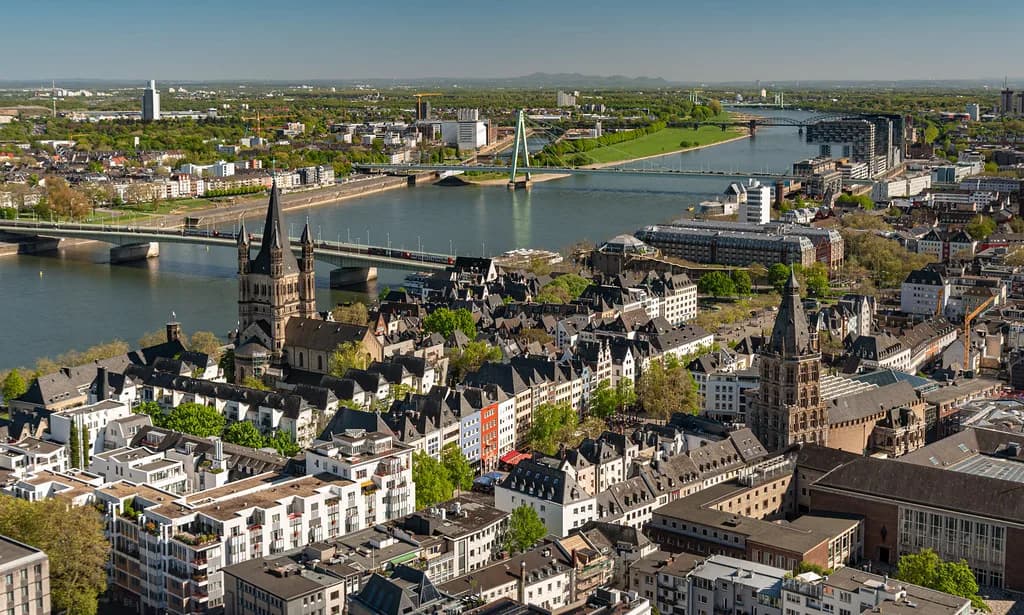
German Expressionists are well represented too, and a planted roof terrace looks across to the cathedral, with Rhine views from several windows. The cathedral-side location means it slots naturally into a cathedral-centred morning. For wider planning, see Cologne Cathedral visitor guide.
Several major Cologne museums share a Monday closure, and the Cologne things-to-do guide names Museum Ludwig among them, so verify the current week on the museum's own page before locking in a day. Budget roughly a half day, this guide's suggested duration rather than an official figure, if you want Picasso, Pop Art and photography without sprinting. For wider planning, see Cologne landmark visitor guides.
Wallraf-Richartz: Seven Centuries of Painting
The Wallraf-Richartz-Museum & Foundation Corboud is the counterweight for anyone who prefers painted surfaces to installations. Its collection spans roughly 700 years of European art, from medieval panel painting, including Stefan Lochner's Madonna of the Rose Bower, to Baroque names such as Rubens and Rembrandt, as the Cologne things-to-do guide summarises.
German Romanticism and French Impressionism complete the arc, so the museum rewards a slower pace than a highlights dash. It is the wrong choice if you are travelling purely for contemporary art, and the right one if you would rather trace how European painting developed.
On a 48-hour trip, treat Ludwig and Wallraf-Richartz as alternatives rather than a both-in-one-afternoon pairing, because two large collections in one day flattens both. If you want the painting-focused half-day set out hour by hour, the one day in Cologne itinerary shows how a single ticketed interior can anchor a full day without crowding in a second.
Roman-Germanic Museum and Kolumba: Two Cathedral Neighbours
The Roman-Germanic Museum covers Cologne's Roman heritage with mosaics, sculpture and burial finds. Its standout pieces include the Dionysus mosaic and the tomb of a Roman soldier, which makes it the stronger pick if you want excavated objects rather than paintings, according to the Cologne things-to-do survey.
Kolumba is the art museum of the Archdiocese of Cologne and shows more than 2,000 years of Western culture from late antiquity to the present. Peter Zumthor's building fuses the ruins of the late Gothic St. Kolumba church with the Madonna in the Ruins chapel and a modern structure, so architecture is part of the visit.
Both sit close to the cathedral, so they compete for the same slot rather than complementing each other on a tight schedule. Choose Roman archaeology if you want context for the city beneath your feet, and Kolumba if you prefer a quieter, curated art experience.
Chocolate Museum: A Sensory Stop, Not an Art Stop
The Chocolate Museum is Cologne's taste-and-senses option, built around the story of chocolate production rather than a fine-art collection. Cologne Tourism groups it among the city's top four museums, which is a fair signal of its appeal as a lighter counterweight to a gallery.
Treat it as a family or rainy-day pick rather than a substitute for Ludwig, Wallraf-Richartz or Kolumba. If it matters to your group, check the operator's own pages for current ticketing and entry arrangements instead of relying on third-party booking pages.
It pairs well with time on the Rhine promenade, which costs nothing and absorbs the waiting time around any timed entry. On a three-day visit it earns its place as the lighter counterweight to two heavier collections; the 3 days in Cologne itinerary is a useful frame for spacing those out.
Small Museums Worth a Slot: Farina and NS-Dokumentationszentrum
The Farina Duftmuseum in the Old Town occupies the original building of what the Diary of a Mad Hausfrau account describes as the world's oldest fragrance factory still in operation, founded in 1709 by Johann Maria Farina. That same account notes it can only be visited with a guided tour, so book ahead online; tours run in multiple languages and a suggested duration of around 45 minutes is that account's recommendation, not an official figure.
The same blog account reports that photography is not allowed inside the museum, though pictures in the shop are fine, and that visitors take part in scent testing and leave with a small bottle of the original fragrance. The trade-off is that you exchange an open-ended gallery wander for a fixed tour slot, which is either efficient or restrictive depending on your day.
The NS-Dokumentationszentrum occupies the former Gestapo headquarters known as the EL-DE Haus, and its cellar preserves original prison cells with inscriptions left by prisoners, as the Cologne things-to-do guide reports. It is a memorial and research centre rather than an art stop, and it demands emotional space; families should decide deliberately whether it fits their trip rather than adding it as a filler hour.
Free Sightseeing Versus Ticketed Interiors
Reading the cathedral exterior, wandering the Old Town and walking the Rhine promenade cost nothing, while the collections above are ticketed interiors. Deciding how many paid interiors your schedule can absorb is the real budget question, and it is more useful than collecting admission figures that change between seasons.
Admission is charged for the cathedral tower climb and for the museums, and the Cologne Tourist Board publishes its own guidance for anyone comparing options. Check the operator's official page for the current price and included content on the date you intend to visit, because published figures age quickly.
A city tourism card can bundle transport and museum discounts, but discount percentages vary by venue, so read the current terms rather than assuming every museum is included. If a card is central to your planning, compare its terms against the two or three museums you have already chosen.
The Monday Trap and Other Timing Decisions
Several major Cologne museums share a Monday closure, and the Cologne things-to-do guide lists Museum Ludwig, the Roman-Germanic Museum, Kolumba and the Wallraf-Richartz-Museum among those closed Mondays. That reshapes an itinerary rather than merely removing one option, so use Monday for the cathedral, the Old Town and riverside walking, then stack ticketed collections on other days. The same source notes NS-Dok is closed on Mondays as well.
Because closures and last-admission times change, verify each museum's current days on its official page the week you travel instead of trusting a general pattern. If your trip is short and a specific collection is the reason you came, build the day around its confirmed opening hours first and fit everything else around that.
Summer and holiday periods bring heavier demand, which affects how comfortable a large collection feels, so weekday mornings remain the safer default when you have flexibility. For a wider look at how a Cologne visit fits a longer German route, the Cologne: Itineraries and City Travel Guides pillar collects the city-level planning pages in one place.
Sample 24-Hour, 48-Hour and Rainy-Day Combinations
With one day, choose Museum Ludwig or Wallraf-Richartz as your single ticketed anchor, then spend the rest outdoors with the cathedral and the Rhine, accepting that you are seeing one collection properly rather than three badly. These are suggestions, not rules. With 48 hours, add either the Roman-Germanic Museum or Kolumba on the second day and treat the two art houses as a strict either-or.
For a rainy day, pair the Chocolate Museum with Farina's guided tour if you can secure a slot, giving you two indoor experiences that are short enough to combine. If your group wants archaeology or modern art instead, swap one in and drop the other rather than trying to cover both. The 2 days in Cologne itinerary sets out a fuller version of this two-day shape.
Travellers who prefer painting to installations should bias the whole plan toward Wallraf-Richartz and the smaller historic houses, while modern-art visitors should give Ludwig the larger share of their indoor hours. Either way, leave one museum unvisited; a return trip needs a reason.
Which Collections to Consider Dropping When Time Is Short
If your trip is built around a single afternoon indoors, drop either Ludwig or Wallraf-Richartz rather than both, since seeing a fraction of each collection teaches you less than finishing one. If your interest is Roman Cologne, Kolumba becomes the optional stop and the Roman-Germanic Museum the priority.
Visitors travelling with young children can reasonably put Farina and NS-Dokumentationszentrum aside: one needs a fixed tour slot, and the other is an emotionally heavy memorial. Anyone who dislikes guided formats should skip Farina entirely, because according to the Diary of a Mad Hausfrau account there is no self-guided alternative.
Finally, drop any museum you chose only because it appeared on a list. The collections above reward a decision made for your own taste, and the four axes at the start of this guide are enough to make that decision before you leave the hotel.
Plan Your Visit
Cologne's museum scene is best handled as a series of deliberate choices: one art anchor, one history or sensory stop, and enough outdoor time to remember that the cathedral and the Rhine are free. Check official museum pages for current opening days and admission, and book guided formats such as Farina in advance.
Plan by taste rather than by must-see lists, and leave one collection for a return trip. That way a short break in Cologne feels complete instead of truncated.
Frequently Asked Questions
Which Cologne museum is best for a first visit?
For a first visit, choose between Museum Ludwig for modern and contemporary art and the Wallraf-Richartz-Museum & Foundation Corboud for painting from the medieval period to Impressionism. Ludwig is the stronger choice if you want Picasso, Pop Art and a cathedral-side location, while Wallraf-Richartz suits anyone who prefers seven centuries of European painting. If Roman archaeology interests you more than art, the Roman-Germanic Museum is the better use of your single indoor slot. Verify current opening days on the museum's own page before fixing your plan.
Is the Chocolate Museum in Cologne worth it for adults?
It depends on what you want from the visit. The Chocolate Museum is built around the story of chocolate production, so it works as a sensory, family-friendly stop rather than an art museum. Adults travelling mainly for painting or archaeology will usually get more from Ludwig, Wallraf-Richartz or the Roman-Germanic Museum. Treat it as a lighter counterweight to a heavier collection, and check the operator's own pages for current ticketing arrangements.
Are Cologne museums closed on Mondays?
Several major Cologne museums report a Monday closure, including Museum Ludwig, Wallraf-Richartz, Kolumba and the NS-Dokumentationszentrum, though schedules can change. Treat Monday as a walking day: the cathedral exterior, the Old Town and the Rhine promenade cost nothing and stay open. Confirm each museum's current opening days on its official page before you travel, especially if one collection is the main reason for your trip.
How many museums can you realistically see in one day in Cologne?
One substantial collection is a realistic target for a single day, with a second short stop at most. Pairing two large art houses such as Ludwig and Wallraf-Richartz in one afternoon usually means rushed rooms and poor attention, so pick one and spend the remainder of the day outdoors. If you add a smaller experience, a guided Farina tour or the Chocolate Museum fits better than a second major gallery.
Is Museum Ludwig or Wallraf-Richartz the better art museum?
Neither is objectively better. Museum Ludwig specialises in modern and contemporary art, with one of Europe's largest Picasso holdings and a major Pop Art collection, which suits travellers who want a twentieth-century focus. Wallraf-Richartz spans roughly 700 years of European painting, from medieval panel painting and Baroque masters to German Romanticism and French Impressionism, which suits anyone who wants historical range. Choose by taste and treat them as alternatives on a short trip.
Do you need to book Cologne museum tickets in advance?
For the large art and history museums, one travel blog describes advance booking as recommended during summer and holiday periods, but this is not an operator rule, so check each museum's official page for its current policy. The Farina Duftmuseum is different: according to the Diary of a Mad Hausfrau account, it can only be visited with a guided tour, so book online ahead of time. Demand rises in peak season, so reserve early when a specific collection or time slot matters to your group.