

Augsburg rewards a walker who pairs two very different quarters. The Lechviertel gives you narrow lanes threaded by canals inside the old town, while the Textilviertel spreads out around the textile museum and its industrial neighbours. Put them together and you get a single route that explains why the water arrived first and the factories followed it.
The crucial caveat: this is not one signposted, official trail. The self-guided itineraries that cover this ground are separate tours with their own start points and distances. Treat the numbers below as planning anchors, then stitch your own line between the quarters using a map and your own pace.
A suggested half-day to a full day works well for the combined idea, allowing time for one museum interior and a riverside stretch, but treat that as a rough planning estimate rather than an official time. Check current opening hours and admission on each site's own page before you commit, because those details change by season.
Why These Two Quarters Belong on One Walk
The Lechviertel and the Textilviertel tell one story in two chapters. Water diverted from the Lech powered crafts and mills in the historic core, and the same water logic later supported large textile works on the city's edge. Walking both in sequence makes that cause-and-effect visible instead of abstract.
The Lechviertel is best understood as the canal-side part of the old town rather than as a formally defined district with boundaries and signs. Locals and mapmakers use the name loosely, so don't expect an entrance marker. Your mental map matters more than any signboard here.
The Textilviertel is the later, more deliberate quarter, and its anchors are buildings rather than lanes. The TIM Staatliches Textil- und Industriemuseum, the Färberturm and the Kammgarn-Selimiye-Moschee sit within a compact cluster that also includes the Feuerwehrerlebniswelt and the Glaspalast. That cluster is what makes a short version of this walk genuinely worthwhile.
Orientation: Where the Two Quarters Sit
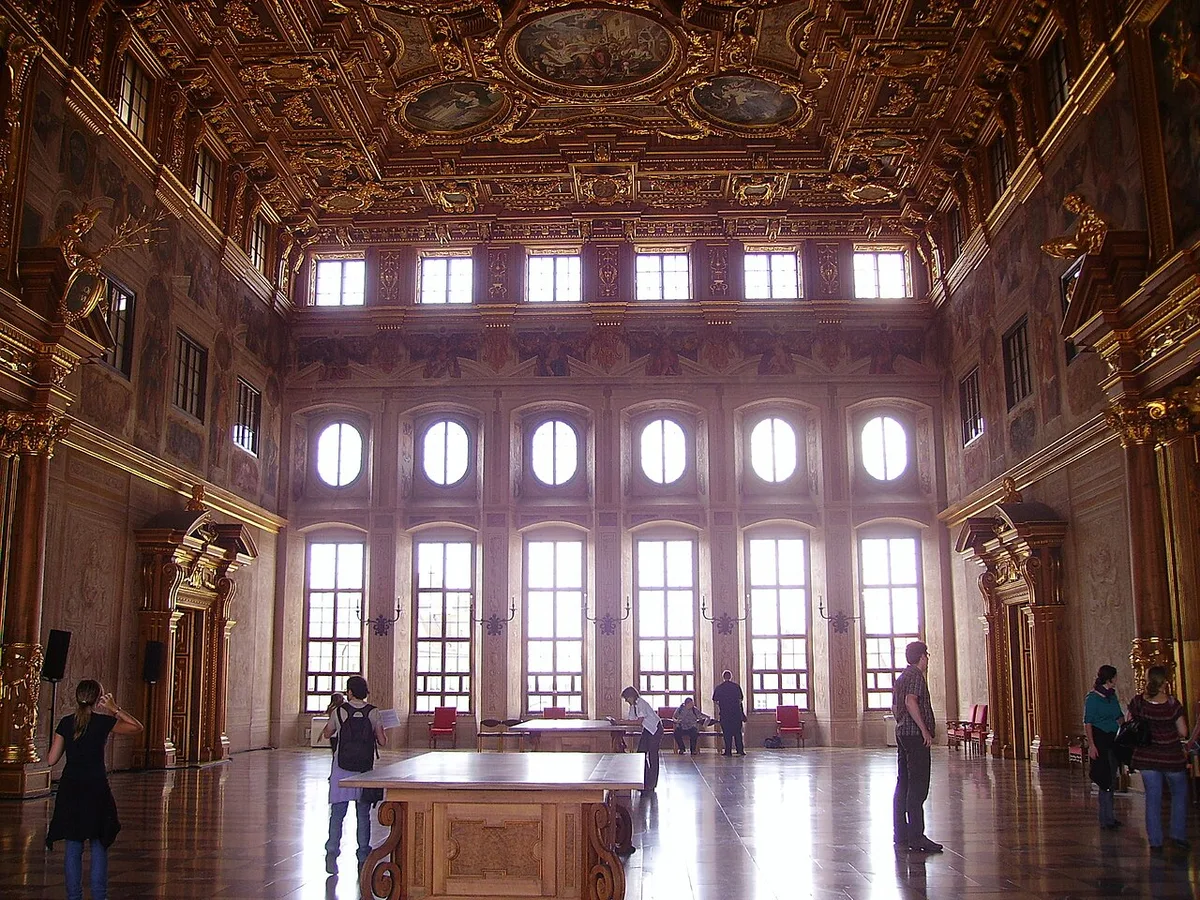
The old town, with the Rathaus, the Goldener Saal and the Maximilianmuseum, is the natural starting zone. From there the Lechviertel's canal lanes are a short walk, and the Textilviertel lies farther out toward the Lech's industrial corridor. Think of the route as moving from dense medieval fabric toward open, later industrial ground.
The Lech itself is the thread connecting them. Its canal system, part of the Augsburg water management system, is the reason the historic core and the later textile district share a geography. Reading up on that system before you walk turns ordinary-looking channels and sluices into the main exhibit. For wider planning, see Augsburger Wassersystem.
For a wider frame on how these quarters fit into the city's sightseeing, a broader guide to Augsburg helps you decide what else deserves a slot. Look for heights to climb if you want an overview before walking at street level; the Perlachturm and other elevated points make good orientation stops. For wider planning, see Augsburg landmark visitor guides.
Choosing Your Route Shape
There are two honest ways to do this. The short version is a compact industrial-cluster loop of roughly 1.4 km covering six sights in the Textilviertel, which suits a half-day with one museum visit. The long version is a city-and-river tour of about 15 km that folds in the old town, the Lech and the Siebentischwald.
The long route is rated easy and described as family friendly, with an elevation range that stays modest and gentle grades rather than climbs. It is also noted as suitable for dogs and kids, with places to rest and eat along the way. That makes it a realistic full-day outing rather than a hike in the alpine sense.
If you only have an afternoon, build the walk around the Textilviertel cluster and add a short detour to the nearest canal-side lane. If you have a full day, walk the old town first, follow the Lech outward and finish among the industrial buildings. Either way, decide your museum stop in advance rather than mid-walk, because interiors eat time.
The Lechviertel Section
This part of the walk is about the connective tissue: lanes beside channels, small bridges and the constant sound of moving water. The interest is not a single monument but the way the water infrastructure threads between buildings. Walk slowly here and look down as much as up.
The Augsburg water management system is the honest headline for this stretch, because the canals and their associated works are the reason the quarter looks the way it does. Understanding the system first makes the lanes legible; without it, they read as picturesque but unexplained.
Practical honesty matters here: the lanes are open public space, while churches, museums and interiors may be ticketed or time-limited. Don't assume free entry just because the surrounding streets are free. Check each site's own listing on the day you visit.
If you plan to cross into the old town proper, the area around St. Ulrich and Afra and the Rotes Tor makes a natural hinge between the canal lanes and the river-side paths. Those landmarks also give you clear orientation points if the lanes start to feel alike.
The Textilviertel Section
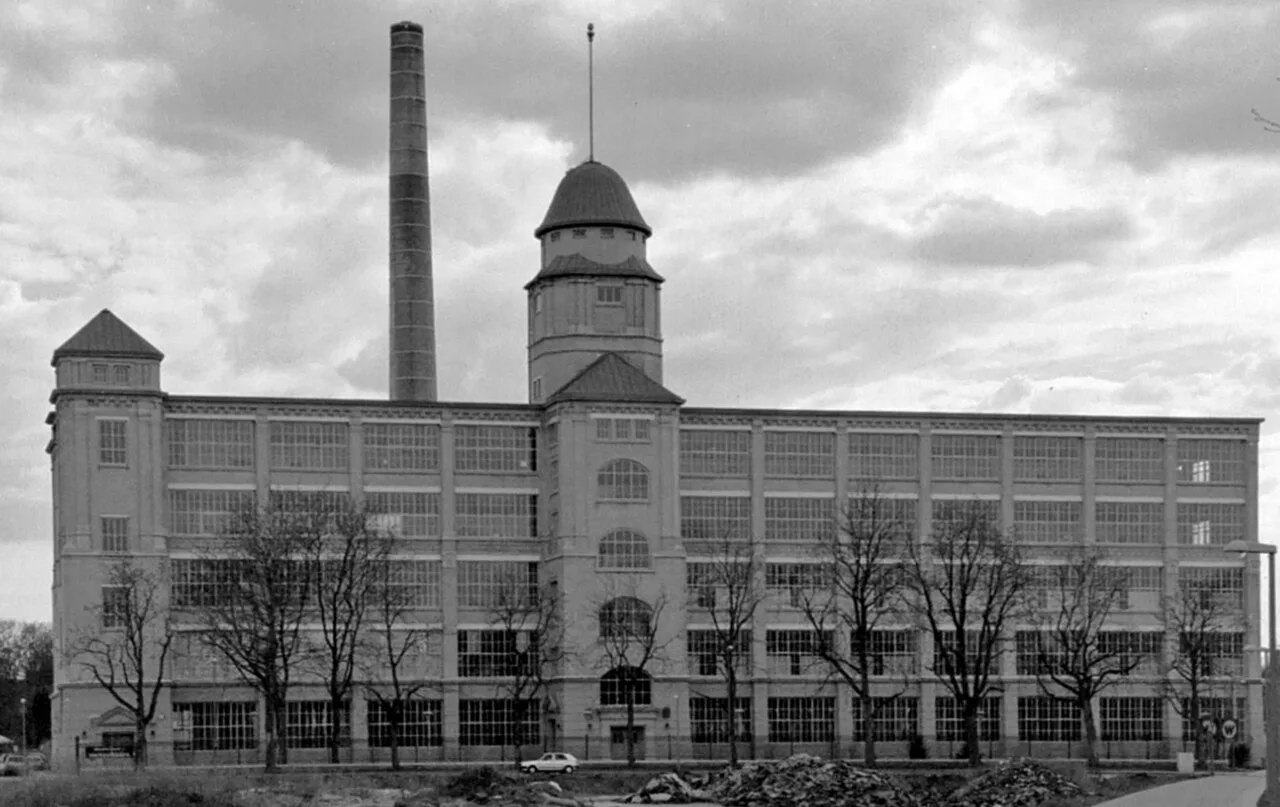
This is the quarter where the industrial story is easiest to read in a single loop. The TIM Staatliches Textil- und Industriemuseum is the primary anchor, with the Färberturm and the Kammgarn-Selimiye-Moschee nearby. The Feuerwehrerlebniswelt, the H2 Zentrum and the Glaspalast round out the cluster, so a short walk here can still be dense with interest.
Do not assume these places share one ticket. They are separate institutions with their own admission policies, and the short self-guided tour simply lists them as consecutive stops on foot. Decide which interiors you actually want to enter, then check each one's current opening and pricing individually.
Walking this quarter is worthwhile even if you skip the interiors, because the building stock tells the story on its own. The industrial architecture, the chimney-like Färberturm and the scale of the former works give the area a character unlike the old town. Budget time simply to stand and look.
Water as the Through-Line
The Lech is not scenery here; it is infrastructure. The Hochablass diversion feeds the canal network that runs through the city, which is why the lanes in the old town exist at all. Walk from the diversion works back toward the centre and the logic of the whole route becomes clear.
A user comment in a route listing describes the Hochablass as damming the Lech since the late Middle Ages, first mentioned in a document in 1346, rebuilt at its present location in 1552, and given its current form after a flood in 1912. That same comment treats it as part of the Augsburg water management system inscribed by UNESCO in 2019. Because it comes from a community post rather than an official source, verify the heritage status and the history locally before repeating it as fact.
The riverside paths along the Lech and the green corridor of the Siebentischwald make a good contrast to the built-up quarters. If you take the long route, the forest section is where the walk shifts from architecture to nature. That change of texture is a reason to include it rather than treat it as filler.
Where to Pause
The long city-and-river route is described as having places to rest and eat along the way, so you do not need to carry every meal. That said, a water bottle and a snack remain sensible on any version of this walk. Sitting by the Lech or in one of the squares gives you a natural midpoint.
Use the riverside and canal-side stretches as your breathers rather than treating them as transit. Water is the theme of the whole walk, so pausing where you can see it keeps the narrative intact. A bench by a channel or a bridge parapet often beats a crowded square.
If weather turns, shift weight toward interiors; the Maximilianmuseum and other old-town museums make a reasonable wet-weather substitute for a canal stroll. Have one indoor option chosen in advance so a rainy morning does not end the day.
Practical Preparation
Sturdy footwear is advised rather than mandatory, especially in wet conditions, according to the route data for the long tour. The elevation gain is modest and the route is rated easy, so trekking boots are not essential. Comfortable shoes you can walk in all day matter more.
The long route is flagged as suitable for kids and dogs, which makes it a credible family option. If you are travelling with children, plan shorter legs and pick one museum as the anchor rather than pushing through the full distance. Families with younger walkers may prefer the compact cluster loop and a play stop later.
Regardless of the route you choose, plan the day around a single museum interior and one outdoor stretch. That combination keeps the walk varied without turning it into a checklist. Build in slack for looking rather than only moving.
Common Mistakes to Avoid
The biggest trap is expecting one continuous, signposted trail from the Lechviertel to the Textilviertel. The available itineraries are separate self-guided tours with their own start points and distances. You are combining them, so you own the navigation between them.
The second trap is assuming shared ticketing across the Textilviertel museums. TIM, the Feuerwehrerlebniswelt and the Glaspalast are separate venues with their own policies. Check each individually and decide which one earns your limited time.
The third trap is treating the Lechviertel as an officially designated district with a defined boundary. It is a conventional name for the canal-side part of the old town, not a museum quarter with a gate. Navigate by landmarks, not by expected signage.
Plan Your Visit
The strongest version of this walk is simple: start in the old town, let the canals lead you through the Lechviertel, then follow the water outward to the Textilviertel and finish among the industrial buildings. Choose between the compact cluster loop and the long city-and-river tour based on how much time you actually have.
Verify the moving parts before you go. Check each museum's own page for current opening and admission, confirm the water heritage detail with an official source rather than a community post, and carry a map so you can stitch the separate tours together. The walk itself is free and public; the interiors are where the decisions are.
Frequently Asked Questions
How long does it take to walk the Lechviertel and Textilviertel in Augsburg?
There is no official figure, because the two quarters are covered by separate self-guided tours rather than one managed route. As a planning estimate, allow half a day for the compact Textilviertel cluster and its roughly 1.4 km of walking, plus time for one museum interior. For the longer city-and-river option of about 15 km, plan most of a day so you can pause by the Lech and still finish comfortably.
Is there one official walking route linking the Lechviertel and the Textilviertel?
No. The itineraries that cover this ground are distinct self-guided tours with their own start points, sight lists and distances, not a single signposted trail connecting the two quarters. You are effectively combining them, which means you handle the connections between them yourself. A map or a navigation app makes that stitching straightforward.
Do you need a guide for the Augsburg canal and textile quarters?
No guide is required. The lanes, bridges and riverside paths are public space you can walk on your own, and the self-guided tours exist precisely for people who prefer to move at their own pace. A guide can add context, but it is optional. If you want interpretation, read up on the Augsburg water management system before you go.
Is the walk flat and suitable for children or dogs?
The long route is rated easy, with modest elevation gain and gentle grades rather than sustained climbs, and it is described as suitable for kids and dogs. The compact cluster loop is shorter and even more manageable. Because parts of the wider green corridor are protected, keep dogs under control and check local rules on the day.
Which order should you walk, Lechviertel first or Textilviertel first?
Walking the Lechviertel first works better narratively, because the canal lanes explain the water system that later powered the textile industry. From there you move outward to the industrial quarter and finish among its buildings. Reversing the order is possible, but you lose the historical build-up that makes the two quarters feel connected.
Do all the Textilviertel museums share one ticket?
Do not assume they do. TIM, the Feuerwehrerlebniswelt and the Glaspalast are separate institutions, and the nearby Färberturm is not a comparable indoor attraction. Each venue sets its own admission and hours, so check the official page of whichever one you plan to enter and decide accordingly.


