

The Fuggerei looks like an open-air museum, but the operator describes it as a living settlement of 67 houses and 142 apartments with its own church, where around 150 residents live. That single detail should shape your walk as much as any map does.
The site occupies a walled block on Jakoberstraße in Augsburg's eastern old town, and the operator publishes directions on foot, by car or by tram. Third-party listings give the address as Jakoberstraße 26 in 86152 Augsburg, which matches the operator's location guidance. Because the enclosure is compact, the visit is short in distance but layered in detail, and it works best as one deliberate stop rather than a stroll that bleeds into the surrounding streets. For wider planning, see the Augsburg city guide and the Augsburg landmark hub.
Admission, opening times and tour schedules are published by the operator and change over time, so this guide avoids quoting exact figures. Confirm anything time-sensitive on the operator's site before setting out. For the full attraction overview, see the Fuggerei Augsburg Guide.
History in Five Minutes: Jakob Fugger's 1521 Foundation
Jakob Fugger founded the settlement in 1521, acting in the name of himself and his brothers. The operator calls the Fuggerei the oldest existing social settlement in the world and describes it as a town within a town, with 67 houses, 142 apartments and a church of its own. That foundation claim is what gives the repeating facades their weight.
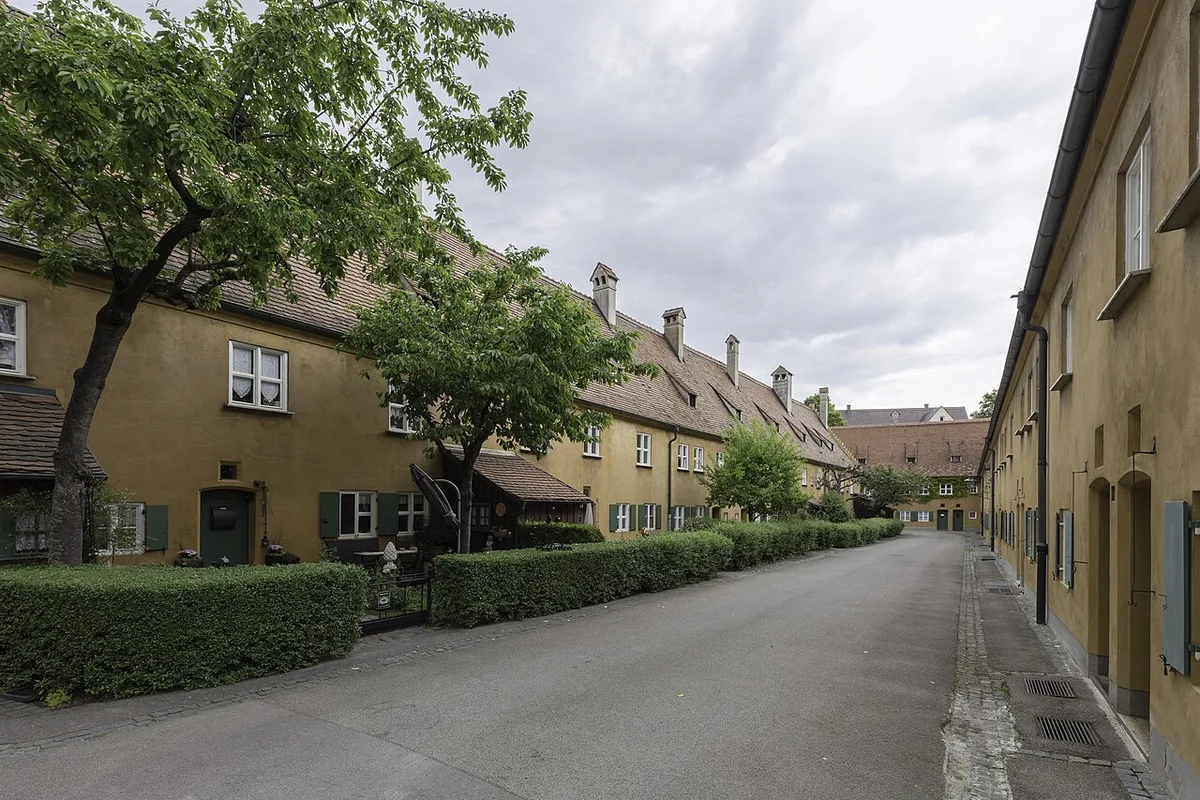
The arrangement was tied to the Fugger family's wider foundations and to the social expectations of the period, not to charity in the modern sense. The operator presents the settlement as help towards self-help, an ongoing obligation rather than a one-off gift, which is why it has survived as housing instead of being converted into a monument.
One of the four museums on site, the Museum of History and Living, narrates the timeline from 1521 through five centuries of change. If you only have time for one interior, this is the one that gives the rest of your walk context, because it explains the sequence behind the architecture you have just passed.
The Living-Community Rules That Shape Your Walk
The Fuggerei still houses around 150 residents, whom the operator describes as needy Catholic citizens of Augsburg. The same operator page states that they pay an annual cold rent of 0.88 euros and recite three daily prayers. Those conditions are the terms under which people live there now, not a historical curiosity.
That means lanes and doorways are private in practice even where they look public. Doors are homes, thresholds are private, and windows belong to households that did not invite visitors. Stay on the routes the operator opens to visitors, do not test handles, and do not linger in front of a doorway as though it were an exhibit.
Quiet matters more than most visitors expect. Residents go about ordinary routines while visitors pass through, and raised voices carry across narrow courts into homes. Keeping conversations low and leaving people out of your photographs is the difference between a respectful visit and an intrusion.
What a Self-Guided Walk Through the Lanes Shows You
On foot you see the gates, the lanes, the repeating house fronts and the community's own church. St. Markus serves the settlement as its parish church, which is why the building reads as architecture for use rather than as a museum piece. The walled enclosure frames the walk with a clear inside and outside.
The route is short but detailed, so the natural rhythm is a slow loop with stops rather than a straight line. Notice the plaques, the door treatments and the way the lanes channel movement between courtyards. Because the space is compact, you can repeat a lane and still find something you missed the first time. For a fuller account of the buildings, entry arrangements and ticket options, see Visiting the Fuggerei in Augsburg.
Photography is the easiest place to get this wrong. The architecture is photogenic, but residents are not part of the attraction, and a lane full of people is not a backdrop. Shoot facades and lanes if you must, keep people out of frame, and put the camera down when someone steps out of a door.
The Four Museums and the Bunker Exhibition
Four museums operate on site, and the operator states that they can be visited daily for an admission fee. They cover different subjects: a reconstructed historical dwelling, the Museum of History and Living, the Museum of Residents, and the Museum of Everyday Life. Treating them as one undifferentiated block misses how differently they are assembled.
The reconstructed historical dwelling shows how an apartment was furnished and used, which is the most direct answer to what daily life looked like. The Museum of Everyday Life covers living, housing and provisioning after the Second World War and into the present. Together the collections move from the sixteenth century to the recent past rather than clustering around the founding period.
The exhibition in the wartime bunker addresses the bombing and reconstruction of the settlement rather than military history. It is the section most visitors do not anticipate, and it explains why parts of the Fuggerei look younger than the 1521 foundation implies. If architecture interests you, this is the display that accounts for the inconsistencies you noticed in the lanes.
Do not assume a single admission covers every interior. The operator lists museums and tickets as separate topics, and a third-party listing also treats tickets and entry arrangements as a distinct booking matter. The sensible approach is to check the operator's ticketing pages for what each entry includes. If you plan to see only one collection, confirm its scope before you buy rather than after.
Free to Walk, Paid to Enter: Sorting Out Access
The grounds and the interiors are two different propositions, and mixing them up is the most common planning mistake. Walking the lanes and entering the museums are separate decisions with separate arrangements, which the operator sets out on its own visitor information pages. Work out which one you want before you arrive, because the answer changes how long you need.
The operator's site is the right place to confirm admission, opening times and what each ticket covers, since those details change while third-party listings lag behind. Address, contact details and current visitor information are published there directly. If a figure you have seen elsewhere looks unusually specific, verify it with the operator before building a day around it.
Because the settlement is a living quarter, access can also be adjusted for the community's needs. That is normal for a place where residents come first, and it means no single published arrangement should be treated as permanent. Checking shortly before your visit is more reliable than planning from a saved page.
Pacing the Walk: A Suggested Rhythm
As a suggestion rather than an official figure, allow about an hour for the lanes and the church, and closer to half a day if you intend to work through several museums properly. The settlement is small, but the interiors reward reading time, and rushing them defeats the purpose. Build the walk around one or two interiors rather than trying to see all four at speed.
If your day is tight, do the lanes first while you are fresh and pick a single museum afterwards. The Museum of History and Living is the natural first choice because it gives context for everything you have just walked past. Adding the bunker exhibition on top makes a solid half day without tipping into exhaustion.
If you are staying longer, a two days in Augsburg itinerary can absorb the Fuggerei alongside the city's other landmarks without cramming. Slot the settlement into the part of the day when you are happy to move slowly; late morning generally suits it better than the end of a long walking day.
Guided Options and How to Confirm Them
The operator runs public guided tours every Saturday at 3 pm, plus group and school-class formats. Its pages are the only reliable source for schedules, meeting points and whether a given tour is running. Do not rely on a reseller's listing for a start time, because tours are operated and changed by the foundation itself.
A guided visit changes what you get from the walk. A guide can explain the foundation, the church and the reconstruction history in a way that signage and facades cannot, and the group format sets a pace that keeps visitors moving through residential lanes. If you are visiting primarily for context rather than atmosphere, book on that basis.
If you prefer to move at your own speed, the self-guided route through the lanes stays the more flexible option, with the museums as optional stops. Either way, confirm current arrangements on the operator's pages before travelling, since both tour schedules and access details are published there.
Etiquette Mistakes to Avoid
The most common errors are small ones: photographing residents, trying doors, standing in a threshold to frame a shot, or treating a lane as a stage. Each of these turns a home into an exhibit, and each is avoidable with a moment's thought. The rule of thumb is that anything you would not do in a stranger's front garden does not belong here either.
Noise is the second trap. Groups arriving together tend to talk at the volume of a walking tour, which carries through narrow lanes and courtyards in a way it would not on an open street. Splitting into smaller clusters and keeping commentary brief solves most of it.
It also helps to remember that the settlement is not frozen. Residents move in and out, repairs happen, and the community's needs take precedence over visitor convenience on any given day. Accepting that some areas may be closed or restricted is part of visiting a place that is genuinely lived in rather than staged.
Practical Questions to Settle Before You Go
Accessibility arrangements and how to reach the settlement are covered on the operator's own pages, including information for visitors with impairments and directions on foot, by car or by tram. Rather than guessing at step-free routes or which entrance to use, read those pages directly, because they describe actual site conditions rather than a general assumption.
The same applies to services inside the settlement and to any current restrictions on movement through it. The operator publishes what visitors need to know and updates it when circumstances change, so treat its visitor information as your checklist the day before you travel.
If practical constraints matter for your group, the Augsburg with kids page is a useful second reference for planning family logistics elsewhere in the city. It helps you decide whether the Fuggerei walk fits the shape of your day or belongs on a different one. The short distances suit children, though the quiet expectation is worth explaining beforehand.
Pairing the Fuggerei With the Rest of Augsburg
The Fuggerei works best as one stop in a wider city day rather than as a standalone outing. Because it is compact and residential, it leaves time for Augsburg's other landmarks, and its position in the eastern old town makes it a natural first or last stop of a loop. Plan the rest of the route around it rather than the other way round.
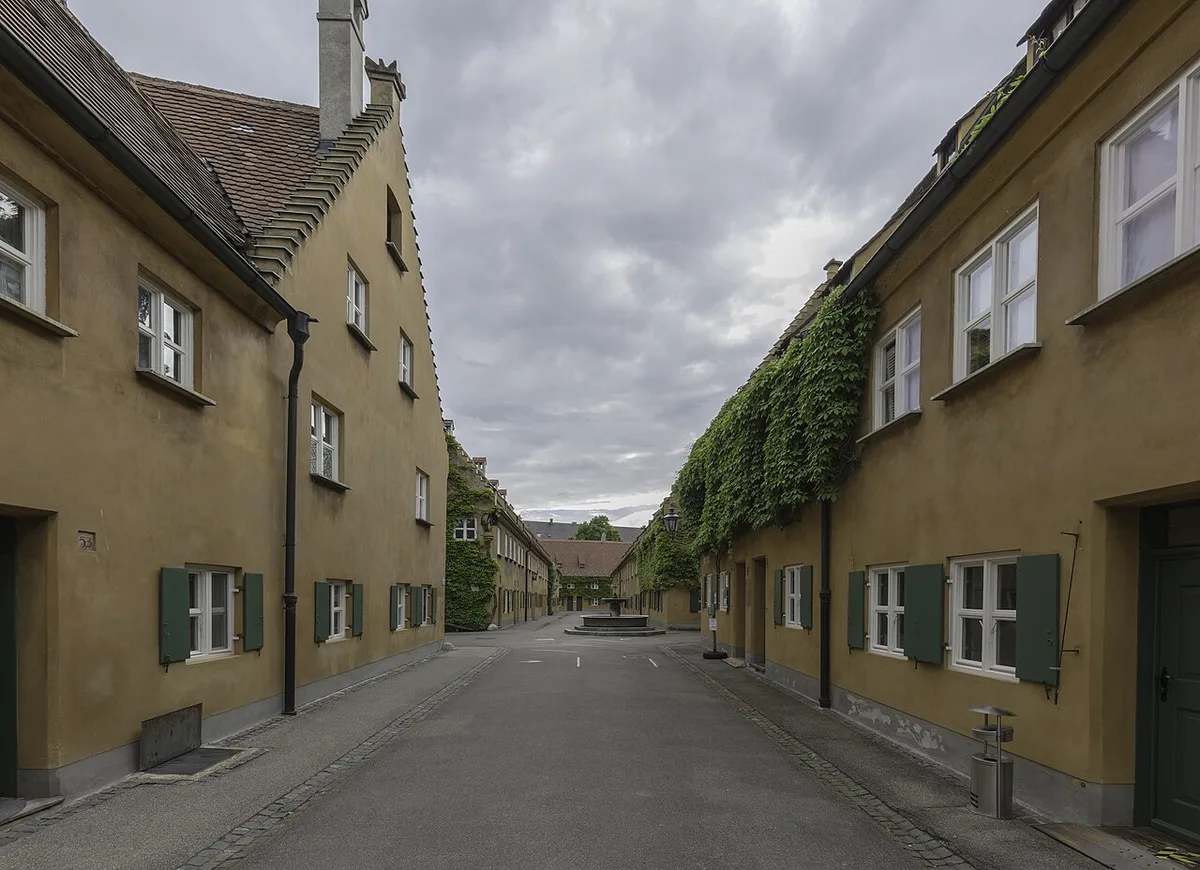
If the weather turns, an indoor alternative nearby keeps the day intact, and Augsburg on a rainy day covers suitable options. Keeping a wet-weather substitute in reserve means a single bad forecast does not undo your plans, since the Fuggerei lanes are outdoor space and rain does affect the walk.
Whichever combination you choose, keep the settlement's residential character in mind when you set the tone of the day. It is a quiet stop between louder ones, and treating it that way is both more respectful and more rewarding. That contrast is part of what makes it memorable.
Plan Your Visit
A good Fuggerei walk is short, quiet and deliberate. Walk the lanes, see the church, choose one or two museums rather than racing all four, and leave the residents' doorways alone. The settlement rewards attention far more than coverage.
Before you travel, confirm admission, opening times, tour schedules and accessibility on the operator's own pages, since those are the details most likely to change. Everything else, from the 1521 foundation to the everyday rules of the community, holds steady.
Approach the Fuggerei as a neighbourhood that happens to welcome visitors, and you will get more from it than any checklist of sights can give you. That framing is the whole point of the walk.
Frequently Asked Questions
Do people still live in the Fuggerei today?
Yes. The operator describes the Fuggerei as a living settlement housing around 150 Catholic residents of Augsburg. Because it is a functioning neighbourhood, lanes and doorways are private in practice, and visitors are expected to keep to open routes, avoid photographing residents and keep noise down. Current rent and residence conditions are published on the operator's own pages.
Can you walk around the Fuggerei without a ticket?
The grounds and the interiors are separate propositions. Walking the lanes and visiting the museums, including the reconstructed historical dwelling and the bunker exhibition, are distinct decisions with distinct arrangements, and the museums are described by the operator as visitable daily for an admission fee. Check the operator's ticketing pages for what each entry currently includes, and do not assume one admission covers every interior.
How long should you set aside for a Fuggerei visit?
As a suggestion rather than an official figure, allow about an hour for the lanes and the church, or roughly half a day if you want to work through several of the four museums properly. The site is compact, so distance is not the constraint; reading time inside the interiors is. If your day is tight, walk the lanes first and add the Museum of History and Living for context.


