

The Ulm Synagogue stands on the Weinhof, a short walk from the Münsterplatz. It is a working synagogue and community centre. As the city's tourism office states, the building was inaugurated on 2 December 2012, close to the site of its nineteenth-century predecessor. That single detail shapes how this guide is written: it focuses on what you can observe and understand from the square, and it flags clearly where you need to check with the community before assuming anything.
Jewish life in Ulm was extinguished during the Shoah, and the community that reformed here in the 1990s eventually needed more room than its prayer and meeting spaces allowed. The Israelitische Religionsgemeinschaft Württemberg took on the task of reconstruction, and the municipal council offered the Weinhof as a prominent place in the heart of the historic centre, as the city's tourism office explains.
The building's function on the Weinhof is the key to an honest visit. Treat the facade as the main event, plan your time around the public square rather than an interior circuit, and combine it with the neighbouring landmarks that share the same address cluster. For wider planning, see Ulm landmark visitor guides.
A New Beginning on the Weinhof: The 2012 Inauguration and Its Predecessor Site
The synagogue was inaugurated on 2 December 2012 and stands close to where its nineteenth-century predecessor once stood, so the site carries both continuity and rupture in the same square, as described by the city's tourism office. The Jewish community in Ulm had grown again through the 1990s, and the arrival of Rabbi Schneur Trebnik in 2000 allowed community life to be rebuilt after the Shoah; the existing prayer and community rooms soon became too cramped. The municipal council's decision to offer space on the Weinhof placed the reconstruction in the heart of the historic centre rather than in a peripheral location.
The opening carried political weight that the architectural record alone would not convey. The President of the Federal Republic of Germany attended the ceremony, and Joachim Gauck closed his address by saying words could scarcely express how grateful he was to experience the day, as reported by the tourism office. That detail matters for visitors because it frames the building as a public statement about Jewish life returning to a German city centre, not simply as a new address for a congregation. When you stand on the Weinhof, you are looking at a decision the city made about where minority religious life belongs.
Architecture of the Completed Synagogue
The design came from the Cologne office kister scheithauer gross. The result is deliberately not historicist: the design language is described by the city's tourism office as clear and angular while remaining allusive, which is an unusual pairing to achieve in a building that also has to function as a community centre, school and administrative base.
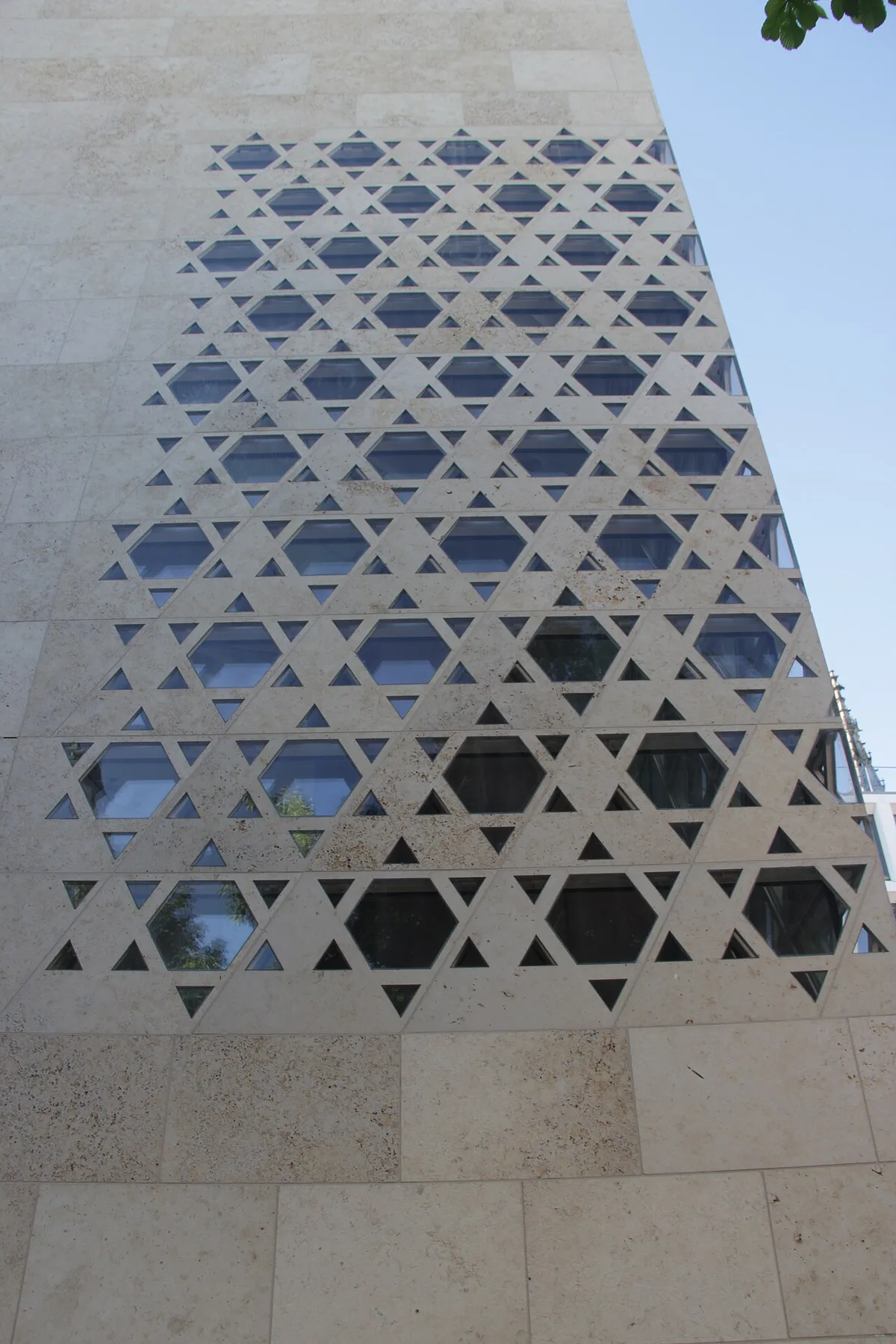
The city's tourism description lists a ritual bath, meeting room, school and administrative rooms, and a nursery school with a hidden inner courtyard alongside the synagogue. These are functions of an active community centre. Their presence explains why this building belongs to daily Jewish life in Ulm; it does not establish public access to any of those rooms.
The most legible feature from the square is the pattern made of Stars of David, formed by more than 600 openings. According to the city's tourism description, that pattern highlights the most important room from the outside, the one holding the Torah scroll, and it also produces a rich illumination on the inside. In other words, the pattern is doing two jobs at once: identifying the liturgical heart of the building to anyone outside, and controlling light for the people inside. Once you know that, the facade stops looking like decoration and starts reading like a sign.
The prayer hall faces south-east, which the city's tourism description explains as alignment with Jerusalem. Together with the Star-of-David openings, this gives an exterior visit a religious context that a photograph alone would miss. You can understand these published design features while keeping your visit to the public square.
Exterior Viewing, Tour Enquiries and Visitor Etiquette
For an interior visit or a synagogue tour, ask the community in advance. Ulm tourism publishes a contact email specifically for synagogue tour enquiries. That is a useful point of contact, but it is not confirmation of a drop-in tour, ticket price or visiting time. Ask about the arrangements for your proposed date and group, and plan an exterior stop unless the community confirms access.
As practical visitor advice, keep entrances clear, give people arriving for prayer or community activities their privacy, and avoid pointing a camera into windows or photographing worshippers without permission. If you stop with a group, choose a place on the square where you do not obstruct access. These are suggestions for a considerate visit rather than a published list of venue rules.
Do not assume that arrangements for nearby churches or museums apply here. A city sightseeing pass, a museum ticket or a walking tour of the old town does not itself establish access to this working synagogue. Keep the exterior stop in your itinerary and treat any community-approved visit as a separate arrangement.
Fitting the Weinhof into an Ulm Heritage Walk
The Weinhof puts you within a couple of minutes of the Schwörhaus and a short walk of the Münsterplatz, which is what makes this an efficient architecture stop rather than a detour. The synagogue exterior takes minutes to take in, but the surrounding cluster rewards slower movement: painted facades, historic buildings and the contrast between old and modern architecture are all within a compact area. Walking is the sensible way to link them, since the centre is continuous and the distances are short. For a fuller route, see the Ulm Old Town walk.
Ulm's central sights are close enough to combine without transport, and a heritage-themed day benefits from mixing the synagogue stop with other buildings that carry the city's long history. Germany Travel's Ulm city profile places the synagogue among the city's modern structures that stand in deliberate contrast to the old buildings around them. For a closer look at the town hall, see the Ulmer Rathaus visitor guide.
For a separate church visit, check the Ulmer Münster's own visitor information. It describes church and tower arrangements separately, including weather-related restrictions on tower access. Leave time for that decision on its own terms; it does not change how you approach the synagogue at the Weinhof.
If you want to extend the walk toward the river, the lanes and bridges of the old quarter give the day a different texture after the squares. That is a sensible way to balance a stop that is architectural and reflective with something more open and informal, and it also connects the Weinhof area to the broader city guide for longer stays. For wider planning, see Ulm: Itineraries and City Travel Guides.
Suggested Time for an Exterior Stop
As an editorial suggestion, allow ten to fifteen minutes at the Weinhof to look at the cube form and Star-of-David openings, read about the history, and pause on the square. This is a planning estimate, not an official tour duration. A confirmed community visit would need its own time allowance.
For a half-day, combine the synagogue exterior with the Münsterplatz and the old town lanes rather than trying to fill the time with ticketed interiors. If you want to climb the Minster tower, budget extra time and check that venue's own current information first, because tower access and opening arrangements are set by the Minster and change independently of anything on the Weinhof. A realistic half-day pairs the square, the church precinct and the riverside lanes at a walking pace. For more low-key stops, see Hidden Gems in Ulm.
If you would rather keep costs down, structure the day around exterior viewing and free public squares, then decide on paid interiors separately. That approach suits a heritage day well, because the strongest impressions in this part of Ulm come from the streetscape and the way the buildings talk to each other rather than from any single ticketed room.
Planning Around the Ulm Synagogue
The Ulm Synagogue is an architecture and heritage stop on the Weinhof. Its clear cube form, Star-of-David openings and south-east-facing prayer hall belong to the completed Kister Scheithauer Gross building. The inauguration and nearby predecessor site connect that architecture with the return of Jewish community life to the city centre.
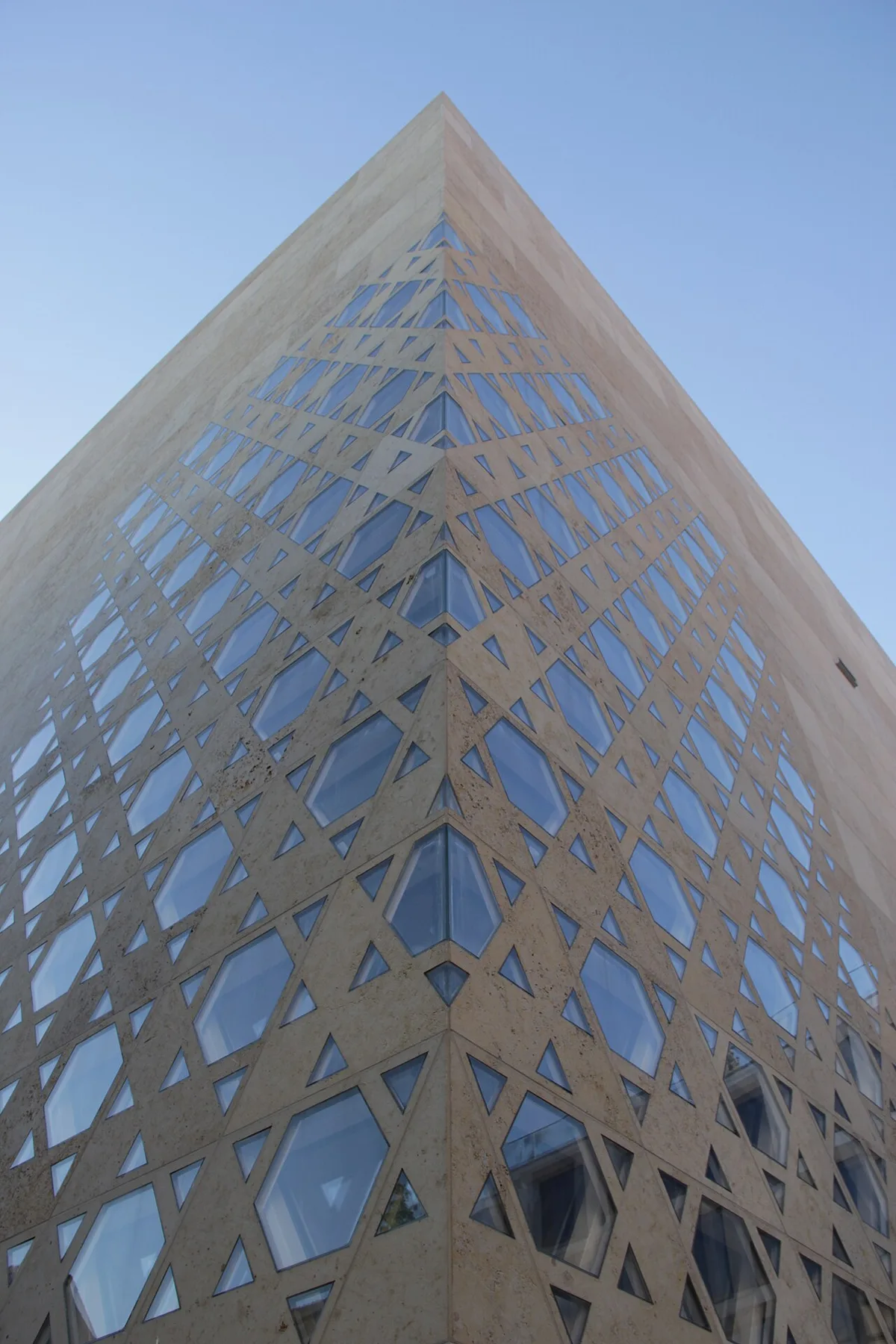
Before relying on an interior visit, ask the community about access for your date. Ulm tourism provides the synagogue's location, history and tour enquiry contact; that listing is a useful starting point. Keep the public-square stop separate from tickets or visitor arrangements at other Ulm sights.
Give the building the same respect you would give any working place of worship, keep your visit to the public square, and let the Weinhof, the Münsterplatz and the old town lanes fill out the rest of your time. If you want to broaden the trip, other Ulm guides cover the city's lesser-known corners and heritage layers in more detail.
Frequently Asked Questions
What is the Ulm Synagogue and when was it built?
It is a synagogue and Jewish community centre on the Weinhof in central Ulm, built to replace cramped prayer and community rooms used by a congregation that reformed from the 1990s onward. The city's tourism office states that the building was inaugurated on 2 December 2012, close to the site of its nineteenth-century predecessor. It houses the prayer hall, a ritual bath, school and administrative rooms, and a nursery school, though those facilities are building uses rather than public attractions.
Can you go inside the Ulm Synagogue as a visitor?
For a synagogue tour or interior visit, contact the community in advance using the enquiry email published by Ulm tourism. The tourism listing does not establish a public drop-in arrangement, ticket price or tour time. Plan to view the exterior unless the community confirms a visit for your date.
Why does the Ulm Synagogue have Star-of-David windows?
The pattern of Stars of David, formed by more than 600 openings, is how the building identifies its most important room from the outside, the one containing the Torah scroll, according to the city's tourism description. It is a functional device as much as an ornamental one, because it also creates a rich illumination inside that room. That is why the pattern is concentrated where it is rather than spread evenly across the facade, and why the facade is worth reading rather than simply photographing.
Why is the prayer hall oriented toward the south-east?
The city's tourism description explains that the south-east-facing prayer hall aligns with Jerusalem as the religious centre of Judaism. This is part of the religious meaning of the building, alongside its Star-of-David window pattern.
Where in Ulm is the synagogue located?
It stands on the Weinhof in central Ulm, a short walk from the Münsterplatz and directly by the Schwörhaus. This is the location the city's tourism material uses for the building. Because it sits on a public square rather than behind a gate, you can view the exterior as part of a walk through the old town without any special arrangement. Treat the surrounding squares and lanes as the main route and keep the building itself as a quiet stop along the way.
How much time should I allow for the synagogue and nearby Weinhof sights?
As a suggestion from this guide rather than an official timing, allow about ten to fifteen minutes at the Weinhof for the facade, then extend the visit by walking the Münsterplatz and the old town lanes. If you plan to climb the Ulmer Münster tower, add time and check that venue's own current visitor information first, because its arrangements are separate from anything at the synagogue. A comfortable half-day combines the square, the church precinct and the riverside quarter on foot.


