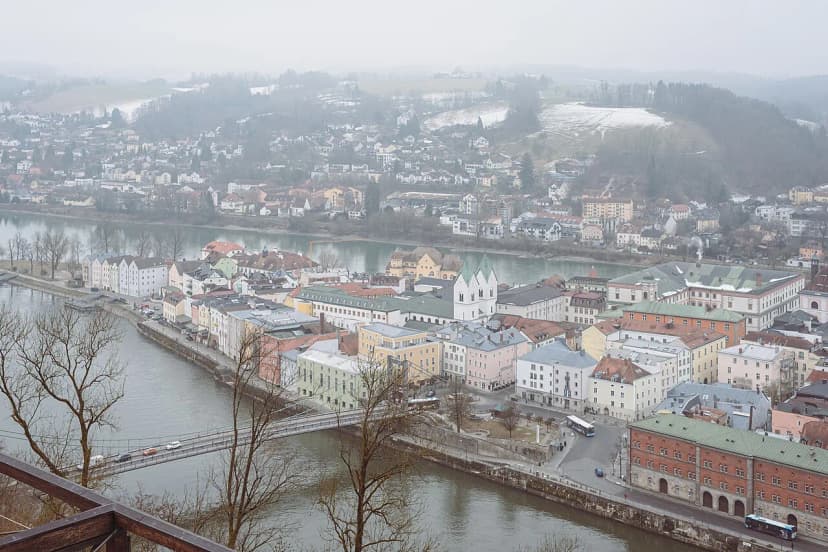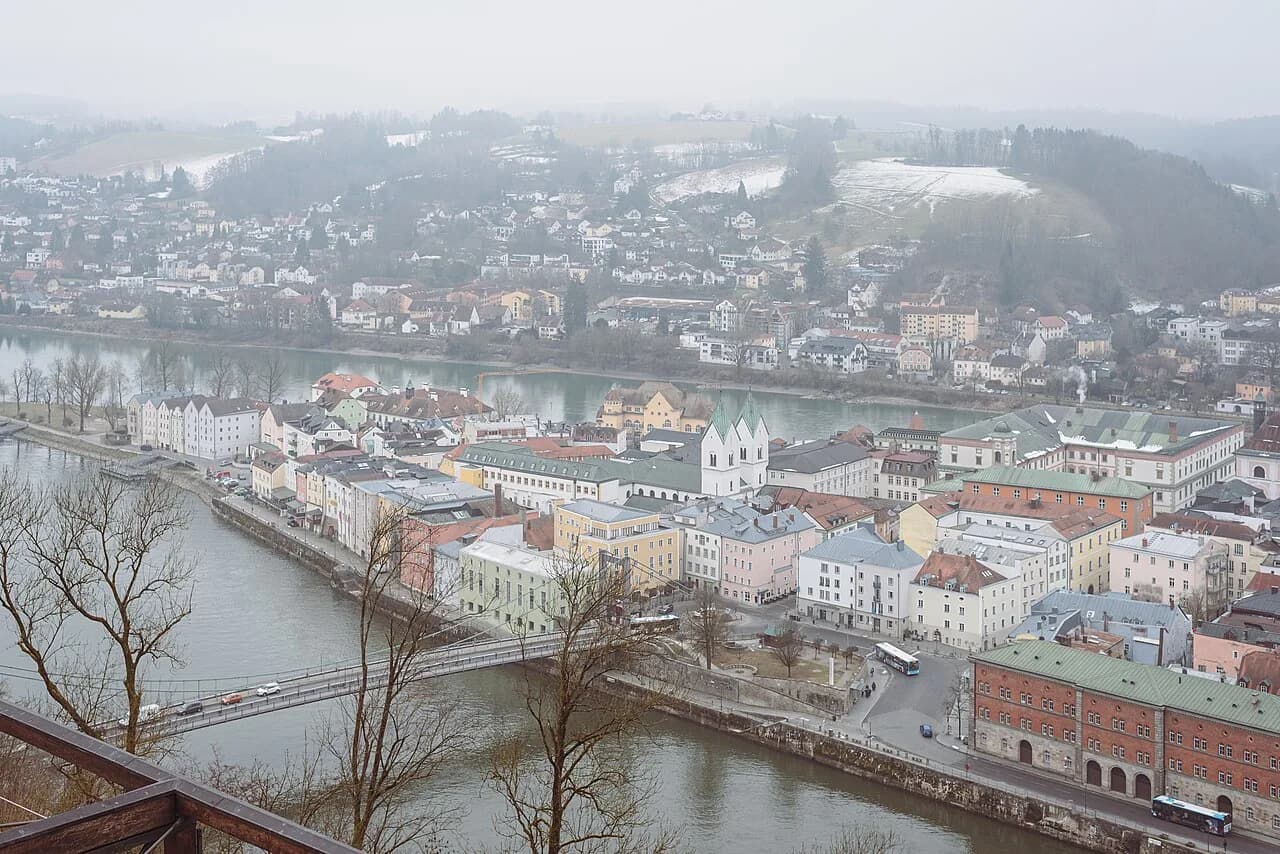
Niedernburg sits at Klosterwinkel 1 in Passau's old town, and the first thing to plan around is a hard constraint rather than a highlight: Passau Tourism states that the monastery and church are reachable only via steps, while the Fresco Museum Niedernburg is listed as barrier-free. That split between a stepped convent precinct and one accessible interior shapes everything below.
Treat Niedernburg as a stop inside a longer walk along the Inn promenade rather than a headline sight you cross town for. Its value comes from context: the convent precinct, the Innstadt's Roman layers, and the river itself sit close together. Read this alongside the wider Passau: Itineraries and City Travel Guides before you fix an order of stops.
What Niedernburg Is Now
Niedernburg was once a Benedictine abbey, and Passau Tourism records that Emperor Henry II declared it an imperial abbey, which let it act independently and hold imperial immediacy. That history explains the name and the standing of the site. It does not mean you can tour a monastic complex the way you might tour a museum.
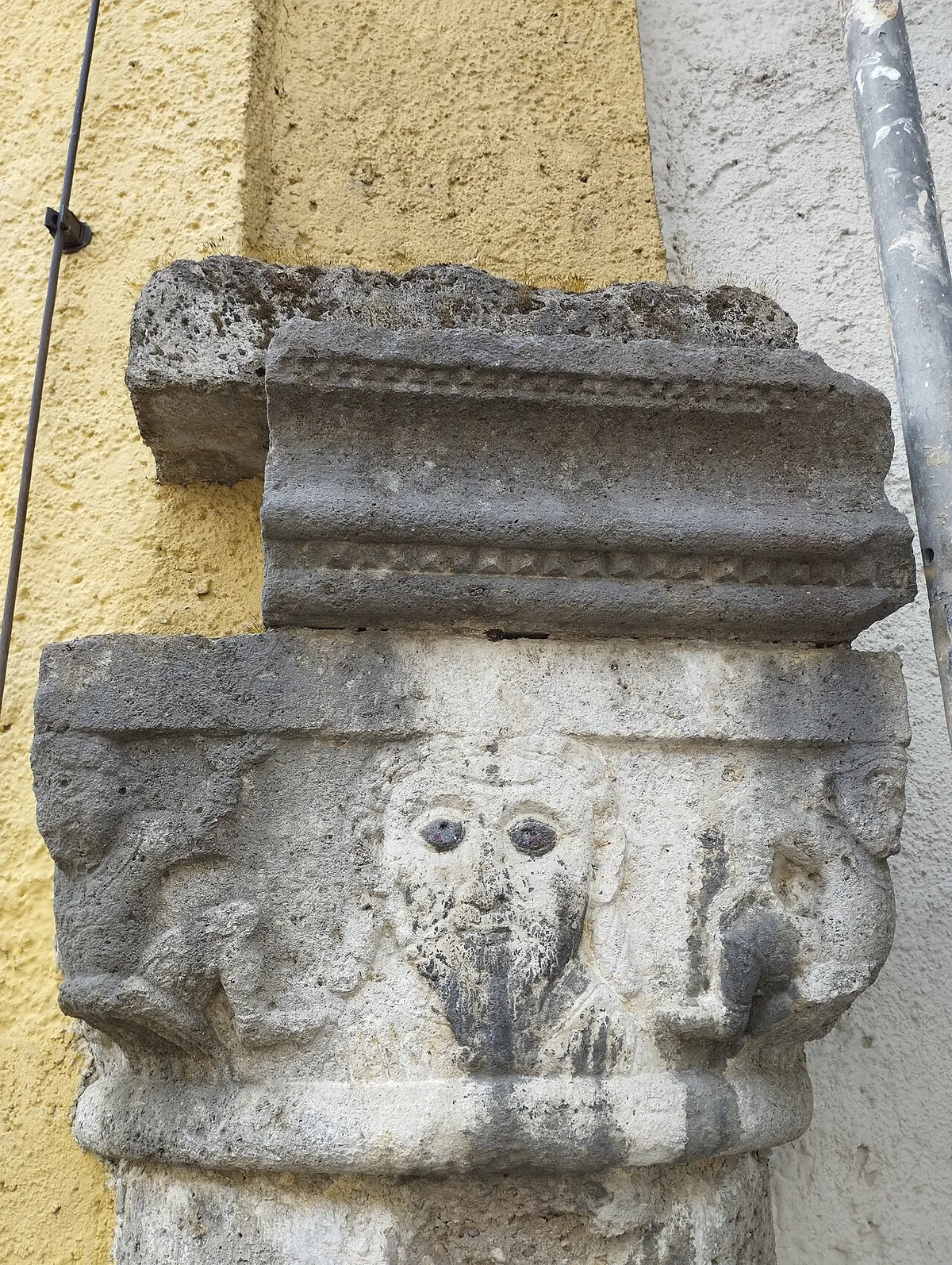
The convent buildings today host several girls' schools, according to the same tourism listing, so the precinct is in active use rather than preserved as a visitor site. Passau Tourism also notes that the site was once home to the "English Ladies," a later phase of its long religious use. Treat the exterior and the street setting as the free, always-available layer, and expect school use to shape what you can approach.
Rather than the fully preserved abbey some visitors expect, Niedernburg is a living religious and educational precinct whose heritage surfaces in fragments. That framing matters when you decide how long to spend here. If you are expecting a big ticketed monument, you will be disappointed; if you are walking the Inn side and want the historical layer under your feet, it earns its place.
Holy Cross Church and Blessed Gisela
The Holy Cross Church is the part of Niedernburg with the clearest draw, and Passau Tourism names it explicitly as a destination for Hungarian guests. The reason is the tomb of Blessed Gisela, described as the former Hungarian queen and sister of Emperor Henry II. After her husband King Stephen of Hungary died, she joined the abbey and became abbess, per the same listing.
Inside, the late-Gothic tomb sits above a tombstone from the eleventh century, and the shrine known as Mariä Schutz dates from 1567, according to Passau Tourism. Since the fifteenth century the tomb and that shrine have drawn numerous mainly Hungarian pilgrims. If you come for one thing at Niedernburg, it is this: the church interior carries the site's religious weight, and the layered burial markers are the concrete reason pilgrims make the trip.
One connection you should not expect to find documented here is St. Elisabeth of Hungary. Passau Tourism's account of Niedernburg ties the pilgrimage tradition to Gisela, not to Elisabeth, and the church pages of the Diocese of Passau do not supply that link either. If a tour or a blog tells you otherwise, ask which source supports it before you build your visit around it.
The Fresco Museum Niedernburg
The Fresco Museum Niedernburg is the one interior here whose existence and subject are clearly documented. Passau Tourism's museum index describes it as a reminder of St. Mary's Church, which was destroyed by the great fires of the seventeenth century, and the abbey listing adds that it shows secco paintings more than eight hundred years old. Those two statements are the core of what you can expect to see.
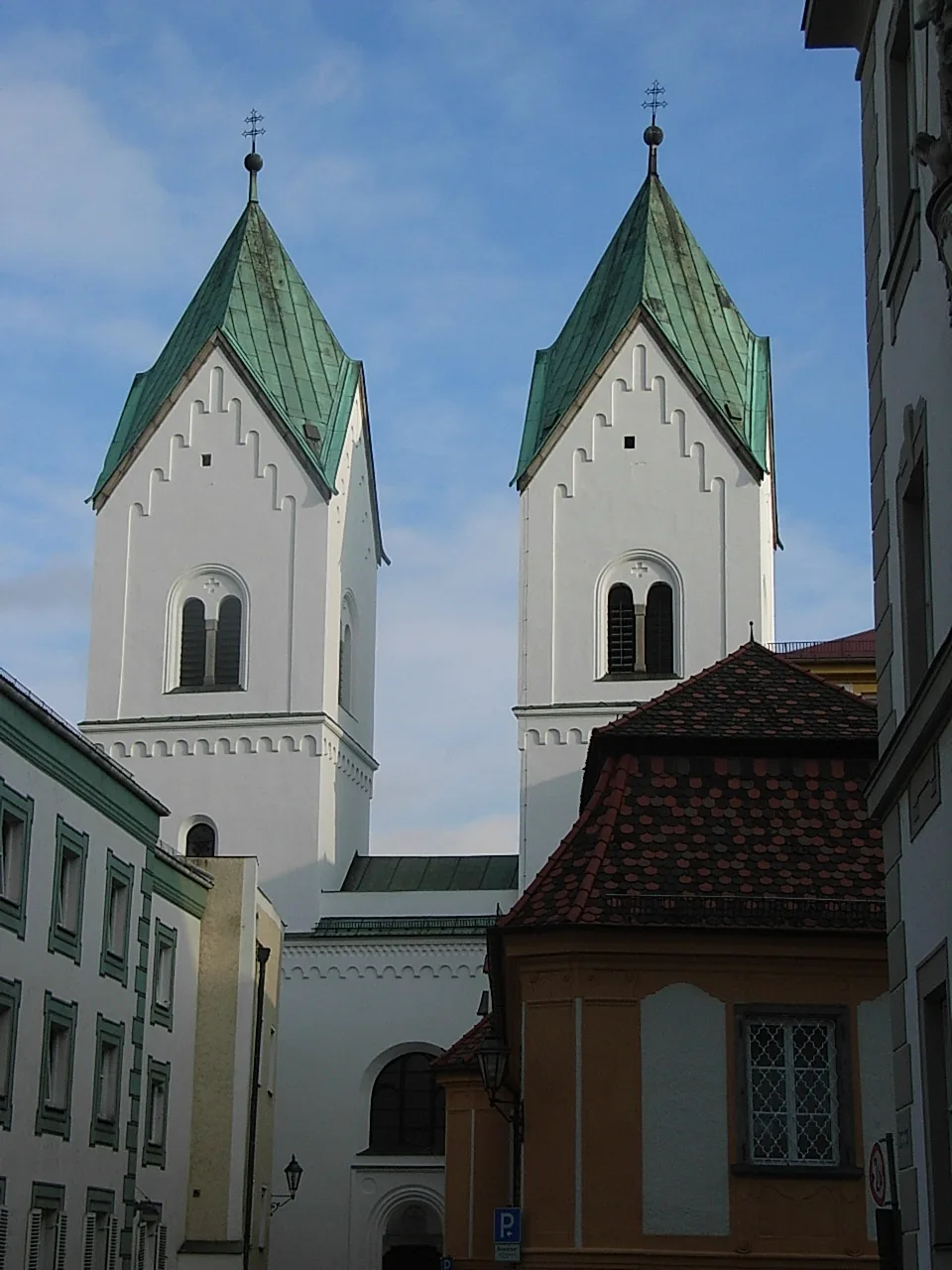
Because the museum is a separate museum rather than a room inside the church, do not assume one admission or one timetable covers everything in the precinct. Passau's museum landscape is a set of distinct collections, from the Roman Museum to the Glass Museum, each with its own operator and arrangements. Check the Fresco Museum's own listing at the tourist information for current opening times and how admission is handled before you plan your day around it.
Steps, Accessibility and What to Verify
Accessibility at Niedernburg splits cleanly in the official description: the monastery and church are reachable only via steps, while the Fresco Museum is listed as barrier-free. The same source points to the nearest disabled parking at building Bräugasse 17 and notes public accessible toilets in the underground car park at Römerplatz 1, plus a handicapped lavatory in the Town Hall building at Rathausplatz 3 that is free and opens with a Euro key. Note that the Town Hall's own page describes its wheelchair access as limited, with a narrow elevator, stair lift and ramps, and recommends bringing an assisting person.
What the published information does not tell you is the current opening hours of the Niedernburg church or whether the former convent interiors are ever open to visitors, and it gives no admission prices for either the church or the Fresco Museum. Without that, the honest plan is to treat the church as a place you approach and check on arrival, and to confirm the Fresco Museum's schedule through the tourist information rather than trusting a blog post. Older travel writing quotes prices and hours that no longer apply, so use it for atmosphere only.
The city's tourist information offices are the reliable place to confirm details, including the one at Bahnhofstraße 28, which is documented as having a step-free and barrier-free entrance and as speaking English among other languages. Staff there can tell you the current state of church access and museum times for the day you are in Passau. That check takes a few minutes and prevents a wasted detour up the steps.
Where Niedernburg Sits in a Passau Day
Niedernburg is best understood as an Inn-side stop, close to the riverside promenade and the old town's lanes. Passau Tourism's own list of attractions places it alongside St. Stephen's Cathedral, the Veste Oberhaus fortress, the Dreiflüsseeck where three rivers meet, and the Town Hall. That grouping is a useful sanity check on your route: Niedernburg belongs with the river, the old town hall and the promenade rather than with the fortress high above the Danube.
A sensible order is to walk the old town first, using a Passau old town walk to cover the cathedral square, the lanes and the riverside, then drift toward the Inn side to pick up Niedernburg and the Innstadt. The Town Hall, whose 38-metre tower houses the tourist information on the ground floor, makes a natural orientation point before or after that stretch on the old town walk.
If the old town hall's painted halls interest you, its large council chamber includes a stained-glass window showing Saint Gisela entering the convent of Niedernburg, so the two sites reinforce each other thematically. If you are deciding how to spend a short visit, place the old town hall visitor guide and Niedernburg on the same half-day rather than treating them as separate trips across the city.
The Inn Side and the Roman Museum
The Innstadt across the river holds the city's Roman layer, and the Roman Museum Kastell Boiotro is the place to see it. The museum occupies a late medieval house and incorporates the foundations of the late-Roman fort, standing on the right bank of the Inn near the confluence with the Danube. The excavated fort is trapezoidal with its long side parallel to the Inn, and some of its tuff-and-brick piers are rebuilt at their original position in the museum garden.
Pairing Niedernburg with the Roman Museum gives you two different layers of the same district: a medieval convent precinct on one hand and a fourth-century riverside fort on the other. Both sit on the Inn side, so the walking is continuous rather than a series of separate errands. Check the museum's current opening arrangements before you go, since a museum visit needs its own time slot in your plan.
Adding Mariahilf for a Longer Inn-Side Walk
If you want more Inn-side walking after the Innstadt, the Mariahilf pilgrimage church is the logical extension, reached by a covered stairway that climbs the hill from the street Neutorgraben. The church itself is a seventeenth-century baroque pilgrimage site on the far side of the Inn. The climb is the point for many visitors, but it is a climb, so weigh it against the rest of your day.
Doing Niedernburg, the Roman Museum and Mariahilf in one outing makes for a substantial walk with two separate stair or hill sections, one of them the steps at the convent. That is a real trade-off against a gentler old town stroll. If you prefer a flatter day, keep to the promenade, the confluence viewpoint and the old town lanes and treat the convent as a brief look from the street.
Practical Tips and What to Skip
Come with no fixed expectation about the interior and you will get the most from Niedernburg. The precinct's interest is historical and religious, tied to Gisela and to the pilgrimage tradition documented since the fifteenth century, rather than architectural spectacle of the kind you find at the cathedral. Build in a check at the tourist information for the day's access and any museum times before you commit to the steps.
Skip any plan that depends on a single ticket covering every museum in the complex, since Passau's museums are separate and separately described. Skip, too, the Empress Elisabeth legend as a reason to visit: the association with Sisi travels with the city generally and is a story rather than a verified link to Niedernburg. Spend your time instead on what Passau Tourism actually documents, the tomb, the shrine and the secco paintings in the fresco museum, and let the unverifiable extras go.
Plan Your Visit
Niedernburg rewards a particular kind of visitor: someone already walking the Inn side of Passau who wants the convent precinct, the Gisela pilgrimage tradition and the riverbank setting to fit together. If you can manage steps and are comfortable checking access on arrival, it makes a worthwhile layer in a longer walk toward the Innstadt. If you need step-free access, plan around the Fresco Museum and the Roman Museum instead, since those are the interiors you can actually reach.
Before you set out, confirm the day's opening times and any admission arrangements with the tourist information rather than relying on older write-ups, which quote figures and schedules that no longer hold. The same offices can confirm which accessible toilets and parking are open near the convent. That small check is what turns a vague detour into a confident stop on your route.
Frequently Asked Questions
Can you visit Niedernburg Abbey in Passau?
You can approach the convent precinct and the Holy Cross Church, but the site is not a walk-through monument. The former monastic buildings host several girls' schools, and Passau Tourism states that the monastery and church are reachable only via steps. The Fresco Museum Niedernburg is the interior that is documented as barrier-free. Because the published information does not list current opening hours for the church, check with the tourist information on the day rather than assuming access.
What is there to see at Niedernburg Convent today?
The Holy Cross Church holds the tomb of Blessed Gisela, described as the former Hungarian queen and sister of Emperor Henry II who became abbess after her husband King Stephen of Hungary died. The late-Gothic tomb sits above an eleventh-century tombstone, and the shrine known as Mariä Schutz dates from 1567; the tomb and shrine have drawn mainly Hungarian pilgrims since the fifteenth century. The museum in the precinct, the Fresco Museum Niedernburg, is described as a reminder of St. Mary's Church destroyed by seventeenth-century fires and shows secco paintings over eight hundred years old.
Is the Fresco Museum Niedernburg worth visiting?
It is the clearest documented interior at Niedernburg, showing secco paintings more than eight hundred years old and tying the site to St. Mary's Church, which was destroyed by the great fires of the seventeenth century. It is also the part of the complex listed as barrier-free, unlike the monastery and church, which are reachable only via steps. Treat it as a separate museum with its own arrangements rather than an extension of the church, and confirm its current opening times and admission details with the tourist information before you go.