

Passau's cathedral square absorbs most of the day-trippers, which makes the rest of the city unusually rewarding to explore. Cross the Inn, climb the Mariahilf hill or walk the riverside promenade and the mood changes within minutes. A concrete detail worth knowing before you set out: the covered stairway up to the Mariahilf pilgrimage chapel has 321 steps, and the entrance is on the Neutorgraben in the Innstadt, according to Passau Tourism.
The city has a Roman past, medieval trade history and a Baroque rebuilding after the 1662 fire, and those layers are visible in different quarters. Veste Oberhaus, the Mariahilf pilgrimage church and the Roman Museum Kastell Boiotro each represent a different century, and each asks a different kind of visit. Some are free to approach, but the ticketed interiors require planning.
Why These Spots Stay Quieter
St. Stephen's Cathedral anchors the old town and pulls the largest share of visitors toward Domplatz. The crowds are not a problem, but they do shape how the city feels if you never leave that square. Moving even a short distance across a bridge or up a hill changes the pace noticeably. Passau Tourism maintains the city's official visitor listings if you need current details while planning.
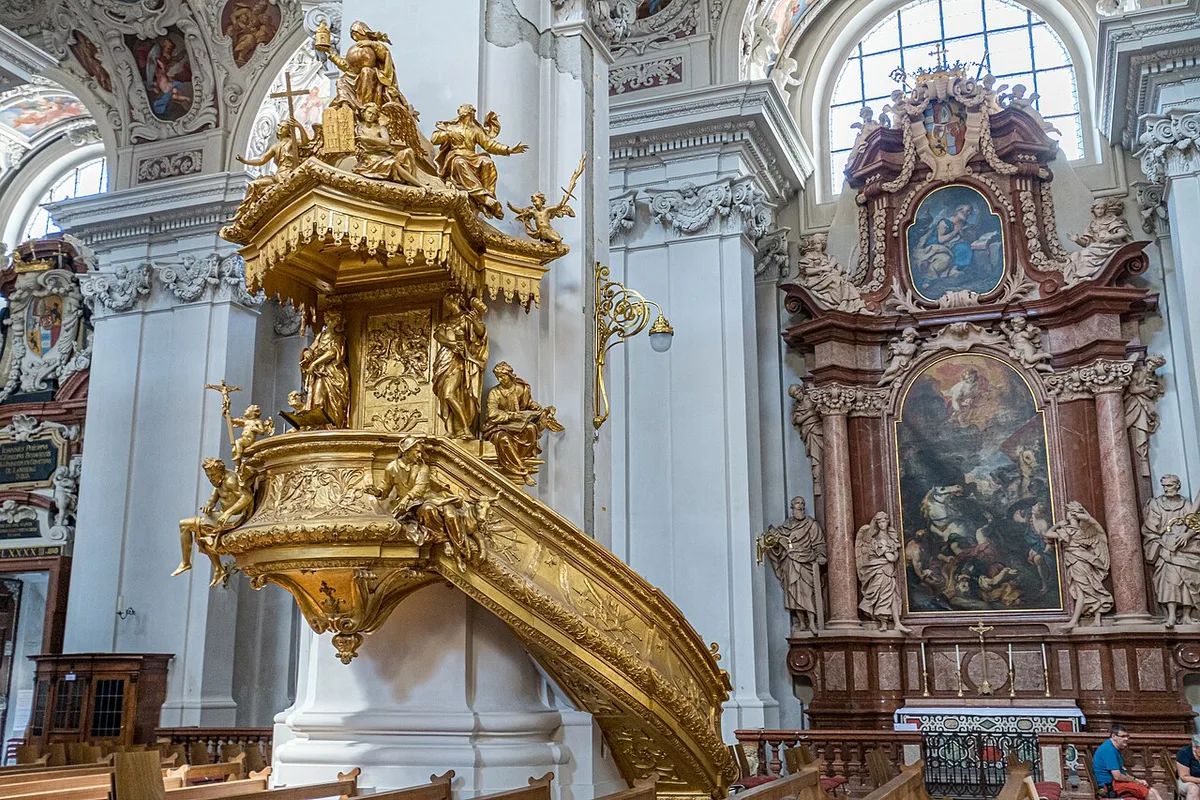
The Mariahilf pilgrimage church sits high above the Innstadt, the neighbourhood on the Inn side of the river, and reaching it requires a deliberate climb rather than a casual stroll. That effort is part of why it stays calmer than the cathedral. The Inn-side promenade and Veste Oberhaus similarly reward anyone willing to walk a bit further.
None of these places are empty, and calling them undiscovered would be misleading. They are quieter alternatives, not secrets, and they can be busy on weekends or during holiday periods. Treat the relative calm as a tendency rather than a guarantee.
Mariahilf: The 321-Step Covered Stairway
A covered stairway with 321 steps leads up to the Mariahilf pilgrimage chapel, and the walkway is lined with votive tablets left by pilgrims over the centuries. Passau Tourism states that the entrance to the stairway is on the Neutorgraben in the Innstadt. This is a climb, not a lift, and the covered structure means you are sheltered from rain on the way up.
The church sits beside the St. Paul monastery, a Baroque complex from the 17th century that was historically significant as a Marian pilgrimage site. The miraculous image at the high altar is a copy; the original, painted by Lucas Cranach, was a gift to Leopold, Archduke of Austria and Prince Bishop of Passau, in 1611, and it now resides in Innsbruck. The copy became famous in its own right after Emperor Leopold I fled to Passau in 1683 and prayed before it during the Turkish siege of Vienna, as Passau Tourism recounts.
Passau Tourism lists the church as open daily from 7 a.m. to 8 p.m., which gives you a wide window for planning. That published window is the one to rely on. Do not assume ceremonies, side chapels or the monastery are open on the same schedule without checking.
Free Grounds Versus Ticketed Interiors
At Mariahilf, the grounds, the stairway and the church exterior are free to approach, but Passau Tourism notes limited wheelchair access for the church and disabled parking in the courtyard. The path to the church is steep, and the covered stairway involves 321 steps. Visitors with mobility limitations should plan to arrive by vehicle and use the courtyard parking if they want to see the church itself.
At Veste Oberhaus, the situation is different: the castle complex includes courtyards and viewpoints, but the museum, St George's Chapel and the Observation Tower are separate from the free approach. Passau Tourism states that the castle complex itself is not accessible for disabled visitors, though an elevator reaches the New Rampart viewpoint and the outer and inner baileys. There are three steps to the ticket office and museum shop, and no disabled access to the tower, exhibition rooms, St George's Chapel or the Linde Battery viewpoint.
Passau Tourism lists the Oberhausmuseum as open from March 15 to November 15 on most days, with a winter window from December 25 to January 6, closed on December 31. The entrance fee includes the Observation Tower, and the operator is the City of Passau, but listed fares can change, so confirm prices on the operator's page before you travel.
The Inn Promenade and Schaiblingsturm
Walk along the Inn River on the southern edge of Passau and you will pass the Schaiblingsturm, a striking tower that marks the route toward the confluence. This is the pathway to the Dreiflüsseeck, the point where the Inn, Ilz and Danube meet. Bavaria's tourism board describes the route as passing the Schaiblingsturm on the way to the confluence at the eastern tip of the old town, and notes that the rivers arrive from different directions with differing colours.
The promenade is free, open and largely flat, which makes it one of the easier additions to a Passau day. It also serves as a useful link between the Innstadt and the tip of the old town. A suggested duration, not an official figure, is roughly half an hour for the walk one way, depending on how often you stop to look at the water.
Veste Oberhaus: What the Complex Actually Contains
Veste Oberhaus is one of the largest surviving castle complexes in Europe and was once the residence of the prince-bishops of Passau, according to Bavaria's tourism board. It sits on the Georgsberg above the city, and the Oberhausmuseum inside presents exhibitions on medieval life, Passau's history and its role as a trading centre. St George's Chapel, at the heart of the complex, holds a cycle of 14th-century frescoes.
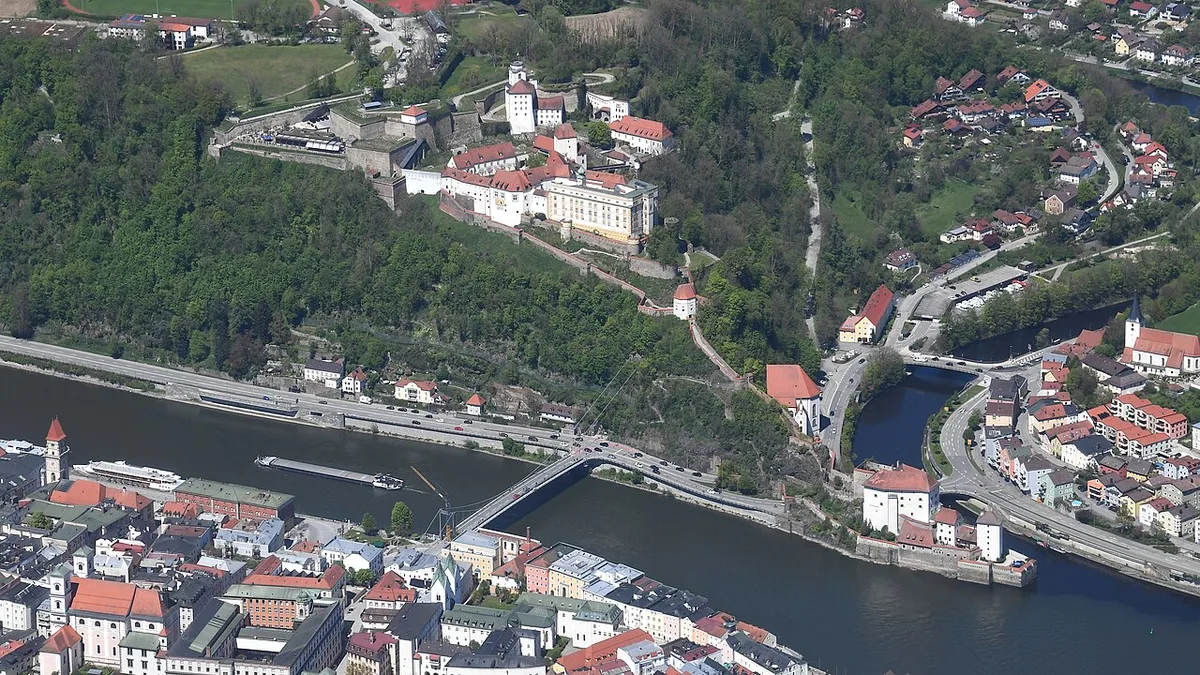
The Observation Tower has reopened with multimedia installations, and climbing to the upper platform gives panoramic views over the city and the rivers, as described by Passau Tourism. Wheelchair access to the tower and exhibition rooms is not available, so the trade-off is clear: the best views come with the least accessibility. Folding stools are available on request.
Passau Tourism notes that a bus shuttle runs according to museum opening times, daily on the half hour between Town Hall Square and the fortress, and that passengers who show a bus ticket receive a discount on the museum entrance fee. The shuttle and public buses are not suitable for wheelchair users because of the high entry.
Kastell Boiotro: A Deliberate Roman Detour
The Roman Museum Kastell Boiotro sits on the foundations of a late Roman fort and displays around 600 exhibits covering 400 years of Roman presence in the region, according to Bavaria's tourism board. It is a small site, but it adds a distinct layer to a Passau visit that the Baroque churches and fortress do not cover.
This is also the stop where you should check details before travelling, because entry rules and opening arrangements are not the same as at the larger museums. Passau Tourism's museum listings and the museum's own pages are the right places to confirm current access. A suggested duration, not an official figure, is about an hour if you want to read the exhibits rather than pass through quickly.
Side Lanes and Small Squares on the Inn Side
The Innstadt, the neighbourhood on the Inn side, has its own lanes and small squares that see fewer visitors than the cathedral quarter. Walking from the river promenade toward the Mariahilf stairway takes you through this area without any need for a map. The contrast with the busy old town is immediate once you cross the bridge.
Read the old town as a set of layers rather than a checklist: the Roman past at Boiotro, the medieval trade city around the Rathaus, and the Baroque rebuilding after the 1662 fire that shaped the cathedral. The Passau old town walk can connect those layers more clearly than jumping between individual sights.
Building a Half-Day Loop Without Backtracking
A sensible order is to start on the Inn side with the Mariahilf climb or the riverside promenade, then cross into the old town and finish at Veste Oberhaus. This avoids climbing the fortress hill and then retracing your steps to the Inn. It also puts the steepest section earlier, when energy is higher.
If you add the Roman Museum Kastell Boiotro, treat it as a separate short stop rather than part of the main loop. It works best on a different half-day or as a deliberate detour. A suggested plan, not an official timing, is roughly two to three hours for the Mariahilf and promenade combination, then half a day for the fortress if you include the museum and tower.
Practical Notes Before You Go
Passau's old town sits at the confluence of three rivers and has a long history of flooding, so riverside paths and lower lanes can be affected after heavy rain. Check local conditions if you are visiting during a wet period. Passau Tourism publishes current information for visitors.
The Mariahilf church, the Oberhausmuseum and the Roman Museum each have their own access rules, opening arrangements and ticket structures. Do not assume one ticket covers all three, and do not assume a courtyard is the same as an interior. Confirming each site separately is the only reliable approach.
Plan Your Visit
Passau rewards visitors who move beyond the cathedral square, but the quieter stops each have their own practical constraints. Mariahilf involves 321 steps and has limited wheelchair accessibility, Veste Oberhaus separates free grounds from ticketed interiors and has notable access limits, and the Roman Museum Kastell Boiotro is a small, deliberate detour. Choose two of these rather than trying to cover everything in one day.
Check current opening hours, ticket details and accessibility information on each site's own page before you travel, because these arrangements change. Passau Tourism is the most reliable starting point for visitor information. Once your route is set, the walk between sites is part of the experience.
Frequently Asked Questions
How many steps lead up to the Mariahilf pilgrimage church?
Passau Tourism states that the covered stairway to the Mariahilf pilgrimage church has 321 steps, and the walkway is lined with votive tablets. The entrance is on the Neutorgraben in the Innstadt. The climb is not suitable for wheelchair users, and disabled parking is available in the courtyard.
Is the Mariahilf stairway free to climb?
The stairway and church exterior are free to approach, and Passau Tourism lists the church as open daily from 7 a.m. to 8 p.m. The climb involves 321 steps and the site has limited wheelchair accessibility. The grounds, the church and the monastery are separate from each other, so do not assume one opening window applies to everything.
Are the Veste Oberhaus grounds free if you skip the museum?
The Veste Oberhaus complex includes courtyards and viewpoints, while the Oberhausmuseum, St George's Chapel and the Observation Tower are separately managed. Passau Tourism states that the castle complex is not fully accessible for disabled visitors, and there are three steps to the ticket office. Check the operator's own page for current access rules before you commit.
Is the Roman Museum Kastell Boiotro worth a detour?
Bavaria's tourism board describes the Roman Museum Kastell Boiotro as occupying the foundations of a late Roman fort, with around 600 exhibits on four centuries of Roman rule in the region. It is a smaller, more specialised stop than the fortress or the cathedral. Entry details change, so verify current arrangements with Passau Tourism before visiting.


