
Seville built its reputation on tapas and flamenco, but its historic core hides one of Europe's densest lineups of free admission days. Local museums, palaces, and monuments open their doors at no charge on a rotating weekly schedule that most visitors never plan around. This guide breaks down which free things to do in Seville open in 2026, on which days, and for how long.
The Real Alcázar releases a limited batch of free tickets every Monday afternoon for the palace's final entry slot, roughly 4 to 6pm. Reservations open online roughly two to three weeks ahead and the free slots sell out fast, so timing matters more than budget here. This guide reflects Seville's 2026 free-admission calendar, including the days and hours that changed most recently.
The picks below span ten stops grouped into three categories: reduced-hour free monuments, landmarks free every single day, and neighborhoods worth wandering for nothing. Each entry lists the normal ticket price for context, the free hours, and one practical tip for making the most of a limited window. A short planning section follows, along with an honest note on which paid attractions are worth the extra euros.
10 Free Things to Do in Seville
Andalusia's capital treats free admission as a genuine civic tradition rather than a marketing gimmick. The list below moves from monuments with scheduled free windows to landmarks that never charge admission, then to neighborhoods worth exploring at no cost.
The first group covers grand interiors that normally charge an entry fee but waive it during a fixed weekly window. Casa de Pilatos is the clearest example, waiving its usual entry fee every Monday afternoon for a few hours only. The Casa de Pilatos foundation site lists the current free-hour window, since it has shifted in past years. Arrive close to opening, because the free tickets are handed out at the gate rather than reserved online.
Torre del Oro is the easiest of these free windows to use, since it needs no advance booking at all. The riverside tower waives its entry fee every Monday, and the Torre del Oro official site confirms current hours before a visit. Its small naval museum fills in under thirty minutes, making it an easy add-on to a riverside walk.
Free-admission windows often hand out tickets at the gate on a first-come, first-served basis rather than through online reservations. Arrive early or check each site's policy ahead of time, since free slots typically fill during peak afternoon hours.
The second group of picks never charges admission at all, on any day of the year. The Archive of the Indies is the standout example, holding original shipping records from Spain's colonial trade with the Americas. According to the Spanish Ministry of Culture's archive page, entry has been free every day the reading rooms are open.
Monday afternoons deliver the best free-admission windows: Real Alcázar (4 to 6pm), Casa de Pilatos (afternoon), and Torre del Oro all waive admission on the same day. Book the Alcázar's free slot online first, as free tickets often sell out within hours.
Plaza de España belongs in this always-free group too, and it draws more visitors than any paid museum in the city. Built for the Ibero-American Exposition of 1929, the plaza has stayed free and open to the public ever since. The final group below trades monuments for free-to-wander neighborhoods and one very Sevillian evening ritual.
- Real Alcázar's Free Monday Afternoon Slot
- The 14th-century royal palace normally costs about 14.50 euros for general adult admission.
- Every Monday, a limited batch of free tickets covers the last entry slot, roughly 4 to 6pm.
- The Mudéjar courtyards and gardens are worth the wait, even on a rushed 90-minute visit.
- Casa de Pilatos' Monday Free Hours
- This 15th-century mansion mixes Mudéjar tilework with Renaissance courtyards across several film-famous rooms.
- Regular tickets run roughly 6 to 10 euros, but Monday afternoons drop to free for a few hours.
- Lines build fast once word gets out, so plan to arrive right at opening.
- Torre del Oro's No-Booking Monday Visit
- This 13th-century watchtower guards the Guadalquivir riverbank and houses a compact naval museum inside.
- A standard ticket costs only a few euros, but every Monday entry is free with no reservation needed.
- Thirty minutes covers the museum comfortably, leaving time for a riverside walk afterward.
- Seville Cathedral and Giralda's Free-Entry Window
- The world's largest Gothic cathedral holds Columbus's tomb and the climbable Giralda bell tower.
- Standard combined tickets run roughly 12 to 15 euros, though a free window opens some weekday afternoons.
- Check the cathedral's official ticketing page first, since the free slot fills fast and shifts by season.
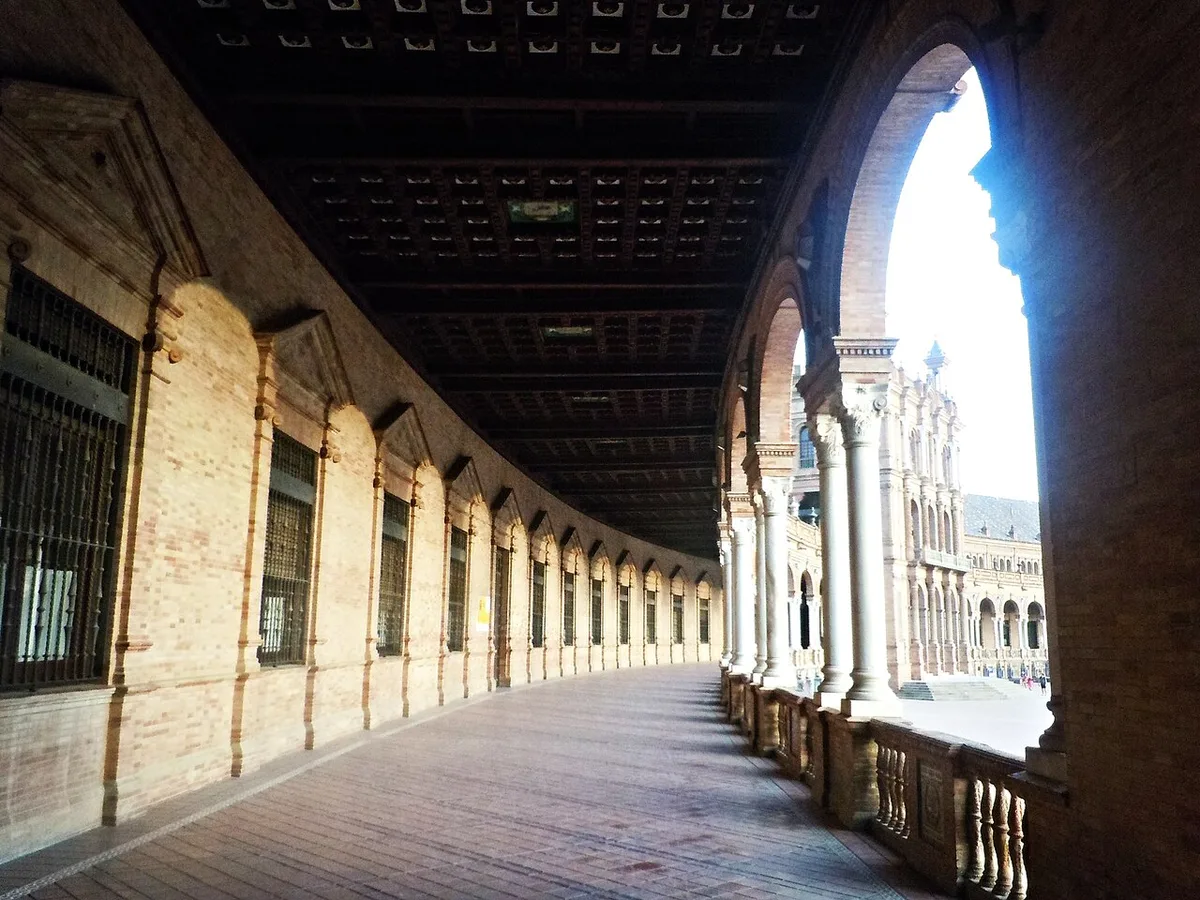
- Plaza de España's Painted Tile Alcoves
- This curved, moat-lined plaza is free to enter every day, with no ticket booth in sight.
- Painted alcoves line the walls, one for each Spanish province, doubling as a small free-library shelf.
- Morning light works best for photos, well before tour buses fill the central fountain area.
- María Luisa Park's Shaded Ponds and Fountains
- This palm-lined botanical park wraps around Plaza de España and stays free from morning to night.
- Wandering parakeets, orange trees, and quiet ponds make it an easy escape from the midday sun.
- Weekday mornings are noticeably quieter than weekend afternoons, when local families take over the lawns.
- Archive of the Indies' Original Colonial Documents
- This UNESCO-listed building holds original shipping and trade records from Spain's centuries of colonial commerce.
- Entry is free every day the reading rooms are open, with no ticket required at the door.
- The cool, quiet halls make this a smart pick on a hot Seville afternoon.
- Triana's Ceramic Workshops and River Views
- This working-class neighborhood across the Guadalquivir has produced Seville's decorative tiles for centuries.
- There is no entry fee here, just a riverside walk past small ceramic workshops.
- Late afternoon light along the river makes this the best time for photos of the skyline.
- Santa Cruz Quarter's Whitewashed Alleys
- The old Jewish quarter's narrow lanes and hidden courtyards cost nothing to explore on foot.
- Orange trees and wrought-iron balconies line streets barely wide enough for two people to pass.
- Early morning, before tour groups arrive, is the quietest time to wander here.
- Free Flamenco Shows at Triana's Local Bars
- Several bars in Triana host unticketed flamenco performances most nights of the week.
- La Carbonería runs shows nightly around 10:30pm, while La Anselma starts closer to 11:30pm.
- There is no cover charge, though bars expect at least one paid drink per guest.
How Many Days Do You Need for Free Sightseeing?
A single day comfortably covers the always-free landmarks, since Plaza de España, María Luisa Park, and the Archive of the Indies sit close together. Two days let you add a Monday free-entry palace or two without rushing between reservation windows. Three days works best if flamenco evenings and neighborhood wandering matter as much as the monuments.
Travelers building a single-day plan can pair this free-things list with a full one-day Seville itinerary for hour-by-hour pacing. Free stops slot naturally into morning and late-afternoon gaps, when paid attractions often have shorter lines anyway. Midday heat between roughly 2 and 5pm is a good window for an indoor free stop like the Archive of the Indies.
Paid museums still fill useful gaps in a free-focused schedule, especially once the free-hour windows above are used up. A broader look at ticketed collections lives in the guide to Seville's best museums worth visiting, for anyone with a paid-admission budget too. Combining one paid museum with two or three free stops usually fills a satisfying half-day.
Mondays deserve special planning, since several of the best free windows land on the same day. Booking the Alcázar's free slot first, then walking to Casa de Pilatos afterward, is a realistic combination for one afternoon. Save Torre del Oro for early Monday morning, since it needs no reservation at all.
Family-Friendly and Budget-Friendly Extras
María Luisa Park and Plaza de España double as the easiest free stops for families with young children. Wide paved paths handle strollers well, and the park's shaded benches give tired legs a break. Parakeets and fountains hold kids' attention longer than most paid museum galleries do.
Families planning a longer stay can pair these free stops with the dedicated guide to Seville with kids for age-specific picks. That guide covers paid attractions worth the splurge, which this free-focused list intentionally leaves out. Mixing one paid highlight with several free stops keeps a family day varied without draining the budget.
Budget travelers without kids benefit from the same math, since two or three free stops a day stretch a short trip further. Picnic supplies from a Triana market stall make María Luisa Park a free lunch spot too. Public water fountains around the park mean bottled water is rarely necessary in mild weather.
What to Skip and What's Worth Paying For
Not every popular recommendation earns its spot on a free-things list. The Metropol Parasol's rooftop walkway charges admission and gets crowded fast, so treat it as a paid extra rather than a free must-see. Skipping it entirely on a tight budget costs little, since the plaza underneath is free to walk through anyway.
Seville's paid attractions still earn their ticket price for travelers with a day or two of budget to spend. A full rundown of ticketed sites, prices, and hours sits in the Seville attractions guide, organized by neighborhood. Cross-referencing that list against the free picks above avoids paying twice for something available free on the right day.
City passes bundle several paid sites into one price, which sounds efficient until the free-Monday math gets involved. The breakdown in is the Seville Pass worth it weighs pass pricing against paying per site, including the free windows covered here. Travelers hitting three or more free Monday slots often save more by skipping the pass altogether.
Is Seville Worth a Free-Budget Trip?
Seville rewards a free-focused trip better than most major European capitals, given how many marquee sites waive admission weekly. A visitor sticking to the picks above can fill three full days without buying a single museum or palace ticket. That leaves the travel budget free for food, flamenco tickets, or one splurge attraction instead.
Neighborhoods add depth that the big-name monuments alone cannot, especially for a return visitor. The hidden gems in Seville guide covers lesser-known corners worth the extra walking, most of them free to explore. Pairing that list with Triana and Santa Cruz above rounds out a trip that skips the tourist-trap circuit almost entirely.
Evenings extend the free-budget approach further than daytime sightseeing alone. Beyond the flamenco bars covered above, the guide to things to do in Seville at night lists more low-cost after-dark options. Between free daytime monuments and cheap evening entertainment, Seville stretches a modest budget further than its reputation suggests.
Frequently Asked Questions
How much does a free day in Seville actually cost?
A day built around the picks above can cost close to nothing beyond food and transport. Entry to the palaces, museums, and plazas covered here is free on their scheduled days. Budget mainly for meals, a metro pass, and maybe one drink at a flamenco bar.
Do free entry tickets need advance booking?
Some do and some don't, so it pays to check each site before setting a schedule. The Real Alcázar and Casa de Pilatos require online booking or early arrival for their free Monday windows. Torre del Oro and the Archive of the Indies need no reservation at all.
Which day of the week has the most free things to do in Seville?
Monday is the strongest day, since the Real Alcázar, Casa de Pilatos, and Torre del Oro all waive admission for part of the afternoon. Plaza de España, María Luisa Park, and the Archive of the Indies stay free every single day regardless.
Is it worth skipping paid attractions in Seville entirely?
Not entirely, since a few paid sites still deliver more than the free alternatives. Mixing one or two paid highlights with the free picks above balances cost against experience. A city pass only pays off for travelers visiting several paid sites in a short window.
Seville's free-admission calendar rewards travelers willing to plan around a schedule instead of a budget. Monday afternoons alone can cover a palace, a mansion, and a riverside tower without spending a euro on tickets. The rest of the week still leaves plazas, parks, and neighborhoods open at no cost at all.
Build the free stops around the paid attractions actually worth their price, and Seville stops feeling like an expensive city. Bookmark the official ticketing pages linked above, since free-hour schedules shift from year to year.