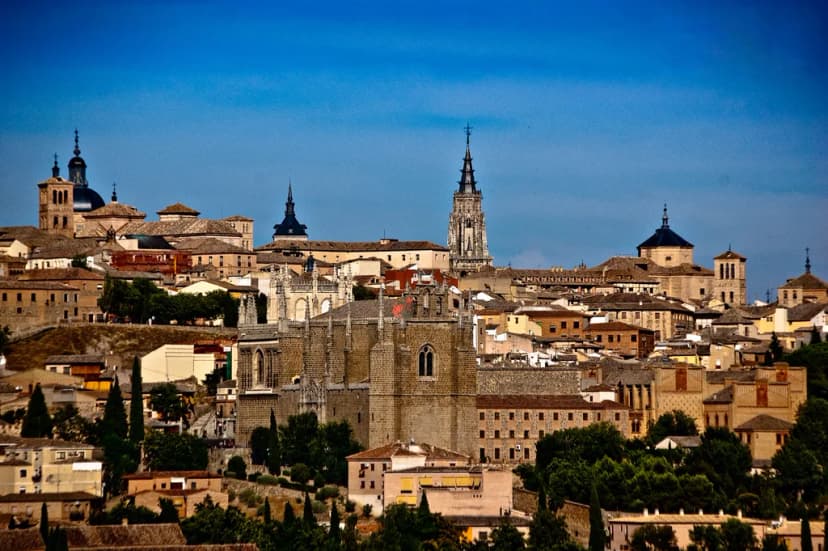
Seville rewards photographers with tiled courtyards, orange-lined streets, and a skyline anchored by one bell tower. This edit narrows the city down to the ten spots that consistently produce the strongest frames. Each pick includes the practical details a shot list actually needs, not just a pretty caption.
Real Alcazar admission runs about 13 to 16 euros for adults in 2026, and the palace opens daily from 9:30am. That single fact changes a lot of itineraries, since the courtyards get crowded fast once doors open. Several other spots on this list are free, which helps balance a photo-focused day against a ticket budget.
The full guide to Seville's attractions covers ticketing and logistics for every major site in more depth. This piece stays narrow on purpose, ranking spots by how they actually photograph rather than by general appeal. This guide was refreshed for 2026 with current pricing, hours, and seasonal light notes.
10 Best Photo Spots in Seville Right Now
This list mixes iconic monuments with the quieter corners locals actually recommend to visiting photographers. Every entry names an exact building, plaza, or neighborhood rather than a vague category like museums or parks. Order roughly follows how a walkable route through the old town and across the river naturally flows.
Six of the ten spots are free to photograph, which keeps a full day of shooting affordable. The rest charge modest entry fees, and most offer discounted or free hours worth planning around. Prices below are typical 2026 ranges; always confirm current figures on the official ticketing site before a visit.
Light matters as much as location in a city built from pale stone and glazed tile. Morning sun favors east-facing plazas, while several rooftop and riverside spots peak closer to sunset. Notes on timing sit inside each entry below, so plan a route around light rather than convenience alone.
| Spot | Time Needed | Cost |
|---|---|---|
| Real Alcazar's Patio de las Doncellas | 2 hours | 13-16 euros |
| Seville Cathedral and La Giralda | Varied | 11-14 euros |
| Plaza de Espana | 1 hour | Free |
| Metropol Parasol (Las Setas) | 45 minutes | 3-5 euros |
| Casa de Pilatos | 45 minutes | 6-10 euros |
| Plaza del Cabildo | 20 minutes | Free |
| Torre del Oro | 20 minutes | 1-3 euros |
| Barrio Santa Cruz | 1 hour | Free |
| Triana | Varied | Free |
| Parque de Maria Luisa | 30 minutes | Free |
- Real Alcazar's Patio de las Doncellas
- This Mudejar palace courtyard is Seville's most photographed interior, framed by arches and reflecting pools.
- It sits inside the Real Alcazar in the old town and rewards a two-hour visit for unhurried shots.
- Adult tickets run about 13 to 16 euros, and the palace opens daily from 9:30am in summer.
- Bus C5 stops nearby, and arriving right at opening beats the tour-group crowds by a full hour.
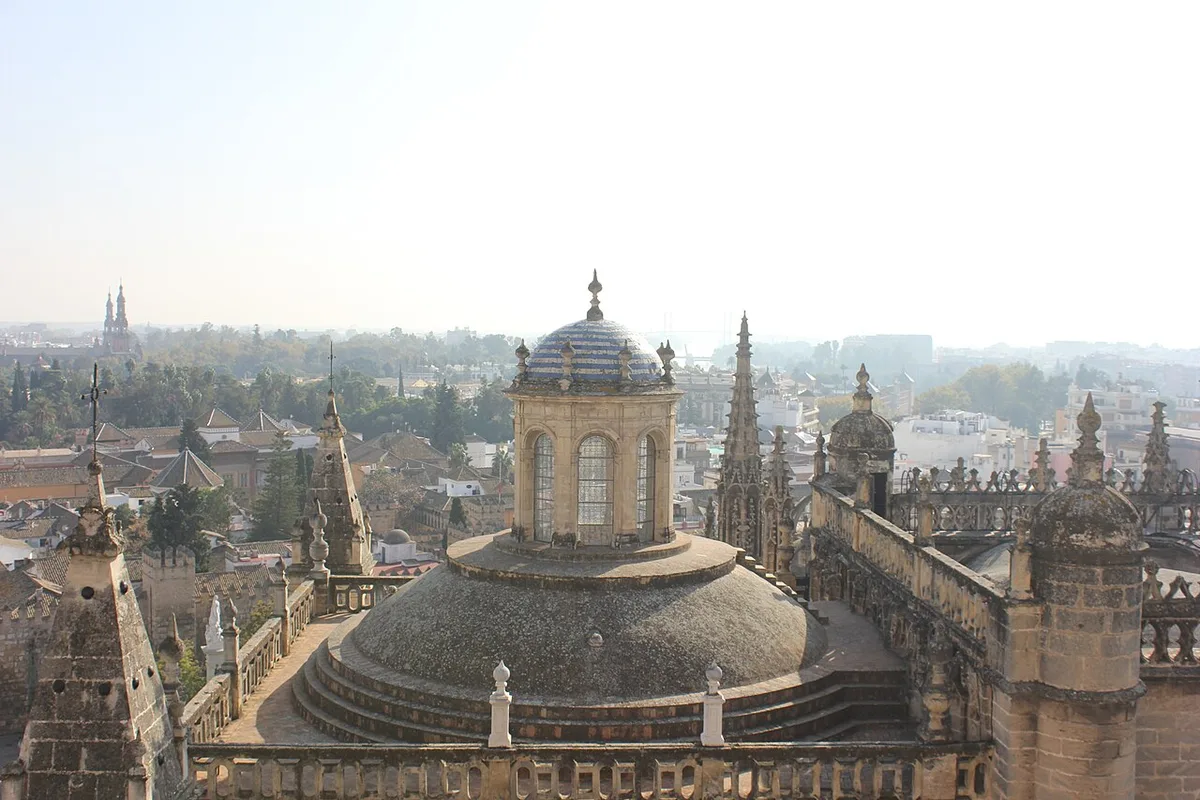
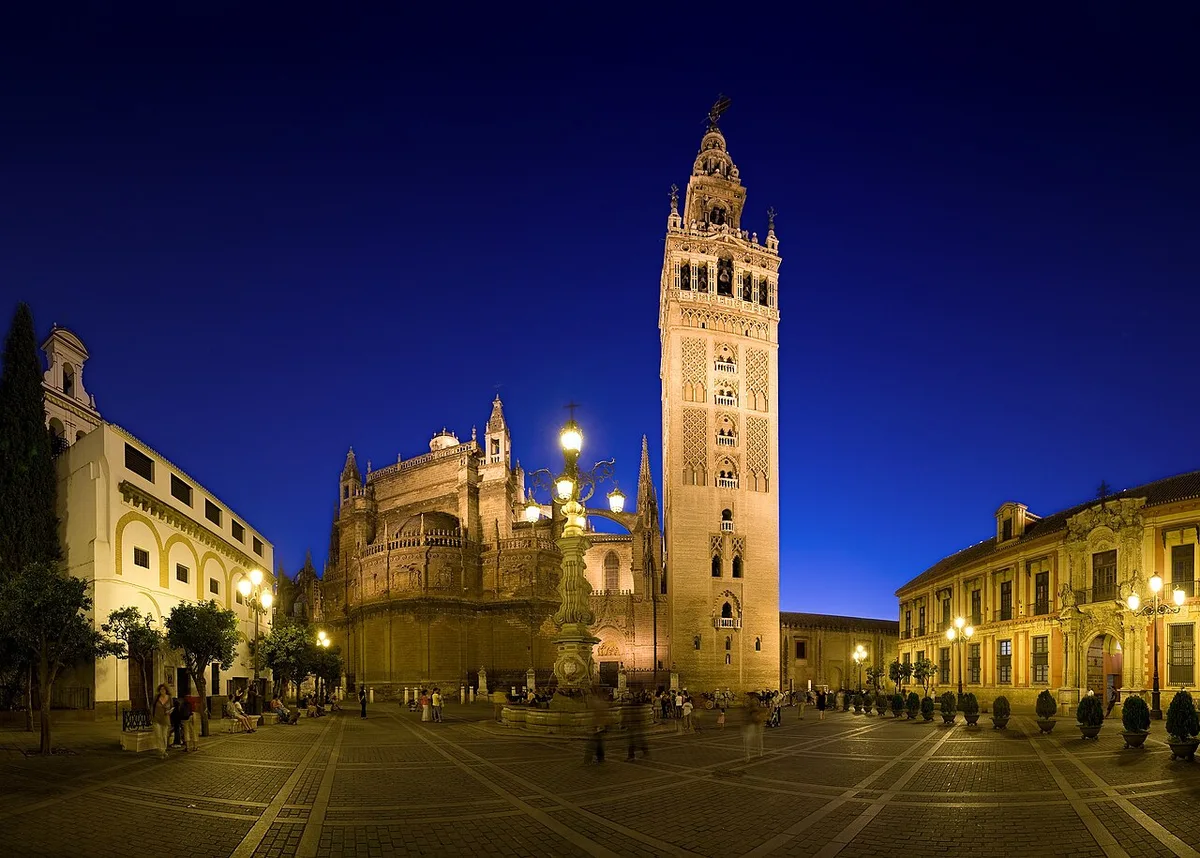
- Seville Cathedral and La Giralda tower
- The cathedral and its converted minaret dominate every old-town skyline shot from almost any direction.
- Plaza Virgen de los Reyes, just outside the north door, frames both structures in one clean angle.
- Combined entry costs roughly 11 to 14 euros, with hours generally 10:30am to 6pm and shorter on Sundays.
- Climb the Giralda's ramp for a rooftop view, and go right at opening to avoid the tour-bus rush.
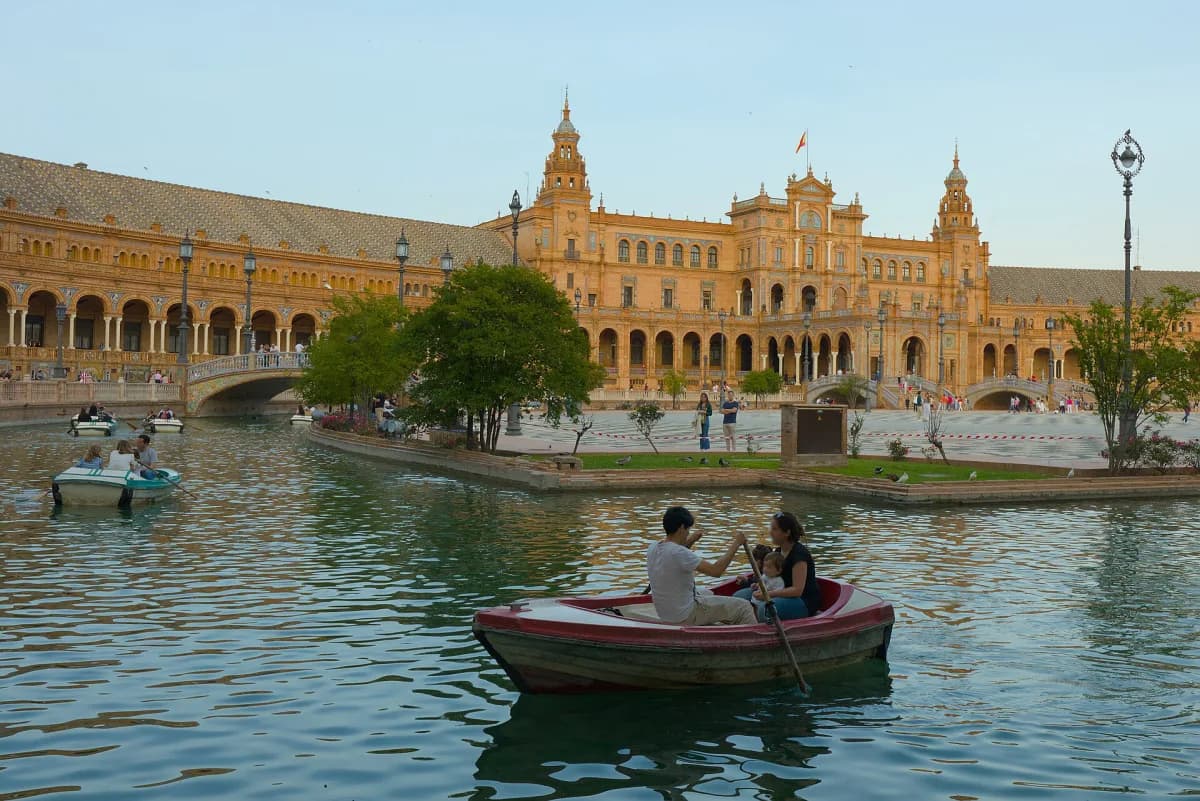
- Plaza de Espana's tiled canal bridges
- This 1928 semicircular plaza pairs blue-and-yellow tiled alcoves with a canal crossed by four ornate bridges.
- It sits at the edge of Parque de Maria Luisa and needs about an hour to shoot properly.
- Entry is free, and the plaza stays open around the clock with no fixed closing time.
- The number 34 bus and a short walk both work; sunrise light beats midday's flat glare.
- Metropol Parasol rooftop walkway
- Locally called Las Setas, this mushroom-shaped timber structure offers a panoramic rooftop path over the old town.
- It rises above Plaza de la Encarnacion, and a rooftop loop takes roughly 45 minutes.
- Rooftop access costs around 3 to 5 euros, with the structure lit and open until late most nights.
- Arrive about 45 minutes before sunset, since the walkway fills fast once the sky starts to color.
- Casa de Pilatos's tiled courtyard
- This 16th-century noble house pairs Renaissance marble with Mudejar tilework in a quieter, less-visited setting.
- It sits near Plaza de Pilatos in the Santa Catalina area and needs about 45 minutes to explore.
- Ground-floor tickets run roughly 6 to 10 euros, and the house opens daily from 9am to 6pm.
- Midday visits stay calm here even when the Alcazar is packed, making it a solid backup.
- Plaza del Cabildo's arcaded arches
- This small semicircular square hides behind an unmarked archway just steps from the cathedral crowds.
- Weekend mornings bring stamp and old-book sellers to the arcade, adding character without any entry fee.
- It costs nothing to visit and stays accessible any time, though residents live in the flats above.
- Keep noise down and cameras pointed at the architecture rather than the windows out of basic courtesy.
- Torre del Oro's riverside promenade
- This 13th-century watchtower anchors the Guadalquivir waterfront with palm-lined views back across the river.
- The Paseo del Rey promenade just north of the tower gives the cleanest angle, needing only 20 minutes.
- Museum entry costs about 1 to 3 euros and is often free on Mondays; check the current schedule.
- Walk or take the riverside tram, and return around golden hour when the water catches the light.
- Barrio Santa Cruz's whitewashed lanes
- Seville's old Jewish quarter delivers narrow alleys, orange trees, and flower-draped balconies at every turn.
- It borders the cathedral and Alcazar, so budget an hour to wander its maze of side streets.
- There is no entry fee, and the neighborhood is walkable any time of day or night.
- Streets empty out by mid-morning on weekdays, so an early pass avoids the afternoon tour groups entirely.
- Triana's ceramic-tiled riverside quarter
- Seville's traditional potters' district lines its lanes with hand-painted azulejo tiles and colorful workshop facades.
- It sits just across the Puente de Isabel II bridge, near the Mercado de Triana.
- Wandering the neighborhood and market is free, though a workshop visit may run a small fee.
- Cross the bridge near sunset for warm light on the tilework, then browse the market before it closes.
- Parque de Maria Luisa's shaded ponds
- This 99-acre garden sits beside Plaza de Espana and mixes fountains, tiled benches, and a small duck pond.
- Isleta de los Pajaros, its little island bridge, is the park's most photogenic corner and worth 30 minutes.
- Entry is free and gates stay open from early morning until around 10pm most of the year.
- Come after Plaza de Espana at sunrise, since the park's shade holds cooler light later into the morning.
Tripods need a permit at several monuments. Check each site's photography policy before packing heavy gear.
What to Skip: Overrated Photo Spots
Not every spot with a hashtag earns the detour, and two recurring picks fall short in person. Plaza Nueva shows up on generic Seville lists, but its main function is a transit hub and tram stop. The architecture is pleasant enough, yet it rarely produces a frame worth the walk from better plazas nearby.
La Alameda de Hercules photographs best after dark, when its bars and string lights come alive. Listed as a daytime photo stop, it mostly delivers parked cars and flat midday light on plain pavement. Save it for an evening tapas stop instead, and spend that daylight hour at Plaza del Cabildo or Triana. Local photographers on r/Seville echo the same overrated verdict for this square.
One more honest note: staged flamenco photo ops sold near the cathedral cost extra and add little. The genuine article, a proper tablao show in Triana, is a better use of that same evening budget. For more free, low-key detours around town, the guide to free things to do in Seville lists several.
Best Time of Day and Season for Photos
Seville's light shifts fast, so pairing each spot with its ideal hour matters more than a fixed route. East-facing plazas like Plaza de Espana and Plaza Virgen de los Reyes glow brightest within an hour of sunrise. Rooftop and riverside spots peak closer to sunset; a guide to where to watch sunset in Seville covers exact timing.
For a broader roundup of elevated views across the city, the guide to Seville's best viewpoints pairs well with this list. Golden hour specifically favors Triana's riverfront, where warm light hits the tiled facades across the water. That same golden window also flatters the cathedral's stonework when viewed from across the river.
Spring and autumn bring the mildest midday light, avoiding the harsh overhead sun of a Seville summer. Winter days are shorter but softer, and the low afternoon angle flatters the tile work at most sites. Holy Week and the April Fair pack the historic core, so shoulder-season visits usually mean thinner crowds.
A short video walkthrough of these same routes, filmed at street level, helps with framing before a trip. Crowd and lighting conditions can shift with festivals, so a quick pre-trip check helps confirm timing. Between the video and the list above, most of the guesswork disappears before the camera comes out.
How Many Days Do You Need for a Photo Walk?
One focused day covers the core five: Alcazar, cathedral, Plaza de Espana, Metropol Parasol, and Santa Cruz. Two days add breathing room for Triana, Casa de Pilatos, and a proper sunset return to the riverfront. A guide to spending two days in Seville lays out a route that matches this pacing closely.
Photographers chasing empty-frame shots should budget extra time for repeat visits at opening and near closing. The Real Alcazar and cathedral both reward a second pass, since midday crowds change the mood of a shot completely. Tripods need a permit at several monuments, so check each site's photography policy before packing heavy gear.
Anyone visiting several paid sites should weigh whether a combined pass actually saves money against solo tickets. A breakdown of whether the Seville Pass is worth it compares both options against a typical two-day itinerary. For most photo-focused visitors, buying skip-the-line tickets direct still beats a bundled pass on flexibility.
Frequently Asked Questions
What is the single best photo spot in Seville?
Real Alcazar's Patio de las Doncellas edges out the rest for its symmetry, tilework, and reflecting pools. Arrive at 9:30am opening to shoot the courtyard before tour groups arrive. Expect to pay roughly 13 to 16 euros for adult admission.
How much time should you plan for a Seville photo walk?
One packed day covers the five essential spots, while two full days allow proper morning and sunset visits. Add a third day for day-trip detours if photography is the main travel goal. Most photo-focused visitors find two days strikes the best overall balance.
Which Seville photo spots are completely free?
Plaza de Espana, Plaza del Cabildo, Barrio Santa Cruz, Triana, and Parque de Maria Luisa all cost nothing to visit. That covers half the list on this guide without buying a single ticket. Paid sites like the Alcazar remain worth the fee.
Is a Seville photo walk worth it on a short itinerary?
Yes, since most of the top spots sit within a compact old-town core reachable on foot. A focused half-day route can still hit Plaza de Espana, the cathedral, and Metropol Parasol. Timing around light matters more than total distance covered.
Where can you shoot photos of Seville on a rainy day?
Covered courtyards at Casa de Pilatos and the Real Alcazar stay dry, quiet, and photogenic under cloud cover. A guide to Seville on a rainy day lists several more indoor backups nearby. Soft, diffused light can even flatter tiled interiors nicely.
Seville rewards a route built around light and crowds rather than a rigid checklist of landmarks. The ten spots above cover every angle, from a UNESCO palace courtyard to a hidden arcaded plaza. Pair the paid highlights with the free ones to keep a full shooting day within budget.
For extra courtyards and side-street angles beyond this list, Piccavey's dedicated Seville photo guide adds a few more. Start early, end near sunset, and let this guide do the planning for the day in between. Every price and hour here reflects 2026 figures, so double-check the official site before a paid visit.