
Last updated July 2026, this guide ranks the best museums in Verona for travelers who want to prioritize collections over crowds. Verona's medieval fortresses, convents, and Baroque palaces double as exhibition halls, so the architecture is often as compelling as what is inside. Use the criteria below to decide which of the city's 11 leading museums fit a short visit and which deserve a longer stop.
Verona's Indoor Side: What to Expect Beyond the Arena
Verona's outdoor sights get most of the attention: the Roman Arena, Piazza delle Erbe, and the balcony linked to Juliet Capulet. Indoors, the city holds Roman glass, medieval sculpture, and 20th-century art spread across a dozen sites, many inside monuments worth seeing on their own. For a first stop, prioritize three names: Castelvecchio Museum, the Archaeological Museum at the Roman Theatre, and the Fresco Museum inside the Juliet's Tomb complex. Together they cover the city's fortress architecture, its Roman-era history, and the detached frescoes tied to Verona's Urbs Picta heritage. Two of the museums below sit directly on or near Piazza delle Erbe, so they slot easily into a walk that also covers the square's market stalls and towers. If time is tight, pair this list with a one-day Verona itinerary to fit one or two museums around the main squares.
The Verona Card and When Museums Are Open
The Verona Card bundles entry to many of the city's civic museums into one cumulative pass instead of paying per site, which suits a visit built around three or more stops. A standard single-museum ticket runs roughly $6 to $10, so the math favors the card once a third site gets added to the day. Civic sites such as Castelvecchio, the Archaeological Museum, and the Achille Forti gallery are typically part of that circuit. Privately run collections, including some of the smaller house museums on this list, are not always included, so confirm each site's current status before buying. Tickets for civic sites are typically available on-site or through each museum's own ticket desk, with the card purchasable at participating locations across the center. As with many Italian civic museums, expect some Monday closures across the city, and check individual opening hours before locking in an itinerary. Indoor museums also double as a backup plan on a wet afternoon, which is where planning a rainy day in Verona becomes useful for sequencing two or three stops without wasting a ticket.
11 Best Museums in Verona Worth Visiting
The list below orders Verona's leading collections by how most visitors will encounter them, from the essential fortress museum to specialized, low-crowd stops on the edge of the historic center.
- Castelvecchio Museum
- This 14th-century fortress on the Adige River holds Verona's main museum, restored in the mid-20th century by architect Carlo Scarpa in a project still studied by architecture students today.
- Collections span medieval sculpture, a painting gallery with works by Pisanello and Paolo Veronese, plus collections of weapons, bells, and jewels.
- The courtyard's equestrian statue of Cangrande della Scala is one of the strongest photo stops on this list, framed by the castle's brick towers.
- Archaeological Museum at the Roman Theatre
- Founded in 1923, the museum occupies the cells, refectory, and cloister of the 15th-century Jesuit convent of San Gerolamo, set above the Roman Theatre.
- Displays cover Roman-era finds recovered across Verona and its surrounding territory, alongside city and river views from the convent terraces.
- Reaching the upper levels requires stairs or a lift, so factor that access trade-off into the visit if mobility is a concern.
- Fresco Museum "G.B. Cavalcaselle" and Juliet's Tomb
- The former monastery of San Francesco al Corso is where legend places Juliet's burial, inside a stone sarcophagus visitors can still view.
- The stronger draw for art history sits upstairs: frescoes detached from palaces across Verona, part of the city's Urbs Picta heritage.
- Expect the legend to pull most of the crowd while the fresco collection itself stays comparatively quiet.
- Palazzo Maffei
- This Baroque palace on Piazza Erbe holds the Carlon collection, an eclectic mix spanning Boldini, Picasso, Morandi, Magritte, Duchamp, and Balla.
- The building itself, with a Baroque balcony overlooking the square, is as much a reason to visit as the art inside.
- Pair a stop here with Verona's best viewpoints for more elevated spots over the same piazza.
- Achille Forti Gallery of Modern Art
- Housed inside the historic Palazzo della Ragione, this gallery combines the Forti collection with the Domus and Cariverona foundation holdings.
- More than 150 works of painting and sculpture cover the period from 1840 to 1940, with strong ties to Verona-born artists.
- It is one of the quieter stops on this list and a reliable escape from the lines outside Juliet's House.
- Capitolare Library
- The church of St. Helena and the Canonici cloister, decorated with early Christian mosaics, lead into the wider Capitolare complex.
- The Chapter Library inside is widely cited as the oldest continuously functioning library in the world, still holding early manuscripts.
- Visits typically move slowly through the Canonical Museum first, so budget extra time if the manuscripts are the priority.
- Miniscalchi Erizzo Museum
- This former residence of the Counts Miniscalchi Erizzo keeps its Gothic-Venetian facade, frescoes, and decorated rooms largely intact.
- Furniture, period art collections, and documentary archives make it a house-museum experience rather than a standard gallery walk.
- It rarely draws a line, which makes it one of Verona's hidden gems for travelers avoiding the busiest stops.
- Natural History Museum
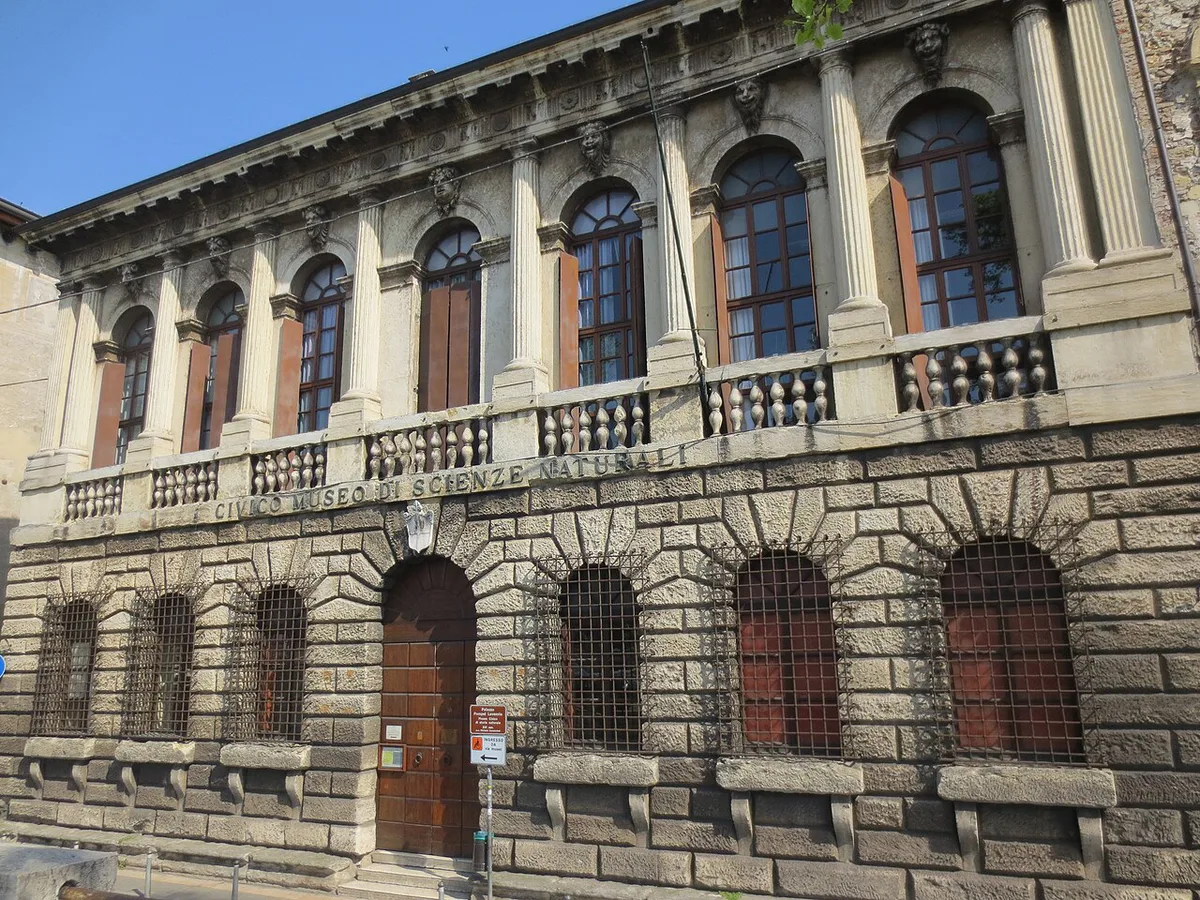
- Founded in 1853 inside Palazzo Pompei, the museum grew from plant, animal, and geological collections assembled by Veronese enthusiasts since the 1500s.
- The standout section covers the Bolca fossil beds, cited as one of the most significant fossil quarries on record.
- It is the strongest pick on this list for a family day, alongside the outdoor stops covered in visiting Verona with kids.
- African Museum
- Founded in 1892 with material gathered by Combonian Missionaries, the collection focuses on African art, objects of worship, and regional history.
- A library holding more than 20,000 volumes, plus a dedicated film library, supports the permanent exhibits.
- Temporary exhibitions rotate through the space on their own schedule, so it is worth checking current listings before a repeat visit.
- Maffeiano Inscriptions Museum
- Scholar Scipione Maffei established this museum in 1745 inside the courtyard of the Philharmonic Academy to house his Greek-Roman inscriptions.
- It ranks among the oldest public museums in the world, predating most national collections found across Europe.
- The appeal is narrow but deep, best suited to travelers with a specific interest in epigraphy and classical inscriptions.
- Underground Museum
- Home to the International Centre of Photography, this site runs temporary photography exhibitions above an underground archaeological route.
- Below street level, the route passes Roman-era stone streets, mosaics, Longobard-era tombs, and remains of medieval tower-houses.
- It is the most physically different stop on this list, better suited to a slower pace than a quick pass-through visit.
Which Museum Should You Choose? Quick Comparison
Use this table to shortlist two or three museums instead of trying to cover all 11 in one visit. Quick stops fit under an hour, moderate stops need about 60 to 90 minutes, and in-depth stops reward two hours or more. Verona Card status is noted as a starting point only, so confirm current inclusion before buying tickets.
Among quick stops (under 1 hour), Achille Forti and Miniscalchi Erizzo offer fewer crowds than the Fresco Museum, where the Juliet legend draws most visitors while the fresco collection stays relatively quiet.
| Museum | Best For | Time Needed | Verona Card |
|---|---|---|---|
| Castelvecchio Museum | Fortress architecture and the painting gallery | In-depth (2+ hrs) | Civic pass |
| Archaeological Museum | Roman-era finds and city views | Moderate (1-1.5 hrs) | Civic pass |
| Fresco Museum and Juliet's Tomb | The Juliet legend plus detached frescoes | Quick (under 1 hr) | Civic pass |
| Palazzo Maffei | Modern art inside a Baroque palace | Moderate (1-1.5 hrs) | Confirm before visiting |
| Achille Forti Gallery | 19th- and 20th-century art, low crowds | Quick (under 1 hr) | Civic pass |
| Capitolare Library | Manuscripts and the world's oldest working library | Moderate (1 hr) | Confirm before visiting |
| Miniscalchi Erizzo Museum | A house-museum with Gothic-Venetian interiors | Quick (under 1 hr) | Confirm before visiting |
| Natural History Museum | Families and the Bolca fossil beds | Moderate (1-1.5 hrs) | Civic pass |
| African Museum | African art and missionary history | Quick (under 1 hr) | Confirm before visiting |
| Maffeiano Inscriptions Museum | Epigraphy and classical inscriptions | Quick (under 1 hr) | Civic pass |
| Underground Museum | Roman and Longobard-era underground route | Moderate (1-1.5 hrs) | Confirm before visiting |
Underground Verona and Guided Tours
Beyond the museum buildings, local operators run themed tours through Verona's underground and after-dark sites. An Underground Tour explores Roman mosaics and Longobard-era tombs beneath the modern street level, typically priced around $30 per person; confirm current schedules before booking. A separate Verona by Night walk covers the city center away from daytime heat and crowds, also priced near $30 per person and departing from Piazza Bra. A Romeo and Juliet-themed tour digs into the historical background behind the legend, departing from Piazza Erbe at a similar price point. These tours typically run through local guide operators rather than the museums themselves, so booking happens separately from any museum ticket. Evening options like these pair well with evening activities in Verona for a full night plan that goes beyond a single walk-through.
Mistakes to Avoid When Visiting Verona's Museums
A few planning mistakes show up often among first-time visitors to Verona's museums.
- Overloading a single day
- Two museums per day is a realistic ceiling once travel time between sites gets factored in.
- Spread heavier stops like Castelvecchio and the Archaeological Museum across a 3-day Verona itinerary rather than packing them into one afternoon.
- Missing seasonal night openings
- Some sites add evening hours on a seasonal basis, separate from their standard daytime schedule.
- Check current listings before assuming a museum keeps normal hours after dark, especially in summer.
- Skipping the house museums
- Miniscalchi Erizzo and similar smaller sites get passed over in favor of the well-known names, yet they carry the shortest lines on this list.
- Travelers working with a tighter budget can offset paid museum entries by mixing in stops from free Verona activities on the same day.
Matching Museums to Your Trip Length
For a single day in the city, prioritize Castelvecchio, the Archaeological Museum, and the Fresco Museum, then fold any remaining time into a broader sightseeing plan around Piazza Erbe. Two days allows room to add Palazzo Maffei or the Achille Forti gallery without rushing either stop; see a 2-day Verona itinerary for how to sequence it. Families traveling with children get the most value from the Natural History Museum and its fossil galleries, covered above. Longer stays can work through the specialized names near the bottom of this list, including the Maffeiano Inscriptions Museum and the African Museum, without competing for the same time slots as the Big Three. None of the 11 museums here requires more than a half-day slot on its own, which keeps multi-museum days realistic. Whatever the length of the trip, picking two or three museums from this list beats trying to cover all 11 in one visit.
At minimum, Castelvecchio (2+ hours), Archaeological Museum (1–1.5 hours), and Fresco Museum (under 1 hour) total 3.5+ hours—well exceeding the realistic two-museum-per-day ceiling and leaving little room for other sights on a single day.
Further reading: Verona on Wikivoyage · Verona on Wikipedia
Frequently Asked Questions
Is the Verona Card worth it for museum visits?
It depends on how many sites are planned. Standard single-museum entry runs roughly $6 to $10, so the card tends to pay off once three or more museums are on the itinerary. Confirm which specific museums are currently included before buying, since private collections are not always part of the circuit.
Which Verona museum should first-time visitors prioritize?
Castelvecchio Museum, the Archaeological Museum at the Roman Theatre, and the Fresco Museum inside the Juliet's Tomb complex cover the widest range of Verona's history in the least amount of time.
Are Verona's museums closed on Mondays?
Many Italian civic museums close on Mondays, and Verona follows that general pattern at several sites. Confirm each museum's current hours directly before building a day around it, since exceptions exist and hours can shift seasonally.
Is the Archaeological Museum accessible for visitors with mobility issues?
The museum sits inside a hillside convent above the Roman Theatre, and reaching the upper terraces requires stairs or a lift. Visitors with mobility concerns should plan for that access trade-off before visiting.
What is the oldest library in Verona?
The Capitolare Library is widely cited as the oldest continuously functioning library in the world, housed within the wider Capitolare museum complex near the church of St. Helena.