

The Verona Arena's daytime sightseeing ticket — the one that lets you walk the tiers of the amphitheatre without a show — costs €12 full price, €9 reduced and €3 for visitors aged 18–25, and the Arena opens Tuesday to Sunday, 9 a.m. to 7 p.m., with last admission at 6:30 p.m. It's closed Mondays, 25 December and 1 January, with an extra opening on Monday 7 December 2026. That's a completely different ticket from an evening seat at the Arena Opera Festival: the 2026 festival is over, and the 2027 season runs from 11 June to 11 September 2027. The two tickets get mixed up constantly by first-time visitors.
This guide separates the two ticket types, covers when to go for the calmest visit, how long to budget, and how the Arena slots into the rest of a day in Verona's historic centre.
What Is the Verona Arena?
The Verona Arena is a Roman amphitheatre built in the mid-1st century AD, a few decades before Rome's own Colosseum. Its elliptical bowl is faced in Valpolicella limestone — a local pink-tinged stone that gives the structure its warm, rosy colour — and in Roman times it held around 30,000 spectators for gladiator contests and public games, making it one of the best-preserved amphitheatres from antiquity anywhere in the world.
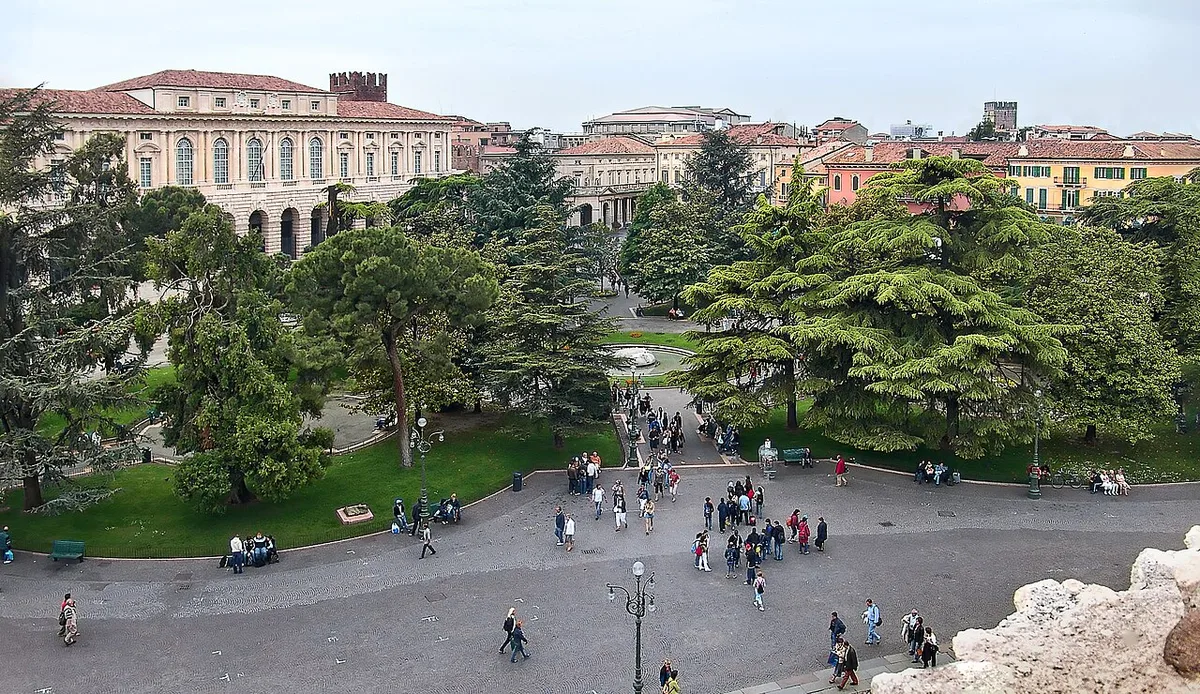
What you see today isn't quite the original shape. A violent earthquake on 3 January 1117 brought down most of the Arena's outer perimeter wall; only a single four-arch fragment survives, known locally as the ala ("wing"), standing apart from the intact inner rings that form the amphitheatre you actually walk into. In 1913, the Arena hosted its first opera — Verdi's Aida, staged to mark the centenary of the composer's birth — and that performance launched what's now the Arena Opera Festival, one of the largest open-air opera venues in the world, seating roughly 15,000 for a modern performance inside a structure built for a very different kind of spectacle two thousand years ago.
Verona Arena Tickets & Prices 2026
There are two entirely different tickets, and mixing them up is the single most common planning mistake for the Arena.
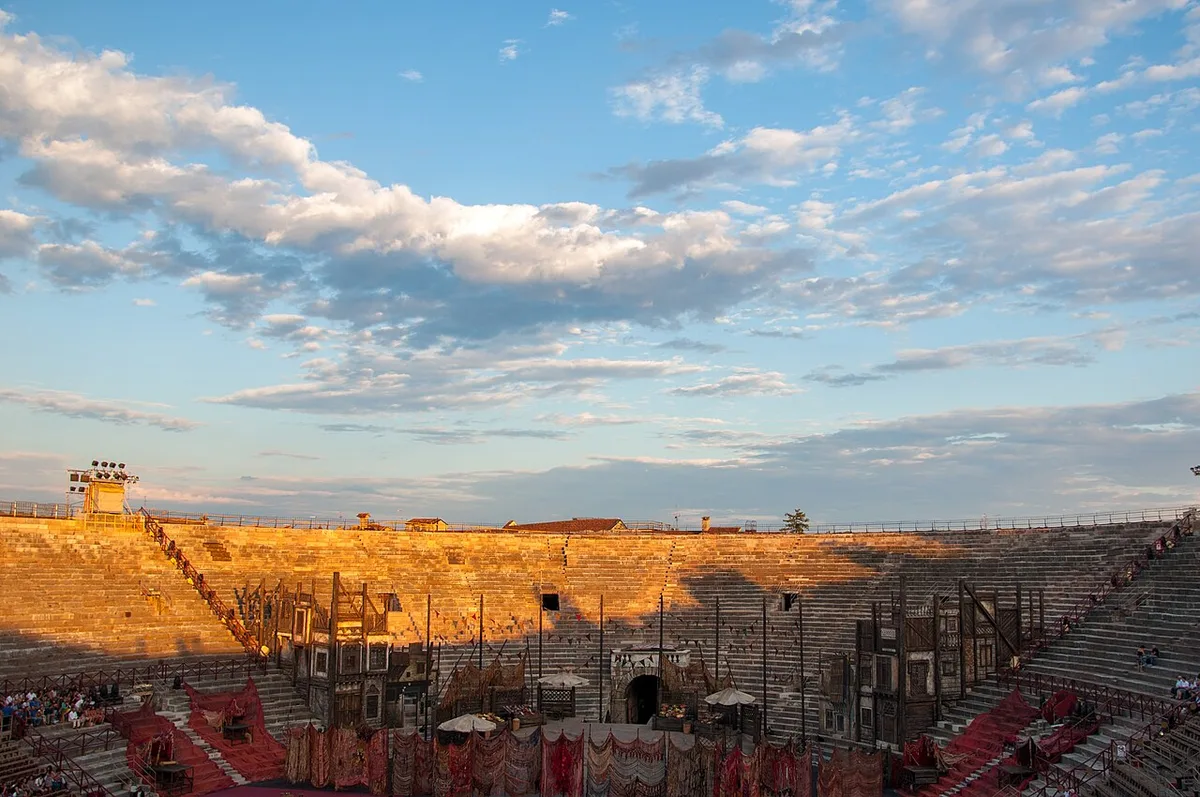
A daytime sightseeing ticket lets you walk into the amphitheatre bowl and climb the stone tiers without a performance happening. The full price is €12. The €9 reduced rate is for Touring Club, FAI and Arte Terme Card holders, and visitors aged 18–25 pay €3. Under-18s and Verona Card holders enter free, and from November to March the first Sunday of each month costs €1 for everyone. Tickets are sold online at verona.coopculture.it and through the call centre; each ticket is issued in the visitor's name and is checked against an original ID at the entrance.
An Arena Opera Festival ticket is a completely different purchase, sold through the Fondazione Arena di Verona's own ticketing. The 2026 season has ended; the 2027 festival runs from 11 June to 11 September 2027, and tickets are already on sale. For 2027, numbered seats on the stone steps (4th to 6th sectors, no chair) start at €22, numbered seats with unpadded backrests in the Verdi, Puccini and Rossini sectors start at €60, padded seats in the tribune and stalls start at €125, and the front-row Platinum Premium stalls seats cost €420 on the opening nights. Reduced rates are for under-30s and over-65s; a limited number of U30 stalls seats cost €30 (not on premieres, opening nights or Saturdays), and the Tribune Family sector charges €2.50 per child under 14 with a €68 ticket for the accompanying adult. Prices vary by production and date; the full 2027 sector list is on the official Arena di Verona site.
If you only want to see the amphitheatre itself, the daytime ticket is the far cheaper option — and the one most people searching for "Verona Arena tickets" actually want.
Opening Hours & Best Time to Visit
The Arena keeps museum-style hours: Tuesday to Sunday, 9 a.m. to 7 p.m., with last admission at 6:30 p.m. It's closed on Mondays, 25 December and 1 January; Monday 7 December 2026 is an extra opening day.
From April to October the Arena hosts shows and events, so stage sets stay in place and parts of the monument are not open for visits. On days with a performance, daytime sightseeing closes earlier than 7 p.m., and the closing time changes with each event. The 2027 Opera Festival runs from 11 June to 11 September 2027, so a daytime visit in those weeks works best in the morning.
For the calmest daytime visit, aim for a weekday morning right at opening, before tour groups arrive from the coach and cruise circuit around mid-morning. In spring (April–May) or autumn (late September–October) you get milder weather and thinner crowds than the peak summer weeks, though the opera festival itself runs only from mid-June to mid-September.
How Long to Plan for Your Visit
A daytime visit to the Arena itself takes about 45 minutes to an hour — enough time to walk the tiers, take in the views across Piazza Bra, and read the on-site information panels.
If you're seeing an opera, budget the whole evening: performances typically run 2.5 to 4 hours depending on the production, plus arrival time — gates open well before curtain, and settling into stone step seating (bring a cushion or buy one inside the Arena) takes longer than a normal theatre seat. Pair a daytime Arena visit with a one-day Verona itinerary if you want to see the rest of the historic centre on the same trip.
How to Get to the Verona Arena
The Arena sits directly on Piazza Bra, at the edge of Verona's historic centre, so almost every visitor simply walks in. From Verona Porta Nuova, the city's main train station, it's about a 20–25 minute walk straight up Corso Porta Nuova, or a short ride on the city buses running that same corridor. From Verona airport, the Verona Airlink bus (line 199, €7) connects to Porta Nuova station in about 15 minutes, from which it's the same walk or bus hop into the centre.
The nearest parking is in public car parks such as Saba Arena (Verona Card holders get 10% off its hourly rates), and the surrounding historic centre carries heavy traffic restrictions, so driving in is more hassle than it's worth for most visitors — arrive on foot, by bus, or by train.
Visit Tips: Queues, Booking & Mistakes to Avoid
Daytime tickets are sold online at verona.coopculture.it or through the call centre, and each one is issued in the visitor's name: bring an original ID, because entry is refused when the details don't match. For opera nights, book weeks to months ahead — the more affordable sectors tend to sell out fastest, not the expensive ones.
The most common mistake is assuming a daytime sightseeing ticket also covers an evening opera seat, or vice versa — they don't, and they're bought through different channels. The second is underestimating the stone steps: if you're attending a performance in the stone-step sectors, a cushion (sold on-site or brought from your hotel) makes a multi-hour show far more comfortable. Finally, don't skip checking the day's performance schedule if you're planning a summer daytime visit — a show that evening can shorten the daytime sightseeing window earlier than the posted standard hours.
Nearby Attractions
The Arena sits at the western edge of Verona's pedestrian core, putting the city's other major sights within easy walking distance. Piazza delle Erbe, Verona's old Roman forum turned market square, is about a 10-minute walk along Via Mazzini, the city's main shopping street. From there, the Torre dei Lamberti bell tower offers rooftop views over the historic centre and the Arena itself. In the other direction, Castelvecchio, the Scaliger family's riverside medieval fortress, is roughly a 15-minute walk northwest along the Adige River. For a night out after a daytime Arena visit, see our guide to things to do in Verona at night.
Frequently Asked Questions
How much are Verona Arena tickets in 2026?
Two different tickets exist. A daytime sightseeing ticket to walk the amphitheatre costs €12 full price, €9 reduced and €3 for ages 18–25, with free entry for under-18s and Verona Card holders. An Arena Opera Festival evening ticket is a separate purchase: for the 2027 season (11 June – 11 September 2027), numbered seats on the stone steps start at €22, and padded seats in the tribune and stalls run from €125 to €420 for the front-row Platinum Premium seats on the opening nights.
What are the Verona Arena's opening hours?
The Arena is open Tuesday to Sunday, 9 a.m. to 7 p.m., with last admission at 6:30 p.m. It's closed Mondays, 25 December and 1 January, with an extra opening on Monday 7 December 2026. From April to October, daytime sightseeing closes earlier on days with a show or event.
Is the Verona Arena open during the Opera Festival?
Yes, but hours vary. On days with an evening performance or event, daytime sightseeing closes earlier than the standard schedule, and stage sets limit which parts are open. The 2026 festival has ended; the 2027 Arena Opera Festival runs from 11 June to 11 September 2027.
How long should I plan for a Verona Arena visit?
A daytime sightseeing visit takes about 45 minutes to an hour. If you're attending an opera performance, budget the full evening — shows typically run 2.5 to 4 hours, plus arrival time before curtain.
Is the Verona Arena worth visiting if you're not going to the opera?
Yes. The amphitheatre is one of the best-preserved Roman structures in the world and worth seeing regardless of whether a performance is scheduled. Walking the stone tiers and standing in the bowl gives a sense of scale that photos from Piazza Bra don't capture, and the daytime ticket is inexpensive compared to an opera seat.
The Verona Arena rewards knowing which ticket you actually want before you arrive at Piazza Bra. A daytime visit is quick, inexpensive, and available most of the year; an opera night is a bigger commitment in both time and cost, and only runs during the summer festival window.
Either way, the Arena sits close enough to the rest of Verona's historic centre that it fits naturally into a single day of sightseeing — arrive on a weekday morning if you can, and if you're visiting between 11 June and 11 September 2027, look at that day's opera programme first.
For the latest official information, see the Arena di Verona official site and the Verona Arena overview on Wikipedia.


