Potsdam is a compact city of roughly 300 hectares of palace park, a baroque centre rebuilt around one square, and water on nearly every side. That combination makes it unusually well suited to an evening visit, because the parts that matter most after dark are the parts that never close: streets, squares, bridges and park paths. The parts that need a ticket, by contrast, shut their doors in the late afternoon, so the real planning question is which of those two Potsdams you want.
A useful starting point is the operator's own statement that Sanssouci Park is open daily from 8 am until dark and that entrance to the park is free. That single detail shapes everything else: you can walk the UNESCO-listed grounds on any evening without booking anything, but "until dark" is a moving target that swings from roughly 5 pm in December to past 9 pm in June. Check the sunset time for your travel date before you commit to a park walk at the end of the day.
This guide assumes you already know Potsdam has palaces. It focuses instead on what an evening actually delivers: where the light falls, what you can still enter, how long to allow and when staying overnight genuinely improves the trip rather than just costing more.
What Potsdam at Night Actually Is (and Is Not)
Potsdam after dark is a walking city, not a spectacle city. There is no reliable published schedule of building illuminations, light shows or late-night openings that a visitor can plan around, and the city's own tourism pages describe the palaces, gardens and baroque squares without promising evening programming. Treat any specific claim about a monument being lit at a set time as something to verify locally rather than as a fixed fact.
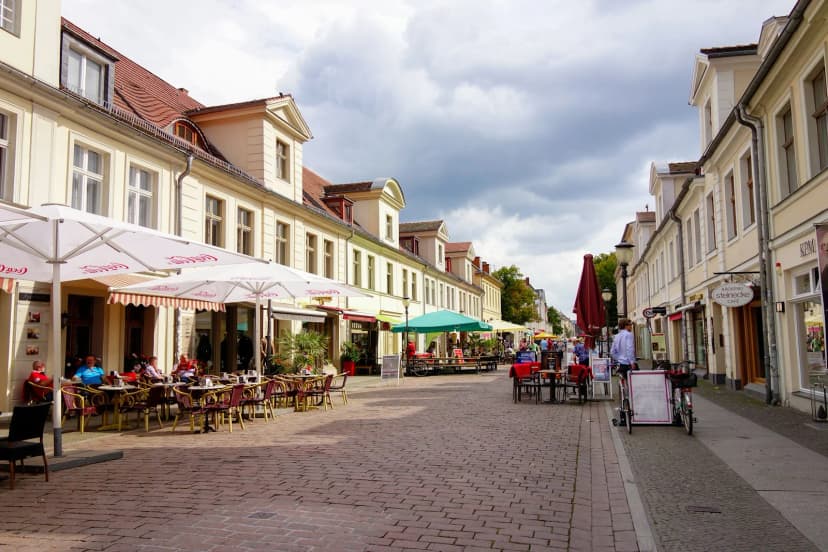
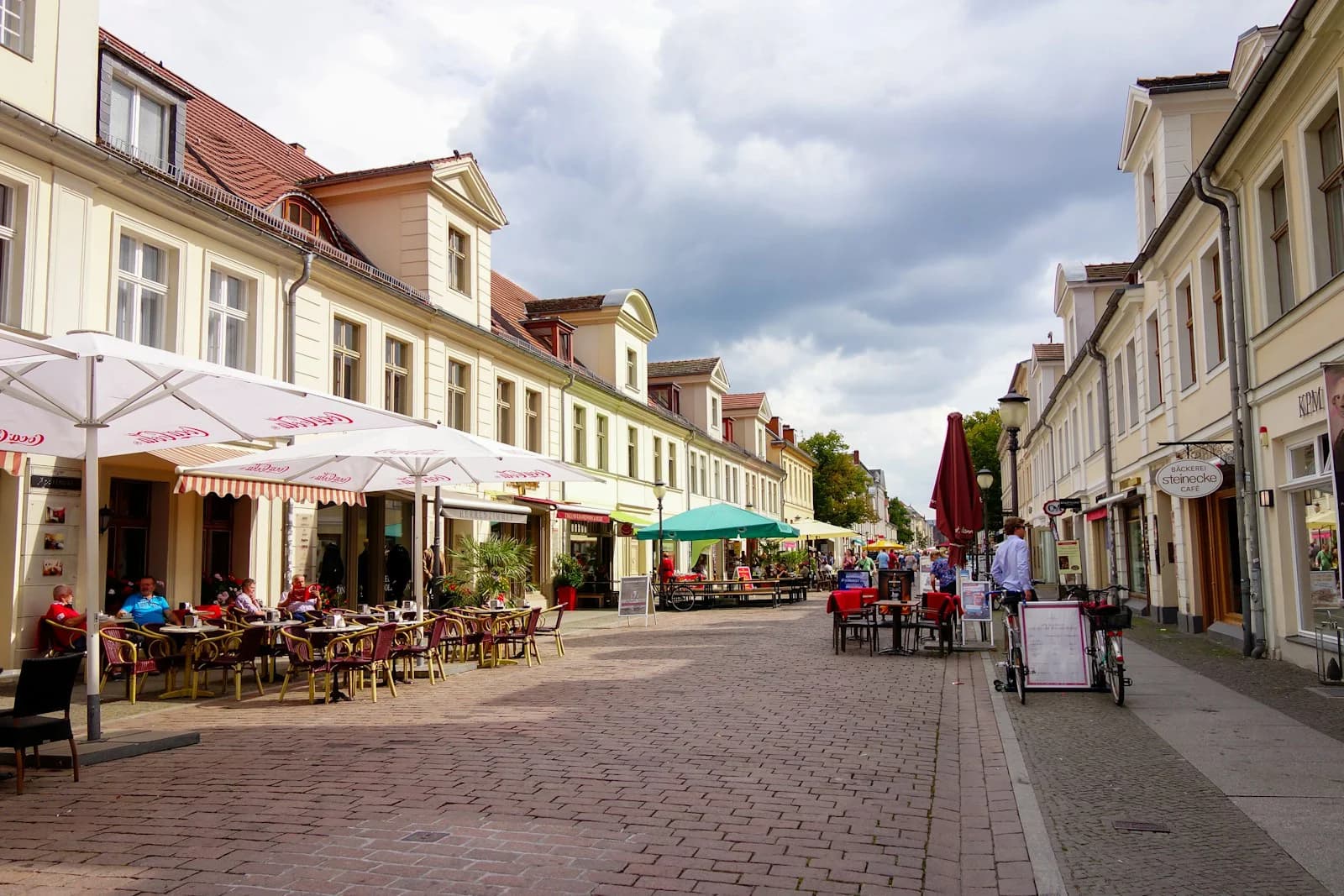
What does exist, dependably, is atmosphere: floodlit facades on the square around the Nikolaikirche, the reflective surface of the Alte Fahrt beside the rebuilt city palace, and quiet residential streets in the Dutch Quarter where the brick gables read well under street lighting. The Brandenburg tourism board frames the city as palaces and gardens by the water, and the water is what carries the evening.
The honest trade-off is this: an evening in Potsdam is rewarding if you enjoy cities on foot, and underwhelming if you expect a nightlife district. Plan it as the calm end of a sightseeing day rather than as a destination in its own right.
Free Grounds Versus Ticketed Interiors
The single most useful distinction for an evening plan is free space versus paid space. Sanssouci Park's grounds are free to enter and open daily from 8 am until dark, so an after-dinner stroll through the park's eastern end toward the terraced vineyard costs nothing and needs no reservation. Everything with a roof over it is a different proposition.
Sanssouci Palace itself closes well before any reasonable dinner time. In the April to October season it opens Tuesday to Sunday from 10.00 am to 5.30 pm and is closed Mondays; in November and December the closing time moves to 4.30 pm, again with Monday closures. Visits are tied to fixed admission times and last entry is 30 minutes before closing, so a palace interior is a daytime commitment, not an evening one.
Admission is not a single blanket ticket for the whole complex. The palace's own single ticket is priced at 14 euros, or 10 euros reduced, while the sanssouci+ ticket at 22 euros, or 17 euros reduced, covers one visit to each publicly open SPSG palace in Potsdam on a single day, excluding Sacrow House, Stern Hunting Lodge and special exhibitions, and granting the reduced rate at the Belvedere Pfingstberg. Do not assume the Picture Gallery and New Chambers come with the palace ticket simply because the operator describes them as belonging to Sanssouci Palace.
If interiors matter to you, buy before you travel and choose a morning or early afternoon slot. The operator notes that daily ticket numbers are limited and recommends advance online purchase, so arriving at 4 pm hoping to walk in is a risk you do not need to take.
Alter Markt and the Historic Centre on Foot
The city's historic heart is the Alter Markt, the space around the Nikolaikirche reaching to what was once the built-up waterfront on the Alte Fahrt. The city describes it as having been designed in the mid-18th century under Frederick the Great as an Italian-style square near the Havel, and notes that 19th-century observers counted it among the finest squares in Europe. As an evening anchor it works because it is open, level and ringed by lit facades.
Two details give the square its character after dark. The marble obelisk, erected in 1753 and altered in 1979, stands as a focal point in front of the church, and the Altes Rathaus, built around 1755 to designs by Jan Bouman and Christian Ludwig Hildebrandt after a Palladio model, carries its Atlas statue on the dome. That building now houses the Potsdam Museum, which is a daytime visit rather than an evening one.
From the square the natural evening loop runs north into the Dutch Quarter, the gabled brick settlement begun in 1732 at Frederick William I's request to attract Dutch craftsmen, the request partly unmet and the houses largely used for staff. It is now the city's most visited quarter, and its narrow streets are best experienced on foot at dusk when the tour groups have gone.
Sanssouci Park at Closing Time
Walking Sanssouci Park as the light goes is the most distinctive evening experience Potsdam offers, and the one most often misplanned. The park spans nearly 300 hectares along an east-west axis of more than two kilometres, so it is not something you cross quickly; the operator advises allowing ample time for a leisurely walk. Pick one segment rather than attempting the whole park on a short evening.
There is a genuine safety note attached to this walk. The operator publishes a warning that drought has severely damaged trees, that branches are at risk of falling, and that visitors should stay on the paths and avoid resting under old trees even in rain, with parks best avoided during severe weather warnings. Check the current weather before setting out and treat the marked paths as the route.
Accessibility is described by the operator as conditionally barrier-free, and the park operator recommends a low-barrier route for visitors with limited mobility and for blind and visually impaired visitors. That is useful framing for an evening walk, when low light already reduces what you can see.
Lakeside and Havel Views After Dark
Water is what separates a Potsdam evening from a generic old-town stroll. The historic centre sits beside the Alte Fahrt, the Neustädter Havelbucht curves around the steam engine building styled as a mosque with its minaret, and the Heiliger See lies on the edge of the New Garden. The Brandenburg tourism board sells the city as palaces and gardens by the water, and that phrasing is accurate rather than promotional.
A practical evening route uses the water as a spine: start at the Alter Markt and the Alte Fahrt, walk north through the Dutch Quarter, and finish along the Havel where the paths open out. Because these are public routes rather than ticketed sites, the walk has no closing time, though lighting on unlit stretches will be limited and a torch or phone light is sensible outside summer.
The Pfingstberg Question: Worth the Climb, Not in the Dark
The Belvedere on the Pfingstberg is the city's signature panorama, a double-towered Italianate structure begun in 1847 for Frederick William IV, who did not live to see its completion in 1863. Its operator, the Förderverein Pfingstberg, runs it as a UNESCO World Heritage site with a garden layout by Peter Joseph Lenné and the small Pomonatempel, Schinkel's first independent building, on the southern slope.
The problem for an evening plan is the season. The operator's own autumn notice states that until 31 October the site opens on weekdays from 10 am to 5 pm and at weekends from 10 am to 6 pm, closed Mondays, and then reopens only for an Advent weekend and a New Year concert before resuming the following March. That is a daytime slot, not a late-evening one, and the detail changes by season, so check the site's opening-hours page for your dates. Further visitor details appear in UNESCO-Welterbe Schloss Belvedere Pfingstberg in Potsdam entdecken.
If you hold a sanssouci+ ticket, the Belvedere grants you the reduced rate on admission there, which is one of the few cross-links between the two sites worth knowing. Compare the climb with the alternatives before committing a daylight block to it.
Timing Your Evening Around Daylight
Potsdam's usable evening is defined by sunset, and the range across the year is large. A June evening can give you park time well past 9 pm, while a late-October or November evening starts losing light in the late afternoon and is effectively over by early evening. Build your plan around the specific sunset time for your date rather than around a generic idea of an evening.
Two workable structures follow from that. In summer, tour a palace interior in the afternoon, eat early, then walk the park and finish in the historic centre after dark. In winter, invert it: use the short daylight for the park or a viewpoint, then spend the dark hours entirely on the square-and-water circuit, where lighting and architecture do the work.
A suggested duration of two to three hours covers the compact centre loop comfortably, including time to sit somewhere rather than march. That figure is a recommendation based on the distances and opening patterns described here, not an official estimate, so adjust it to how much you want to stop.
Staying Over Versus Returning to Berlin
Potsdam sits within easy reach of Berlin by regional train, which makes a same-day return tempting. The catch is that the return leg pulls you back toward the station just as the city becomes pleasant, and the palaces and museums you came for have already shut. Berlin residents gain more from an overnight stay than a day-tripper from further afield.
An overnight stay changes what you can do: a late dinner in the centre, a walk along the Havel without watching a timetable, and a morning start at a palace before the day crowd arrives. Search hotel availability for your dates directly and compare it against the cost of two train fares plus a rushed evening, since rates vary by season and event weekends.
If you do stay, use the evening for the open city and keep the ticketed interiors for the morning. That sequencing is the difference between a comfortable visit and a frantic one.
Practicalities, Rules and Tickets
Sanssouci Park is a garden ensemble with published park rules, and the operator asks visitors to help preserve it; read the rules page before you go rather than assuming anything goes. The branch-fall warning already mentioned belongs in the same category of practical reading, as does checking the weather if a storm is forecast.
For any ticketed interior, buy in advance rather than on the day. The palace operator states that admission is bound to fixed time slots, that same-day tickets are sold from 30 minutes before opening subject to availability, and that daily ticket numbers are limited, which is precisely the combination that punishes improvisation in high season.
Accessibility is described by the palace operator as conditionally barrier-free and suitable for visitors with disabilities in accompaniment, and prams are not permitted in the exhibition rooms for conservation reasons. If either point affects your group, plan around the grounds and squares rather than the interiors, where access is most constrained.
For events, temporary closures and anything date-specific, the city's own portal and its events calendar are the places to confirm details close to your travel date, since seasonal notices and short-notice closures will not appear in a general guide.
A Sample Evening, Start to Finish
Begin at the Alter Markt in the late afternoon while there is still light on the facades and the obelisk, then walk the short distance north into the Dutch Quarter as the shops close and the streets empty out. This is the point to stop for dinner rather than pushing on, because the centre is compact and you will pass back through it anyway.
After eating, take the waterside stretch along the Alte Fahrt and toward the Havel, using the lit square and the church as your reference point so the loop closes naturally. If your visit falls in the long-light months, extend the evening with a park walk beforehand instead, entering from the eastern side and keeping to the paths given the tree warning.
If you have a second evening, spend it differently rather than repeating the loop: use one evening for the centre and water, and the other entirely for the park in the long daylight of summer. Readers who want to see how another German city handles its after-dark hours can compare notes in this guide to Dresden at night.
Plan Your Visit
An evening in Potsdam rewards planning that respects two facts: parks and squares are free and open, palaces and museums are neither, at least not at night. Anchor your evening on the Alter Markt, the Dutch Quarter and the Havel, and treat the park as a long-light walk with a weather check first. Keep ticketed interiors for daylight and buy those in advance.
For a full picture of the city beyond one evening, including the wider palace landscape and how to sequence a longer stay, use the city hub and the guide to spending a single day here. Verify current hours and any seasonal notices on the operator and city pages close to your travel date, since autumn and winter schedules shift.
Frequently Asked Questions
Is Potsdam worth visiting at night?
Yes, if you enjoy walking cities rather than nightlife districts. The historic centre around the Alter Markt, the Dutch Quarter and the Havel waterfront remain open and pleasant after dark, and Sanssouci Park's grounds stay open until dark with no entrance fee. What you should not expect is a published programme of illuminated buildings or late palace openings, because the city and palace operator do not advertise one.
Can you walk around Sanssouci Park in the evening?
Yes. The park operator states that the park grounds are open daily from 8 am until dark and that entrance is free, so an evening walk is possible within those hours. Note that until dark is a seasonally shifting limit rather than a set clock time, so check sunset for your date. The operator also warns that drought-damaged trees can drop branches, asking visitors to stay on paths and avoid old trees even in rain.
Is Sanssouci Park free to enter?
The park grounds are free to enter, according to the palace foundation that manages them, and no ticket is needed for walking the paths. That free access does not extend to the buildings inside the park: Sanssouci Palace and the other palaces and collections open to the public are ticketed separately and keep daytime hours, with fixed admission time slots. Do not assume one ticket covers every building in the complex.
What can you do in Potsdam after the palaces close?
The open city is the answer: the Alter Markt and its Nikolaikirche, the marble obelisk, the Altes Rathaus that now houses the Potsdam Museum, the Dutch Quarter's brick streets, and the waterside paths along the Alte Fahrt and the Havel. These are public spaces without closing times, so the evening is spent walking rather than touring interiors. Dinner in the centre fits naturally into the same loop.
How long does an evening in Potsdam need?
Two to three hours is a comfortable recommendation for the compact centre and waterfront circuit, including time to slow down. That is a suggested duration rather than an official one, and it assumes you are not adding a park walk. In summer, when daylight lasts much longer, add another hour or two for Sanssouci Park's eastern section.
Should you stay overnight in Potsdam or return to Berlin?
Staying over lets you use the evening properly and start the next morning at a palace before the crowds, which is difficult if you are watching a return train. If you are based in Berlin and only want a short evening, a same-day return is workable but leaves you leaving just as the centre becomes enjoyable. Compare hotel rates for your dates against the cost of repeated train fares.
Can you see the Pfingstberg Belvedere in the evening?
Realistically no. The Belvedere is run with a seasonal opening pattern: the operator's autumn notice gives weekday hours of 10 am to 5 pm and weekend hours of 10 am to 6 pm until the end of October, with Mondays closed, followed by a winter pause broken only by Advent and New Year events. Treat the lookout as a daytime stop and check the current opening-hours page before you go.
Where is Potsdam's historic centre and is it walkable after dark?
The historic centre is the Alter Markt and the streets around it, on the Havel side of town and within easy walking distance of the Dutch Quarter. The city describes the square as having been laid out in the mid-18th century as an Italian-style space near the river, and it remains a public square with no closing time. The surrounding streets are level and compact, though lighting on some stretches is limited outside the main square.