Nauener Tor is one of the three preserved city gates of Potsdam, built in 1755, and it stands beside the Dutch Quarter rather than beside Sanssouci. A Potsdam walking account describes it as a neo-Gothic gate built in 1755 and as one of the oldest examples of Gothic Revival architecture in Europe, a claim worth repeating with its qualifier intact. Because the gate belongs to the public street scene, there is no published visitor programme to plan around.
As a planning suggestion, not an official figure, allow about 15 to 30 minutes at the gate itself and let the surrounding streets set the rest of your pace. The gate is the hinge between two parts of the city: the ceremonial centre around Alter Markt to the south, and the brick gables and café terraces of the Dutch Quarter immediately north. Treat it as the start of a district rather than as a ticketed monument.
What Nauener Tor Actually Is
The gate dates from 1755 and is counted among Potsdam's preserved city gates. A detailed walking account of the city centre describes it as a neo-Gothic structure built in 1755 and as one of the oldest examples of Gothic Revival architecture in Europe. That framing explains the surprise many visitors feel on arriving: after the Rococo of Sanssouci, the pointed arches and castle-like outline of Nauener Tor look as if they belong to a different country. The gate reflects English Gothic taste in a city otherwise shaped by French and Italian models.
Because the gate stands in the open street, you can see it, walk beneath it and photograph it without buying anything. What you cannot assume is an interior. The city's own pages describe Potsdam's sights in detail but do not present Nauener Tor as a staffed monument with opening hours, tickets or a visitor route. If a blog or an older guide says you can climb the towers, treat that as unverified until an official source confirms otherwise, rather than as a current description of access.
The practical consequence is simple: plan the gate as a stop on a walk, not as a booking. The city's tourism pages are the right place to check whether anything has changed before you travel, since requirements and access arrangements can be updated by the operator rather than by travel writers.
The Dutch Quarter Around the Gate
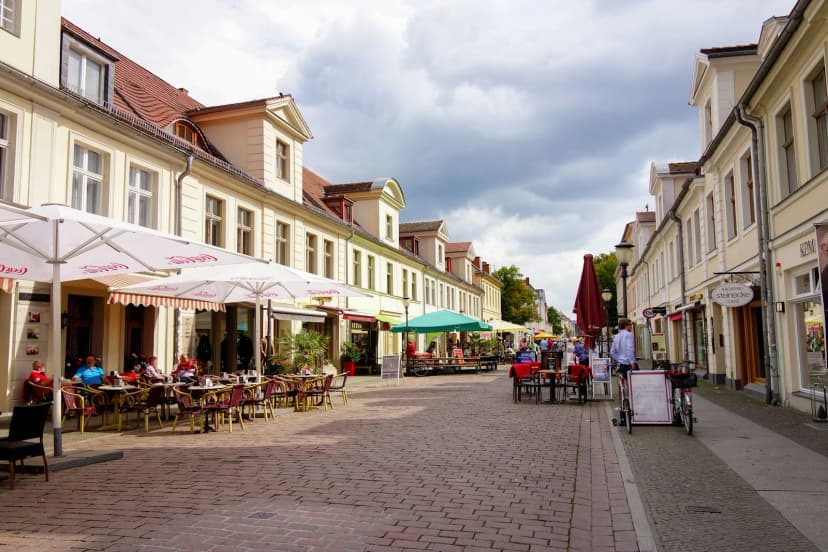
Step past Nauener Tor and you are in the Holländisches Viertel, the district that gives the gate most of its atmosphere. The quarter is usually described as two intersecting streets of red-brick, Dutch-style houses built in the 18th century for Dutch settlers invited to work in Potsdam. The official city pages document the wider 18th-century building culture of Potsdam in detail, while the walking account describes how the area was designed and what it contains today. The quarter is often referred to as the largest Dutch settlement outside the Netherlands.
The historical twist is worth knowing before you arrive. Although the plan called for a substantial colony of Dutch houses, the walking account notes that relatively few Dutch families actually came and that many of the buildings ended up housing other residents. Today the same brick facades contain cafés, boutiques and restaurants. Specific business names and their current offerings change, so this guide does not fix them; the sensible approach is to choose by looking as you walk.
Mittelstrasse is the street most often named for the district's Dutch character and the natural landing point after the gate. A market at the gate is mentioned in older travel writing, but no current official source confirms a schedule, so verify locally if a market matters to your visit. For a fuller treatment of the district's streets and architecture, the dedicated Dutch Quarter page is the better read than this one.
The Walk from Alter Markt to the Gate
The most rewarding approach to Nauener Tor begins at Alter Markt, the old market square, and heads north. Potsdam's official pages state that the square was laid out in the mid-18th century under Frederick the Great as an Italian-style square close to the Havel, and that the marble obelisk at its centre was erected in 1753 and altered in 1979. The Altes Rathaus on the square is the building to look for: the city explains that the fourth town hall was built around 1755 to designs by Jan Bouman and Christian Ludwig Hildebrandt, and that after a restoration carried out between 2010 and 2012 the Potsdam Museum returned to its founding location inside it.
From the square, the centre of the small Dutch Quarter is an easy walk north along Friedrich-Ebert-Strasse to Mittelstrasse, according to the Fodor's side-trip description of the route. Keep the geography in your head: the old market and its landmarks to the south, the gate and the Dutch Quarter to the north, connected by a straight, walkable axis rather than a bus ride. If you want a longer, structured route rather than this single stretch, the self-guided old town walk covers the same ground in more detail.
For a half-day, this is the route to choose. It is compact, entirely on foot, and mixes architecture with coffee stops without demanding a long park walk. The Potsdam Museum, St. Nicholas Church and the marble obelisk anchor the southern end; the gate and the Dutch Quarter close the northern end. If you have a full day, extend the afternoon westward rather than trying to bundle both halves into one loop.
Nauener Tor or Brandenburg Gate?
Potsdam has its own Brandenburg Gate, and confusing the two is easy. The walking account states that the Potsdam gate was completed in 1771, which makes it older than the more famous Brandenburg Gate in Berlin, and that it was once part of the city fortifications before becoming a free-standing structure when the walls were demolished in the early 20th century. Nauener Tor predates it by roughly sixteen years. They are different buildings in different parts of the city, and the distinction matters when you are planning a route.
The two gates serve different days. The Potsdam Brandenburg Gate stands near Luisenplatz, where cafés and restaurants cluster, and it is the natural starting point for the walk along Allee nach Sanssouci toward the park. Nauener Tor belongs instead to the old-town and Dutch Quarter circuit on the other side of the centre. Choosing between them is really choosing between a park-oriented day and a city-oriented one, and neither is the wrong answer.
If you have the time, link them, but be realistic about the distance and about how much lingering you want. A walk that covers Alter Markt, Nauener Tor, the Dutch Quarter and the Brandenburg Gate in one push is possible, yet it leaves little room for stops. Potsdam rewards a slower pace, and the city's own tourism pages are the place to confirm current routes. If you want a city itinerary rather than a single landmark, use the Potsdam city guides hub instead of stretching this one.
Pairing the Gate with Sanssouci
Sanssouci Park is a separate proposition from Nauener Tor, and the official foundation page for the park states that entry is free and that the park is open daily from 8 am until dark. The same source describes the park as covering nearly 300 hectares, so it deserves a half-day rather than a quick detour. The palace is a different product: the foundation's palace page states that visits are bound to fixed admission times and that the number of admission tickets per day is limited. Those two facts alone explain why so many rushed itineraries go wrong.
Do not assume that one ticket covers the whole complex. The foundation lists the Picture Gallery and the New Chambers as belonging to Sanssouci Palace while remaining distinct properties, and it sells a combined sanssouci+ ticket that is valid for a single visit to all the foundation's palaces open to the public on one day, with stated exclusions. In other words, the grounds are open and free, while the palace interior is ticketed and time-slotted, and other buildings may be separate again. Confirm current prices and opening times on the official pages before buying anything.
A workable shape for one day is the old town and the gate in the morning, a meal in or near the Dutch Quarter, then the park in the afternoon. This keeps the two halves of the city from competing for the same hours. If you are building a multi-day trip, the Potsdam itineraries hub is the better place to sequence several sights rather than treating this page as a full city plan.
Practical Notes Before You Go
Potsdam's centre is compact and walkable, but the city is not small and its sights are spread between the old town, the park and the northern districts. This guide deliberately avoids naming specific tram or bus lines for the gate, because no current operator page consulted here confirms a route. Plan on public transport for longer hops and on your feet for the old-town cluster. A dedicated Potsdam public transport guide is the right place to work out the details.
Treat any specific schedule, price or access detail you read about the gate with caution unless it comes from the city or a current operator. The gate is part of the public street scene, and anything beyond that should be verified rather than assumed. Build your day around what you can see for free, and treat paid interiors elsewhere as optional upgrades.
Keep the walk flexible. Weather, crowds and your own appetite will decide whether the Dutch Quarter is a twenty-minute stroll or a two-hour lunch, and both are correct outcomes. The point of Nauener Tor is that it gives the old town a shape and a direction, not that it fills a checklist.
Plan Your Visit
Nauener Tor is best understood as a gateway rather than a destination in its own right. Its value comes from position: it marks the transition from Potsdam's ceremonial centre to the brick streets of the Dutch Quarter, and it does so in a style that stands apart from the Rococo palaces further west. Plan around that and the gate will feel like a discovery rather than a detour.
Start at Alter Markt, walk north to the gate, and let the Dutch Quarter decide how long you linger. Add Sanssouci only if you have a separate block of time and, for the palace interior, a booked admission slot, and verify current park and palace details on the official foundation pages before you go. A morning on foot covers the city side comfortably; the park is a second, larger commitment.
Frequently Asked Questions
Is Nauener Tor free to visit?
The gate stands in the public street scene, so walking past and around it costs nothing. Neither the city pages nor the travel accounts consulted describe a ticketed interior or a paid visitor programme for Nauener Tor. If you read about climbing the towers or entering the gate, treat that as unconfirmed and check the city's tourism information before you travel.
Can you climb or go inside Nauener Tor?
That cannot be confirmed here, and older travel accounts describing tower access should not be relied on. The verified description is of a preserved historic gate experienced from the street, not a monument with a published visitor programme or published opening hours. If interior access matters to you, ask the local tourist office or check current city pages rather than assuming.
How long should you spend at Nauener Tor and the Dutch Quarter?
As a planning suggestion rather than an official figure, allow about 15 to 30 minutes for the gate itself, and anywhere from one to two hours for the Dutch Quarter if you stop for coffee or a meal. The district is small enough to cross quickly but pleasant enough to hold you longer. Your available time and appetite, not a fixed schedule, should set the pace.
How do you walk from Alter Markt to Nauener Tor?
Head north from the old market square along Friedrich-Ebert-Strasse toward the Dutch Quarter, and the gate marks where that district begins. Landmarks along the way include the marble obelisk and the Altes Rathaus, which houses the Potsdam Museum. Confirm the route on a current city map before setting out, since street layouts and building works can change.
Is Nauener Tor the same as the Brandenburg Gate in Potsdam?
No, they are two different gates. Nauener Tor dates from 1755 and sits by the Dutch Quarter, while the Potsdam Brandenburg Gate was completed in 1771 and stands near Luisenplatz, closer to the approach to Sanssouci Park. The Potsdam Brandenburg Gate is older than its Berlin namesake, which is a common source of confusion.
Should you visit Nauener Tor or Sanssouci first?
Do the old town and the gate first if you want a compact, café-friendly morning, then move to Sanssouci Park in the afternoon. Palace visits are bound to fixed admission times, while the park grounds are free to enter, so booking a palace slot shapes the order of your day. Check current palace opening times and ticket details on the official foundation page before committing.
Sources
- Potsdam Travel Guide | Potsdam Tourism - KAYAK
- Incredible Things to do and See in Potsdam Germany - Bobo and ChiChi
- Things to see and do in Potsdam | Velvet Escape
- Side Trip to Potsdam - New York Times
- Sanssouci Palace - Retreat on the Vineyard | SPSG
- Sanssouci Park - Garden Design at the Highest Level | SPSG
- Old Market (Alter Markt) | Landeshauptstadt Potsdam