

Passau works with children for a simple reason: the old town is compact, and Passau Tourism describes the three-rivers city as somewhere everything lies close enough together to cover on foot. That matters when you are carrying a bag and negotiating snack stops, because you can build a family day around a handful of stops rather than a full transit map.
The city also gives you a useful split between free and paid. St. Stephen's Cathedral and the Mariahilf pilgrimage church can be entered without buying a ticket, while the Veste Oberhaus complex charges for its museum interiors. Knowing that in advance helps you decide where the money goes and where it does not. For a wider view of what costs nothing at all, see free things to do in Passau.
One caveat shapes a 2026 visit: Passau Tourism notes that since 2023 the cathedral organ has been restored section by section and does not sound at full range during concerts. You can still hear concerts and the cathedral still costs nothing to walk into, but a family expecting the complete instrument should adjust expectations and confirm the current status before travelling.
Why Passau Fits a Family Day
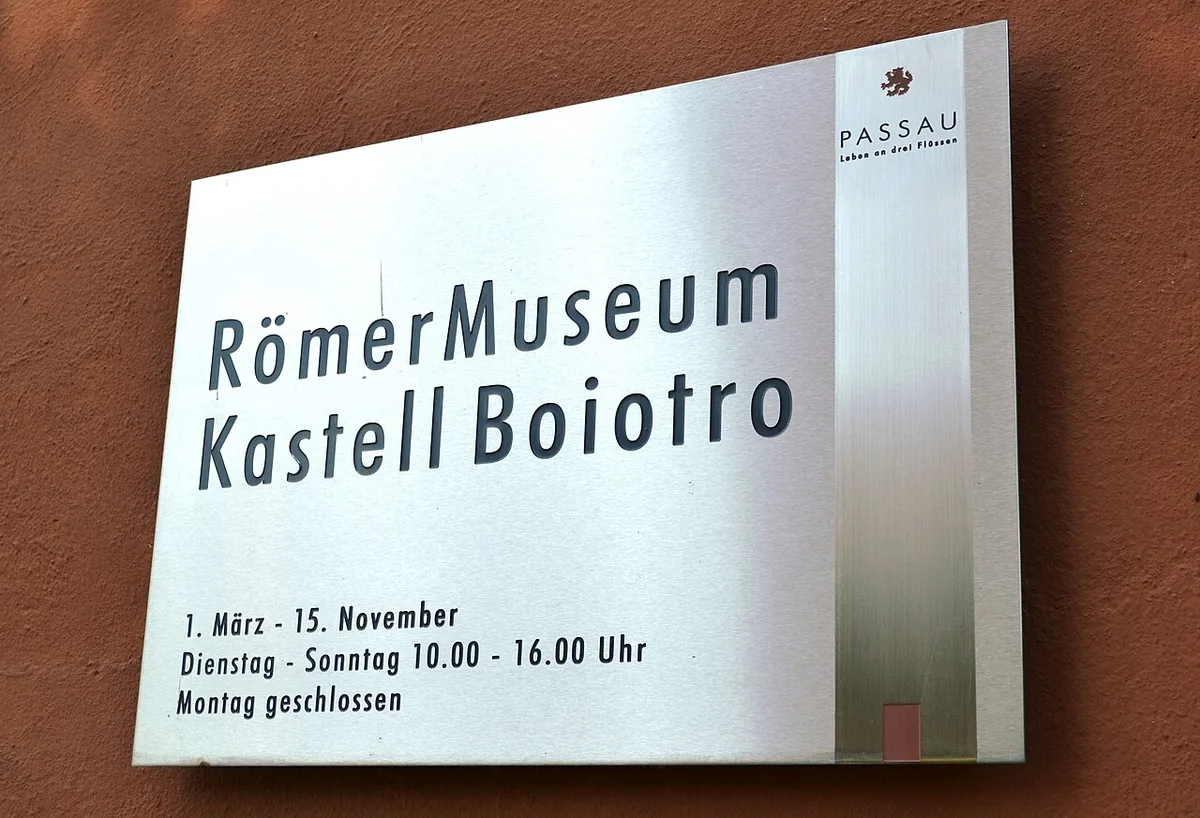
Passau Tourism's family page lists the things most children actually enjoy: the fortress, boat trips on the water, playgrounds, cycling and hiking, the peb water park, family city tours and the Roman museum Kastell Boiotro. Nothing on that list requires a long transfer, which is unusual for a city with this much history. Treat it as a shortlist and cut anything that does not fit your children's energy that day.
Passau sits where the Danube, Inn and Ilz meet, and the confluence at the eastern tip of the old town is the classic first stop because it is open ground rather than a ticketed site. Bavaria's tourism board describes a walk along the Inn past the Schaiblingsturm tower toward the confluence, and lists the pier and confluence among its ten Passau sights. For a broader orientation, see Passau: Landmark Visitor Guides.
A suggested half day suits families with toddlers or tired walkers: pick one paid interior, one waterfront stretch and one break. A suggested full day adds a second paid stop and a playground or swim, which is where the peb water park and the city's playgrounds come in. Neither plan is an official itinerary, and both survive a slow morning better than a packed one.
Veste Oberhaus: The Fortress Stop That Anchors the Day
Veste Oberhaus rises above the old town and houses the Oberhausmuseum, whose exhibitions cover medieval life in the castle, Passau's history and trading importance, the Bohemian Forest Museum, the Historical Apothecary and the Passau Porcelain collection. That range means you can pick one or two rooms with children rather than treating the whole museum as compulsory. The observation tower has reopened with multimedia installations and a climb to the upper platform for panoramic views.
For families, the practical detail is the shuttle bus, which runs according to museum opening times and departs daily on the half hour from Town Hall Square up to the fortress and back. It is not an all-day service, so the return leg depends on when the museum is open, and Passau Tourism advises checking the timetable linked with the museum listing before planning the rest of the day around it.
Budgeting is clearer than at many castle sites because the operator publishes a combined entrance fee that includes the observation tower: adults 7.00 EUR, reduced 5.00 EUR, families with two adults 14.00 EUR, families with one adult 7.00 EUR, children under six free, groups from 15 people 5.00 EUR per person and school classes 3.00 EUR per person. Those figures sit on the museum's own page, and the combined fee covers the stated entrance scope, so do not assume every temporary exhibition shares it.
Accessibility is the part families underestimate. The castle's own statement says the complex itself is not accessible for disabled visitors, that a lift serves the New Rampart viewpoint and the outer and inner baileys, and that there is no disabled access to the observation tower, the exhibition rooms, St George's Chapel or the Linde Battery viewpoint. It also warns that the shuttle bus and the public bus have high entry steps and are not suitable for wheelchair users, and that there is no wheelchair-accessible toilet in the castle; there is a public accessible toilet at the sports field above the castle, opened with a Euro key.
If you are pushing a stroller, that same statement is your planning document: high bus steps usually mean folding the stroller and carrying it, or walking up instead. Neither option is comfortable in heat. Decide before you leave the old town whether the fortress is worth the effort that day, and read more in the Veste Oberhaus Passau fortress visitor guide if you want the site explained on its own terms.
The museum keeps seasonal opening rather than year-round daily hours: 15 March to 15 November, Monday to Friday 9 a.m. to 5 p.m. and Saturday, Sunday and holidays 10 a.m. to 6 p.m., plus a winter daily window from 25 December to 6 January, 10 a.m. to 4 p.m., closed on 31 December. The observation tower has its own dates: 15 March to 8 November, Monday to Friday 9:30 a.m. to 5 p.m. and Saturday, Sunday and holidays 10:30 a.m. to 6 p.m. The tower therefore closes earlier in the season than the museum does, so confirm both on the operator's page for your travel dates.
St. Stephen's Cathedral: Free Entry, Paid Concerts
St. Stephen's Cathedral is free to enter and sits at the highest point of the old town, which makes it a natural orientation stop. Passau Tourism publishes seasonal daily opening: April to October 6:30 a.m. to 7 p.m. and November to March 6:30 a.m. to 6 p.m. The one fixed interruption is the closure during organ concerts from 10:45 to 11:20 in the morning, so a family arriving then will be turned away and should plan around it.
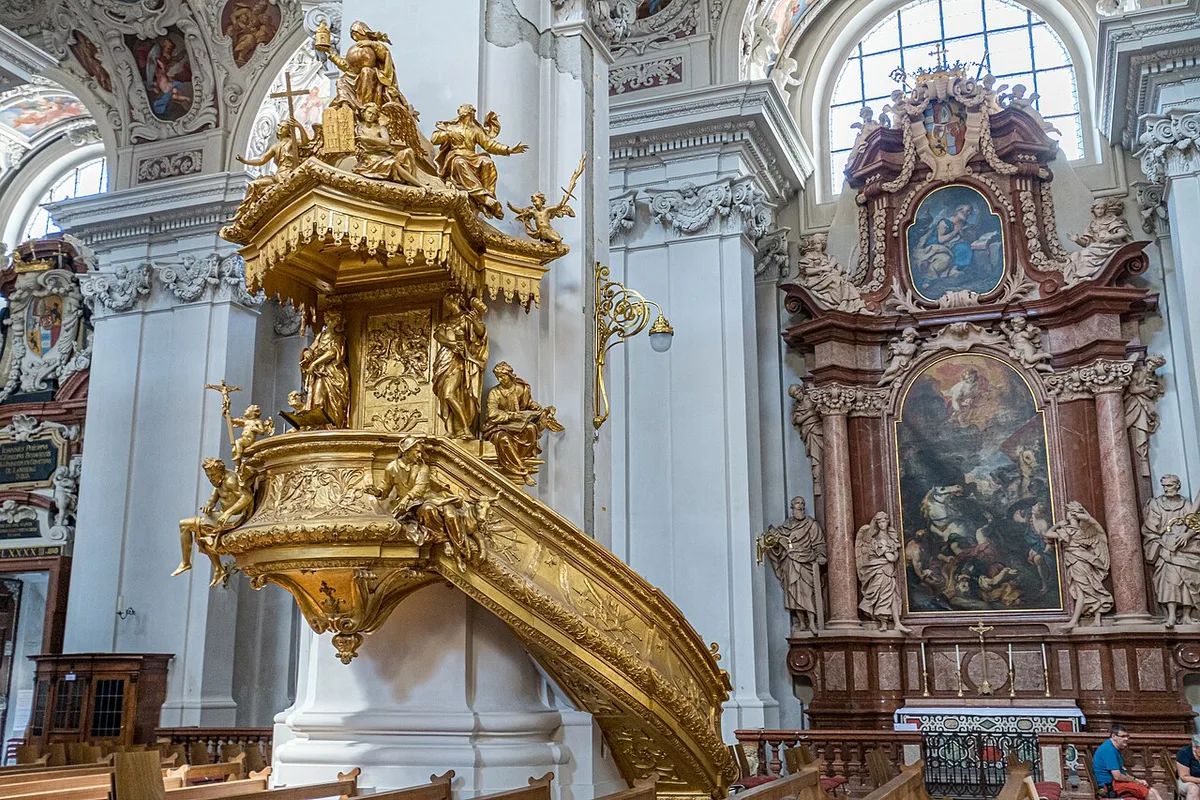
The organ is the reason many families come. It has 17,974 pipes and 233 registers in five separate installations played from one main console, and Passau Tourism describes it as the biggest cathedral organ in the world. That scale is hard for children to picture until they hear it, so a concert is often more memorable than a walk-through. The diocese's cathedral pages and the concert listings are where the current instrument status lives.
Concerts come in two shapes. Midday concerts run on working days from early May to the end of October and last around half an hour, which suits children far better than a full evening. Evening concerts run every Thursday at 19:30 across the same season, with tickets sold at the door from about 6:30 pm, admission to the cathedral via the Dominnenhof from 6:45 pm, and no reservations possible, so arriving early is the only way to secure seats.
Ticket prices differ by concert type and by reduced category. Passau Tourism publishes noon concerts at adults 6.00 EUR and reduced 3.00 EUR, and evening concerts at adults 12.00 EUR and reduced 6.00 EUR. Read those figures on the tourism page rather than trusting a reprinted post, because rates change. The reduced category covers pupils and students, so families should expect children in that group to pay the lower rate.
One expectation to set now: since 2023 the organ has been restored section by section, so it does not sound at full range in concerts. A source tracking the cathedral music notes that full playability is not expected until around 2028 and that scaffolding temporarily obscures parts of the rear of the church. Tell children they are hearing a work in progress rather than the finished instrument.
Accessibility inside the cathedral is better than at the fortress but not perfect: small thresholds at the main entrance, a barrier-free Steinweg entrance with a mobile ramp, two public disabled parking spaces at the cathedral square in front of Domplatz 11, and an induction loop. A public accessible toilet is nearby at Zengergasse and opens with a Euro key. Families with wheelchairs or strollers should plan to use the Steinweg side.
Mariahilf: The 321-Step Climb and Whether to Attempt It
The Mariahilf pilgrimage church stands above the Innstadt, reached by a covered stairway of 321 steps that begins at Neutorgraben and is lined with votive tablets. Passau Tourism publishes daily opening from 7 a.m. to 8 p.m., which makes it one of the most flexible free stops in the city. The covered walkway at least keeps rain and direct sun off the climb.
For young children the honest answer is that 321 steps is a real climb, not a gentle slope, and no shortcut is published. Families with confident walkers who enjoy counting as they go often find it a highlight; families with toddlers in arms, or anyone with knee trouble, should treat it as optional. The view back over the Inn side of Passau is the reward, and it comes free.
Accessibility at the top is limited: Passau Tourism states that the church has limited accessibility for wheelchairs, that there is disabled parking in the courtyard and a public handicapped lavatory in the church. The stairway itself is the barrier, so a wheelchair user would need to arrive by vehicle rather than on foot. Plan the approach before committing to it with a group.
The church's history gives children something to hold onto: the venerated image is a copy of a Lucas Cranach painting, and the original went with Prince Bishop Leopold to Innsbruck, where it remains in the St. Jakob parish church. The devotion spread after Emperor Leopold I fled to Passau in 1683 when Vienna was under siege and prayed before the image daily. That story lands better with older children than a list of dates.
Boats, Playgrounds and Water: River Options
Boat trips appear on Passau Tourism's family list as the headline water activity, and Danube cruises are one of the city's main tourist trades. That listing confirms the category exists without publishing prices or timetables for commercial operators, so treat the tourism page as a starting point and book through the operator whose schedule fits your day. Check departure points, duration and whether the boat has indoor seating before committing, since weather on the Danube changes quickly.
The peb water park is the other water option the city names for families, useful for a rainy day or an afternoon when the children need to burn energy rather than look at buildings. Opening times, prices and pool rules change seasonally, so check the operator's own pages instead of relying on an older guide. Swimming also solves the problem of a hot afternoon in a city with a lot of stone.
Cycling and hiking along the rivers are listed as family themes, and Passau's official tourism site keeps them under its leisure section with downloadable brochures. Flat riverside stretches near the confluence are the natural place to start with children on bikes, although no gradients or distances are published as family-specific guidance. Test a short stretch first and turn back before anyone runs out of steam.
For a rainier day, the city has enough indoor options that you can treat the weather as a decision point rather than a problem; our notes on Passau on a rainy day go through the museum and indoor alternatives in more detail.
Kastell Boiotro and a Short Roman Stop
Kastell Boiotro is the Roman museum built on the foundations of a late Roman fort, with 600 exhibits covering roughly 400 years of Roman rule in the region. Bavaria's tourism board lists it as one of ten Passau sights and notes that its own website is only in German. For children who like forts, soldiers and objects rather than paintings, it is the shortest history stop on this list.
Treat it as a museum, not a castle ruin to run around: it is the kind of compact collection that works as a suggested thirty-to-forty-five-minute stop inside a longer walk. Passau Tourism lists it among the city's museums and separately names it on the family page. Entry terms and opening times change, so confirm them with the museum before setting out.
Walking Strategy: Pacing the Old Town
The old town rewards a loop rather than a checklist: cathedral square, the Residenzplatz with the Wittelsbach fountain, the Town Hall area and the riverbank all sit within a compact area, and Passau Tourism's statement that everything lies close together on foot is the single most useful fact for planning with children. Build the loop so the fortress or a boat trip breaks the middle of the day.
Cobblestones are the practical hazard: they are uneven underfoot, awkward with strollers and slow with small legs. Choose footwear accordingly, and accept that a stroller will need lifting at some kerbs and thresholds. Passau Tourism publishes no stroller-specific route names or gradients, so treat any specific route advice you find online as opinion and test the street yourself.
Pacing by duration, a suggested half day is the cathedral, a riverbank walk to the confluence and one snack stop. A suggested full day adds the fortress with the shuttle, plus either the water park or a playground in the afternoon. Neither is an official itinerary, and both get easier if you book a family city tour through a local operator; TOPassau lists a children's tour and states a duration of 75 minutes.
If you are deciding between one day and several, the difference is depth rather than distance: a suggested single day covers the core loop, while extra days allow the fortress, a boat trip and the Mariahilf climb without rushing. Families who add a second day usually spend it on the water and the Inn side of town; our two-day Passau itinerary sets out one way to split that time.
Feeding, Changing and Rest Stops
The city lists nappy changing, breastfeeding and feeding explicitly on its family information page, which tells you these facilities exist rather than exactly where each one is. Practical anchors are the Tourist Information office at Rathausplatz 2 and the larger museums and churches, which typically have the most space. Ask at the Tourist Information point on arrival and mark the nearest options on a map before you need them.
Restaurants and cafes are concentrated around the cathedral square and the old town lanes, so a break rarely requires a detour. Passau Tourism maintains separate listings for restaurants and cafes, which is the fastest way to find somewhere with space for a stroller. In summer the squares fill up and indoor seating becomes the quieter choice with young children.
The cathedral square itself is the easiest open space to let children run while adults sit, and it is free. Between the cathedral, Residenzplatz and the riverbank you have a string of open, no-ticket stopping points that make the day workable even when a museum visit falls apart. That flexibility is the real advantage of a compact old town.
Plan Your Family Visit
Passau's family appeal is structural: the sights cluster, the riverside is free, and the paid interiors are few enough to choose between rather than queue for. Decide in advance which ticketed stop you actually want, protect the free stops as your flexible time, and the day will hold together even if one plan fails. Confirm opening times and concert details on the operator and diocese pages in the week before you travel.
If you are comparing cities for a family trip, Passau's compact scale is closer to Dresden's or Munich's walkable cores than to a sprawling capital, though each offers a different mix of museums and outdoor space. Read those guides alongside this one before booking transport, since train connections often decide the route more than the sights do. For wider planning, see Dresden with Kids: Museums, Rides and Open Spaces or the Munich with kids guide.
Frequently Asked Questions
What three rivers meet in Passau?
The Danube, the Inn and the Ilz come together at Passau, which is why the city is known as the three rivers city. The clearest place to see the meeting point is the confluence at the eastern tip of the old town, reached on foot along the Inn past the Schaiblingsturm tower, as described by Bavaria's tourism board. The water colours differ enough that children can usually spot where the rivers are still running side by side before they mix.
Is the Veste Oberhaus worth it with young children?
It depends on your transport tolerance. The fortress has a shuttle bus from Town Hall Square that runs on the half hour according to museum opening times, but the castle's own accessibility statement documents limits: no disabled access to the observation tower, the exhibition rooms, St George's Chapel or the Linde Battery viewpoint, and high entry steps on both the shuttle and public buses. The museum's exhibitions on medieval castle life and Passau's trading history work well for children who like objects and armour. Families with toddlers who will need to be carried should weigh the climb carefully.
Can you visit St. Stephen's Cathedral for free?
Yes. Entry to Passau's cathedral is free, and Passau Tourism publishes seasonal daily opening hours, with a shorter window in winter. The cathedral closes for about half an hour around midday during organ concerts, so avoid that slot. Organ concerts themselves are ticketed, and the cathedral organ has also been under section-by-section restoration since 2023, so it does not sound at full range in concerts.
How many steps lead up to the Mariahilf church?
The covered stairway from Neutorgraben to the Mariahilf pilgrimage church has 321 steps, and Passau Tourism publishes daily opening from 7 a.m. to 8 p.m. The stairway is lined with votive tablets and the church itself has limited accessibility for wheelchairs, with disabled parking in the courtyard and a public handicapped lavatory in the church. Young children who are confident walkers often manage it; toddlers in arms make it a much longer outing.
How long do you need in Passau with kids?
A suggested half day covers the cathedral, a riverside walk to the confluence and one break, which is realistic with toddlers. A suggested full day adds the fortress using the shuttle and either the water park or a playground in the afternoon. These are suggestions based on how the sights cluster, not official itineraries, and a second day lets you add a boat trip and the Mariahilf climb without rushing.
Are there boat trips in Passau suitable for children?
Passau Tourism lists boat trips among its family activities in the three rivers city, so the category is clearly established. It does not publish commercial operators' prices or timetables, so check individual operators directly for departure points, trip length, indoor seating and child ticket terms. Weather on the Danube can change a trip quickly, so a boat with covered seating is the safer choice with young children.
Sources
- Passau mit Kindern | Passau Tourismus
- TOPassau - Passau 4 Kids
- Passau Tourismus | www.tourismus.passau.de | Passau Tourismus
- Pilgrimage Church "Mariahilf" in Passau | Passau Tourism
- Museum Veste Oberhaus in Passau | Passau Tourism
- Passau in Bavaria, Germany: 10 Sights and Highlights
- Passau Tourism | www.tourism.passau.de/en | Passau Tourism
- St. Stephen's Cathedral Passau | Passau Tourism
- Music in the High Cathedral "Stephans Dom" - Passau < Chill out ...
- Dom St. Stephan | Bistum Passau


