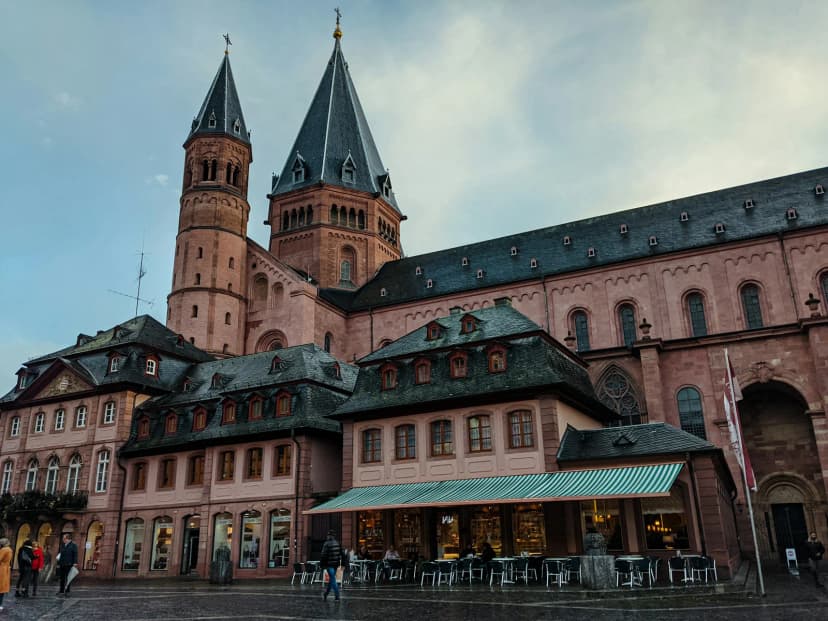
Two days in Nuremberg is a real, workable budget, but not a generous one. It is enough for a full walking day through the medieval Old Town and a second day that touches the city's darker twentieth-century history at the Nazi Party Rally Grounds. This plan is an editorial suggestion, not official guidance, so treat timings as pacing decisions rather than rules. The essential trade-off comes on day two.
Nuremberg sits in Bavaria in southern Germany and grew rich as an imperial city on central European trade routes, which is exactly why its walled core is so dense with churches, patrician houses and sandstone towers. Almost all of that core is compact enough to cross on foot, and the official tourist office publishes the details you need to confirm before travelling. Start there for current opening times, prices and ticket rules rather than trusting older trip reports.
At a Glance: How to Split Two Days
Day one stays entirely inside the walls: the craftsmen's courtyard near the station, the Hauptmarkt, Sebalduskirche, the climb to Nuremberg Castle and a slow evening walk beside the Pegnitz. Day two leaves the Old Town and heads out to the rally grounds complex, then returns for a short evening. This split keeps you from zigzagging across the city and preserves the second day's emotional weight.
The sacrifice is deliberate. Choosing the rally grounds on day two means you realistically get one indoor museum stop at most in the Old Town, not three. If you would rather collect museums, swap the second day out entirely and use a Nuremberg itinerary 1 day as the base for a longer Old Town programme instead.
Start From the Main Station and the Handwerkerhof
Nuremberg Hauptbahnhof sits right against the old city wall, which makes it a sensible starting point even if you arrived by bus or on foot from a nearby hotel. Just outside the station, the Handwerkerhof is a rebuilt craftsmen's courtyard of small half-timbered workshops set inside the fortifications. It is a five-minute orientation stop, not a morning.
From there you walk through the gate and the street pattern does the rest of the work. The Old Town core is genuinely compact, with churches, squares and the castle hill all within strolling distance of one another. Save public transport for day two, when the distances stop being walkable in the same way.
Day 1 Morning: Hauptmarkt, Schöner Brunnen and the Frauenkirche
The Hauptmarkt is the working heart of the Old Town, and the official tourism page describes colourful stalls selling fruit, vegetables, flowers and bread on weekdays. Two landmarks share the square: the Gothic Frauenkirche on its eastern side and the tall, spire-like Schöner Brunnen fountain. Walk the square slowly rather than treating it as a photo stop.
The Frauenkirche facade carries the Männleinlaufen, a mechanical clock whose figures move around at noon. It is a real timing constraint: either you are in the square shortly before midday, or you accept that you will miss it and move on. Building your morning around it costs you flexibility elsewhere, so decide in advance which you prefer.
Day 1 Midday: Sebalduskirche and the Vischer Shrine
Sebalduskirche, a short walk north of the Hauptmarkt, is Nuremberg's oldest parish church, first built around 1215 and rebuilt after wartime destruction before being reconsecrated in 1957. Its centrepiece is the bronze shrine of St. Sebald, cast by Peter Vischer the Elder and his sons between 1508 and 1519. The virtual museum of Nuremberg art describes it as both micro-architecture and goldsmithing, with Gothic, Renaissance and even Byzantine motifs crowded into one open, canopied structure.
The church is a working place of worship, not a museum, so visiting hours and any admission charge are set by the parish and published on the tourism office page. Check both shortly before your trip and put a little cash aside, since churches in Germany do not reliably accept cards. Quiet, respectful behaviour inside is expected, especially during services.
Day 1 Afternoon: Climbing to Nuremberg Castle
The climb from Tiergärtnertor up to Nuremberg Castle is short but steep, and the castle is a chain of separate buildings and towers on a sandstone ridge rather than one grand palace. The courtyards and the outward views over the rooftops are the part most visitors remember, and they are the part that costs you only effort. Decide early whether you are going up for the panorama or for the interiors.
Paid interiors, tower access and any combined ticket are separate questions answered by the castle operator, and older trip reports quote figures that no longer apply. Check the operator's own page for what a ticket currently covers before you commit, and do not assume a single purchase opens every building on the hill. If your two days are tight, the free courtyards plus the view are a defensible choice.
Day 1 Late Afternoon: Albrecht Dürer's House and Tiergärtnertor
Albrecht Dürer's House sits just below the castle at Tiergärtnertor square, and it is best treated as a short museum stop rather than an afternoon. The house is small, the tour is largely self-guided, and the rooms are furnished to evoke the artist's working life rather than to display his original paintings. Budget roughly under an hour indoors.
Outside, the square's most photographed object is Jürgen Goertz's distorted bronze hare, a deliberately odd tribute to Dürer's famous drawing of a hare. The square is also a pleasant place to sit with a coffee between the castle and the Dürer museum. Check the museum's current opening days and admission on the Nuremberg municipal museums pages, since both vary by season.
Day 1 Evening: Weissgerbergasse, the Pegnitz and Heilig-Geist-Spital
Close the day with a slow walk south through Weissgerbergasse, a cobbled lane lined with restored half-timbered houses, then down toward the river. The Pegnitz splits around the old town here, and the timber-framed Heilig-Geist-Spital building appears to float over the water as you approach from the Museum Bridge. This stretch is free, unhurried and best in late light.
Two footbridges, the iron Kettensteg and the wooden Henkersteg, both cross the river within a few minutes of each other. If you still have energy after the castle, this loop makes a natural end to day one without repeating ground. Keep it as a wander rather than a checklist, since the pleasure here is the sequence rather than any single sight.
Day 2 Morning: The Documentation Center Nazi Party Rally Grounds
The rally grounds lie outside the Old Town, so day two begins with a deliberate journey rather than a stroll. Put the Documentation Center first, while you are fresh, because the exhibition is dense and the site's scale is part of the experience. The Documentation Center Nazi Party Rally Grounds sits inside the unfinished Congress Hall, and the building's size is itself difficult to absorb.
Treat this as a remembrance visit, not a sightseeing tick. Half a day is a realistic allocation once travel and walking are counted, and the surrounding grounds demand more walking than the map suggests. Public transport and taxi options both work, and you should check current connections on the local transport operator's site rather than relying on directions copied from older blog posts.
Day 2 Midday: Congress Hall, Zeppelinfeld and Separate Sites
Four distinct places get blurred together in most trip reports: the Documentation Center, the Congress Hall that contains it, the Zeppelinfeld parade ground, and the Memorium Nuremberg Trials on the other side of the city. They are separate sites with separate roles, and none of them shares one admission ticket with the others. Deciding which of them you actually want is the real work of planning day two.
The Zeppelinfeld stands a walk away from the exhibition building, and the open ground is free to enter. If you are short on time, the exhibition plus a look at the grandstand from outside is a coherent half day. Adding a third site is where day two starts to feel rushed, so pick two and stop.
If Remembrance History Is the Priority: The Memorium
The Memorium Nuremberg Trials occupies the courtroom complex where the postwar trials were held, and it is a different experience from the rally grounds. Where the Documentation Center explains how the Nazi state staged itself, the Memorium deals with the legal reckoning afterwards. If your primary interest is law, justice and the trials themselves, this may deserve the day-two slot on its own.
You can combine both if you accept a long, heavy day, but the two sites sit apart from each other and from the Old Town. Splitting them across the two days would mean giving up the walkable Old Town block, which is the trade you are really making. Check the current openings before you commit, since neither is a drop-in attraction at every hour.
Day 2 Afternoon Museum Choices When Time Is Short
If the rally grounds take your morning and early afternoon, the honest answer is one museum, not four. The strongest short choice inside the Old Town is the City Museum at Fembo House, housed in the last surviving large Renaissance merchant's house in Nuremberg, between the town hall and the castle. Its condensed permanent exhibition is designed to deliver the city's story quickly.
Fembo House also sells a day ticket upgrade that lets a single purchase cover other municipal museums on the same calendar day, which is useful if you want two short visits rather than one long one. The museum lists its own opening hours by day and publishes separate holiday hours, so check the visitor information page before you rely on it. Note that guided specials and several partner attractions are excluded from the standard ticket.
Alternatives each ask for a different kind of time. The Toy Museum suits families, the Germanisches Nationalmuseum is a half-day commitment at minimum, and the Historic Art Bunker runs only as a capacity-limited guided tour that should be pre-booked. If a bunker tour is a priority for you, it becomes the fixed point around which the rest of the day has to bend.
Why Nuremberg Zoo Stays Off a Two-Day Plan
Nuremberg Zoo is a large landscape zoo in the Lorenzer Reichswald at Schmausenbuck, and visiting it properly consumes most of a day. It is also genuinely interesting for a Nuremberg itinerary, because the zoo was moved out to Schmausenbuck specifically to clear the Dutzendteich area for the Nazi Party Rally Grounds. That makes it history, and a reason to note the relocation if you pass the Dutzendteich on day two.
With two days, adding the zoo means abandoning either the Old Town day or the remembrance day, and neither trade is worth it. Opening times and admission change with the season, so check the zoo's own site if you are considering a third-day visit. On a two-day trip, leave it out and use the reclaimed time for a longer evening in the Old Town.
Practicalities: Booking Ahead and Confirming Times
Guided tours of the rock-cut cellars and the Historic Art Bunker are the itinerary's real bottleneck, because they run with limited group sizes on fixed departures. Book those first, then arrange everything else around them, rather than the reverse. Confirm the meeting point and the language of your tour when you book.
The Christkindlesmarkt season follows a recurring rule rather than a fixed date: the official tourism page describes the Hauptmarkt being given over to the market from the Friday before the first Advent, opened by the Nuremberg Christkind. Do not plan a trip around specific market dates without checking the current year's publication. Outside that Advent window, plan the Hauptmarkt as an ordinary working market square.
Transport is the other moving part. Nuremberg's buses, trams and metro cover the city well, and fares and day tickets are set by the local transport association, so check current prices there rather than relying on older figures. If you are weighing a city card against paying per attraction, the tourism office publishes what its card includes, and the arithmetic depends entirely on how many paid interiors you actually enter in two days.
Pacing: Where Two Days Feels Tight
Two days works if you accept one indoor museum stop per day and do most of the Old Town on foot. It strains if you want both the rally grounds and the trials courtroom, or both the Dürer house and the Germanic National Museum, on the same day. The castle interiors, the bunker tour and the zoo are the three items most often cut.
A third day absorbs one large museum without squeezing anything else, and it frees up an evening for the river walk at a relaxed pace. If your trip can stretch, build the extra day around a single deep visit rather than adding more stops. Start from the Nuremberg itinerary 3 days page if you want to plan that version.
Plan Your Visit
Two days in Nuremberg rewards a simple structure: one walking day inside the walls, one sober day out at the rally grounds. Book the guided cellar and bunker tours first, confirm church and museum opening times on official pages a week before travel, and keep one museum slot spare rather than filling every hour. That leaves room for the thing two-day itineraries always need, which is slack.
Frequently Asked Questions
Is two days enough to see Nuremberg?
Two days covers the Old Town on foot plus either the Nazi Party Rally Grounds complex or a second block of Old Town museums, but not both comfortably. If you want one large museum such as the Germanisches Nationalmuseum without rushing anything else, three days is a better fit. The main constraint is not distance but the number of separate ticketed interiors you can absorb in a single day.
Is Nuremberg walkable for a two-day trip?
The Old Town core is compact and genuinely walkable, with the main market square, the churches, the castle hill and the river bridges all within strolling distance of one another. Day two is the exception, because the rally grounds sit outside the centre and need public transport, a taxi or a long walk. Plan your accommodation near the station or the Old Town so day one starts on foot.
How do you get to the Nazi Party Rally Grounds without a car?
Nuremberg's tram, bus and metro network serves the area, and taxis are a straightforward alternative from the Old Town. Check the current route and timings with the local transport operator shortly before you travel rather than copying an old blog itinerary, since service patterns change. Whichever option you choose, allow extra time for walking once you arrive, as the site is spread out.
Should you visit the Documentation Center or the Memorium Nuremberg Trials first?
They answer different questions. The Documentation Center explains how the Nazi state staged its rallies and built the grounds, while the Memorium deals with the postwar trials and the courtroom where they took place. If your interest is law and justice, prioritise the Memorium; if it is propaganda, architecture and scale, start with the Documentation Center. Combining both makes for a long, emotionally heavy day.
Do you need to book Nuremberg's underground tours in advance?
Yes, treat them as the itinerary's bottleneck. The guided cellar and art bunker tours run on fixed departures with limited group sizes, so book ahead through the operator's own page and confirm the departure time and language before building the rest of your day around it. These tours are not included in the standard municipal museum ticket.
Sources
- Official event website
- Sebalduskirche (St. Sebald's Church) - Congress- und Tourismus-Zentrale Nürnberg
- St. Sebaldus Tomb | Work of art | Virtual museum of Nuremberg art
- Hauptmarkt (Main Market Square) - Congress- und Tourismus-Zentrale Nürnberg
- tiergarten.nuernberg.de: Home
- Informazioni per il pubblico | Stadtmuseum im Fembo-Haus