Nuremberg's headline sights are genuinely worth a day, but the city's more interesting layers sit just off the obvious route. Beneath the Old Town, a labyrinth of rock-cut cellars once stored beer and later sheltered residents during wartime bombing, and a guided walk through them reframes everything you see above ground. This guide focuses on those lesser-known experiences and the practical trade-offs between them, so you can decide what deserves your limited time.
As a starting point for planning: a half day is a reasonable suggested duration for one underground tour plus a food stop, though that is our recommendation rather than any official timetable. Visitor reports describe the cellars as a six-acre system across four levels, which is a scale worth understanding before you book. Confirm current tour times, languages and whether the route is running by checking with the operator or the city tourist information before you travel.
A word on how to read the rest of this piece: where a detail comes from a visitor report rather than an official source, we say so. Prices and opening hours change, so nothing here should be treated as a fixed commitment. Use it to choose between experiences, then verify the specifics.
What Counts as a Hidden Gem in Nuremberg
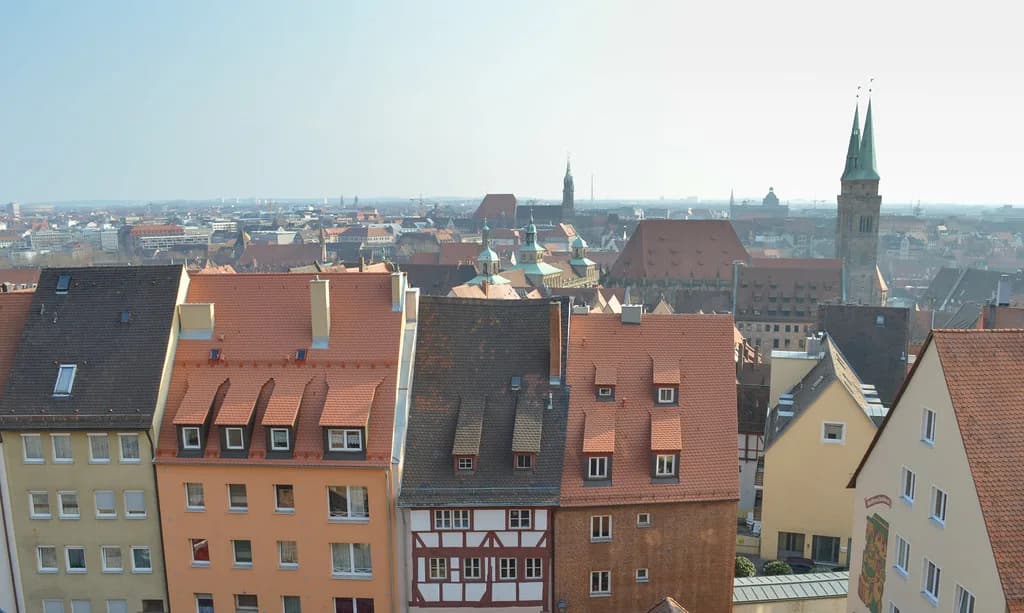
Nuremberg's Old Town is compact and walkable, dominated by its hilltop castle and ringed by medieval walls. The Pegnitz River splits the historic center in two, and most visitors cluster around the castle, Hauptmarkt and Dürer's house. The quieter rewards sit across the bridges or below street level.
Treat 'hidden gem' here as a practical category rather than a marketing label. It means places where the experience is specific, the crowd is thinner, or the entry cost is low relative to what you get. Some are free public spaces; others are ticketed interiors with a guided element.
That free-versus-paid distinction matters more than any ranking. Streets, squares and courtyards are open to wander, while cellars, roof spaces and museum collections typically require a ticket. Do not assume one ticket covers everything inside a complex.
Rock-Cut Cellars Under the Old Town: Beer Storage and Wartime Shelter
The cellars beneath Nuremberg were carved in the late 1300s to store the city's red beer, keeping it cool through the summer. In the twentieth century the same tunnels became air-raid shelters during World War II bombing. That double history is what makes the underground route more than a novelty.
Visitor reports describe the caves as spanning roughly six acres across four levels, a figure from one traveler's account rather than an official measurement. Today the chambers are largely empty and used for tours, though some beer, schnapps and wine are still stored in parts of the historic caves. Because the route and access can change, confirm the current situation locally before committing.
Cellar tours are a reported experience rather than a confirmed bookable product, so availability should be checked with the operator. If the underground route is not running during your dates, the alternative is to spend that time in the Wine Market quarter instead. Build your day around one anchor experience rather than assuming everything will be open.
Fountain Rings and Local Ritual at the Schöner Brunnen
Near the Church of Our Lady stands the Schöner Brunnen, a gilded Gothic spire from the fourteenth century that reaches about nineteen meters high. During the war the fountain was encased in concrete to protect it from bombing. That detail matters because much of what surrounds it today is reconstruction.
The local ritual is to spin the golden rings set into the fountain's grille three times for good fortune. It is one of those customs locals treat quietly and visitors embrace enthusiastically, which makes it a low-cost, high-charm stop. It takes a couple of minutes and sits directly on the main square route.
Because the fountain is on Hauptmarkt, timing changes the experience entirely. Early morning gives you clear photographs and space to actually find the rings. Midday puts you in the middle of the densest crowd in the city.
The Wine Market Quarter and the Holy Ghost Hospital
The Wine Market neighborhood is where you go if you want the storybook version of Nuremberg. Narrow cobblestone lanes, medieval buildings and half-timbered houses survived here, while much of the rest of the city was destroyed by bombs and fire during World War II. For travelers specifically hunting old Bavarian architecture, this is the district that delivers.
Nearby, the Holy Ghost Hospital spans the Pegnitz River, an arrangement that makes for one of the city's most photographed compositions. It also sits within walking distance of the main sights, so it slots in easily rather than requiring a separate trip. Come early or late in the day for calmer lanes.
The Old Town's compact layout means most of these stops chain together on foot. If you are building a single day around the historic center, our suggested Nuremberg Old Town walking route pairs the surviving streets with the main squares. Use it as a spine, then detour for the underground or rooftop elements.
St. Sebald Tower and Roof Tour: What the Climb Involves
St. Sebald is one of Nuremberg's most important Gothic churches, dating to the thirteenth century, with a roof rebuilt after wartime fires. A private guided tour reportedly takes visitors up to the angel choir level for a view down into the nave. From there the route continues above the vaulted roof, where you see the timber trusses of the structure itself.
The reported climb passes the Sebald bell and continues roughly fifty meters to the top of the tower, rewarding the effort with city views and close-up stonework. That figure comes from a visitor account, not an official specification, so treat it as approximate. Anyone considering this should ask the church directly about current tour status, timing and physical demands.
This is the kind of experience worth pairing with the underground rather than stacking three major sights in one morning. A cellar tour plus a rooftop climb covers the city from below and above, which is a more memorable pairing than two interiors. Decide based on how much stair climbing you want in a single day.
Red Beer Tasting at Hausbrauerei Altstadthof
Nuremberg red beer has deep roots in Franconia, brewed to medieval recipes and historically stored in the rock cellars. Hausbrauerei Altstadthof serves a flight of three beers, which a visitor report describes as red, black and a light Helles, echoing the colors of the German flag. The same source notes the brewery also produces whiskey and beer schnapps.
Food here is built around the beer rather than beside it. Reported menu items include malt-crusted schnitzel, bratwurst simmered in beer, and a beer-infused tiramisu. If you want one stop that connects the city's brewing history to its table, this is a strong candidate.
Pair this with the cellars and the narrative closes: the beer was stored underground, and now you drink it above the same ground. Check current serving times and whether tastings are running before you plan a meal around it. Prices and availability are exactly the kind of detail to confirm locally.
Tafelzier Pastries and a Lighter Food Break
Franconian food is hearty, and after a few days of sausages and roast pork you may want contrast. Tafelzier Patisserie is described as an elegant café serving artistic pastries, macarons, truffles and chocolates. It sits an easy short walk from the center.
Treat this as a deliberate pause rather than a meal. A coffee and a couple of pastries resets a sightseeing day better than a heavy lunch, especially if you have a cellar tour or rooftop climb scheduled. It also works as a weather fallback when rain interrupts walking plans.
For broader eating decisions, keep in mind that Nuremberg's restaurant range runs from traditional taverns to refined dining. A single sweet stop is not the whole food story, and the city's signature small grilled sausages are served nearly everywhere near the main market. Balance the refined stop against the traditional one.
Handwerkerhof and Smaller Detours Worth the Walk
The Handwerkerhof crafts courtyard gathers traditional workshops in a compact area, making it an easy detour when you are already near the station side of the Old Town. It is a low-commitment stop: you can walk through, watch a bit of craft work and move on. That makes it a good filler between bigger ticketed experiences.
The Old Town is enclosed by medieval walls, with the main train station just outside to the southeast and the Königstor gate leading in on foot. That geography is useful for sequencing: start or end on the station side and work inward. It also means you rarely need transport between the stops in this guide.
Smaller churches, quieter riverbanks and photo spots across the bridges reward wandering without a fixed itinerary. Budget an unstructured hour somewhere in your day for this. It is usually the part people remember.
Sequencing Underground, Rooftop and Food in One Day
A logical order runs downward first, then upward, then into food. Start with an underground cellar tour while you are fresh, climb St. Sebald or a tower next for the city overview, then finish with red beer and a meal. Each step changes your vantage point, which keeps the day from feeling repetitive.
If you only have a single day in the city, the underground-and-food combination is the most distinctive pairing and the easiest to fit. Our One Day in Nuremberg plan covers the core sights so you can see how much slack remains. Slot the lesser-known stops into the gaps rather than replacing the essentials.
With more time, spread the stops across two days and add the Wine Market quarter as a slower morning. A two-day structure lets you keep one block for history-heavy sites and another for food and architecture. That split reduces the risk of museum fatigue.
Choosing Between Hidden Gems and Headline Sights
Nuremberg's big attractions carry real weight, particularly the castle, the major Gothic churches and the World War II sites outside the walls. Those are not skippable if the history is why you came. The lesser-known stops work best as complements, not replacements.
Decide based on what you want to feel rather than what you want to tick off. Underground spaces and roof climbs give you a physical sense of the city's layers; the Wine Market gives you its surviving texture. If your time is short, pick one of each rather than three of the same kind.
Travelers who enjoy this approach elsewhere in Germany tend to plan the same way in other cities: one anchor sight, one local experience, one food stop. If you are comparing destinations, our guide to hidden gems in Berlin applies the same logic. Use it to calibrate how much time you want to leave unstructured.
Practical Planning Notes
Book nothing on assumption. Cellar tours, church roof access, brewery tastings and pastry cafés all have their own schedules, and the source-reported details in this guide may not reflect current conditions. Check the Nuremberg tourism site or ask at the tourist information center in the Old Town for the day's actual options.
If you are extending your stay, two days in Nuremberg gives you room to add the Nazi Rally Grounds and the trial memorial without crowding out the quieter stops. A three-day version allows a proper half-day outside the walls. Both let you keep the underground and rooftop experiences in their own time slots.
Finally, decide in advance which experiences you would drop if something is unavailable. The Wine Market quarter, the fountain ritual and the riverbank walks cost nothing and need no reservation. Build your day so the unbookable parts still make it worthwhile.
Frequently Asked Questions
Are Nuremberg's rock-cut cellars worth touring?
Yes, if you want context rather than spectacle. The cellars were carved in the late 1300s to store red beer and later served as air-raid shelters during World War II, so a single route covers two very different eras of the city's history. Visitor reports describe a large multi-level system, though that scale comes from one traveler's account rather than an official figure. Because tour schedules change, confirm current availability with the operator or local tourist information before planning your day around it.
When should I visit the Wine Market neighborhood?
Early morning or late afternoon works best, because the narrow lanes are calmer and the surviving half-timbered buildings are easier to appreciate without crowds. This district is where much of Nuremberg's old architecture remains after wartime destruction, so it rewards unhurried walking rather than a quick photo stop. The Holy Ghost Hospital over the Pegnitz is a short walk away and pairs naturally with the same visit.
Can I combine a red beer tasting with sightseeing?
Yes, and it fits neatly at the end of a day. Hausbrauerei Altstadthof serves red, black and light beers in a tasting flight, and the menu reportedly includes beer-based dishes such as malt-crusted schnitzel and beer-infused tiramisu. Because the beer was historically stored in the rock cellars, tasting it after an underground tour gives the day a clear narrative arc. Check current serving times before you go, since these details change.
What is the Schöner Brunnen ring-spinning legend?
The Schöner Brunnen is a gilded Gothic fountain on the main square, and local custom says you should spin the golden rings set into its grille three times for good fortune. The fountain was encased in concrete during the war to protect it, which is a useful reminder of how much of the surrounding Old Town was rebuilt. It is a free stop and takes only a few minutes.
Should I do the St. Sebald tower and roof tour?
Consider it if you want a view most visitors never get. A guided route reportedly leads up to the angel choir level for a look down into the nave, then above the vaulted roof to see the timber structure, continuing past the bell toward the tower top. The reported climb is roughly fifty meters, a figure from a visitor account rather than an official specification. Ask the church directly about current tour status, timing and what the climb involves.