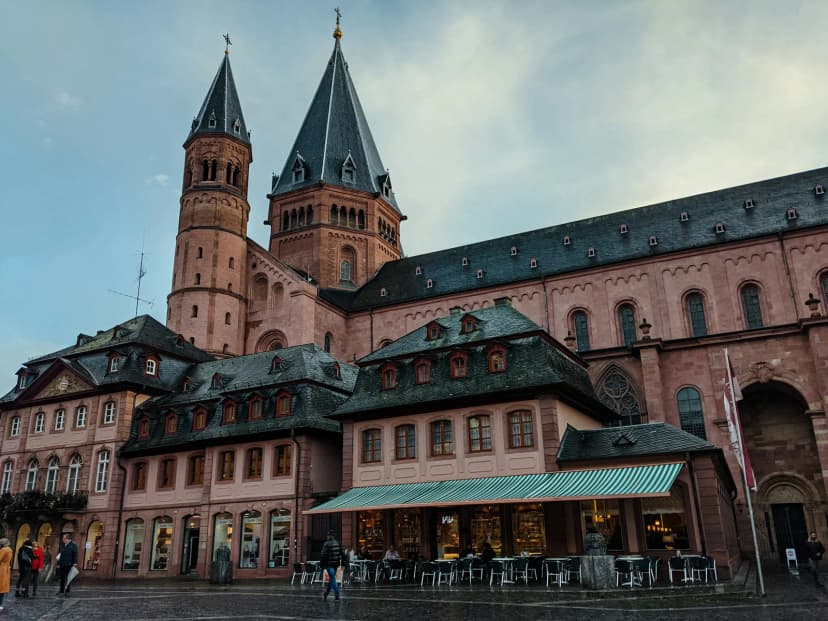
Mainz rewards a three-day stay precisely because it does not demand one. The old town, cathedral square and riverfront sit close enough together that you can walk between them, which means the extra days go into pacing rather than transport logistics. Use the first day for the compact core, the second for a day out of the city, and the third for the quieter corners that most short visits skip.
Everyone walks through Mainz differently, so treat every timing below as our suggestion rather than an official schedule. What is confirmed is the shape of the place: the city tourism board describes a mix of sights such as the Mainz Cathedral, wine taverns along the old-town lanes, and events running through the year. That combination is exactly why a three-day plan should leave room for sitting still.
One practical note before you build the days: museum relocation and renovation news changes, so check the operator pages shortly before you travel instead of trusting older descriptions. The city site keeps current information about the new Gutenberg Museum project, and the tourism site covers the mainzcardplus and guided tours. Those two pages are the ones to re-check in the week before arrival.
Why Three Days Suits Mainz
Mainz is compact, walkable and easy to explore without overplanning every hour, which is the single most useful thing to know before you start booking anything. A traveller account from an April 2026 visit describes barely using public transport because the main sights connect through the old town and riverside areas. That is the same reasoning that makes a three-day stay work: you spend your energy on the city, not on getting across it.
The same account suggests that two nights would suit the city better than the single night the authors booked, and notes that many highlights are free to visit. Three days lets you absorb that slower rhythm without padding the plan with marginal sights. If your time is tighter, the shorter version is covered in our 2 days in Mainz itinerary and our one day in Mainz itinerary.
Decide early how many paid interiors you actually want, because that decision drives everything else. Free, open-air stops include the cathedral square, the Marktbrunnen fountain beside it, the Rhine promenade and the park-like grounds around the citadel. Ticketed interiors are a separate matter, and the museum card worth checking is the mainzcardplus, which the tourism board lists with free entry to Mainz museums and a city tour among its benefits.
The Three-Day Shape at a Glance
Day 1 stays entirely on foot in the old town: cathedral, cathedral square, St. Stephan, and whichever museum you choose. Day 2 leaves the city for wine country or Wiesbaden. Day 3 returns to Mainz but moves away from the core, toward the citadel, the Roman Theatre viewpoint, the city park and the riverfront.
Keep Day 1 and Day 3 geographically separate, or you will repeat the same streets and lose the sense of two distinct days. The bridge between them is the Rhine promenade at Adenauer-Ufer, which works as a natural end point for either day depending on energy. If you only walk one structured route, make it the old-town one and let the third day drift.
Arriving and Getting Around
Frankfurt Airport is the usual arrival point for international travellers, and Mainz Hauptbahnhof is centrally located with onward buses, trams and S-Bahn services into the old town. Train travel suits Mainz well because the city sits on a practical line between Frankfurt, Cologne, Koblenz and the wider Rhine Valley. Check the operator's live timetable for your own date rather than relying on any journey time quoted in a guide, including this one.
Once you are in the old town, walking is genuinely the default. The city tourism board also offers public city tours and bookable experiences through its visitor information point at Markt 17 by the cathedral square, which is useful if you want context on the cathedral and the old town in one block of time. For schedules, tour times and current ticket options, the tourism board and the city website are the authoritative places to look.
Day 1 Morning: Altstadt, Squares and the Gutenberg Museum
Start in the Altstadt without a fixed route and let the squares pull you along. The old town is compact and atmospheric, with narrow lanes, wine taverns and small squares opening unexpectedly between buildings, and it is used by locals and students as much as by visitors. The Fastnachtsbrunnen fountain is worth a pause because it ties the city's carnival identity into an ordinary street corner.
The Gutenberg Museum is the one interior that most justifies a timed slot on Day 1, but confirm its current location and status before you go. A blogger visit describes the museum as having temporarily moved into the Natural History Museum building on Reichklarastraße during renovation, reported as of late 2024, so treat that address as historical context rather than as a 2026 certainty. The city's own new Gutenberg Museum page is where the current project status should be checked.
Two ticketing details matter here, and both come from that same 2024-era visitor report. Visitors bought the Gutenberg Museum ticket rather than a combined ticket with the Natural History Museum, and entry used an interactive NFC card that visitors tapped against exhibits to trigger projected images, plus a treasury holding original Gutenberg Bible copies. Do not assume a single shared ticket covers everything in the building, and check current admission and entry arrangements with the operator rather than budgeting from old figures.
Day 1 Afternoon: Cathedral, Marktplatz and St. Stephan
Mainz Cathedral dominates the old town, with pale reddish sandstone and six towers visible above the rooftops. Construction began in AD 975 under Archbishop Willigis, and the interior chapels and statues reward a slow lap rather than a quick look. Sitting quietly for a few minutes inside is a better use of the visit than trying to photograph every chapel.
Pair the cathedral with Marktplatz am Dom and the Marktbrunnen fountain in the same square, which is the natural place to pause for a drink and watch the city move. The fountain carries detailed Renaissance carvings and combines easily with the cathedral visit. Opening arrangements at religious sites can change with services, so check the cathedral and city listings on the day rather than assuming a fixed window.
Finish the walking day at St. Stephan, whose blue stained-glass windows by Marc Chagall cast a calm glow across an otherwise understated interior. From the outside the church looks modest next to the cathedral, so the contrast is the point. If you run short on Day 1, drop the extra museum rather than the church or the cathedral square.
Day 2: Rheingau Wine Country or Wiesbaden
Day 2 is where the three-day plan earns its keep, because the German rail line toward the Rheingau runs through vineyard country and riverside towns. A wine tasting stop in the region, such as Schloss Johannisberg, appears in travel-guide coverage as a day-trip idea. Tasting prices, opening times and whether tours run must be checked with each estate directly, because these change seasonally and are not stable planning facts.
Choose between the two Day 2 options on temperament, not logistics. Take the wine day if you want landscape, walking between vineyard villages and a slower rhythm away from a city. Take the town day if you want a contrasting urban stop with no countryside planning attached; our Mainz to Wiesbaden day trip guide sets out the Wiesbaden side if that is your pick.
Do not try to combine both in one day. The value of Day 2 is leaving Mainz properly, and splitting your attention between two out-of-town targets usually means you arrive back having seen neither well. Keep Day 3 free of travel so the trip finishes on the city rather than in transit.
Day 3: A Slow Day on the City's Edges
Begin at the citadel, which today reads more like a large park with historic military buildings scattered through it than a formal monument. Some structures host exhibitions and cultural events, but the appeal is the atmosphere and the views, including a terrace overlooking the Roman Theatre and the wider skyline. The theatre remains below are preserved but not fully walkable, so plan to look rather than scramble.
Continue into Stadt Park, which mixes a traditional green city park with small animal enclosures, gardens and walking paths, including a rose garden where locals sit in good weather. It is a free stop and one of the nicest slow-paced corners in the city. Check current park opening arrangements locally, as municipal green spaces can adjust access by season.
Close the day along the Rheinpromenade at Adenauer-Ufer, where the river, boats and evening light do most of the work. Nearby, the medieval Holzturm and the Nagelsäule memorial behind the cathedral add small historical stops if you still have energy. This is the day to buy nothing, book nothing and simply walk.
Is the mainzcardplus Worth It?
The mainzcardplus is a value decision, not an automatic buy, and the tourism board describes it as giving free entry to Mainz museums, a city tour and further benefits, sold with or without a public transport ticket. Over three days it only pays off if you plan to enter several museums rather than treating the city as a walking destination with one or two interiors. Add up the paid sights on your own list first, then compare that total with the card.
Current prices and the exact list of included museums are published by the tourism board, and they change, so check the official page rather than budgeting from an older figure. Note also that museum complexes may not share a single ticket, so the card's coverage of a name on a list does not automatically mean every collection inside is included. Ask at the ticket desk which specific exhibitions your card or ticket covers.
Where Three Days in Mainz Fits a Wider Rhine Trip
Mainz works as a relaxed cultural stop between larger cities, and the rail connections make it easy to slot into a longer Germany route rather than treating it as a standalone destination. Three days also gives you the option of a second day trip without cutting the city short. If you are building a multi-city trip, our 3 days in Berlin itinerary shows how a longer city block differs in pacing, and the 3 Days in Dresden itinerary covers the old town, Saxon Switzerland and Neustadt split.
Keep the order flexible. If your arrival day is half-lost to travel, run the slow Day 3 first and save the old-town walking day for when you are fresh, because that is the one day worth protecting. The single rule that matters is keeping one full day on foot in the old town.
Plan Your Visit
Three days in Mainz is not three days of headline attractions. It is one dense walking day, one day out, and one day deliberately spent at the city's edges along the river and the park. Build it that way and the trip feels generous rather than padded.
Before you travel, re-check three things on the official pages: the current status of the Gutenberg Museum project, what the mainzcardplus includes today, and the opening arrangements for the cathedral and St. Stephan. Everything else, including the promenade and the squares, can be left to the day.
Frequently Asked Questions
Is three days too long for Mainz?
No, provided you use the third day for something other than the old town. Three days gives you one walking day through the cathedral square and St. Stephan, one day out in the Rheingau or Wiesbaden, and one slower day around the citadel, city park and Rhine promenade. If you only want the core sights and nothing outside the centre, two days is plenty.
Is Mainz, Germany worth visiting?
It suits travellers who prefer walkable cities, wine culture and history without overwhelming crowds. The old town, cathedral square, Roman remains and riverside paths sit close together, and many outdoor highlights cost nothing to visit. Anyone looking for a large, high-energy city with a dense sight list may find Mainz quiet by comparison.
Which place is close to Mainz for a day trip?
Wiesbaden is the straightforward urban option, and the Rheingau wine villages are the countryside option along the rail line through the vineyards. Pick one for your second day rather than attempting both. Check current train times and any tasting or tour arrangements directly with the operator or estate before you commit.
Should I do the Rheingau or Wiesbaden on day two?
Choose the Rheingau if you want vineyard landscapes, a wine tasting stop and a rural pace. Choose Wiesbaden if you would rather stay in a city and avoid countryside logistics. Both work as a single day from Mainz, and neither needs to be booked far in advance for the transport itself, though specific tastings and tours may.
Do I need the Gutenberg Museum ticket or a combined ticket?
A visitor report from around late 2024 states that visitors bought the Gutenberg Museum ticket rather than a combined ticket with the Natural History Museum. Do not assume any shared or combined ticket across the building. Confirm the current ticket scope with the museum before you visit, especially given the renovation situation.
How do I check the Gutenberg Museum's current location?
Check the city's new Gutenberg Museum project page and the museum's own visitor information before travelling. A blogger visit reported the museum as temporarily housed in the Natural History Museum building on Reichklarastraße as of late 2024, but that describes a past situation and may have changed since. Do not plan around the older address without verifying it.