Lübeck rewards snackers rather than street-food hunters. The city's own tourism pages frame eating as something woven into a sightseeing day: breakfast or brunch in the Old Town, a fish roll as the snack between meals, and afternoon coffee in a café overlooking the World Heritage site. There is no evidence of a single defined street-food market here, so plan around individual stops instead of one concentrated food zone.
This guide sticks to what the city's tourism site and visitor accounts actually describe, and it separates those two kinds of source. Official pages tell you which foods the city promotes and where it points you; independent travel writing names specific venues as personal suggestions. Nothing here ranks shops, and any price, menu or opening time needs checking directly with the venue before you go.
What Lübeck Is Actually Famous For
Ask what Lübeck is known for and two answers come up: its Hanseatic brick architecture and its marzipan. The official tourism site introduces the city as the "Queen of the Hanse" and lists Lübecker Marzipan among its cultural highlights alongside museums and churches, which tells you the sweet is treated as part of local identity rather than a novelty souvenir. That framing matters when you plan: marzipan here is a heritage product, not just a candy counter.
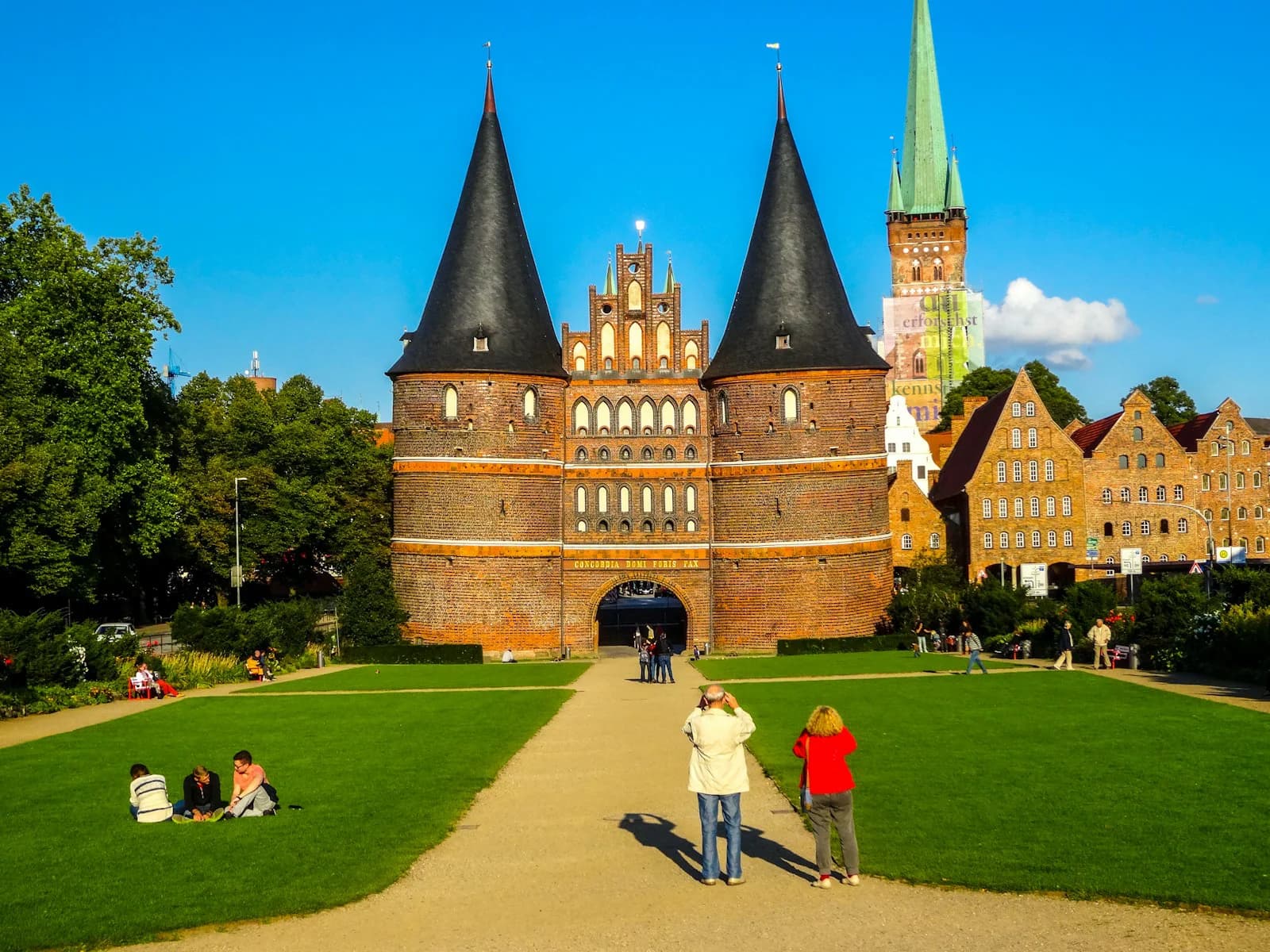
The Old Town itself is compact, roughly 2.5 kilometres by 1.5 kilometres according to one detailed visitor account, which is why snack-hopping on foot works at all. You can walk between the Holstentor, the market square and the Trave waterfront without needing transport, so a marzipan stop and a fish roll can sit in the same afternoon. The practical constraint is not distance but time inside paid attractions, which we come back to later.
The Fish Roll at Drehbrückenplatz
The clearest official recommendation in the sources is the fish roll. Lübeck's tourism gastronomy page describes a fish roll on the redesigned Drehbrückenplatz right on the Trave as the perfect snack between meals, which is a specific location rather than a general type of food. Treat that as your anchor stop: it is positioned as a between-meals bite, not a sit-down lunch, so it fits neatly into a walking day.
Because the recommendation comes without a fixed vendor, price or schedule, you should expect variation by stall and by season. Check what is operating on the day by walking the square rather than assuming a particular counter is open. If the weather turns, the same page's alternative is an Old Town café, which is a reasonable fallback rather than a wasted detour.
Marzipan, Done Properly
Two names recur for marzipan: Niederegger and Lübecker Marzipan-Speicher. Both appear in third-party visitor writing rather than official operator guidance, so treat them as suggestions, not rankings, and do not expect the sources to tell you which is cheaper or better. What the sources do support is marzipan cake as an afternoon-coffee order, which the city's gastronomy page names as a natural fit for a café break in the Old Town.
Budget-wise, a slice of marzipan cake or a small box of marzipan is a low-commitment purchase compared with a full museum ticket, so it works well as the thing you do while deciding how to spend the rest of the day. Buy what you will actually carry, since marzipan is dense and warm weather does it no favours. For a fuller day structure around these stops, a two days in Lübeck itinerary keeps the eating and the sightseeing in separate blocks.
Regional Specialties Beyond the Sweet
"Lübeck specialities" on the city's gastronomy page is deliberately broad, covering breakfast and brunch, cafés and evening restaurants rather than a fixed dish list. For a casual plate, that means looking for the regional framing on menus rather than hunting a signature street dish, because the sources do not identify one. The page also promotes culinary guided tours of the Old Town, which is a sensible option if you want the food context explained rather than guessed.
Beyond eating, the Old Town holds 90 or so passages and courtyard entries according to the city's tourism site, and these come up constantly in walking routes. They are residential, not food venues, so walk through quietly and do not expect cafés tucked inside them. Keeping that distinction straight saves you from a pointless detour.
Fair Trade as a Local Nuance
Lübeck has held fair-trade city status since 2011, and the city's gastronomy page reports that numerous cafés, restaurants, hotels and around 90 retailers participate by offering fair-trade products. In 2025 the city also took the title of Capital of Fair Trade in the large municipalities category. The important caveat: the award applies to participating businesses and the city's own structures, not to every snack location you pass.
If fair trade is part of what you want from a coffee stop, the city publishes a fair-trade map showing where products are available, and the Tourist Information café at the Holsten Gate is itself a network member. Look for the participating-business sign rather than assuming a venue is involved. That is the honest way to use the designation without overreading it.
Named Casual Venues to Consider
Independent visitor writing names several casual options: Fangfrisch, Schiffergesellschaft, Neue Rösterei and Restaurant Nord, plus the marzipan stops already mentioned. These come from a personal trip account, not from operator guidance, so they are starting points for your own shortlist. Read current reviews and menus before committing, because ownership, kitchens and hours change.
Schiffergesellschaft also appears on the city's own tourism site, described as a place where you can taste the Hanse, which makes it one of the few named venues with a degree of official visibility. The city site additionally lists hosts that meet quality and environmental management standards, including Fangfrisch and Schiffergesellschaft among others. Use those lists as a filter, not a verdict.
None of these venues should be assumed to suit every dietary need, allergy or accessibility requirement, because the sources do not cover that. Check directly with the venue before you build a meal around it. If you want quieter, less-obvious eating spots, the hidden gems in Lübeck angle is a better fit than chasing the headline names.
Balancing Snacks With Paid Sightseeing
The real trade-off in a Lübeck day is snack time versus paid interiors. Museum and church entry, tower access and guided tours all consume both money and clock time, so three leisurely café stops can quietly cost you an afternoon you meant to spend inside the Holstentor area or a church. Decide which interiors matter most, then let the snack stops fill the gaps between them rather than the other way round.
One visitor account gives concrete examples of that cost, noting an adult ticket of 13 euros at the European Hansemuseum and 7 euros at the Günter Grass House, with the connected Willy Brandt House free of charge. Those figures come from third-party trip notes and may be out of date, so verify current prices and opening times on each operator's own page before you plan around them. Do not assume neighbouring museums share one ticket.
Walking distances inside the Old Town are short, so the limiting factor is usually your appetite and the weather rather than your legs. In colder months the Christmas market season changes the food landscape entirely, and it is worth reading up on the Lübeck Christmas market separately if your trip falls in that window. If eating is the main event, give a three days in Lübeck itinerary the space to include both casual stops and one proper restaurant meal.
A Suggested Half-Day Snack Route
A workable half-day shape: start near the Holstentor, walk into the Old Town for coffee and a piece of marzipan cake, take a fish roll by the Trave at Drehbrückenplatz as your between-meals stop, then finish with a fair-trade coffee where the city's map shows a participating venue. Treat it as a suggestion and adjust to what is open on the day. A half day is reasonable for a coffee and marzipan stop, a fish roll and one more casual break, because the Old Town is small and walkable; for a sit-down restaurant meal, carve out an evening separately.
Before you go, confirm current opening times and menus directly with each venue, since none of the sources here guarantee them. For the wider city picture, start with the Lübeck: Itineraries and City Travel Guides hub and build the eating around the sightseeing you actually want to do.
Frequently Asked Questions
What food is Lübeck famous for?
Lübeck is best known for marzipan, which the city's own tourism site lists among its cultural highlights, and for regional café and restaurant cooking rather than one signature street dish. The city's gastronomy page points visitors toward breakfast and brunch, a fish roll as a between-meals snack, afternoon coffee with marzipan cake, and evening meals in Old Town restaurants.
Is there a street food market in Lübeck?
The sources do not describe a defined street-food market or a concentrated street-food scene in Lübeck. What they do describe is snack-led eating: a fish roll on Drehbrückenplatz by the Trave, cafés for coffee and cake, and restaurants in the Old Town. Plan around individual stops rather than expecting one market area.
Where can I get a fish roll in Lübeck?
The city's tourism gastronomy page recommends a fish roll on the redesigned Drehbrückenplatz, on the Trave, as the ideal snack between meals. It does not name a specific stall, so check what is operating when you arrive and keep an Old Town café as a fallback if the weather is poor.
How much of a day should I give to eating in Lübeck?
A half day is enough for a coffee and marzipan stop, a fish roll and one more casual break, because the Old Town is small and walkable. If you want a sit-down restaurant meal as well, carve out an evening separately rather than trying to fit everything between museum visits.