Willy Brandt was born in Lübeck, and the museum that carries his name occupies Königstraße 21 in the old town, a short walk from the city's main shopping street. The house presents the permanent exhibition Willy Brandt – A Life of Politics in the 20th Century, staged with multimedia stations rather than rows of glass cases. By far the most useful thing to know before you go is that admission to the exhibition is free of charge, according to the city's tourism listing [visit-luebeck], which makes it an easy stop to slot into a day in the Altstadt.
This is not the same place as the Willy-Brandt-Haus in Berlin at Wilhelmstraße 140, which is the SPD's federal headquarters and hosts its own art exhibitions and events calendar. The Lübeck house is a memorial and contemporary-history learning site in the statesman's birthplace, run as part of the Federal Chancellor Willy Brandt Foundation's exhibition programme. Mixing up the two leads to the wrong address, wrong visitor rules and a completely different experience.
Why the Willy Brandt House Matters in Lübeck
Brandt's biography runs through the twentieth century in a way few others do: emigration and exile, postwar reconstruction, the chancellorship, the Eastern treaties and the Nobel Peace Prize. The Lübeck museum treats that life as a way into the wider history of Germany and Europe rather than as a simple hero narrative. Democracy, human rights and peace form additional strands alongside his personal story.
Because the house is rooted in Brandt's birthplace, a visit also says something about Lübeck itself and about how a port city's social democratic milieu shaped a future chancellor. The exhibition is designed to reach all age groups, with a dedicated children's strand that uses pictures to trace how a young worker became a globally recognised politician. That makes it a viable stop for families who might otherwise skip a political history museum.
Where It Is and How It Fits an Old Town Day
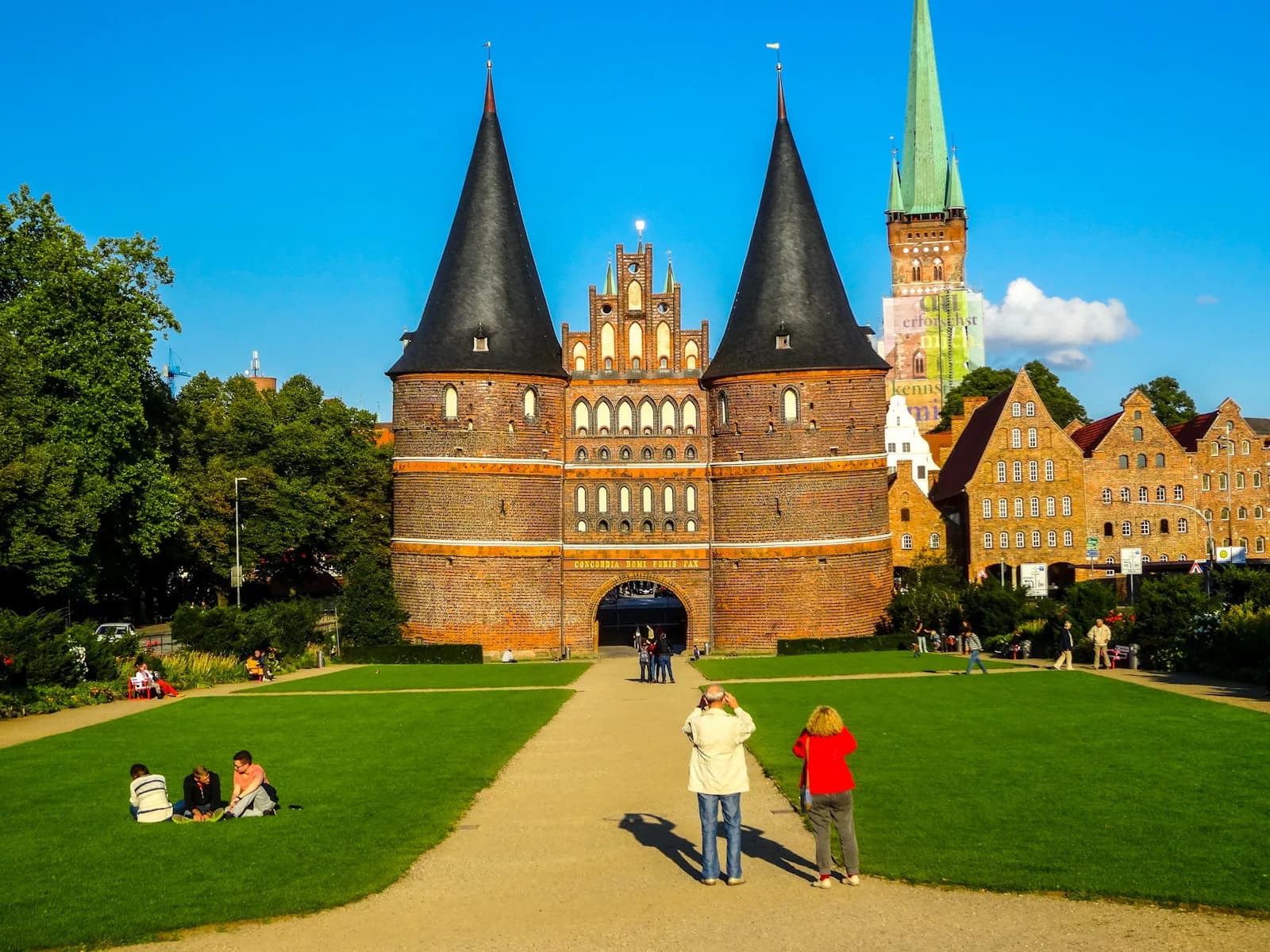
The museum's address is Königstraße 21, 23552 Lübeck, in the middle of the old town rather than on its edges. That places it within walking distance of the Holstentor, the Markt and the cluster of museum houses on the northern side of the Altstadt. If you are already spending a day between the Holstentor and the Buddenbrookhaus, the Willy Brandt House can be added without a separate trip.
Lübeck's literary museums form a natural pairing with the political history here, since Thomas Mann and Günter Grass both wrote out of the same city and century. A sensible sequence is to take the Buddenbrookhaus in the morning and the Willy Brandt House in the afternoon, or the reverse if you want to start with twentieth-century politics. Readers planning their days around these sites can work from a Lübeck itinerary and adjust the order to opening times.
What You See Inside the Permanent Exhibition
The permanent exhibition is titled Willy Brandt – A Life of Politics in the 20th Century and charts his career through installations and multimedia elements rather than static display boards. Visitors move through stations that place them inside events instead of describing them from a distance, which suits the turbulent periods the exhibition covers. Expect an approach built around media and interaction rather than a conventional chronology of captions.
The interactive admission ticket is part of the design: it lets each visitor take an individual route through the exhibition and become active at points along the way. Two stations stand out in the published description, a government bench you can sit on and a lectern you can step up to, echoing the chancellorship without pretending to be the real chamber. Treat them as hands-on exhibition elements rather than as original objects from Brandt's time in office.
Beyond the displays, the house runs lectures, readings, seminars and discussion sessions, so what is on during your dates may extend beyond the permanent exhibition. If a talk falls on your travel days it is worth planning around, because it changes the character of the visit from a self-guided walk to a seated programme. The organiser's own pages are the place to check current talks rather than any third-party listing.
Interactive Stations and What Children Get From It
Children are explicitly catered for through a strand that uses pictures to tell the story of a young worker who became a respected global politician. That narrative is simpler than the main exhibition and gives younger visitors a thread to follow while adults read the denser material. The museum recommends its programme for children and young people, so it is not a case of children being tolerated rather than addressed.
The hands-on elements help here: sitting at the government bench or standing at the lectern gives a child something physical to do between information-heavy passages. Parents should still expect to move at a child's pace rather than cover every station in depth. A clearly non-official suggestion is to allow roughly one to one and a half hours for a family visit, and longer if you read every panel.
Free Admission and What Is Not Free
Admission to the Willy Brandt House in Lübeck is free of charge, as the city's tourism pages state plainly. That covers the permanent exhibition and the interactive ticket that structures your route through it. It does not mean every service in the building is free, and the distinction matters when you are budgeting a museum day.
Guided tours, school class visits and thematic walks are separately arranged and separately priced by the Federal Chancellor Willy Brandt Foundation, so they sit outside the free entry rule. If your group needs a guide, plan for a paid booking rather than assuming the free admission extends to the tour. Because published figures can change, confirm the current rates with the foundation when you book instead of relying on any older number you have seen.
Opening Hours and How to Check Them
The city's tourism listing currently gives opening hours of Monday to Sunday 11:00 to 18:00, which would make the house a daily stop. Older destination-marketing pages show seasonal patterns with shorter winter hours and December closures, and those listings are tied to a past year. Do not plan around a seasonal table you find in an old guide; confirm the day's hours on the operator or city tourism page shortly before you travel.
Public holidays are the point where published daily hours most often fail, so a same-week check is sensible rather than over-cautious. If your trip depends on this museum specifically, check the phone number listed by the city tourism office as a backup. Verifying takes a minute and protects an afternoon that might otherwise end at a closed door.
Public Weekend Tours and Language
The foundation runs public tours every Saturday and Sunday at 3 p.m. through the exhibition, free of charge and without registration. You simply turn up and join, which makes weekend afternoons the easiest time to get guided interpretation rather than reading panels on your own. The practical catch for international visitors is that these public tours are conducted in German.
If your German is limited, the free exhibition is still fully visitable on your own using the multimedia stations, but you will miss the guide's framing. The alternative is a booked tour with an English-language surcharge, arranged in advance rather than joined on the day. Decide which matters more, a spontaneous weekend slot in German or a scheduled tour in your own language.
There is also a monthly telephone tour aimed at guests who cannot visit in person, usually conducted in German and requiring registration through the Bei Anruf Kultur programme. It is an inclusive offer rather than a substitute for being there, and dates sit in the foundation's events section. It is worth knowing about if a member of your group cannot manage the trip but wants to follow the exhibition.
Group, School and Thematic Tours in Detail
Group tours cover either a general walk through the permanent exhibition or a special-interest route, with published topics including Brandt's flight, emigration and exile, his Eastern Europe and Germany policy, and his vision of a unified Europe. A guided tour of the permanent exhibition usually takes about one hour and is priced per person with a minimum charge, and groups of twenty or more are split up. The foundation states these figures and adds that prices may change.
School classes are handled separately, with a per-pupil hourly rate for students and free places for accompanying teachers, plus a foreign-language surcharge for tours in English. That surcharge is the detail most school groups miss when they request an English-language guide and then compare the quote with a German-language one. Booking and educational enquiries go through different contacts at the foundation, so route your request to the right person.
Thematic walks through Lübeck itself follow Brandt's biography and the city during the Nazi era, lasting roughly two hours and priced per person. They leave the building and use the old town as the exhibition, which suits visitors who want the city's twentieth-century history rather than only the museum's interior. If you only have time for one paid format, choose between the indoor tour and the walk based on whether you want Brandt's politics or Lübeck's wartime context.
Booking a Group Tour and the Cancellation Rule
Group tours are booked through the foundation's registration form, with questions on dates and booking handled by named contacts on its guided-tours page. Because tours are arranged at times agreed with you rather than on a fixed public schedule, request your slot early enough that the time you want is still available. Have an alternative time ready in case your first choice is taken.
The foundation's cancellation condition is specific: a booked group tour must be cancelled no later than two working days before the booked date, and late cancellation or non-appearance triggers a cancellation fee. That rule makes group planning a commitment rather than a provisional hold, so confirm your numbers before you book. Tell the organiser as soon as a trip looks uncertain rather than waiting for the day itself.
Nearby Old Town Stops to Pair With the Museum
Lübeck's museum cluster rewards an unhurried walk rather than a checklist, and the Günter Grass House Lübeck visitor guide covers another twentieth-century figure a few minutes away. Pairing Grass and Brandt gives you a literary and a political angle on the same century in the same city. Check each house's own days before committing, since a shared day off would break the pairing.
On the city's eastern edge, the Burgkloster Lübeck visitor guide and the Burgtor Lübeck visitor guide cover medieval and later history and sit close to each other near the Holstentor side of the old town. Adding them extends a museum day into a walk across several centuries without crossing the whole city. Choose based on how much indoor time you want against time on the streets.
Practical Planning Tips
Allow roughly one to one and a half hours for the permanent exhibition as a suggestion, longer if you read every panel and use every interactive station. Because entry is free, there is no pressure to extract maximum value from a timed ticket, so you can leave and return the same day if the museum is crowded. Mid-morning and early afternoon tend to be the busiest stretches in Lübeck's old town museums, with the last hour before closing generally calmer.
Bring your questions to the free weekend tour if you speak German, and book an English-language tour in advance if you do not. If you are travelling with a group, settle numbers and dates before using the booking form so the cancellation rule never comes into play. And check the day's opening hours on the operator or city tourism page in the week you travel, because that is the only reliable way to confirm them.
Plan Your Visit
The Willy Brandt House is one of the few free, genuinely substantive stops in Lübeck's old town, and its subject connects the city to the wider history of twentieth-century Europe. Free admission to the multimedia exhibition makes it an easy addition to a day built around the Holstentor, the Markt and the literary museums. The paid extras, the weekend tours, group bookings and thematic walks, are optional layers rather than the main event.
Before you go, confirm the current opening hours on the city tourism or operator page, decide whether you need a booked tour in your own language, and check the foundation's page for the tour formats and conditions that apply to your group size. If you are planning a wider itinerary through the city's museums, the Günter Grass House in Lübeck and the Buddenbrookhaus sit naturally alongside it. Build the day around what you want to understand, not around how many doors you can pass through.
Frequently Asked Questions
Is the Willy Brandt House in Lübeck free to enter?
Yes. The city's tourism listing states that admission to the Willy Brandt House in Lübeck is free of charge, and that covers the permanent exhibition and the interactive admission ticket used inside it. Guided tours, school class visits and thematic walks are arranged and priced separately by the Federal Chancellor Willy Brandt Foundation, so free entry does not extend to a booked tour.
What are the opening hours of the Willy Brandt House Lübeck?
The city tourism listing gives daily hours of 11:00 to 18:00. Older destination-marketing pages show seasonal patterns with shorter winter hours and closures over the New Year period, but those listings are tied to a past year and should not be treated as current. Check the operator or city tourism page in the week you travel, and call the listed number if your plans depend on the house being open.
Do I need to book a tour at the Willy Brandt House Lübeck?
Not for the free public tours, which run on Saturday and Sunday afternoons without registration. Group tours, school class visits and thematic walks through Lübeck must be booked in advance through the foundation's registration form, with times agreed individually. The foundation asks that a booked group tour be cancelled no later than two working days before the date, and a fee applies to late cancellations or non-appearance.
Is the Willy Brandt House Lübeck the same as the one in Berlin?
No. The Willy-Brandt-Haus in Berlin at Wilhelmstraße 140 is the SPD's federal headquarters and hosts its own art exhibitions, event rooms and access rules. The Willy Brandt House in Lübeck at Königstraße 21 is a memorial and contemporary-history learning site in Brandt's birthplace. They have different addresses, programmes and visitor rules.