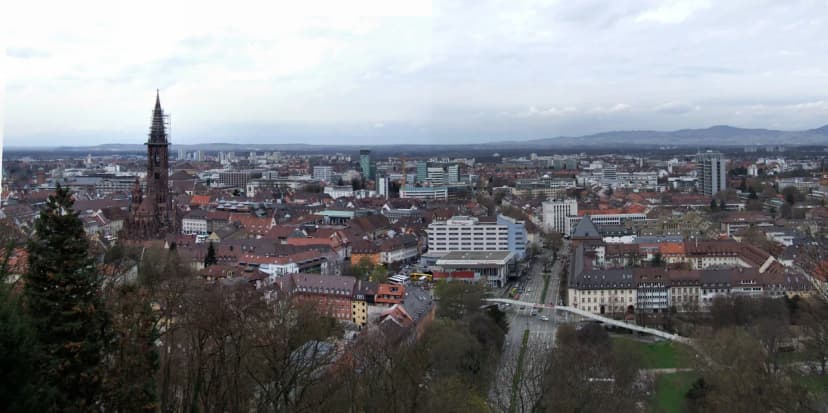
Lübeck's old town sits on an island that forms a hill between the Trave and Wakenitz rivers, roughly a square kilometre in size and holding well over a thousand listed buildings. That density is why the historic centre reads less like one district and more like a cluster of small ones, where the view changes within a few minutes of walking. Visitor details: LUBECK - a guide to Germany's most ravishing city | bye:myself.
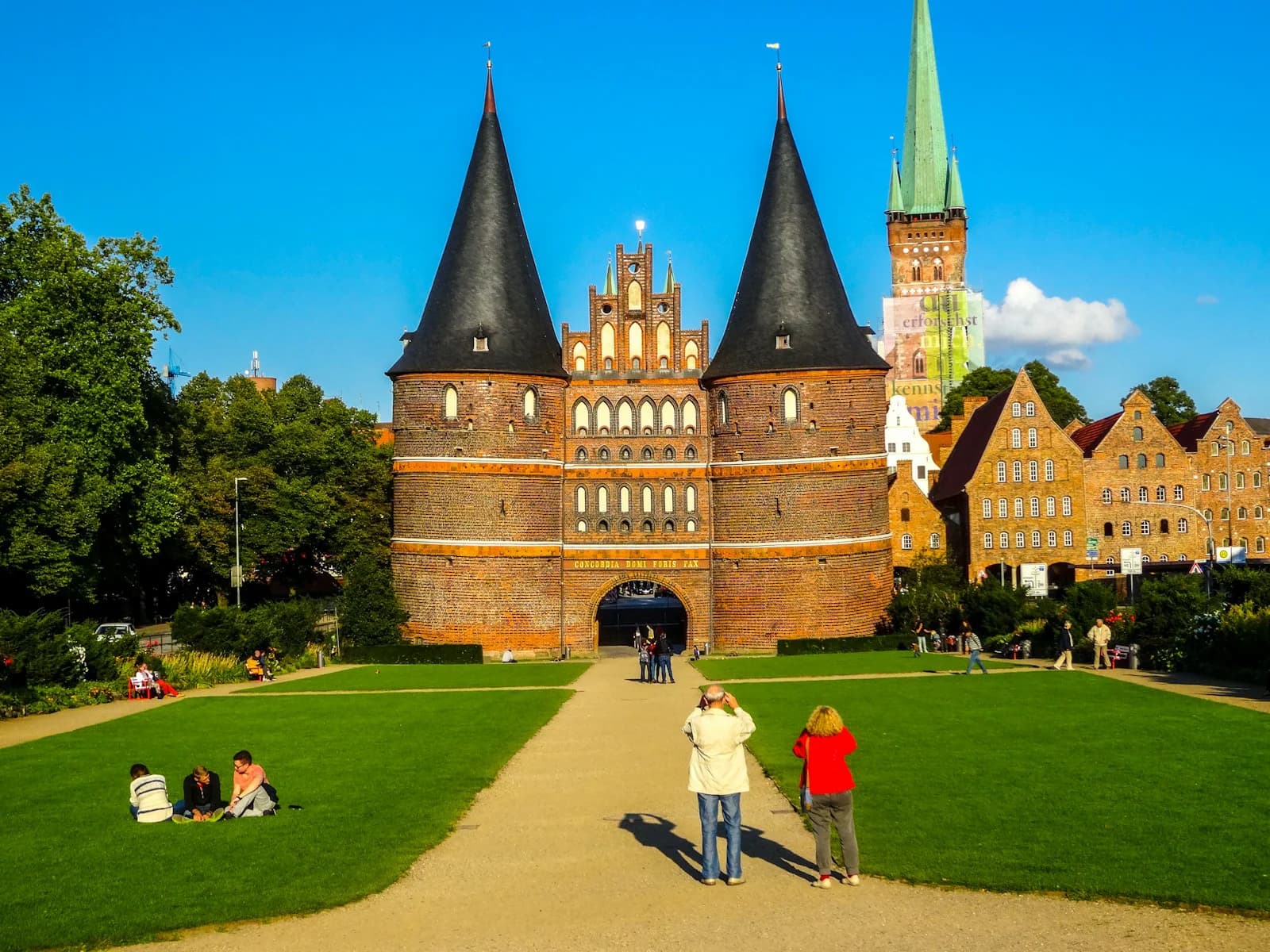
Most first-time visitors arrive from the west, crossing the Puppenbrücke and passing the Holstentor, the gate built in 1464 that still marks the old western boundary of the Hanseatic city. The eight allegorical figures on the bridge railings gave it its name, and the originals now stand at the St. Annen Museum.
What Counts as a Neighborhood in Lübeck
On the island, the practical unit is the church parish, not a modern administrative district. Each of the five main churches served a different group, and walking from one to the next is the clearest way to feel the quarters shift. The skyline is often described through its seven towers, raised by St. Mary's, the cathedral, St. James', St. Peter's and St. Giles'.
Outside the island, the logic changes completely. Districts such as St. Jürgen in the south, Herrenwyk in the industrial east and Travemünde on the Baltic grew for reasons that had nothing to do with medieval trade walls. Treating them as separate trips rather than extensions of an old-town stroll produces a more honest plan.
For a first orientation, our suggested time frame is a half day for the island core and a full day if you add the riverfront, the museums and a courtyard detour. That is our editorial recommendation, not an official itinerary, and the tourist office publishes its own town walk map if you prefer a set route.
The Altstadt Island Core: Church Quarters as Anchors
St. Mary's Church was built between 1265 and 1352 on the highest point of the old town island, inside the Hanseatic merchants' quarter that climbs uphill from the Trave warehouses. It was the main parish church of the citizens and the city council, which explains its position beside the town hall and the market rather than beside the cathedral.
That uphill relationship is the single most useful thing to understand about the island. The merchants' quarter, the market and the civic buildings sit high; the working riverfront sits low. If you plan a route from the warehouses upward, the city's social geography explains itself as you climb.
Each church also carried a professional identity, which is why the quarters feel different in character rather than merely different in architecture. St. Jakobi served the seafarers, and a lifeboat from the ship Pamir is kept inside as a relic of that connection. St. Aegidien is the smallest and easternmost of the city-centre churches, first mentioned under that dedication in 1227.
Do not assume every church interior is open or free to walk into. St. Peter's functions as a city church without a congregation and hosts exhibitions and events rather than regular services. Blogger accounts describe a lift to the viewing platform and a paid ticket, but some visitors report the lift out of action, so check the church's own page before you build a day around a tower view.
Merchants' Courtyards and Gänge: The Lived-In Layer
The courtyards and Gänge exist because rich merchants did not want their workers living on the same street as themselves. Small houses were built behind the large merchant houses and reached through narrow openings in the walls, sometimes low enough that you have to duck. Around 180 of these courtyards once existed in Lübeck; roughly 80 remain.
The largest surviving courtyard is on An der Untertrave, and it is the one most often visited. The apartments inside are genuinely small and tightly packed, which is exactly why the atmosphere registers so strongly when you step through the passage.
The essential courtesy rule is that these are homes, not exhibits. Walk through quietly, keep cameras pointed at buildings rather than windows and doors, and avoid lingering in a space that functions as a shared front garden for residents. Claire's Footsteps frames the courtyards the same way, as a hidden layer created by overcrowding on an island with nowhere to expand.
Holstentor, Puppenbrücke and the Western Approach
Most visitors enter the old town from the west, arriving from the train station, the bus station or one of the large car parks. Crossing the Puppenbrücke brings you to the Holstentor, built in 1464 and one of two surviving gates from Lübeck's medieval fortifications, the other being the Burgtor in the north.
The gate stands visibly crooked because it was built on boggy ground close to the Trave, and the ground has caused problems for centuries. Concrete was poured beneath it in the 1930s to stop the settling, and it is stable today. The Latin inscription on the outer face reads as a statement about harmony at home and peace abroad.
Driving into the narrow centre is not advisable, since many streets are genuinely tight and large parts are pedestrian zones anyway. Lübeck Hauptbahnhof is a short walk from the old town, which makes leaving the car at the station side the simpler decision. Confirm current train and bus arrangements through the operator rather than relying on blog timings.
Obertrave and the Salt-Warehouse Riverfront
The Obertrave bank runs from near the Holstentor toward the Engelsgrube, and it opens with a row of six adjoining storehouses built between the 1600s and 1800s. Salt was the commodity stored here, both for preserving food and for moving furs, which is why the warehouse belt lines the water rather than the market square.
Wanderlog dates the Salzspeicher group between 1579 and 1745 and describes them as Renaissance-style brick storehouses along the Trave, which is close enough to the same story to confirm the trade function. The riverfront today feels open and lateral, in contrast to the tight lanes inland, and residents have historically been permitted to hang laundry between the trees on the boulevard.
The Holstentor and the salt warehouses actually stand outside the island proper, on the Wall peninsula and the surrounding minor isles. That is a useful distinction for anyone trying to understand why the walk from the station feels different from the walk inside the old town centre.
St. Jürgen and the Southern Edge
St. Jürgen lies south of the medieval core along the Wakenitz, and its landmarks show a city that outgrew its walls. The Wasserkunst is a historicist water tower built in 1867 and extended in 1890, sitting directly on the river; the Kolosseum is a listed concert and event hall in the same district.
These are not postcard sights in the usual sense, and that is precisely the point. If you have already walked the island and want to see how nineteenth-century infrastructure reshaped the city, this southern edge rewards a detour.
Herrenwyk and the Industrial East
Herrenwyk tells the part of Lübeck's story that brick Gothic tends to overshadow. The Geschichtswerkstatt Herrenwyk occupies the former department store of the Hochofenwerk blast furnace plant and documents work in the plant and daily life in the workers' colony, with a focus on the 1920s and 1930s and on the rise and fall of the Flender shipyard.
The museum is run under the Cultural Foundation of the Hanseatic City of Lübeck, and its origins trace back to a 1983 exhibition on working-class culture. Opening arrangements for a small industrial museum can change with staffing and funding, so confirm before travelling out.
Travemünde: Lübeck's Baltic Neighborhood
Travemünde is part of Lübeck but behaves like a seaside resort, with a river mouth, beaches and a ferry port rather than merchant courtyards. The Alter Leuchtturm is a brick lighthouse functioning as a landmark and maritime museum, and the four-masted sailing ship Passat is moored nearby for guided tours. Travel between the old town and Travemünde is by train or bus, so check the current operator timetable rather than trusting quoted journey times.
The beach zones differ noticeably. Kurstrand is the main wide sandy beach central to the resort, while the Priwall peninsula across the river is quieter and reached by ferry, and there are designated areas where dogs can swim.
A beach promenade of about 1.7 kilometres runs along the seafront, recently renovated and useful for a walk without committing to a full beach day. Because Baltic weather changes quickly, pack a warm layer even in summer; the resort genuinely behaves differently from the sheltered island.
Where the Literary and Museum Quarters Cluster
Several literary and art museums sit close together on the island, which makes them easy to treat as one district. The Günter Grass House opened in October 2002 and is run by the Cultural Foundation of the Hanseatic City of Lübeck, showing Grass's literary work alongside his drawing and sculpture. The Willy Brandt House occupies his childhood home and presents a permanent exhibition by the Federal Chancellor Willy Brandt Foundation.
The Museum Behnhaus Drägerhaus holds nineteenth- and twentieth-century painting in two adjoining old-town houses, and the Buddenbrookhaus at Mengstrasse 4 is dedicated to Thomas and Heinrich Mann. Wanderlog currently lists the Buddenbrookhaus as temporarily closed, so treat that status as something to verify with the museum before you plan around it rather than as a permanent condition.
Do not assume one ticket covers a connected complex. Museums that share a building group or an address can still be separately ticketed and separately entranced, which is a common and avoidable disappointment on a short visit.
Choosing Where to Sleep: Island or Station Side
The core trade-off is atmosphere against convenience. Staying on or beside the island puts the churches, courtyards and riverfront within a short walk, which matters most if you have only one evening of usable daylight. Staying near Lübeck Hauptbahnhof puts you a short walk from the old town while keeping luggage handling and early departures simple.
Everything surrounding the old town is ordinary residential neighbourhood with shops and food stores, so the island-versus-outside decision is about ambience rather than about missing services. Prices and room availability vary by season and are not fixed facts, so compare current listings for your own dates instead of relying on any secondhand figure.
Practical Neighborhood Navigation
Walking is the default for the island, and that is not a stylistic preference but a practical one, given narrow streets and pedestrian zones. The tourist office's Welcome Center near the Holstentor sells a pocket-size town map in English or German that unfolds to show a marked town walk running from the Holstentor to the Rathaus and the Niederegger confectioner's shop, with nearly two dozen stops between.
The Welcome Center also runs guided walking tours year-round, with a schedule that varies by season, and it is the right place to ask about current arrangements for boat trips on the rivers and harbour. Confirm seasonal timings directly with the office rather than assuming a fixed daily departure.
For breaks between neighborhoods, the green edges of the city work well as pauses. If you want to spend an afternoon away from brick facades and crowds, the city's planted spaces are worth planning around.
Mistakes to Avoid in Lübeck's Quarters
The first mistake is assuming that a single ticket unlocks a whole connected complex. The second is treating lived-in courtyards as photo sets rather than as shared residential space, which is exactly the behaviour that puts access at risk for everyone.
The third is expecting every church interior to be open and free, when several function partly as event venues or cultural spaces with variable access. The fourth is trusting quoted admission prices from older blog posts; the Lübeck tourist office publishes current visitor information and is the right place to confirm entry arrangements before you go.
Plan Your Neighborhood Route
Build the visit around contrast rather than coverage: one morning on the island's church quarters, an afternoon on the Obertrave and in a courtyard passage, and a separate half day for Travemünde or the industrial east. That structure keeps each area legible instead of blurring into a single walk.
If you have longer, spreading the districts across several days lets you add the museums and a Baltic afternoon without rushing either. Our suggested three-day structure suits travellers who want the literary houses, the industrial museum and the coast in one trip.
Before travelling, confirm opening arrangements, tower access and any guided tour schedule with the Lübeck tourist office and with each site directly, because these change by season and by staffing. The neighborhood logic stays stable; the operational details do not.
Frequently Asked Questions
Is Lübeck's old town island walkable in a single day, and which quarter should I base myself in?
The island is compact enough that walking is the practical way to cover the church quarters, the market area and the riverfront across one long day. For a first visit, basing yourself close to the Holstentor or the market square keeps the main quarters within easy reach on foot. If you value easy luggage handling and onward connections more than atmosphere, the area around Lübeck Hauptbahnhof is a short walk from the old town.
Where can I see the medieval courtyards and Gänge, and are they free to enter?
Courtyards and Gänge are tucked behind the street facades throughout the old town, and the largest surviving courtyard sits on An der Untertrave. They are residential, not ticketed attractions, so there is no entry desk and no admission arrangement to buy. Because people live there, walk through quietly, avoid photographing windows and doorways, and do not treat the space as a public square.
How is Travemünde different from Lübeck's old town?
Travemünde is part of Lübeck but functions as a Baltic seaside resort and ferry port, with beaches, a lighthouse and a moored four-masted ship rather than merchant lanes and courtyards. The Kurstrand is the main central beach, while the Priwall peninsula across the river is quieter and reached by ferry. Plan it as a separate outing, and check current train and bus times with the operator rather than relying on quoted journey durations.
Do all the churches in Lübeck allow visitors inside?
No. The city's five main churches have different roles today, and some function partly as event or exhibition venues with variable access. St. Peter's, for example, operates as a city church without a congregation and is used for cultural events and exhibitions rather than regular services. Check each church's own website before you go, particularly if a tower view is the reason for your visit.
Can I walk into the merchants' courtyards to take photos?
You can generally walk through the passages, but the courtyards are private residential property rather than public attractions. Around eighty courtyards survive from the roughly 180 that once existed, and the tiny houses inside are lived in. Keep visits brief, stay on the paths, and keep cameras away from private windows and entrances.
Which parts of Lübeck fall outside the Altstadt island?
Several notable areas sit beyond the medieval core. The Holstentor and the salt warehouses stand outside the island proper on the Wall peninsula and nearby minor isles, St. Jürgen lies south along the Wakenitz with the Wasserkunst and the Kolosseum, Herrenwyk in the east holds the industrial history museum, and Travemünde sits on the Baltic coast. Treating these as separate outings works better than folding them into an old-town walk.