
A Gang is a narrow passage cut through a street-front building; a Hof is the small courtyard it reaches, usually ringed by modest dwellings. Together they form a hidden layer of Lübeck's Altstadt that most day visitors walk past without noticing. Understanding them turns a pleasant stroll into a lesson in how a medieval trading city housed its working population.
Lübeck's official tourism site puts the number of winding Gänge and handsome Stiftshöfe still to be discovered at around 90, the kind of figure that gives a sense of scale rather than a precise inventory. They are scattered across the whole Altstadt island rather than lined up on one signed lane, so a Gänge walk is a walk with many small stops rather than a single destination.
What a Gang and a Hof Actually Are
Think of the street frontage as a mask. The burgher's house faced the street with its shop, workshop or warehouse, while the passage beside or through it led to a rear plot that had been built over. What you enter today is not a scenic alley but the leftover service and living space of a working property.
Inside, the scale drops sharply. The small units placed in the rear yards stood tightly packed on corner plots, behind burgher houses, or in the interior of residential blocks, and these hidden living areas became known as Gänge or Gangviertel. Some have been carefully restored and planted with flowers by newer owners, which is why a courtyard can look charming and still be somebody's home.
Terminology helps you read what you find. A Stiftshof belongs to a charitable foundation and may have a different character from a commercial rear yard, while covered gateways are another category again. Not every passage in Lübeck is a Gang, and not every courtyard is publicly accessible, so let the individual doorway tell you what you are looking at.
Why Lübeck Grew Inward Instead of Outward
Hanseatic trade made Lübeck rich, and wealth made it crowded. The old town sits on an island hill that could not expand beyond its walls, so as commerce grew the densely built lanes filled in rather than spreading out. The result was intense pressure on every square metre inside the fortifications.
The solution was to break passages through the front houses and build over the rear courtyards with small dwellings. Local accounts describe this explicitly as an emergency measure, a Notlösung, rather than a planned housing policy: the Altstadt hill could not keep pace with the growth that successful trade brought, and it quickly became too tight inside the city walls. It is a clear surviving illustration of how a booming medieval port improvised its way around geography.
This is why the Gänge matter beyond their looks. They are physical evidence of a social order, showing where the labour that kept the trade economy running was housed relative to the merchants it served. Walking them is closer to reading a housing record than admiring a backdrop.
Who Lived Behind the Front Houses
The rear dwellings were home to day labourers, porters and the workers employed in whatever trade the street-front house practised. ADAC's city guide frames the passages as a window into how poorer residents lived from the late Middle Ages onward: journeymen, load carriers and day labourers. Someone who carried goods or worked a workshop by day often lived in a cramped unit a few steps behind the premises. The passage was the commute.
That connection between workplace and lodging explains the layout. A Gang typically served the specific property it pierced, not the neighbourhood in general, so neighbouring courtyards could belong to different trades and different owners. It also explains why these quarters were hidden rather than celebrated in their own time.
The social distance was short in metres and long in status. Merchants and craftsmen occupied the handsome street facades while their labour force lived in single rooms at the back of the same plot. Many visitors find this contrast the most memorable part of a courtyard walk.
How Many Survive, and Where to Find Them
Lübeck's official tourism site states that around 90 winding Gänge and handsome Stiftshöfe can still be discovered today, and an archived local events entry repeats the same approximate count. Treat it as a widely cited figure rather than a permanently fixed register, since restoration, conversion and private ownership change what is visible over time.
The ADAC city guide places the historic passages all over Lübeck's Altstadt, describing them as hidden living areas on corner plots, behind burgher houses and inside residential blocks. There is no single Gänge street to tick off. Practical consequence: plan a wandering loop through the old town rather than a direct route to one address.
A useful anchor point is the area around the Handwerkerviertel, the craftsmen's quarter, where a themed walk was historically scheduled to gather at the Buddenbrookhaus. If you want a broader context for the old town before hunting passages, the wider Lübeck: Itineraries and City Travel Guides coverage helps you sequence the Altstadt sensibly.
Free Grounds Versus Private Doorsteps
Most passages are open to visitors, but residents reasonably expect consideration, and this is the single most important thing to understand before you go. ADAC notes that access varies from courtyard to courtyard because ownership varies; there is no uniform rule covering all of them. Some are restored and welcoming, others are simply someone's front yard. Never assume a passage is public just because it is unlocked, and never treat a courtyard as a free attraction with an entrance.
If a gate is closed, a sign is posted, or the space is clearly in residential use, that is your answer. Turning around costs nothing and preserves access for everyone who follows. This is also why the Gänge do not belong on a list of budget-friendly Lübeck activities in quite the way a park or waterfront promenade does. You are a guest in a lived-in space, not a ticket holder.
Walking the Gänge Independently
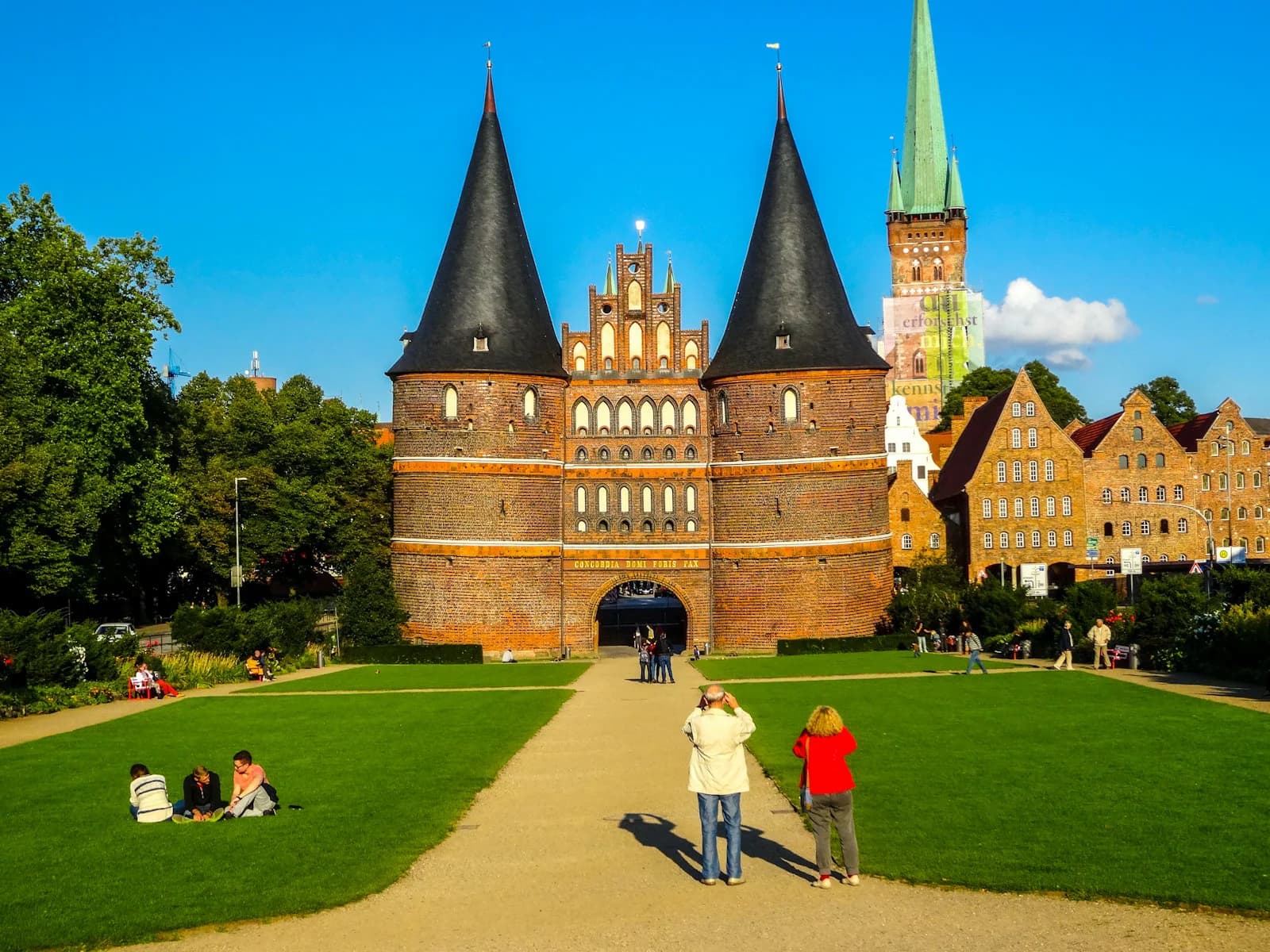
A self-guided wander gives you flexibility and no schedule, which suits the scattered geography of the passages. Link courtyards to the surrounding monuments, such as the Holstentor, the great brick churches, the Heiligen-Geist-Hospital and the museum harbour, and let the old town's street pattern do the work. You will pass more Gänge by drifting than by marching.
Allow roughly half a day if courtyards are your main objective, or a full day if you fold in churches and one museum. That duration is a suggestion based on the scale of the Altstadt island, not an official figure. Comfortable shoes matter more than a precise plan, because the surfaces are historic rather than smoothed for visitors.
Build in one indoor stop so the walk does not become a blur of brick. The Buddenbrookhaus Lübeck visitor guide is a natural pairing, since the house sits close to where craftsmen's-quarter tours have historically gathered. If you prefer a different focus, the Burgkloster Lübeck visitor guide covers the medieval convent complex at the northern edge of the old town island.
Guided Walks: What a Tour Adds
The trade-off is straightforward. A self-guided walk is free, flexible and silent, but a passage looks much like any other passage until someone explains which trade used it and who lived there. A themed tour supplies that context and often entry to places you would not find or would not recognise on your own.
Local operators run themed formats including a craftsmen's-quarter route and hidden-alley walks that the organisers describe as visiting tucked-away places, with insights into museums, workshops and shops. One listing states a duration of two hours in German for groups of up to fifteen people and notes that the meeting point can vary because each tour is planned individually. Confirm the current language, group size and start point with the operator when you book, since these details are set per departure.
Prices, availability and meeting points change with the season and the operator, so check them directly rather than relying on any figure you read elsewhere. The archived craftsmen's-quarter entry on lübeckverliebt is a historical record from January 2024 that its publisher explicitly marks as no longer updated, so use it to understand the format, not to plan a date. The current city events calendar is where confirmed departures appear.
Etiquette, Photography and Access Caveats
Keep your voice low and your group small; a courtyard amplifies sound in a way a street does not. Do not photograph through windows, into doorways or directly at residents, and put the camera away entirely if someone is visibly going about their day. These are homes first, and ADAC's guide notes that residents expect consideration.
Stay on the visible path, leave gates as you found them, and take litter with you. If a resident asks you to leave, do so immediately and without argument; that single interaction shapes how the next visitor is received. If you want a break from courtyards without leaving the old town, local secrets tend to sit in the small details rather than the headline sights, and a slow half hour over coffee in a side street often yields more than another lap.
Expect cobbles, narrow gaps and uneven thresholds throughout the Altstadt, and expect conditions inside a Gang to be tighter than on the street outside. Historic passages were not designed for wheelchairs, pushchairs or large groups moving together. Anyone with limited mobility should plan around specific courtyards rather than assuming a continuous accessible route, and mixed-ability groups may do best to split at the tightest passages and rejoin afterwards.
Planning Your Gänge Walk
Treat the Gänge and Höfe as a housing history you happen to walk through, not a checklist of photogenic corners. Start with the figure of roughly 90 surviving passages, accept that ownership and access differ from one courtyard to the next, and let the Altstadt's scattered layout set your route.
Decide early whether you want context or freedom. A guided hidden-alley or craftsmen's-quarter walk adds explanation and access you would otherwise miss, while a self-guided loop costs nothing but your attention. Either way, check current schedules and meeting points directly with the operator or the city's events calendar shortly before you go.
Walk quietly, keep groups small, and turn back where a courtyard is clearly private. The passages have survived centuries of change partly because visitors have treated them as neighbourhoods, and that is still the best way to see them.
Frequently Asked Questions
What are the Gänge und Höfe in Lübeck?
They are narrow passages, called Gänge, cut through street-front buildings into small rear courtyards, called Höfe, where modest dwellings were built. They date from the medieval and early modern period, when Lübeck's walled old town ran out of room and rear plots were built over to house labourers and tradespeople who worked in the front properties. Today they form a hidden layer of the Altstadt, distinct from the main streets and squares.
How many passages and courtyards still exist in Lübeck's old town?
Lübeck's official tourism site and an archived local events listing both refer to around 90 Gänge, Torwege and Stiftshöfe surviving in the Altstadt. This is a widely cited figure rather than a permanently fixed register, because restoration and changes in private ownership affect what remains visible. Use the number as a sense of scale, not as a precise inventory to complete.
Can you visit Lübeck's courtyards for free?
Most passages can be walked without paying, since they are ordinary lanes and yards within the old town rather than ticketed attractions. However, access is not uniform: many courtyards are residential, some gates are closed, and ownership varies from one property to the next. If a space is clearly private or shut, respect that and move on.
Why were Lübeck's passages built in the first place?
Successful Hanseatic trade made Lübeck rich and crowded, but the old town sits on an island hill that could not expand beyond its walls. As space ran short, passages were broken through the front houses and rear courtyards were filled with small one- or two-storey dwellings. Local accounts describe this as an improvised response to overcrowding rather than a planned housing scheme.
Are there guided tours of the Gänge and Höfe?
Yes. Local operators run themed walks, including routes through the craftsmen's quarter and tours focused on hidden alleys and secret passages, often including glimpses into places you would not find alone. Formats, language, group size and meeting points vary by departure, so confirm the details with the operator when you book and check the city's current events calendar for confirmed dates.
Where are the Gänge located in Lübeck?
They are spread across the entire Altstadt island rather than concentrated on one street, appearing on corner plots, behind burgher houses and inside residential blocks. That scattered pattern means a Gänge walk is a wandering route with many small stops, best combined with the old town's churches, the Holstentor and the museum harbour.


