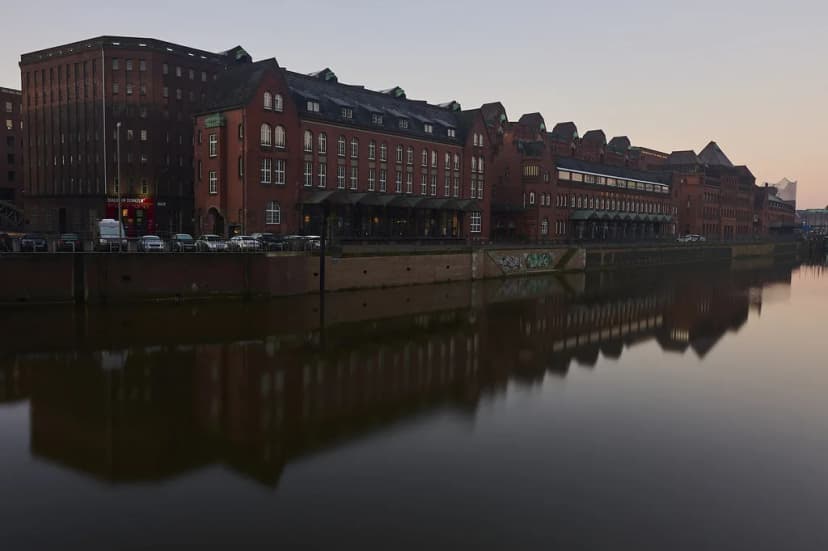
Hamburg's best free day is not a list of attractions but a route along water. The old warehouse district, the Elbe quays and the tunnel under the river sit close enough together that you can cover them on foot without buying a single ticket, which is why the city works so well for travellers watching their budget. A suggested duration of five to six hours covers this core waterfront stretch at a relaxed pace with photo and picnic stops.
A realistic plan is one waterfront stretch in the morning, a park break in the afternoon and a market or riverside finish in the evening. Hamburg's official tourism site groups ideas under free activities, while Lonely Planet's city round-up describes the same core areas from a sightseeing angle, so both are useful for cross-checking what a stop actually involves. Treat the sequence below as a suggestion built around walking distances, not an official itinerary. For more ideas on what to see across the city, the Hamburg landmark visitor guides hub collects individual attraction guides.
Why Hamburg Works on a No-Ticket Day
The free zone in central Hamburg forms a rough walking belt between the Speicherstadt warehouses and the Landungsbruecken landing stages. Lonely Planet notes that the canal-divided Speicherstadt, a UNESCO-listed district once devoted to maritime trade, sits beside the Kontorhaus quarter and the Altstadt, so you can move between brick architecture, civic buildings and water without paying an entrance fee. Wear proper shoes, because cobbles and quay paving cover a lot of ground over a full day.
The payoff of sticking to one line of travel is that you spend your time looking at the city rather than riding across it. That five-to-six-hour figure is an editorial suggestion, not an official figure, and you should extend it if you add a park or a market.
Speicherstadt, HafenCity and the Elbphilharmonie Exterior
Start among the red-brick warehouses of Speicherstadt, where the canals, bridges and neo-Gothic facades are public ground and free to walk through. The district is part of the wider UNESCO World Heritage listing shared with the adjacent Kontorhaus area, and it is still a working part of the port's legacy rather than a museum set. Wander without a fixed route, then head toward the water for the modern skyline of HafenCity.
The Elbphilharmonie concert hall is the obvious landmark to aim at, and the building itself sits above a restored brick warehouse on the Elbe. Lonely Planet describes the glass upper levels rising over the city, noting that Europe's longest escalator leads up to the Plaza with its wrap-around balcony and city views; the same source also suggests checking the HafenCity InfoCenter in the Kesselhaus for architectural models and as a starting point for guided district tours. Treat Plaza access as something to verify on the day rather than something guaranteed: visitor arrangements and any charges or booking requirements change, so confirm the current position with the operator before you build your day around it.
Turn west along the waterfront toward the Landungsbruecken, where the harbour opens up in front of you. Lonely Planet points travellers to the north shore of the Norderelbe for harbour boat trips; the promenade itself is free, and watching the ferries and barges is one of the cheapest hours in the city. Keep boat trips and hop-on hop-off services in the paid column, with prices and departure times checked with each operator.
Landungsbruecken and the Alter Elbtunnel
The Alter Elbtunnel turns a short walk into a small event: you descend by lift or stairs and pass under the Elbe on foot. A traveller account of a free day in the city describes walking from Landungsbruecken through the Old Elbe Tunnel and stopping on the far side for harbour views, which is exactly how the crossing is best used. The tunnel itself is the attraction here, not the destination.
On the Steinwerder side, the reward is a different view back at the skyline and the working port traffic. There is little in the way of sights beyond the panorama, so plan the visit as a loop rather than a one-way leg unless you intend to continue along the southern bank. Comfortable footwear matters more than usual because the approach ramps and tunnel floor are hard, and the crossing is fully exposed to wind off the river.
Elbstrand Oevelgoenne and the Museum Harbour
West of the Landungsbruecken, the riverbank at Oevelgoenne offers a sandy stretch and a walk along the Elbe toward the museum harbour. The travel account of the waterfront route describes walking from Elbstrand Oevelgoenne toward Museum Harbour Oevelgoenne, noting that harbour access is free, and the slow passage of ships against the changing sky is the reason to go. Bring a jacket, because the exposed riverbank is colder and windier than the streets inland.
Do not treat the museum harbour as an attraction with guaranteed access to every vessel. The pontoons are free to walk where they are open, but whether ships are moored, open or crewed varies with the season and with the individual operators, so a flat statement that everything is viewable on any given day would be wrong. Check locally when you arrive, and treat the riverbank walk rather than the ships as the fixed part of the outing. If you enjoy historic ships, the museum ship Rickmer Rickers is covered in its own guide.
This stretch works best as the late-afternoon finish of a waterfront day, when the light softens and the walk back toward Altona has a clear direction. If the wind is strong or rain sets in, cut it short and save the riverbank for better conditions, since there is little shelter along the water.
Planten un Blomen and the Alster: Two Green Stops
Planten un Blomen is a free park with gardens, lawns and water features, and it is a natural place to sit down midway through a walking day. Lonely Planet places Dammtorpark and Planten un Blomen west of the Kunsthalle on the far side of the Alster Lakes, describing both as popular local spots for strolling and unwinding. The Planten un Blomen park has the practical advantage of lawns, benches and paths that make a picnic straightforward.
Before you go, read the current information on opening periods such as seasonal closures, since posted times can be published on the operator's own pages and may vary through the year. Beyond that, the key decision is simply which green stop you want: the Alster for a lakeside circuit with boats, or planted gardens for shade and a seat. Give each a separate afternoon rather than trying to see both properly in one.
The Alster gives you an open circuit of water, promenades and sailboats that costs nothing to walk around. Jungfernstieg at the south end of the Binnenalster is where Lonely Planet notes the boat cruises leave, so the lakeside is also a decision point: either stay on foot for free, or step onto a paid Alster round trip if you want the water-level view. Free options here are the promenades, the lawns and the people-watching rather than any ticketed vantage point.
Markets and Street Life: Flohschanze and Spielbudenplatz
Flohschanze is the flea market to plan around, and it is a Saturday fixture rather than a daily one. Lonely Planet describes it as Hamburg's best Saturday flea market, set in a former slaughterhouse with hundreds of vendors selling bric-a-brac, furniture, clothing and jewellery, and suggests continuing along adjacent Marktstrasse or into nearby vintage shops and cafes. Because it depends on traders turning up, treat any given Saturday as likely rather than certain and check current listings before travelling across town.
In St Pauli, Spielbudenplatz is the square to watch for evening life. Lonely Planet notes that the St Pauli Nachtmarkt takes over the square on Wednesdays, when food stalls, live bands and beer drinkers gather from late afternoon into the evening, and that street food trucks appear on Thursday evenings through the year. None of that is guaranteed for a specific date, so check current event listings rather than building a trip around a single night.
The Hamburg Fish Market is the city's other famous market morning, but it is a distinct outing with its own rhythm rather than a filler stop in a waterfront walk. Read current details before setting an early alarm, because whether stalls run and how busy it gets varies with the season and with the weather.
Eating and Drinking Cheaply: Picnics and Public Drinking
Germany permits drinking alcohol in public places, which changes how cheaply you can spend an evening. Lonely Planet states explicitly that drinking in public is legal in Germany and names Altonaer Volkspark and Lindenpark as pleasant spots to sit out with a bottle. The practical consequence is that a supermarket picnic in a park or on a quay is a legitimate way to cut the day's food bill, as long as you take your rubbish with you.
Buying food from stalls is the other budget route, and the fish sandwich is Hamburg's best-known street snack. Lonely Planet describes it as a portable, satisfying budget meal made with locally caught fish in a fresh bun, and lists Bruecke 10 near the harbour and Kleine Haie Grosse Fische in St Pauli among places to try it. Treat opening patterns at individual kiosks as something to verify on the spot rather than assume.
If you would rather sit down indoors than picnic, that is the moment to decide whether the day has been cheap enough to justify one paid meal instead of several. Restaurants near the Landungsbruecken and around the Alster are convenient to the walking route, and choosing a single main meal rather than grazing all day keeps the total closer to a free-day budget.
What Is Not Free: Choosing One Paid Attraction
Miniatur Wunderland, Chocoversum, BallinStadt and the Kunsthalle all charge, and the sensible move is to pick at most one rather than several. Miniatur Wunderland sits in Speicherstadt and is a different proposition from the surrounding free district: the operator warns that it is almost always busy and often very crowded, recommends visiting early or late, and publishes a waiting-time forecast alongside advance tickets and time-bound entry windows. Book ahead through the operator and read the current admission and waiting information on its own pages rather than trusting a figure quoted elsewhere.
Chocoversum is a guided chocolate experience rather than a walk-in museum, and it runs to a fixed format. The operator states that the visit is only possible as part of a 90-minute guided tour, that tours can be booked in German and English, and that the shop is open daily without museum admission; group and ticket prices are published on the operator's pages and change by time and group size, so check those pages for the day you want to visit. If you only want chocolate to take away, the shop is the free-to-enter option.
BallinStadt traces the emigration halls through which millions of people left Europe, and it is an indoor, ticketed museum. The operator publishes seasonal opening periods, daily closing days and current prices on its information page, along with an audio guide covering the exhibition in several languages, which you can use on your own phone. Because hours shift between the summer and winter periods and the museum closes on certain dates, check that page before you travel out to Veddel.
Harbour and Alster cruises are paid outings as well, and the Maritime Circle Line illustrates how bundled tickets work: its hop-on hop-off harbour tour with admission to the BallinStadt Emigration Museum is sold as a combined product, with the route and timing set by the operator. Lonely Planet notes that a Hamburg Card gives free public transport in the city plus discounts on boat cruises, which is worth comparing against the individual fares before you commit to several paid activities.
Museum complexes deserve caution: do not assume that one ticket covers everything inside a group of buildings, because individual houses, temporary exhibitions and partner venues can be ticketed separately. Check the specific museum's own admissions page for the building you intend to enter, and confirm which parts of a site are free to walk through before you plan around it. If you plan to visit several paid museums, compare the options on the Hamburg museum pass page before buying individual tickets.
Day Trips Belong on a Separate Plan
Altes Land, the North Sea and Baltic coast, and the region's castles and manor houses are day-trip decisions rather than free stops in a city day. The city's own day-trip section organises them by theme, from orchards and historic villages to beaches and wildlife parks. Because they sit outside the city, they deserve their own day and their own transport planning rather than being squeezed into a free-walking itinerary.
Welcoming ships at Wedel's Willkomm Hoft is the kind of outing that combines a short journey with a maritime viewpoint, and the city website lists it among its day-trip ideas. If you only have two or three days in Hamburg, keep the day trips for a return visit and spend the time you have on the free waterfront belt instead. Readers comparing cities can also look at free things to do in Berlin and free things to do in Munich to see how Hamburg's free offering differs.
A Suggested Free Day, Step by Step
Begin in Speicherstadt in the morning while the light is still flat on the brick facades, then walk east to the HafenCity waterfront and the Elbphilharmonie exterior. Continue to the Landungsbruecken and cross the Alter Elbtunnel for the view back at the skyline, then take the riverbank path west toward Oevelgoenne. This sequence follows one line of travel, which matters more than any individual stop when you are on foot all day.
Use the afternoon for a single green stop, choosing between Planten un Blomen and the Alster rather than attempting both. Finish at whichever market or square fits your day of the week: Flohschanze if it is a Saturday, Spielbudenplatz for an evening in St Pauli, or the fish market if you are prepared for an early start. If you want a longer plan with more paid activities mixed in, the 3 day itinerary and the walking tour cover the city centre in more depth.
Plan Your Free Hamburg Day
The trick to a cheap day in Hamburg is to treat public space as the main event and paid attractions as optional extras you choose deliberately. Warehouses, quays, tunnels, parks and lakes cost nothing to walk through, and the city is compact enough that they connect on foot. Decide in advance which single ticketed stop, if any, is worth your money, and reserve it through the operator.
Before you set out, confirm the volatile details: waiting times and tickets at Miniatur Wunderland, tour slots at Chocoversum, and seasonal hours and prices at BallinStadt are all published by the operators and can change with demand and the calendar. Market dates are schedule-dependent, and Plaza access at the Elbphilharmonie should be checked rather than assumed. A five-minute check the day before saves a wasted trip across the city.
For the market-morning option, read current information about the Hamburg Fish Market before you commit to an early start, since whether it runs and how busy it is can vary. Then build the rest of your day around walking, picnic stops and the waterfront, and let the free parts of Hamburg do the work.
Frequently Asked Questions
What can you do in Hamburg without spending money?
Walk the Speicherstadt warehouse district, follow the Elbe waterfront past the Landungsbruecken and through the Alter Elbtunnel, and spend time in parks such as Planten un Blomen or around the Alster Lakes. The Elbphilharmonie building and its surroundings are worth seeing from outside even if you skip the interiors. Markets such as Flohschanze are free to browse but depend on their schedule, so confirm they are running before you travel.
Is the Elbphilharmonie Plaza free to visit?
Do not assume so. Access arrangements to the Plaza can change, so check the current position with the Elbphilharmonie before you plan around it. The building's exterior, its position on the HafenCity waterfront and the surrounding public quays are all free to walk past and photograph regardless. If Plaza access matters to you, verify it on the day you intend to go rather than relying on older reports.
Which Hamburg flea market is best for a Saturday?
Flohschanze is the Saturday flea market most often recommended, set in a former slaughterhouse with hundreds of vendors. Treat it as a Saturday fixture rather than a daily one, and check current listings before you go, since individual market days can change. The surrounding streets have vintage shops and cafes that make the trip worthwhile even if the stalls are thinner than expected.
Can you drink alcohol in public in Hamburg?
Yes. Drinking alcohol in public places is legal in Germany, including Hamburg, which makes a park picnic with a supermarket bottle a normal and inexpensive option. Buy what you need locally and take your rubbish with you. Do not assume food stalls or kiosks will be trading when you arrive, so check before you rely on them for a meal.
How much time do you need for a free waterfront walk?
A relaxed walk from Speicherstadt past the Elbphilharmonie and Landungsbruecken, through the Alter Elbtunnel and along to Oevelgoenne takes roughly five to six hours at an easy pace with photo and picnic stops. That is a suggested figure rather than an official one, and adding a park or a market extends it. Split the waterfront and the parks across different days if you would rather not rush either.
Which Hamburg attractions need a ticket?
Miniatur Wunderland, Chocoversum, BallinStadt and the Kunsthalle all charge admission, and harbour or Alster cruises are paid outings too. Each operator publishes its own ticket, tour and waiting-time information, so check the relevant page for the day you intend to visit rather than relying on figures quoted elsewhere. If you only want one paid stop, pick the one that matches your interests and book it directly.