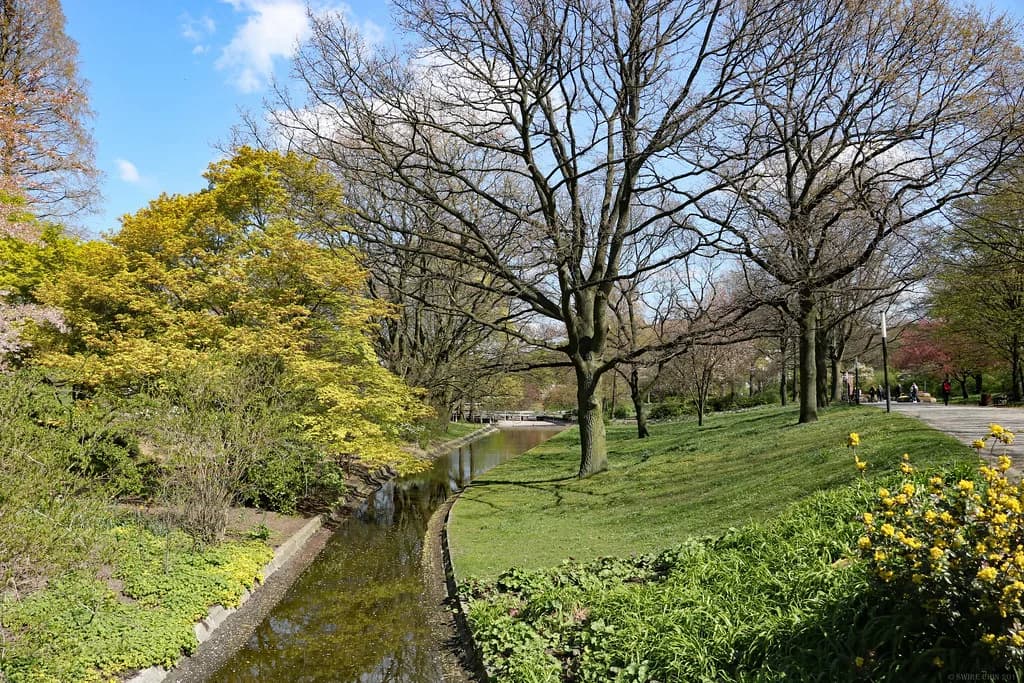
Planten un Blomen occupies the western arc of Hamburg's former Wallanlagen, the defensive ring built around the old and new towns in the seventeenth century. The name is Low German for plants and flowers, and the park still reads as a chain of connected gardens rather than one flat field. Entry to the grounds is free and the park is open year-round, though opening hours differ through the seasons.
Suggested duration: allow roughly 60 to 90 minutes for a single loop past the rose garden and the Parksee, and about half a day if you want the themed gardens, the tropical house and a proper rest. That is our editorial suggestion, not an official visiting time. For a wider view of what Hamburg offers beyond the park, the Hamburg: Landmark Visitor Guides hub is a sensible starting point.
What Planten un Blomen Is and Where It Sits
The park lies in the middle of Hamburg, framed by shopping streets, the Congress Center, the exhibition grounds and St. Pauli. Hamburg's tourism page describes it as sitting on part of the former Wallanlagen, which is why the layout follows a curved belt rather than a rectangle. That history also explains the water channels and surviving bastions you pass on a walk.
Size is reported slightly differently. Hamburg's tourism page puts the whole park at roughly 47 hectares, while the park's own site states 45 hectares for the park area, so treat either figure as approximate. Either way, the grounds are large enough that crossing one section is a very different outing from crossing the full park.
The present name dates from the Niederdeutsche Gartenschau of 1935, and the International Garden Exhibitions of 1953, 1963 and 1973 reshaped large parts of the site. After the last of those shows, Planten un Blomen, the Alter Botanischer Garten, the Kleine Wallanlagen and the Große Wallanlagen were combined into one connected landscape.
Free Grounds, Paid Extras: What Costs What
The park's own service page states that Planten un Blomen is open all year and that admission is free, while asking visitors to note that opening hours differ. That free entry covers the park grounds and the gardens you stroll through; it does not automatically extend to every facility inside. Minigolf, the roller-skating rink and the winter ice rink are separately operated offers with their own arrangements.
Because those facilities are run independently, you should not assume one ticket or one opening time covers them. Prices and seasonal operating periods for minigolf and the roller rink change and are best confirmed with the operator or at the facility before you plan around them. Cafes and kiosks in and around the park are separate businesses with their own hours.
The tropical house and other planted interiors sit in the same grey zone: they are part of the park experience but can be subject to their own access arrangements and closure periods. The park's own pages list food and drink as a service area, without implying that every outlet follows the same schedule. If a specific glasshouse or cafe is the reason for your trip, check current notices rather than assuming it follows the main gates.
How Much Time to Allow
Our suggestion is to allow around 60 to 90 minutes for a single loop through the central gardens and along the water. That is enough to see the rose garden area, cross toward the Parksee and get a feel for the layout without rushing. Anyone who wants the Japanese garden, the tropical house and a proper sit-down will need longer.
For a fuller visit, plan on half a day. Hamburg's tourism page states that exploring the whole park including its attractions takes several hours, which matches the scale of a site that was joined from several former exhibition areas. Add time if you are visiting with children, since the playgrounds are a destination in themselves.
Think of the park as two possible outings: a short, free green break slotted between other sights, or a relaxed half day with a picnic and an evening water show. Deciding which one you want before you arrive is the single biggest factor in how the visit feels.
The Gardens Worth Prioritising
The rose garden is the classic first stop, and Hamburg's tourism page singles it out alongside the Japanese garden as a highlight for plant lovers. The Japanese garden is the more contemplative of the two, laid out with winding paths, water and a tea house, and it rewards slow walking rather than a quick photo stop. The botanical and tropical areas are the third pillar, and they are especially appealing in cold weather.
If you only have time for one themed garden, pick based on season rather than reputation. Roses are at their best in the warmer months, while the sheltered, planted interiors hold their interest when the outdoor beds are bare. The Japanese garden works in almost any weather because its structure, not its flowers, carries the design.
The Alter Botanischer Garten is a separate section within the wider park rather than a single exhibit, so allow time to move between areas instead of expecting everything to be clustered. Comfortable shoes matter more here than in a compact city garden.
Water Light Concerts on the Parksee
The water light concerts on the Parksee are the park's signature evening event, running from May to September according to the park's own pages. Fountains, coloured lighting and music are combined over the water, and visitors gather on the surrounding lawns, often with picnic blankets. Because the effects depend on darkness, they are an evening draw rather than a daytime attraction.
Start times shift across the season as sunset moves, and there is no single time to memorise for the whole run. The reliable approach is to check the current schedule on the park's own site or at the park on the day, then arrive with enough daylight left to claim a spot on the grass. Do not build your evening around a time you read months earlier.
Expect a crowd on warm weekends and bring a layer, since the lakeside cools noticeably after sunset. If you are travelling with young children, an earlier summer start is far easier than a late one, which is worth remembering when you check the current times.
With Children in the Park
Families are well served here: Hamburg's tourism page highlights the water features and climbing area, and notes that summer brings children's festivals, theatre and craft activities. The large playground with its water element is the obvious anchor for a family visit on a warm day. Pack a change of clothes if your children are likely to end up in the water.
Beyond the playground, the open lawns give children room to run without the constraints of a museum or a paid attraction. That combination of free entry and space is why the park works well as a low-cost family afternoon. For more structured family options across the city, see the ideas collected in Hamburg with kids.
Active Options and Their Caveats
Minigolf, a roller-skating rink and a winter ice rink give the park an active side, and joggers are welcome throughout the grounds, as Hamburg's tourism page notes. These are operated facilities rather than free park features, so treat their prices and opening periods as variables that need checking rather than fixed facts. Weather affects them too, particularly the rink and the skating surface.
Because operators and seasons change, the sensible move is to confirm on arrival whether a given facility is running that day, especially outside the main summer months. If a specific activity is the reason for your visit, check before you travel rather than after. The park itself being open tells you nothing about whether an individual operator is open.
Eating, Drinking and Picnicking
There are cafes and kiosks within and around the park, and the park's own site lists food and drink among its service categories. Their opening hours are seasonal and individual, so an outlet that is busy in July may be closed or on reduced hours at other times of year. Check the current listing rather than relying on a remembered schedule.
Given the lawns and the lakeside setting, a picnic is often the better plan. Bringing your own food removes the risk of arriving to find a kiosk shut and lets you stay for an evening water show without hunting for a table. It also keeps a free day out genuinely free.
Mistakes to Avoid
The most common misjudgement is assuming the park's free entry extends to everything inside it. Minigolf, the skating rink and the winter ice rink operate on their own terms, so plan for those separately. The second is assuming that because the park is open, every building and kiosk in it is open too.
The third is treating the water light concerts as something you can simply turn up for at any hour. They are seasonal evening events, and times move with the calendar, so confirm the current schedule rather than guessing. Building an evening around an unverified start time is the fastest way to miss them.
Finally, do not underestimate the walking. The park is spread across several linked sections, and crossing it takes longer than the compact city-centre map suggests. Set a realistic target for what you want to see and leave the rest for another visit.
Plan Your Visit
Planten un Blomen is one of the simplest good decisions in Hamburg: free, central and open through the year, with enough variety to fill half a day or just a lunch break. Treat the grounds as the free part and everything with an operator attached as its own separate arrangement.
Before you go, check the park's current opening hours and the evening schedule for the water light concerts, since both shift with the season. For a city-scale plan that mixes paid and free stops, the Hamburg: Itineraries and City Travel Guides hub is a good place to slot a park visit into a longer day. If your priority is keeping costs down across the trip, start from Free Things to Do in Hamburg and treat the park as one piece of it. When you want a full paid half-day with animals, Tierpark Hagenbeck Hamburg is the natural counterpart. For related planning, see Hamburg Planetarium: Shows, Tickets & What to Expect.
Frequently Asked Questions
Is Planten un Blomen free to enter?
Yes. The park's own service information states that Planten un Blomen is open year-round and that entry is free. That covers the park grounds and the gardens you walk through, but separately operated facilities such as minigolf or the skating and ice rink offers are not covered by the park's free admission. Check with those facilities directly for their current terms.
How long should I spend in Planten un Blomen?
As a suggestion rather than an official figure, allow around an hour to ninety minutes for a loop through the central gardens and along the water. For a fuller visit that includes the themed gardens, the tropical house and a proper rest, plan on half a day. Hamburg's tourism information notes that exploring the whole park with its attractions takes several hours.
When do the water light concerts take place?
The water light concerts on the Parksee run from May to September and are held in the evening, when darkness allows the lighting effects to work. Start times shift across the season as sunset moves, so there is no single time to memorise. Check the park's current schedule on the day of your visit.
Can I visit Planten un Blomen with children?
Yes, and it is well set up for it. The park has large playground areas including a water play feature, plus open lawns where children can run freely. In summer there are also children's events and theatre. Because the grounds are free and open year-round, it works as an affordable family stop, though separately operated activities have their own hours and charges.
Which gardens are worth seeing first?
The rose garden and the Japanese garden are the two most often singled out, along with the botanical and tropical areas. If you have limited time, choose by season: roses peak in the warmer months, while the planted interiors hold interest when the outdoor beds are dormant, and the Japanese garden works in most weather because its layout carries the design.
What can I combine with a visit to Planten un Blomen?
The park sits next to the city centre, so it pairs easily with nearby sights. Hamburg's tourism information names the Dammtor monuments, the Karolinenviertel, the Gänsemarkt, St. Michael's Church and the Reeperbahn as neighbours, making a half-day combination straightforward without extra travel. Larger paid attractions such as Tierpark Hagenbeck or the BallinStadt emigration museum suit a fuller day.