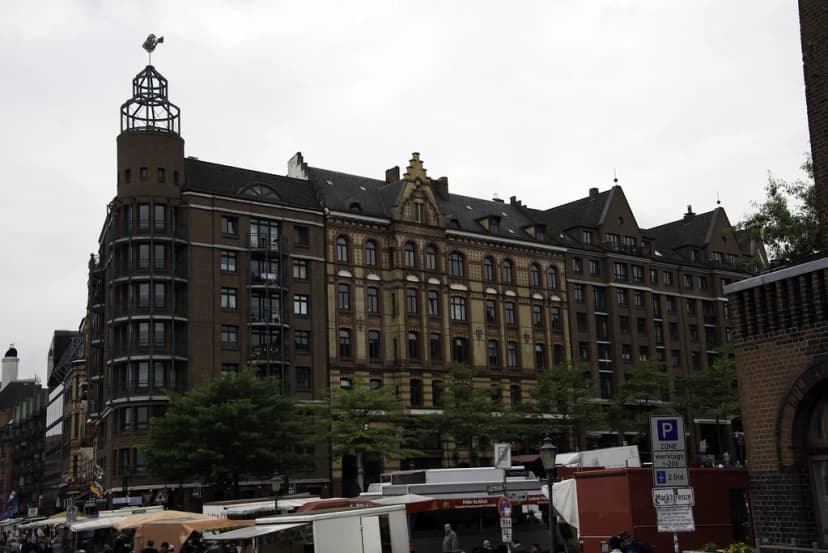
The Hamburg Fish Market, known locally as the Fischmarkt, is the city's signature Sunday ritual: a few hours of loud bargaining, smoked fish and brass-band energy on the edge of the Elbe in St Pauli. It has been part of Hamburg life since 1703, and it still functions as much as a social institution as a place to buy seafood. This guide covers where it sits, how the seasonal start time shapes your plan, what is actually sold, and which trade-offs decide whether it suits you.
One thing to settle before you set an alarm: the market's opening hour shifts with the season, so a fixed time memorised from a summer visit can leave you standing at closed gates in winter. The guidance below treats that variation as a planning constraint rather than a single number. Because the market is a one-morning event, everything else about your Sunday — breakfast, the Reeperbahn, onward sightseeing — needs to fit around it.
Why the Fischmarkt Is Hamburg's Sunday Ritual
Ask a Hamburg resident what to do with a Sunday morning and the Fischmarkt is likely to come up quickly. Time Out's guide to the St Pauli market describes it as a legendary Hamburg experience that pairs abundant smoked, fresh and pickled fish with flowers, fruit, vegetables and second-hand goods. That mix — practical shopping, breakfast and spectacle in one place — is why it has outlasted so many other city markets.
The market also marks a social dividing line. For some visitors it is the final stop of a Saturday night out; for others it is an early start with coffee and a fish roll before the rest of the city wakes up. Both crowds show up at the same time, which explains the noise, the queues at popular stalls and the general sense that you are walking into something rather than simply shopping.
If your Hamburg weekend is built around landmarks, treat the market as a morning anchor and build the rest of the day around it. The city's broader visitor guides, including our Hamburg: Landmark Visitor Guides, are useful for sequencing the harbour, the Elbphilharmonie area and the museum quarter after you leave St Pauli.
Where It Is: Grosse Elbstrasse 9 in St Pauli
The market occupies a stretch of Grosse Elbstrasse in St Pauli, close to the Elbe and directly beside the Fischauktionshalle, the old fish auction hall that gives the location its name. Time Out lists the address as Grosse Elbstrasse 9, Hamburg 22767, which is the reference point to give a taxi driver or to enter into a map app if you are walking from the Reeperbahn.
The geography matters more than the postcode. St Pauli's grid is tight and the market sits at its southern edge, so an approach on foot from the Reeperbahn or the Landungsbrücken area is short but not always obvious in the dark. If you are arriving before sunrise, plan the walk in advance rather than improvising, and expect other visitors to be heading the same way.
Public transport in Hamburg is dense, but exact lines, station exits and journey times change and are not something to rely on from a secondary source. Check the current situation with Hamburg's transport operator or a live journey planner on the morning itself, and allow slack for weekend engineering work, which is common on German rail networks.
Timing: The Seasonal Early Start
The Fischmarkt is a morning event, and the reported opening time moves with the seasons. Time Out's listing describes an opening hour of 5am in summer and 7am in winter, with a closing time of 9:30am throughout the year, while other accounts of the same market pair the later start with the colder months. Because those descriptions do not agree, treat any specific hour as reported rather than guaranteed.
A widely repeated version of the schedule puts the market at 5:00am to 9:30am, moving to 7:00am in winter, and links the tradition back to 1703. That same account is useful for colour but not authoritative on hours, which is exactly why the safest approach is to confirm the current Sunday timing before you travel.
The official Hamburg tourism page for the market exists but does not publish a clear extractable schedule, so it is worth opening directly in a browser to see whether an operator notice has been added. If nothing definitive appears there, cross-check a current local listing on the Saturday before your visit rather than trusting a guide written in a previous season.
Closing time is the number that actually shapes your morning. If the stalls wind down around mid-morning, arriving at the very end means reduced choice and vendors packing away, while an early arrival buys you a calmer first hour and the best selection of fish. Decide which of those you want before you set the alarm.
How Long to Spend: A Suggested Framework
As our suggestion rather than an official figure, allow roughly one and a half to two hours for the market itself: enough time to walk the length of the stalls, eat something standing up, and browse the non-food tables without rushing. Add another thirty to forty-five minutes if you want to look inside the adjoining hall or sit down for a proper breakfast afterwards. These are planning estimates, not published opening blocks.
If you are combining the market with a wider Hamburg morning, a leaner version is possible: arrive near the start, eat one thing, walk the aisles once, and leave as the crowds peak. A longer visit suits anyone treating the market as the main event of the day and wanting to linger over coffee nearby. The trade-off is simple — more time means more crowd exposure, less time means a shallower but calmer visit.
Weekend itineraries for the city are usually built around two or three fixed blocks per day, and the market occupies one of them. Our Hamburg: Itineraries and City Travel Guides collection is the place to check how the Fischmarkt slots against harbour cruises, museum visits and evening plans on the same day.
What Is Actually Sold: Fish, Fruit, Flowers and Second-Hand Finds
The core of the market is seafood. Expect smoked, fresh and pickled fish, including herring prepared in several ways, salmon, plaice, mackerel and eel, along with the live eels and freshly caught plaice that appear in descriptions of the stalls' range. Vendors call out their offers loudly, and the competition between them is part of the experience rather than background noise.
Beyond the fish counters, the market functions as a general Sunday bazaar. Time Out notes flowers, fruit, vegetables and second-hand goods among the regular offerings, which is why you will see shoppers carrying potted plants and household odds and ends alongside bags of seafood. That mixture is what makes a walk-through worthwhile even if you are not buying fish.
Prices for individual stalls are quoted at the counter and are not published in any reliable form, so plan a rough budget in cash and treat any figure you read online as out of date. Payment methods also vary by vendor, and there is no single market-wide rule to rely on. Carry cash as a fallback and ask before you commit to a purchase.
What to Eat: Fischbrötchen, Smoked Eel and Northern Staples
The Fischbrötchen is the market's signature snack: a crusty roll filled with pickled herring, smoked salmon or mackerel, usually finished with onions, pickles and remoulade. It is designed to be eaten standing up and one-handed, which is exactly what a crowded morning requires. If you only try one thing, this is the low-risk introduction to northern German seafood.
Smoked eel is the more serious proposition, traditionally brined and smoked slowly over beech or alder wood, and often served cold with rye bread and horseradish. Its oily texture and intense flavour divide opinion, so it is worth trying a small portion before committing to a larger purchase. Rollmops and matjes herring are gentler entry points if eel sounds too rich for an early morning.
Labskaus, the sailor's dish of potato, beef and beetroot with herring, appears at Hamburg fish markets and turns up again at the touring market in Stuttgart, where it is listed as one of the culinary highlights. It is a plate rather than a snack, so treat it as a sit-down breakfast rather than something to eat while walking the aisles.
The Fischauktionshalle Next Door
The Fischauktionshalle is the historic auction building immediately adjoining the market grounds, and it is the reason the location looks the way it does. It is a separate space from the open-air stalls, and the two do not necessarily share a single atmosphere or entry arrangement, so do not assume that one ticket or one mood covers both.
Descriptions of the hall vary between sources and between seasons, with accounts mentioning live music and beer inside at some points in the market's history. Those details are not confirmed for the current year, so treat any account of bands or drinks schedules as historical colour rather than a plan. If the hall is part of why you are going, check what is actually on before you build your morning around it.
For anyone weighing the market against other harbour-side attractions, the hall's position on the Elbe makes it an easy pairing with the Landungsbrücken area and the waterfront walks that run along it. Our Visiting Landungsbrücken Hamburg guide covers the neighbouring stretch if you want to continue south after the market.
Calmer Alternatives: Nearby Cafés and a Slower Breakfast
Not everyone wants to eat standing between two stall tables at seven in the morning. The streets around the market have cafés that serve a more conventional breakfast, and Time Out explicitly points to nearby cafés as the restorative option for visitors who have had enough of the crowd. It is a sensible fallback if the weather turns or the noise becomes too much.
St Pauli itself rewards a slow walk after the market closes. The neighbourhood shifts character through the day, and the same streets that are loud at dawn become a normal residential district by mid-morning. If you are interested in how the area reads once the sun is up, the market makes a natural starting point for a wider look at the district.
Sunday Logistics: Cash, Crowds and Getting There Early
Sunday mornings in Hamburg mean limited opening hours for many shops and services, which concentrates the city's activity into a few places — the Fischmarkt being the most obvious. That concentration is why the market feels fuller than its physical size suggests, and why arriving at the start rather than the middle gives you more room to move.
Cash is the practical default for a market where stall-level payment arrangements vary and no market-wide policy is published. Prices are set by vendors rather than advertised centrally, so budget loosely and ask at the counter rather than relying on a figure from a guide written in a previous year. If a stall accepts a card, that is a bonus rather than something to depend on.
Plan your onward route before you arrive. Hamburg's Sunday options include harbour boats, the waterfront and the city's museums, but exact schedules and opening hours change and should be checked with the operator on the day. Building a loose plan with two alternatives is more useful than a fixed itinerary that collapses if the market runs long.
Is the Fischmarkt Worth It? Honest Trade-Offs
The market suits visitors who want atmosphere as much as produce: people who enjoy noise, improvisation and the sense of a city doing something it has done for centuries. Time Out frames a Sunday visit as a legendary Hamburg experience, and for that audience it delivers. The early start is part of the appeal rather than an obstacle.
It suits others much less. If you dislike crowds, struggle with early alarms, or want a calm sit-down meal, the Fischmarkt can feel like an endurance test — loud, tight and over quickly once the stalls pack up. Being honest about which of those two visitors you are is more useful than any review, because the market does not adapt to its audience.
One practical middle path: come for the first hour, eat one thing, walk the length once, and leave before the peak. You get the experience without the full crush. Visitors who want depth rather than atmosphere may find more value in Hamburg's other maritime sights, including the BallinStadt Hamburg emigration museum, which rewards a slower pace.
Common First-Timer Mistakes
The most common mistake is assuming the market opens at a single fixed time all year. The seasonal shift is the detail most likely to catch out a visitor who read one guide and set an alarm accordingly. Confirm the current Sunday timing shortly before you go, and treat any hour you see online as reported rather than official.
A second mistake is arriving without cash and assuming cards are universally accepted. Payment arrangements are set stall by stall and are not published centrally, so having cash removes a whole category of friction. Prices are equally localised: ask at the counter rather than trusting a figure from an older article.
A third is confusing Hamburg's St Pauli market with the touring 'Hamburg Fish Market' event staged elsewhere in Germany. Stuttgart's version has run on Karlsplatz since 1987 and travels through the country once a year, with market criers, a three-masted ship and dishes such as Labskaus and smoked eel. It is a different event in a different city, and the dates and programme are published by Stuttgart rather than by Hamburg.
Plan Your Sunday
The Fischmarkt works best when you treat it as a bounded morning rather than an all-day plan: check the current seasonal timing before you travel, arrive near the start if you want choice and space, and be ready to pay in cash. Two hours is a realistic allowance for the market itself, with a little more if you want breakfast or a look at the adjoining hall.
Once the stalls close, St Pauli and the Elbe waterfront are on your doorstep, so the market repays anyone who builds the rest of the day around it rather than treating it as an isolated stop. Whether you love it or merely survive it will depend mostly on how you feel about crowds at seven in the morning — and that is worth knowing about yourself before you set the alarm.
Frequently Asked Questions
What is the best time to go to the Hamburg Fish Market?
The market is a Sunday morning event, and the reported opening hour shifts with the season, so the useful answer is not a single time. Arriving near the start gives you more space and a better selection of fish; arriving later means the atmosphere is at its fullest but vendors are closer to packing up. Check the current timing with a live local listing shortly before your visit rather than relying on an older guide, and confirm on the day.
What can you eat at the Hamburg Fish Market?
The classic is the Fischbrötchen, a roll filled with pickled herring, smoked salmon or mackerel and topped with onions, pickles and remoulade. Smoked eel with rye bread and horseradish is the more serious option, while rollmops and matjes herring are gentler. Labskaus, the sailor's dish of potato, beef and beetroot with herring, is a sit-down plate rather than a snack. Specific dishes vary by vendor.
Is the Hamburg Fish Market worth visiting?
It depends on what you want from a Sunday morning. If atmosphere and a sense of local tradition appeal, the market delivers a distinctive Hamburg experience. If crowds, noise and an early alarm are drawbacks for you, it can feel like an endurance test rather than a treat. A middle path is to visit for the first hour, eat one thing, and leave before the busiest period.
Is the Hamburg Fish Market the same as the Hamburg Fish Market in Stuttgart?
No. Hamburg's St Pauli Fischmarkt is a weekly Sunday market at Grosse Elbstrasse 9 in Hamburg. The 'Hamburg Fish Market' that appears on Karlsplatz in Stuttgart is a separate touring event that has travelled through Germany since 1987 and runs once a year, with its own published programme and dates. If you are planning around the Stuttgart version, use the city of Stuttgart's information rather than Hamburg sources.
Do I need to pay to enter the Hamburg Fish Market?
No reliable source confirms an admission arrangement for the market, and the official Hamburg tourism page does not publish one, so treat any claim about entry fees with caution. Any cost you encounter will come from what you buy at the stalls rather than an entry gate. Confirm the current status locally if this matters to your plan.