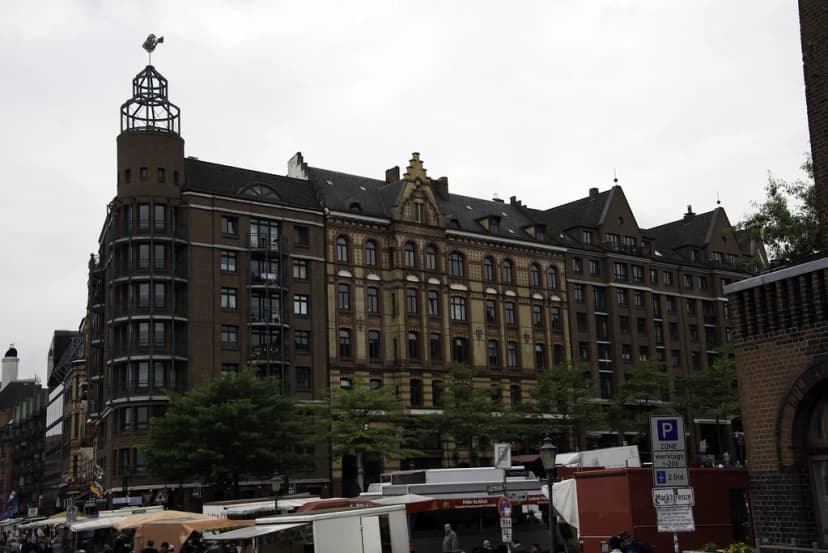
The Reeperbahn is the hub of Hamburg nightlife in the St. Pauli district, and the street itself is 930 metres long, lined with nightclubs and bars, discotheques and pubs. German state tourism coverage describes the street at that length, which is the single most useful fact for planning: you can walk the whole mile without buying a ticket, and only the individual venues charge admission. Große Freiheit, Hans-Albers-Platz and Spielbudenplatz, together with the Panoptikum and the Operettenhaus, are the corners visitors and locals use most.
This guide covers where the street sits within Hamburg, what the name means, which squares orient you, how the adult-only section works, and which habits keep an evening comfortable. It avoids hours and prices that change without notice and points you to operators for those details.
What the Reeperbahn Actually Is
The Reeperbahn is the main artery of St. Pauli, a district just west of Hamburg's centre. It runs past the Spielbudenplatz and intersects side streets such as Große Freiheit, which holds several well-known clubs and music venues. Treating it as a street inside a working neighbourhood, rather than a gated attraction, is the most useful adjustment a visitor can make.
Because it is a public road, there is no entry fee and no single ticket covering the experience. Some buildings along it are paid venues, while others are bars, shops and apartments with residents above them. Plan your evening as a walk with optional stops, not as one continuous ticketed attraction.
Why It Is Called the Reeperbahn
The name comes from the rope-makers, or Reepschläger, who from 1630 moved their work out to the Hamburger Berg because their craft needed very long open runs for twisting ropes by hand. The parallel Seilerstraße still carries the old word for rope-maker in its name, and German state tourism coverage documents this origin, along with the fact that the earlier ropewalks near today's Landungsbrücken had become too small.
The area lay outside Hamburg's fortifications, in the firing zone, so it attracted trades and people the city preferred to keep at a distance, including innkeepers and prostitutes. From that outcast suburb, entertainment gradually took over: fairgrounds and a Spielbudenplatz appeared, then dance halls and theatres, and over time the street developed into the city's best-known amusement mile.
Orientating Yourself: Squares and Side Streets
A few landmarks make the street easy to read. Spielbudenplatz is the open square at the eastern end, home to theatres and the Panoptikum, and Große Freiheit branches north with a cluster of music clubs. Hans-Albers-Platz is a smaller square further west, named after the singer associated with the district's most famous song.
At the corner of Spielbudenplatz and Davidstraße stands the Davidwache, the police station that has become a local symbol through film and television. Its presence is practically useful rather than ominous: it gives you a fixed point to navigate back to if you lose your bearings in the crowd, and the same state tourism coverage notes how busy the adjacent street becomes at weekends.
Hans-Albers-Platz sits on the quieter, more bar-focused stretch toward the western end, and the side streets off the main road change character quickly. That means a short detour can take you from loud club frontage to a small neighbourhood pub. Decide in advance which end suits the evening you want.
Herbertstraße and the Adult-Only Sections
Herbertstraße runs parallel to the Reeperbahn and is a brothel street closed to young people and women, with barriers at the entrance. This is not a sightseeing street in the ordinary sense, and treating it as one is both inappropriate and likely to be blocked. If you want to understand it, do so through a reputable guided tour or background reading.
Elsewhere along the Reeperbahn, adult venues and shows operate as ordinary businesses with their own admission rules. There is no district-wide age policy, no single code of conduct and no shared ticket, so any specific age or dress requirement belongs to the individual venue and should be checked with that venue directly. Respectful, non-photographing behaviour is the baseline expectation throughout.
High Culture and Low Culture on One Street
The common assumption that the Reeperbahn is purely nightlife misses a large part of what is there. The Operettenhaus stages large musical productions, while the Schmidt Theater, opened in 1988, and Schmidts Tivoli, opened in 1991, programme comedy, cabaret, concerts and theatre, and the St. Pauli Theater, founded in 1841, is one of Germany's oldest private stages. The Panoptikum wax museum opened in 1879.
That mix means a visitor with no interest in clubs can still build a full evening around a show and dinner. It also means you should book performance tickets separately from anything else, since each house sells its own seats. If you want to pair the street with a broader evening plan, a dedicated guide to Hamburg at night helps you sequence venues and transport sensibly.
The Beatles, the Star Club and Music History
The street's music reputation rests largely on the early 1960s, when the Beatles played long residencies in St. Pauli clubs before they became globally famous. The Star Club, run by Gretel and Alfons Jankowiak, is the venue most closely associated with that period, and Beatles-Platz with its steel sculptures marks the connection today. Große Freiheit 36 and the Kaiserkeller keep the live-music tradition visible on the same side street.
For a visitor, the practical takeaway is that live music here is not a museum piece. Clubs book bands and DJs across genres, and the line-up changes constantly, so check listings for the dates you are in Hamburg rather than relying on any fixed venue guide.
Events and the Rhythm of the Year
The neighbourhood's event calendar peaks with the Reeperbahn Festival, a multi-day club and music event that typically falls at the end of September and spreads across dozens of venues and open-air stages. Because the programme and date are set annually, confirm the current edition on the festival's own website before booking travel around it. Outside festival week, weekends are consistently the busiest times.
Daytime visits are a genuinely different experience: shops and cafés are open, the architecture is easier to look at, and you can walk the full length without crowds. If your interest is history or photography rather than nightlife, an afternoon visit followed by dinner is a reasonable structure. The street works at both ends of the clock.
Guided Walks: What They Cover and Who They Suit
Guided St. Pauli walks generally do the same three things: give you the background story of how the district developed, walk you past the key squares and side streets, and finish with recommendations for the rest of your evening. A published personal account of one such tour describes meeting near a transport hub and hearing stories about bands and neighbourhood history that would not appear in a standard guidebook. That is one traveller's description of one format, dated 2026.
Tours suit visitors who want context quickly, are travelling alone or in a small group, or want a guide's judgement about which stretches to avoid late at night. They suit less well anyone who dislikes walking in a group or wants complete freedom over timing. Duration, language, group size, any age condition and any cancellation terms differ between operators, so read the specific listing rather than assuming a standard.
As a rough planning figure rather than an official one, allow two to three hours for a guided walk plus a stop, and wear closed shoes since the pavements are uneven in places. The same personal account recommends comfortable footwear and notes that weather can change during a walk.
Practical Safety Habits for an Evening Out
Safety advice for the Reeperbahn is mostly ordinary city common sense rather than special knowledge. Late at night the street is crowded, which is exactly the condition pickpockets prefer, so keep phones and wallets in front pockets or inside layers rather than in an open bag. The personal account notes a companion having a wallet taken during a previous visit, which is a useful reminder that busy does not mean risk-free.
Decide how you are getting back before you start drinking, and note the location of the St. Pauli and Reeperbahn stations relative to where you plan to end up. Walking the main street in company is straightforward; wandering alone into unfamiliar side streets late at night is where most visitors would rather not be on their own. If you feel unsure, the Davidwache corner is a visible reference point.
There is no need for alarmist precautions, but there is also no benefit in carrying more cash or cards than the evening requires. Agree a meeting point with your group in case phone batteries die in the cold or the crowd. These small habits matter more than any specific warning about the district.
Combining St. Pauli with the Rest of Hamburg
The Reeperbahn sits close enough to the harbour that an evening out can be built out of two areas rather than one. The Landungsbrücken piers and the Speicherstadt warehouse district are both within a short hop, and the Elbphilharmonie is on the same side of the centre, which makes a late-afternoon walk followed by dinner in St. Pauli a practical sequence.
If your interest is scale models rather than nightlife, the Miniatur Wunderland in Speicherstadt is a well-known counterpart attraction and sits in the same part of town. It is a ticketed indoor attraction with its own booking system, and its operator advises buying in advance because waiting times are common, so treat it as a separate visit rather than an add-on to a Reeperbahn evening.
Early risers can pair a Friday or Saturday night with the following morning's fish market, which starts before dawn and is a short walk from the western end of the district. Doing both in one weekend is a classic Hamburg combination, though it requires either very little sleep or a late check-out. For wider planning, see Hamburg Fish Market (Fischmarkt).
Extending the Theme Across Hamburg
Several other Hamburg attractions share the Reeperbahn's interest in how the city's rough edges shaped its culture. The BallinStadt emigration museum near the harbour documents the millions who left Europe through Hamburg, a migration story that sits on the same waterfront as the districts you walk between on a St. Pauli evening.
The St. Nikolai Memorial, whose ruined tower stands in the old town, is another reminder of how hard the twentieth century hit Hamburg, and its war history pairs well with the St. Pauli story of clubs, sailors and rebuilding.
If you want to place the Reeperbahn inside a larger route through the city, a set of Hamburg itineraries and city travel guides can help you decide where it belongs among the harbour, the Alster and the old town.
Plan Your Visit
The Reeperbahn rewards a little preparation more than most Hamburg sights. Know which end you are starting from, pick one or two paid stops such as a show or a club night, and leave the rest of the evening open to wander. Confirm current hours, ticket availability and any venue-specific rules directly with the operators, since these change with the season and the programme.
The street is free to walk, which means the only real planning decisions are timing, company and how you get home. An afternoon for the history, an evening for the atmosphere, and a companion for the late hours covers most visitors well.
Frequently Asked Questions
What does the name Reeperbahn mean?
It comes from the Reepschläger, the rope-makers who from 1630 moved their work out to the Hamburger Berg outside Hamburg's fortifications because their trade needed long open runs for twisting ropes by hand. The parallel Seilerstraße preserves the same root, and the name passed to the road laid out along those ropewalks.
Is the Reeperbahn safe to walk at night?
The main street is busy and well lit late into the night, and walking it in company is unremarkable. The realistic risks are pickpocketing in dense crowds and unfamiliar side streets after dark, so keep valuables secured, stay with your group, and decide your route back in advance rather than wandering alone at the end of the night.
Do you need a ticket to visit the Reeperbahn?
No. The Reeperbahn is a public street and there is no entry fee. Individual venues, theatres, clubs, the wax museum and guided tours charge their own admission, and each is booked separately, so there is no single ticket for the street as a whole.
How long does it take to walk the Reeperbahn?
The street runs roughly 930 metres, so walking it end to end takes only about fifteen minutes without stopping. As a suggestion rather than an official figure, allow two to three hours if you want to look at the squares, stop for a drink and take in a side street or two.
What is St. Pauli, Hamburg famous for?
St. Pauli is known for the Reeperbahn and its mix of nightlife, live music, theatre and adult entertainment, along with the Beatles' early club residencies in the 1960s. It is also a lived-in residential district, not a purely commercial entertainment zone.