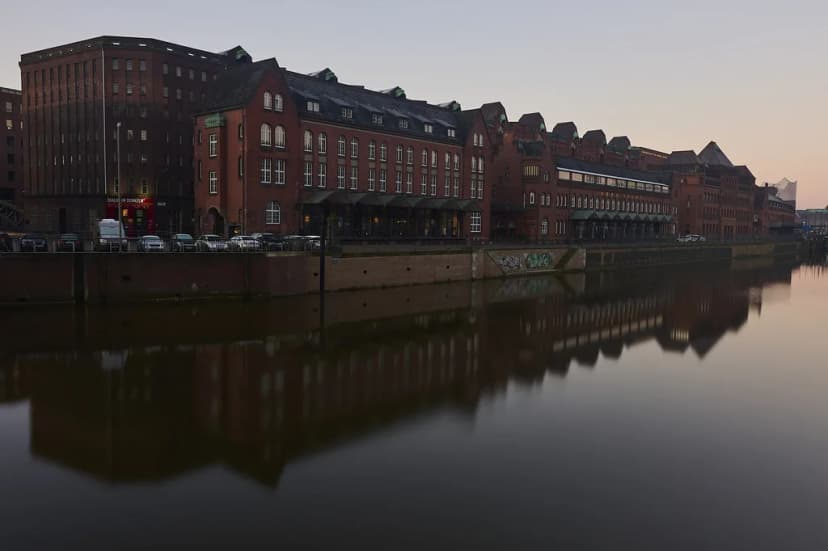
Hamburg rewards a short break because its headline sights sit close together: the Speicherstadt warehouses, the HafenCity waterfront, the Elbphilharmonie and the Landungsbrücken piers all fall within a walkable band along the Elbe. Two days is enough for those plus the old town, the Alster and a proper look at St Pauli, as long as you accept that something has to give. The trade-off that shapes everything is whether you commit to a Miniatur Wunderland slot before you travel.
That single booking decision decides how your first day breathes. The operator states plainly that on many days more people want to enter than the building can hold, that waiting times are therefore routine, and that buying a timed ticket in advance is the way to walk straight in. A set entry window turns the warehouse district into a fixed anchor with free hours around it; without one, you are gambling on the day's queue.
The rest of this plan is organised around one simple split. Day one stays east of the Alster for water, warehouses and harbour views; day two crosses to the Rathaus, the old town lanes, the Alster promenade and then St Pauli for the evening. Durations below are suggestions for pacing your own day, not official visit times, and every price or opening detail should be checked against the operator's current page before you go.
Day 1 Morning: Walking Speicherstadt, the Free Warehouse District
Start in the Speicherstadt, the neo-Gothic brick warehouse quarter that earned UNESCO World Heritage listing in 2015 and remains the largest historic warehouse complex of its kind. Walking its bridges and canals costs nothing: you are paying in footsteps, not tickets, and the reward is the reflected brickwork, the narrow fleets and the view towards the Wasserschloss. Come early if you want photographs without crowds, because the lanes fill once the museums open.
Two things are worth separating here. The district itself is open, free and best explored on foot; the museums inside converted warehouses are individually ticketed, and there is no single warehouse pass that opens all of them. Individual operators publish their own ticket categories and opening guidance, so treat each building as its own decision rather than assuming one purchase covers the neighbourhood.
If you want a quick indoor stop that does not swallow the morning, the small Speicherstadt museum about the port's coffee and tea trade fits neatly into a short detour. The Chocoversum, Hamburg's chocolate museum, sits in the old town close to the Chilehaus and runs its visit as a guided tour only, bookable in German or English with advance registration required for English slots. Its own pages publish group rates, duration and the rule that entry is possible only within the tour, so check those pages rather than relying on older summaries.
Day 1 Midday: Miniatur Wunderland or the International Maritime Museum
With one slot available before lunch, you are choosing between two very different indoor worlds in the same quarter. Miniatur Wunderland is the model railway phenomenon whose operator publishes its own figures: roughly 1,040 trains, 260,000 figures and more than 15,400 metres of track across a 1,490 square metre layout, with construction ongoing and further worlds planned to 2028. The International Maritime Museum occupies a converted warehouse and spreads its collection over multiple decks covering centuries of shipping.
The honest trade-off is time. Wunderland is not a quick look: the operator's own guidance describes visitors needing several hours, and a realistic half-day is a fair planning assumption rather than an official figure. If you only have a compressed window, the maritime museum lets you choose a floor or two and leave, while Wunderland punishes rushing because the detail is the point.
The Hamburg tourism board lists suggested visit time for the attraction and notes that it is open every day of the year with minimum opening hours that can vary, directing visitors to the operator's own page for current times. That is the pattern to follow for every date-sensitive detail on this trip: read the operator, not a blog written in a previous season. If your dates are tight, confirm the day's hours and entry windows before you build the rest of the day around them.
Miniatur Wunderland Logistics: Booking, Waiting and Cheap Windows
The operator's ticket page is unusually candid. It explains that tickets are bound to a chosen entry window, that a limited allotment is kept for spontaneous visitors, and that those walk-up tickets may come with a wait, so it publishes a waiting-time forecast you can check before travelling. Buying ahead is described as the way to enter without queuing. If large crowds bother you, the same page points to quieter visiting times, which it admits have become rare, and to early morning or late evening as the usual alternatives.
Money-saving works on the same logic: the operator notes that discount tickets appear on many days for very early or late slots, with discounts varying from day to day, so a flexible schedule can pay off. It also sells combination events, including one pairing the exhibition with a harbour boat trip at a bundled rate, and states what a standard harbour trip and standard entry would otherwise cost separately. Combination offers only exist for specific pairings, not for the whole city.
Do not plan around a promised same-day ticket. The operator explicitly warns that it is almost always busy and often very crowded, and that waiting time is a normal feature of busy days. Build the visit as a fixed block with a booked window, then let the free warehouse walk fill whatever time remains on either side.
Day 1 Afternoon: The Elbphilharmonie, Plaza Versus Tour Versus Concert
The Elbphilharmonie is three experiences wearing one building. The Plaza is the public viewing level reached by a long curved escalator, and it is free to enter, but you still need a ticket: visitors collect a Plaza ticket, often from a machine on site, and lifts and escalators carry you to the wraparound outdoor walkway. A guided tour is a separate, paid product, and a concert in the Grand Hall is a third, ticketed thing entirely. None of the three substitutes for the others.
In practice the Plaza is where most two-day visitors end up, because it delivers the harbour panorama over HafenCity and the Elbe without a performance booking. Availability for Plaza tickets can be limited at peak times, and the building's own booking system controls both Plaza slots and tour places, so check current conditions and ticket categories on the official operator pages before you commit an afternoon to it.
Allow more time than you think for the building itself, since the approach, security checks and the escalator ride all eat minutes. If a concert or tour is the reason you came, book it early; if the view is the point, the Plaza does the job. Either way, combine it with the warehouse walk rather than treating it as a separate trip across town.
Day 1 Late Afternoon and Evening: Piers, Harbour Views and Dinner
From the Elbphilharmonie it is a short walk along the water to the Landungsbrücken and the St Pauli Piers, the departure point for harbour boats and ferries. Walking the waterfront is free and gives you the ferry bustle, the historic pier buildings and the museum ships docked alongside. A boat trip adds the view from the water and a different angle on the container terminals; the operators sell tickets both at the piers and online, and combination tickets with Miniatur Wunderland exist if you want both.
For dinner, the Portuguese Quarter behind the Landungsbrücken concentrates restaurants within a few blocks, while HafenCity offers newer waterfront options near the Elbphilharmonie and the Überseequartier. Both are within walking distance of the piers, which matters after a long walking day. Prices vary widely by venue, so check menus on site rather than relying on outdated figures.
A first look at the Reeperbahn can be tacked onto the evening if you still have energy, but treat it as a stroll rather than a big night out. The street and its side lanes change character as the evening progresses, and a daylight or early-evening pass gives you the orientation without committing you to the night-time version. A more relaxed close might be a walk back through the lit canal bridges of the Speicherstadt, which costs nothing and looks entirely different after dark.
Day 2 Morning: Rathaus, Deichstraße and the Brick Office Quarter
Day two belongs to the old town, so start at the Rathaus, the neo-Renaissance city hall from the 1880s that anchors the centre. You can step into the atrium and courtyard without joining a tour, which is a sensible way to see the architecture when your schedule is tight; guided tours run separately and some are only in German, so check times if a tour matters to you. From there the lanes around Deichstraße, Hamburg's oldest surviving street, give you low brick houses and canal views within a few minutes' walk.
Then head to the Kontorhausviertel for the Chilehaus, the ten-storey brick Expressionist office building shaped like a ship's prow, and the surrounding 1920s commercial blocks. This quarter, with the Speicherstadt, forms Hamburg's UNESCO World Heritage inscription, so the walk doubles as a free architecture tour. The Chocoversum sits opposite the Chilehaus, which makes it a natural indoor stop if the weather turns.
Hamburg's compact core is what makes this possible. The Altstadt, the Rathaus, the Chilehaus and the Alster promenade sit within a walk of one another, which is why a two-day trip here works without long transfers. If you want the same ground covered in a single day instead, a Hamburg one day itinerary compresses these into a tighter loop, but you will be choosing between the harbour and the old town rather than seeing both unhurried.
Day 2 Late Morning: St Michael's Church, Free Interior and Paid Tower
St Michaelis, the Baroque church known locally as the Michel, is Hamburg's most recognisable steeple and the split here is straightforward: you can generally enter the church interior, while the tower lift and the viewing platform are a separate paid experience bought from the office beside the church. The lift takes you to a 360-degree platform with the best-known panorama over the harbour and the Elbe, and it is the reason many visitors come. Check the church's own published conditions for current access, as tower opening and lift operation can be affected by services and maintenance.
If you have already taken in the view from the Elbphilharmonie Plaza, this is a different angle rather than a duplicate: the Michel looks back across the old town and the Alster as well as the water. Budget for a queue at busy times and buy the tower ticket on site unless the church publishes an advance option. The Krameramtswohnungen, a small courtyard of historic timber-framed almshouses, is a short walk away and makes a quiet free addition.
Day 2 Midday: Jungfernstieg, the Binnenalster and One Museum
Walk down to Jungfernstieg, the promenade on the Binnenalster, where the inner lake meets the shopping streets and cafés line the water. It is free to walk, easy to reach, and the obvious place for a sit-down lunch before an afternoon decision. Boat trips on the Alster run from here in the warmer months, and the promenade itself is pleasant in almost any weather as long as you have a coat.
For culture, the Kunsthalle and the Deichtorhallen are the two main weights, covering old masters through contemporary art and photography respectively. Pick one: doing both in an afternoon means seeing neither properly, and the collections are large enough to absorb hours. Note that Hamburg's museums belong to separate operators with separate admission, so a single city pass may discount some and not others; confirm what each ticket actually includes before buying anything that claims to cover everything.
If you would rather skip museums entirely, this is the natural point to move towards the neighbourhoods. The city's free sights, from the warehouse canals to the Elbe waterfront and the Alster paths, can fill a whole day without any admission at all, which is worth remembering if the budget is tight or the weather is good.
Day 2 Afternoon: St Pauli in Daylight Versus After Dark
St Pauli is two different places depending on the hour. In daylight it is a residential and creative quarter: independent shops, the football club's stadium and museum, theatres such as Schmidts Tivoli, and the Beatles-related corners that document the band's Hamburg years. After dark the Reeperbahn becomes the entertainment mile, with bars, clubs and venues concentrated along one street and its side lanes. Neither version is compulsory, and visiting in the afternoon is a perfectly good way to see the district if nightlife is not your reason for coming.
If you want the night-time version without navigating it alone, guided walks and bar tours run from the area and cover the history along with the current scene. If you want the daytime version, the Karolinenviertel next door adds boutiques and cafés, and the St Pauli Museum and football museum give the district context beyond the bars. Either way, keep your wits about you in crowds, as you would in any busy nightlife district.
This is also the moment to decide whether St Pauli or Sternschanze suits you better for the afternoon. Sternschanze brings street art, flea markets and small independent shops a short ride or a longer walk away, and it reads as the more relaxed option for a daytime wander. If St Pauli wins, you have effectively built a night out into your last evening; if Sternschanze wins, keep the Reeperbahn for a separate short visit.
The Sunday Reshuffle: How the Fischmarkt Changes Day Two
The Fischmarkt in Altona is the one Hamburg institution that forces a plan change, because it is a Sunday-morning event that starts extremely early and closes before mid-morning. That means Monday through Saturday visitors simply cannot include it, and Sunday visitors have to front-load their day, then push the old town, the Alster and St Pauli later. The market descends from a centuries-old trading tradition and today mixes fish rolls, produce and souvenir stalls with live music.
The practical consequence is that a Sunday arrival or departure can wreck the shape of a two-day trip if you have not thought about it. Check the market's own published times before planning around it, since opening and closing hours shift with the season. If your only full day in Hamburg is a Sunday and you want a long lie-in, accept that the Fischmarkt is off the table and build the day around the old town instead.
Sunday also affects shops and some indoor attractions, so verify opening for any specific museum or store you are counting on before you travel. Public transport and the harbour ferries keep running, which means the waterfront and the Elbe remain available even when retail is not. That makes Sunday a good day for the free, outdoor half of this itinerary and a poor one for shopping.
Which Pass Suits a Two-Day Trip, and What It Will Not Cover
Hamburg sells two broadly different products, and mixing them up causes disappointment. The Hamburg CARD bundles public transport with discounts at a long list of attractions, while a separate sightseeing pass covers entry to selected attractions on a different basis. The Miniatur Wunderland page illustrates the pattern precisely: it advertises a small discount for CARD holders that is granted only at the ticket desk, and it explicitly says that the number of visitors is sometimes high and advance booking is recommended to guarantee admission, so holding a card does not reserve you a slot.
Treat every pass as a discount scheme, not a master key. It may reduce admission at some places, exclude others entirely, and rarely covers concerts, guided tours or special events, which are sold by their own operators. Work out the two or three paid attractions you actually intend to visit, compare that total with the pass price, and check the current participation list before deciding. If you are mostly walking the canals, the piers and the old town, a pass may not pay for itself at all.
For transport specifically, the city's public transport guide explains how tickets, zones and the ferry network fit together, which is worth ten minutes of reading before you arrive. Ferries along the Elbe are part of the transport system rather than a sightseeing product, which is a cheap way to get on the water.
Getting Around and Filling Gaps in the Plan
The core of this itinerary is walkable, and that is deliberate: HafenCity, Speicherstadt, the old town, the Alster and St Pauli form a rough line you can cover on foot with U-Bahn or S-Bahn hops when your legs object. Rather than memorising line numbers, use the transport operator's own journey planner on the day and buy tickets at the station before boarding. Ferries along the Elbe double as transport and as a cheap harbour experience.
If you find two days too tight, the honest solution is to add time rather than to squeeze harder. A 3 day itinerary gives you room for a Blankenese afternoon on the Elbe slopes, or an emigration museum visit, or simply a slower afternoon on the Alster without cutting the harbour short. Adding a third day is usually better value than trying to bolt extra sights onto an already full 48 hours.
If you are comparing German city breaks, the same two-day structure works elsewhere but the content differs sharply. A 2 days in Berlin itinerary trades harbour and warehouses for museums and a much larger, more dispersed centre, while a 2 days in Dresden itinerary is compact enough that the river and the baroque old town sit within a short walk of each other. Hamburg's advantage is that its water, its warehouses and its old town are unusually close together.
Rain, Accessibility and Other Practical Adjustments
Hamburg's weather is changeable, so build in one indoor swap per day rather than a rigid outdoor plan. The Miniatur Wunderland operator lists a stepless entrance, lift dimensions, accessible toilets and the nearest barrier-free transport stop, which makes it a dependable wet-weather option for visitors with mobility needs. Most of the big museums and the Elbphilharmonie have their own accessibility information published on their own pages, so check the specific venue rather than assuming a city-wide standard.
The free half of this itinerary is the most weather-resistant in one sense and the least in another: a covered arcade or a museum entrance is a fine refuge, but the warehouse bridges and the waterfront are exposed. A waterproof jacket beats an umbrella in the harbour wind, and the covered passages around the Rathaus and the Alster arcades give you somewhere to wait out a shower. Pair the outdoor warehouse walk with an indoor hour so a downpour costs you a coffee break rather than a whole morning.
Finally, keep the level of detail flexible. Exact tour times, boat schedules and Sunday market hours change through the year, so confirm the day's arrangements on the operator's own page the evening before. That habit protects the plan better than any fixed list, and it costs a few minutes of phone time.
Plan Your Visit
Two days in Hamburg works best as a trade-off rather than a checklist. Give the first day to the warehouses, the water and the harbour, and the second to the Rathaus, the Alster and St Pauli, and you will cover the city's contrasting halves without spending your break on transport. The one booking that genuinely changes the shape of the trip is Miniatur Wunderland, because the operator itself says waiting time is normal and recommends buying ahead.
Before you go, confirm the volatile details: current opening hours, ticket categories, Plaza access and whether anything you plan to visit closes on your dates. Each of those lives on the operator's own page. If you want the broader city context first, the Hamburg itineraries and city travel guides hub collects the route options, while the landmark visitor guides break down individual sights in more depth.
Book the one timed entry that matters, keep the rest loose, and let the weather and your energy decide how much of the free waterfront you take in. The city rewards walking more than rushing, and 48 hours is enough to leave wanting a return trip.
Frequently Asked Questions
Is 2 days enough to see Hamburg?
Two days covers the core: the Speicherstadt warehouses, HafenCity and the Elbphilharmonie on one day, then the old town, the Alster and St Pauli on the other. What it does not cover is depth, so you will be choosing one major museum rather than several, and skipping outlying districts such as Blankenese. If your priority list is longer than that, a third day is a better answer than a tighter schedule.
Do I need to book Miniatur Wunderland in advance?
The operator advises buying a timed ticket in advance because the attraction is often very crowded and waiting times are common. Tickets are bound to an entry window you choose, and a limited allotment is kept for spontaneous visitors that may come with a wait. It also publishes a waiting-time forecast, and notes that discount tickets often appear for very early or late slots, with discounts varying by day.
Is the Elbphilharmonie Plaza free to visit?
The Plaza viewing level is free, but you still need a ticket, which visitors generally collect on site before taking the escalator and lifts up. A guided tour is a separate paid product, and a concert in the Grand Hall is a third, separately ticketed experience. Because access, ticket categories and availability change, check the operator's own pages before planning your afternoon around it.
Should I take a harbour cruise or just walk the waterfront?
Walking the Landungsbrücken and St Pauli Piers waterfront is free and gives you the ferry bustle, the museum ships and the harbour atmosphere. A boat trip adds the view back towards the city from the water and covers more ground, and tour operators sell tickets at the piers and online. If you are short on time or budget, the free waterfront walk plus a harbour ferry is a reasonable middle path.
What changes in a Hamburg itinerary on a Sunday?
The Fischmarkt in Altona is a Sunday-morning event that starts extremely early and closes before mid-morning, so it only fits Sunday visitors and forces the rest of the day later. Shops and some indoor attractions also keep different Sunday hours, so verify each venue before relying on it. Public transport and the harbour ferries keep running, which makes Sunday a good day for the free outdoor half of the plan.
What should I do in Hamburg on a rainy day?
Indoor options cluster neatly: Miniatur Wunderland in the Speicherstadt, the International Maritime Museum in HafenCity, the Kunsthalle or the Deichtorhallen, and the Chocoversum in the old town, which runs as a guided tour requiring advance booking for English slots. Pick one substantial indoor stop rather than two, and pair it with a short walk through the covered passages around the Rathaus. Accessibility details for individual venues are published on their own pages.
Sources
- Hamburg: best things to do in 2 days - Germany Travel
- Miniatur Wunderland Hamburg
- Hamburg: A Perfect 2 Day Itinerary – Travelling Han
- Weekend in Hamburg: Ultimate 2 Day Hamburg Itinerary - Where Goes Rose?
- Besuch planen – Ihr Tag im Chocoversum | Chocoversum
- Homepage | Miniatur Wunderland Hamburg Homepage | Miniatur Wunderland Hamburg
- Tickets | Miniatur Wunderland Hamburg Tickets | Miniatur Wunderland Hamburg