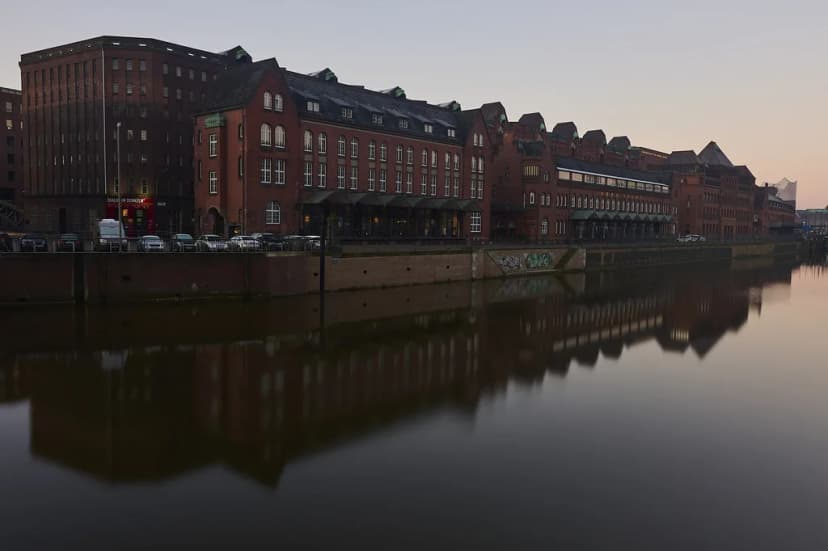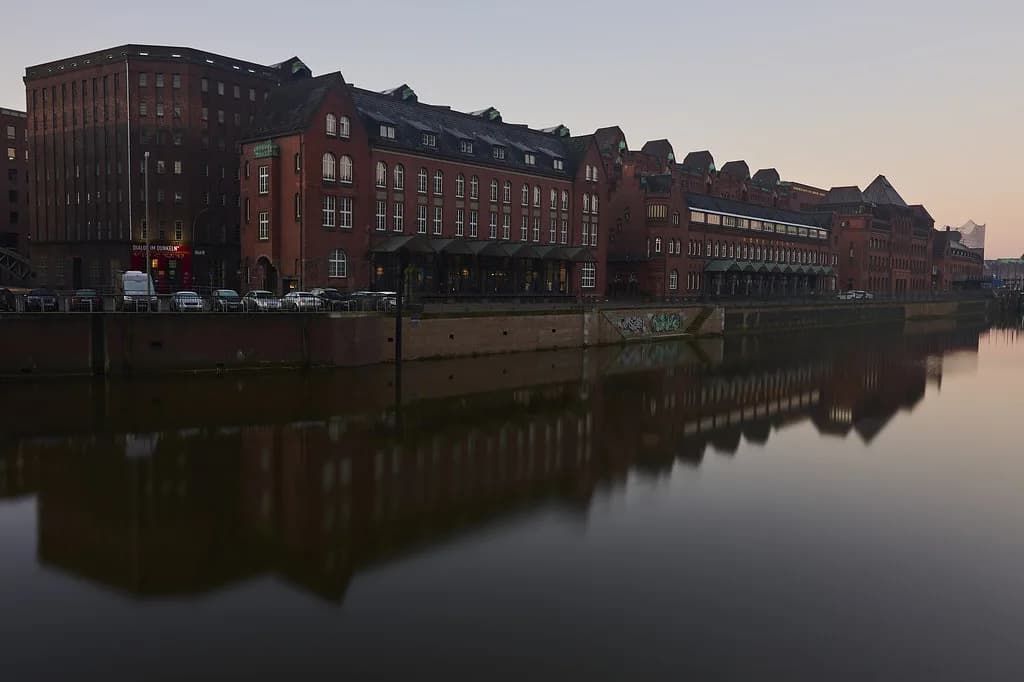
Hamburg packs red-brick canyons, a working harbor and a modern glass skyline into a compact core, so one afternoon can cover several distinct subjects. The decision worth settling before you leave your accommodation is whether a spot is free outdoor ground or a ticketed interior, because that changes your timing, route and budget. As a rough planning estimate rather than an official figure, allow two to three hours if you want to walk the HafenCity waterfront and the Elbphilharmonie area without hurrying. Further visitor details appear in Official event website.
Get the free-versus-ticketed split right and you can string together a full day without paying twice for the same view. One travel blog describing its ten favourite Hamburg photo locations repeatedly advises shooting from bridges for symmetry and arriving late in the afternoon for warmer light, and treats those as suggestions rather than rules. Bridges are what make this city photogenic: they lift you above the water, out of traffic and level with the facades instead of staring up at them.
Speicherstadt and Wasserschloss: Brick Symmetry From the Water
The Speicherstadt warehouse district is the most reliable architecture subject in Hamburg, because its red-brick blocks sit directly on narrow canals and the bridges across them line you up with the facades. A frequently repeated tip is to shoot in late afternoon for warmer light across the brickwork, but that is a photographer's preference rather than an official recommendation. Bring a wide lens for the canal corridor and a shorter telephoto for compressing rows of windows into pattern.
The Wasserschloss, a water-ringed building with bridges on either side, is most often photographed from the Poggenmühlenbrücke bridge opposite it, which is where the classic symmetrical composition comes from. Walk a few metres along the canal bank before you commit, because the exact framing shifts noticeably as you move. Just nearby, the Hälssen & Lyon warehouse, a tea trading house founded in 1879, gives you a second brick subject with green doors and gold lettering.
Because the warehouses occupy an island of channels, almost every good angle involves crossing water, so plan your loop around bridges rather than streets. The district is a UNESCO World Heritage site and remains a working quarter, which means a tripod planted mid-crossing on a narrow bridge can be a genuine nuisance to people passing. If you want the longer history and layout of the area before you shoot, the Speicherstadt Hamburg visitor guide walks through what you are looking at.
Elbphilharmonie and HafenCity: Glass, Water and Reflections
The Elbphilharmonie concert hall rises on the Grasbrook peninsula and is the obvious headliner of any HafenCity walk, but the standard front-entrance shot is the least interesting version of it. One Hamburg photo guide argues that the side you reach by boat is prettier because you see the building's original shape with water on both sides. A wide lens from ground level gives you the glass facade, while the boat angle compresses it against the harbor skyline.
HafenCity itself, formally created in 2008 and anchored by the Elbphilharmonie, supplies the clean modern counterpoint to the old warehouses next door. Glass towers and surrounding water give you reflections and repeated geometry, but the area is open and exposed, so wind and flat midday light will hurt more here than in the sheltered canals. Think of two to three hours as a planning estimate for the waterfront buildings and the Elbphilharmonie area on foot, not as an official figure.
The public forecourt and the surrounding quays are outdoor ground, while the building's interior spaces operate on their own terms, so decide in advance how much of your time belongs to the exterior. If you are working to a Hamburg 3 day itinerary, it makes sense to give HafenCity an afternoon slot and keep Speicherstadt for a separate session rather than trying to cover both in one pass. That keeps your light and your lens changes predictable.
Alter Elbtunnel: Tiled Tubes and Symmetry
The Alter Elbtunnel runs beneath the Elbe in two tubes that link the Landungsbrücken area in St. Pauli with Steinwerder, and its tiled walls have made it a favourite for symmetrical, centred compositions. It is a heritage structure used mainly by pedestrians and cyclists, with vehicular use restricted, so photographing inside means working around people moving through a confined space. A wide-angle lens set square to the tube wall gives you the receding-line shot; a longer lens aimed down the tunnel flattens it into a ring of tiles.
Access arrangements and operating hours can change, so check current information on the day rather than relying on a guidebook or a blog post. Because the tunnel is a passage rather than a destination, it works best as a link in a harbour-side walk: shoot it on the way through and end up on the far bank with a river view back toward the city. Set your exposure before you descend, since the lighting inside is consistent but very different from daylight above.
Alster Lakes and Rathaus: Wide Views and Neo-Renaissance Frontage
The Binnenalster and Außenalster are two man-made lakes inside the city, and their appeal for photographers is simple: calm water, open sky and a clean horizon line. The bridges crossing the Alster put you at water level with the skyline, and photographers commonly shoot toward sunset for reflections, though that is a suggestion rather than a guarantee of conditions. A polarizing filter helps here, because you are often shooting across water toward the sun.
The Rathaus, a neo-Renaissance building constructed between 1886 and 1897, anchors the Rathausmarkt and still houses the city's government offices, which makes it a formal subject rather than a candid one. The obvious frame is straight across the square from the front, but working the corners of the square lets you exclude modern signage and street furniture. If you want to build this into a longer walk through the oldest part of the city, the Hamburg Altstadt walking tour covers the surrounding streets and squares in sequence.
St. Michael's, Planten un Blomen and the Light Show
St. Michael's Church, known locally as the Michel, is a landmark Baroque church with a tower visible from across the city, and photographers often head there for the white and gold interior as much as the exterior. The wide-angle interior shot needs care with vertical lines, since tipping the camera up will converge the walls and columns. For broader city views over the harbor, the Hamburg viewpoints guide covers elevated options and what each one actually looks toward.
Planten un Blomen is a 47-hectare park in the city centre with a Japanese garden, a rose garden and a tropical greenhouse complex, which gives you layered foreground options in one walk. One widely shared tip mentions a summer evening fountain and light show with music, but details vary by season and you should confirm the current schedule locally rather than plan around a fixed time. Spring and summer are the obvious windows for flowers, while a winter ice rink gives the park a different subject entirely.
Reeperbahn and Oberhafenbrücke: Neon Versus Bridge Geometry
The Reeperbahn in St. Pauli is Hamburg's nightlife street, and its photographic value lies in the neon and the street life after dark, which calls for a fast lens and a steady hand or support. This is a busy entertainment district, so work with the crowd rather than through it, and keep your equipment discreet. Daytime gives you a fairly ordinary commercial street, so the subject and the light belong together here.
The Oberhafenbrücke, next to HafenCity, offers a very different proposition: a bridge structure that works as geometry in flat daytime light when the neon street would give you nothing. Stacked against the modern architecture behind it, it gives you a graphic frame that is less about atmosphere and more about lines. A shorter focal length from underneath and a longer one from the approach ramp will give you two distinct compositions from a single stop.
Where Photography Stops Being Free
Miniatur Wunderland in the Speicherstadt is an indoor subject with real photographic appeal, but it is also one of Hamburg's most heavily visited attractions, which changes how you plan a shoot. The operator states on its homepage that the attraction is almost always busy and often very crowded, and suggests visiting early in the morning or late in the evening. The operator also sells entry tickets bound to a time window and publishes a waiting-time prognosis, so you can check conditions before committing to a session rather than turning up and hoping.
The practical consequence is that you should decide whether the model world belongs on a photography trip at all, or whether it eats a half day you would rather spend on the canals. If you do go, budget for the queuing and shoot with a macro or close-focusing lens, since the appeal is in miniature detail rather than in wide views. Check the operator's own pages for current admission and opening information instead of relying on older third-party write-ups.
Chocoversum, Hamburg's chocolate museum in the Kontorhausviertel, can be visited only as part of a guided 90-minute tour, as its operator states on its booking information page, so it works as a fixed appointment rather than a drop-in photo stop. The operator lists a range of group, school and private tour formats with prices valid until 31 December 2026, and the guided format means you follow the guide's pace through the rooms. The museum's own site is the reliable place to check tour formats and current entry arrangements before you try to slot it into a photo day.
The Emigration Museum BallinStadt is a different kind of indoor option, and its operator publishes opening hours that differ between the summer period from 1 March to 31 October and the winter period from 1 November, plus fixed closing days on 24 and 31 December. It also states that the museum is closed on Mondays, with possible special opening for groups and classes on request. Confirm current dates and prices directly with the museum before you build an itinerary around it.
Reflection Shots and the Nikolaifleet Constraint
Photographers chasing mirror reflections in Hamburg hit one consistent obstacle: much of the water in the city's rivers and canals is moving, and moving water does not give you a clean reflection. The exception suggested in one Hamburg photo guide is the end of the Nikolaifleet near the St. Nikolai memorial, where the channel terminates and the water is still enough for a reflection frame when the wind is down. The same guide describes walking past the church on the Willy-Brandt-Straße toward Domstraße to find the spot.
That constraint matters more than any lens choice, because it decides where you can shoot at all rather than how you shoot. The St. Nikolai site itself is a memorial and museum with an observation tower, and its interior spaces are separate from the outdoor remains, so treat the two as different subjects with different access. Morning is usually calmer on the water, but treat that as a working assumption rather than a rule.
A Suggested One-Day Route Without Backtracking
Start at the Landungsbrücken, shoot the harbor front and the Alter Elbtunnel tubes early while the area is quiet, then walk into the Speicherstadt for the warehouse and canal work. Shift west into HafenCity for the Elbphilharmonie and the glass architecture in the afternoon, then finish at the Oberhafenbrücke as the light drops. This order keeps you moving in one direction along the waterfront instead of crossing the same bridges twice.
If you only have one day, this harbor-to-HafenCity line is the highest-yield version because it concentrates the architecture and the water in a single walkable band. Add the Alster and the Rathaus on a second day, and save the Reeperbahn for an evening when you are not carrying a day bag. Bridge-based compositions are the through-line of the whole route, so plan your stops around crossings rather than around individual buildings.
When Weather or Crowds Break the Plan
Rain in Hamburg is common enough that treating it as a failure state is a mistake; the brick facades of Speicherstadt and the covered passage courtyards around the Kontorhausviertel keep working in flat, wet light. Overcast conditions actually suit the warehouse district and the Oberhafenbrücke, because you lose the hard shadows that complicate high-contrast brick compositions. Save the neon and glass subjects for dry evenings when reflections and lit signage do more of the work.
Crowds are the other variable, and they are predictable in the sense that the busiest attractions publish guidance about when to come. Miniatur Wunderland suggests early morning or late evening visits and publishes a waiting-time prognosis you can check on the day, and both it and Chocoversum offer evening or special-format options. Where no such information exists, the honest answer is to arrive at opening or accept a busier frame and shoot around people rather than waiting for an empty scene.
For interiors, remember that a museum, a church and a concert hall each set their own terms about photography, and those terms are not published in one central place. Check each venue's own website or ask at the desk before you set up, especially with a tripod. That one habit prevents most of the friction that ruins an otherwise good shooting day.
Planning Your Hamburg Photo Walk
The strongest Hamburg photo day is built on two decisions made in advance: which spots are free outdoor ground and which are ticketed interiors, and which bridges tie them together in one direction. Settle those and the light, the timing and the lens choices mostly take care of themselves. Check operator pages for anything that changes, and keep blog timing tips in your head as suggestions rather than rules.
Frequently Asked Questions
What is the best time of day to photograph the Speicherstadt in Hamburg?
Photographers commonly suggest late afternoon for warmer light across the brick facades, and morning for calmer water in the canals. This is a suggestion based on how light falls on the warehouses, not official guidance from the city or the district. Check sunrise and sunset times for your travel dates and walk the bridges once before committing to a final position.
Do you need a ticket to photograph the Elbphilharmonie and HafenCity?
HafenCity's quays, squares and waterfront are outdoor public ground, so you can photograph the architecture and the surrounding water without any entry arrangement. The building's interior spaces are a separate matter and operate under the operator's own rules, so check with the venue directly if you plan to shoot inside. Do not assume the same conditions apply to every part of the building.
Are Hamburg's best photo spots free to visit?
Most of the city's headline subjects are outdoor and free, including the Speicherstadt canals, the Elbphilharmonie forecourt area, HafenCity, the Alster lakes and the Alter Elbtunnel. Ticketed interiors such as Miniatur Wunderland and Chocoversum are separate propositions and need their own planning. Treat the route as free until you deliberately choose an indoor stop.
Where can you get reflection shots in Hamburg if the river water is moving?
The end of the Nikolaifleet near the St. Nikolai memorial is the commonly cited exception, because the channel terminates there and the water is still when the wind is down. Elsewhere in the city, rivers and canals flow and will not give you a clean mirror image. Head there in calm conditions and check the water before you set up.
Is Miniatur Wunderland worth it for photography, and do you need to book ahead?
It is one of Hamburg's most popular indoor attractions, and the operator states it is often busy and advises visiting early in the morning or late in the evening. The operator sells entry tickets bound to a time window and publishes a waiting-time prognosis, so check both before you go. The photographic appeal lies in miniature detail, which means a close-focusing or macro lens rather than a wide one.
Which Hamburg photo spots work on a rainy day?
The Speicherstadt warehouse district and the covered passage courtyards around the Kontorhausviertel still photograph well in flat, wet light, and overcast skies reduce harsh shadows on brick. The Oberhafenbrücke also suits grey conditions because the subject is its geometry. For a fully indoor session, check the current arrangements at Miniatur Wunderland, Chocoversum or BallinStadt, since each has its own format and booking rules.
Sources
- Where to Take the Best Photos in Hamburg? Our 10 Must-See Spots | Airbum Blog
- The 10 most Instagrammable spots of Hamburg - Anne Travel Foodie
- Official event website
- Tickets | Miniatur Wunderland Hamburg Tickets | Miniatur Wunderland Hamburg
- Waiting Times | Miniatur Wunderland Hamburg Waiting Times | Miniatur Wunderland Hamburg
- Besuch planen – Ihr Tag im Chocoversum | Chocoversum
- Öffnungszeiten & Preise - BallinStadt Hamburg
- St. Nikolai Memorial