

Cologne works as a day trip from Bonn because the two cities sit on the same stretch of the Rhine and are joined by frequent rail services, so you can travel in the morning and be back the same evening without changing accommodation. Cologne's official tourism board frames the city around experiences including sights such as Cologne Cathedral, museums, breweries, Carnival and Cologne Pride, which is a useful reminder that one day will only ever be a slice of it. For a practical starting point, the day-trips overview from Bonn gathers transport and route options for the region.
This guide is built around the decision of what to leave out. It explains why rail is the sensible default, sketches a suggested shape for the day that separates free public space from paid interiors, and addresses museum duplication head-on for readers who have already spent time in Bonn's collections.
Every volatile detail, from train times and fares to museum admission and card terms, is flagged with the official source to check rather than presented as a fixed figure. Confirm current information on the day you travel, because schedules, prices and inclusions change.
Why Cologne Works as a Day Trip from Bonn
The two cities are close neighbours on the Rhine, and the rail corridor between them is busy, which means you are not committing to a long transfer. That proximity is what turns Cologne into a realistic day trip rather than an overnight stay. If you are still assembling your base itinerary, the Bonn pillar gathers city guides and route ideas for the surrounding region.
The trade-off is that Cologne's headline sights cluster around the cathedral and central station, so the day can become bottlenecked in one small area if you do not plan a second focal point. Decide in advance whether your afternoon belongs to a museum, a neighbourhood, or a brewery stop. Making that call before you arrive prevents the common pattern of drifting between half-finished visits.
Getting There: Why Rail Is the Default
Rail is the default way to make this trip because both city centres are served by main stations with onward local transport, and you avoid the parking question entirely in Cologne's congested centre. Rather than relying on a journey time printed in a guide, look up your specific date and departure on the Deutsche Bahn journey planner, which reflects engineering works and timetable changes. The operator's site is also where you compare flexible and saver conditions before booking.
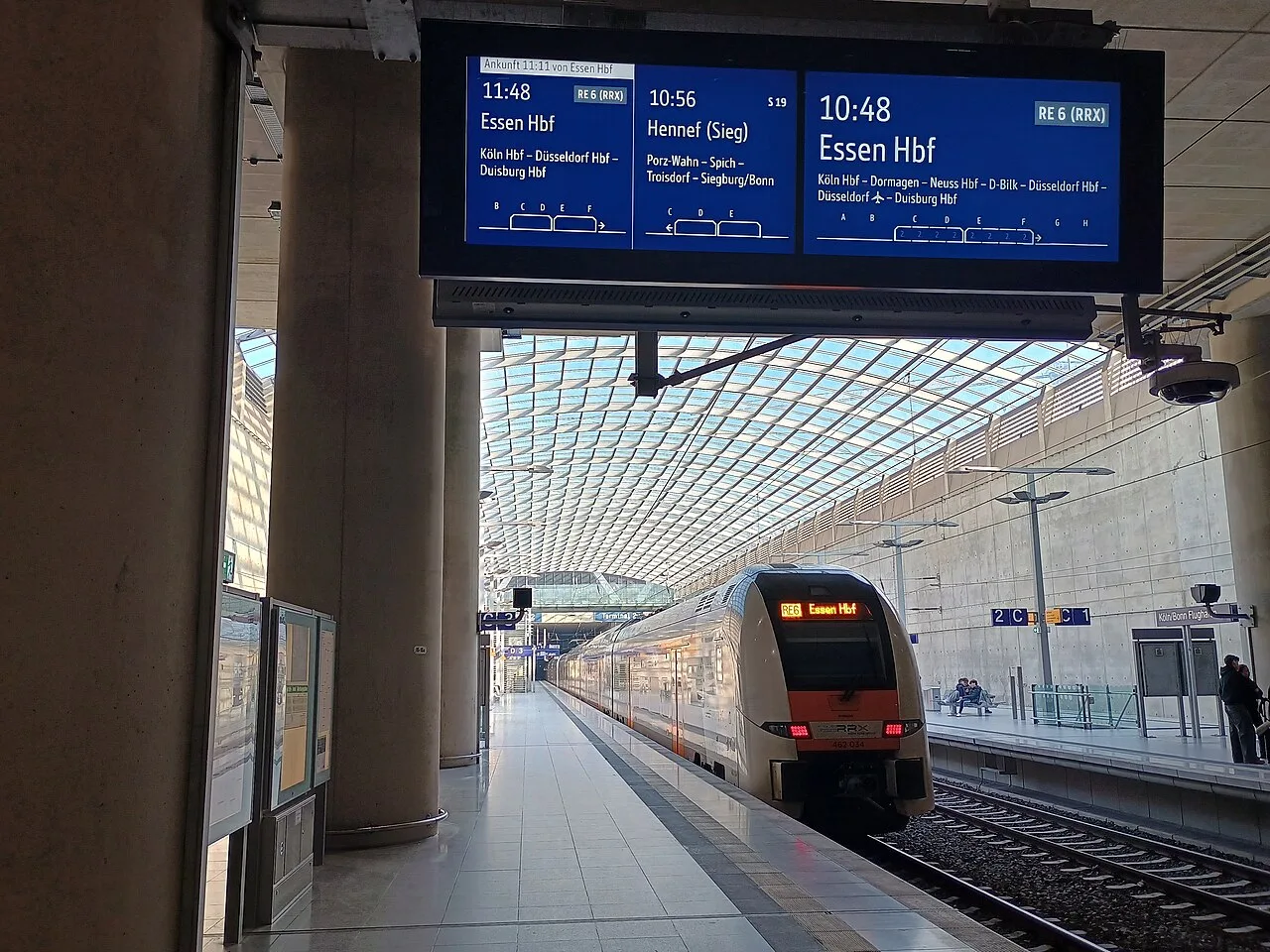
If you are weighing up the practical comparison between train, car and coach, a dedicated transport overview covers the trade-offs in more detail without quoting timetables that date quickly. Buy your ticket before boarding where your fare type requires it, and check whether your chosen train is reservation-recommended on busy days.
A monthly national local-transport pass can change the maths if you are already using regional trains and buses across Germany for several days, but eligibility, coverage and price are set by the operator, so verify the current terms on the Deutsche Bahn site rather than assuming a figure you have read elsewhere. The DB homepage currently advertises a Deutschland-Ticket for local transport, but the monthly price shown there should be checked at the time of purchase.
A Suggested Shape for the Day
The following is a suggestion, not an official schedule: aim to arrive mid-morning and give the cathedral cluster your first block, when light through the stained glass and foot traffic are both more manageable. Keep the cathedral exterior, the surrounding squares and the river promenade as your free, flexible layer. That way a delayed train or a closed interior does not derail the whole morning.
Reserve the afternoon for one paid interior or one neighbourhood, not several. One focused museum visit or a street-art walk through Ehrenfeld or the Belgian Quarter will feel more substantial than three hurried stops. Round the day off with an early evening Kölsch in a traditional brewery near the centre before heading back to Bonn.
Cologne's official tourism site groups sights, museums, breweries and street art into browsable categories, which is a useful way to confirm what is actually open during your visit. Use it to check event listings and any temporary closures on the dates you plan to travel.
The Cathedral Cluster First
Cologne Cathedral dominates the area immediately outside the central station, so you can step off the train and be standing in front of it within minutes. The exterior, the adjacent squares and the Rhine promenade are public space, free to walk and open at any reasonable hour. The cathedral's interior and any tower or treasury access are separately managed and ticketed, so treat those as paid add-ons rather than something included in your arrival.
Decide before you go whether you want to climb, tour an interior, or simply experience the building from outside and move on. On a one-day trip, lingering on the exterior and watching the river traffic often delivers more per minute than queueing for an interior. Whatever you choose, check current opening arrangements and any access restrictions with the operator on the day.
The cluster also includes major museums within walking distance of the cathedral, but each of those is a separate institution with its own ticket. Do not assume a single admission covers the cathedral, the museums and the Roman-Germanic collections together. If you have time for one indoor stop near the centre, choose it deliberately rather than drifting in because it is close.
Choosing One Museum, Not Five
Cologne's museum landscape is spread across the city rather than gathered in one quarter, so trying to see several in a day means spending much of it in transit. Pick one collection that matches your interest and give it a proper visit, then use the remaining time outdoors. Cologne's official tourism pages list museums by category, which helps you shortlist before you commit.
Each institution tickets separately, and combined tickets exist only where the operator explicitly says so. Check the individual museum's own page for admission, opening days and any timed-entry requirement rather than relying on a citywide assumption. If a museum is the reason for your trip, build the day around it and treat everything else as optional.
Brewery Culture: A Short, Deliberate Stop
A Kölsch stop is one of the most distinctly Cologne experiences you can fit into a day trip, and it does not need to take long. Traditional breweries serve the beer in small glasses, traditionally topped up by a Köbes until you signal you are finished, which makes a short visit easy to control. Pair it with Rhenish dishes such as sauerbraten if you want a full meal before the return train. Cologne's official tourism board describes the Köbes tradition and the convivial brewery atmosphere directly.
The official tourism site maintains a brewery and gastronomy section, which is the best place to confirm which houses are currently trading and where they are. Brewery opening hours and kitchen times vary, so check before you build your evening around one address.
Keep the stop to one or two glasses if you still have a train to catch, and note that the small-glass format makes it easy to underestimate how much you have drunk. If you want a longer evening in Cologne, that is an argument for staying overnight rather than rushing the last connection back to Bonn.
Street Art and Neighbourhoods as an Alternative Afternoon
If museums do not appeal, Cologne's street-art scene gives the afternoon a different texture, with routes and guided options concentrated in Ehrenfeld, the Belgian Quarter and parts of the city centre. Cologne is described by its tourism board as one of the hotspots for street art in Germany, with several routes, guided tours and specialist galleries introducing the scene. Walking one neighbourhood is a realistic half-day activity; trying to cover all three is not.
Ehrenfeld rewards a slower wander rather than a checklist, while the Belgian Quarter mixes street art with cafés and small shops. Check the official street-art pages for current route suggestions before you set out, since murals are painted over and addresses change.
These neighbourhoods sit away from the cathedral cluster, so factor in local transport and treat the afternoon as one continuous area rather than hopping between districts. If you are short on time, the city-centre street-art spots are the pragmatic fallback.
The KölnCard Question
The KölnCard is Cologne's visitor discount and transport card, promoted by the city's tourism board as combining travel with discounts at participating attractions. According to the official tourism site, the card offers free travel and up to 50% discount at participating partners. Whether it pays off depends on how much you plan to move around and how many participating venues you will actually enter in a single day. For a trip built around free public space and one museum, the case is weaker than for a multi-stop sightseeing day.
Discount levels, validity periods and the list of participating partners are set by the operator and change over time, so check the current terms on the official tourism site rather than trusting a percentage quoted in an older article. Compare the card price against the individual tickets you would otherwise buy. If the maths is close, the convenience of included transport may still tip the decision.
Avoiding Duplication with Bonn's Museums
Readers who have already spent time in Bonn's museums should think carefully before repeating equivalent collections in Cologne. Bonn's museum mile covers art, history and science across several institutions, so a Cologne art museum may feel like more of the same if you visited Bonn's galleries earlier in the week. A structured Bonn itinerary is useful for checking what you have already covered before you plan Cologne.
The better use of a Cologne day, in that case, is the things Bonn does not offer at the same scale: the cathedral itself, the Rhine promenade, the brewery culture and the street-art neighbourhoods. If you have a spare day in Bonn, the landmark visitor guides cover individual sites in depth so you can plan around what you have already seen.
If you have two days in Bonn rather than one, spread the city's collections across them and keep Cologne for the cathedral cluster and neighbourhoods. A two-day Bonn itinerary shows how to balance Beethoven, the museum mile and the Rhine without cramming.
If You Only Have Half a Day
With half a day, cut the museum entirely and concentrate on the cathedral cluster on foot: exterior, squares, a short stretch of the Rhine promenade and one Kölsch. That combination is compact, mostly free, and resilient to delays. Trying to add a neighbourhood or an indoor attraction will leave you watching the clock instead of the city.
Book a flexible return train if your schedule allows, since a half-day plan depends on arriving early enough to make the walk worthwhile. Check the live timetable on the Deutsche Bahn site on the morning of travel so a disrupted service does not shrink your window further.
What to Do with a Second Day
Once you have spent a day in Cologne, the Rhine Valley itself becomes the more interesting second day, and Bonn is well placed for it because smaller towns lie both upstream and downstream. Königswinter, home to Drachenburg Castle, and Linz am Rhein are reachable by boat or train, and the two can be combined in a single outing. A day-trips overview from Bonn compares these options in more detail.
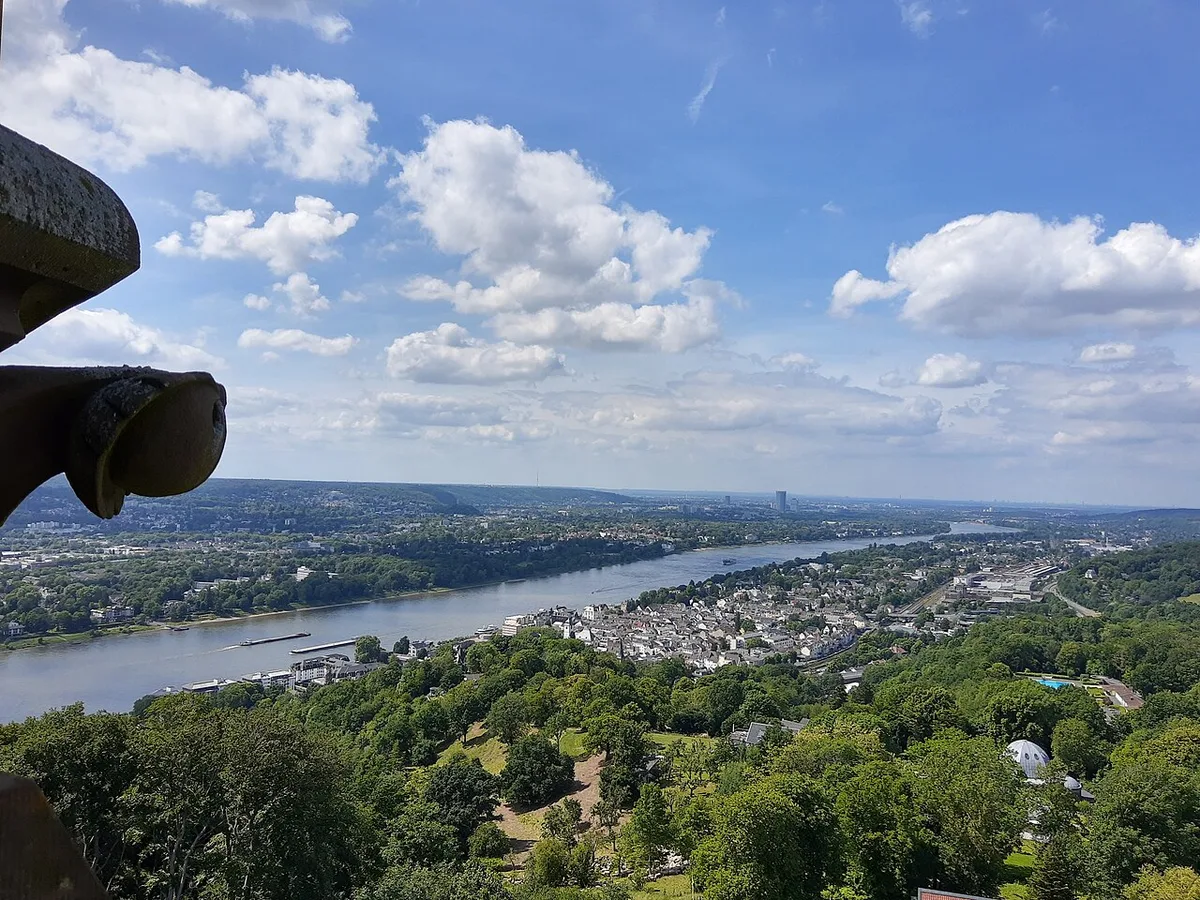
Drachenburg Castle has been open to visitors as a museum since 2009, following restoration after wartime damage. A 2020 travel blog notes that park and castle admission cost €7 for adults and €5 for children and students at that time; treat those figures as historical and check current admission and access with the operator before you go. Eltz Castle, further afield, is generally easier to reach by car, and the same source recommends that option.
Further afield, Linz am Rhein suits travellers who like half-timbered streets and hiking, with the Rheinsteig trail offering a route towards Bad Honnef. If you would rather stay in the city, a second Bonn day spent on the museum mile and the Rhine is a reasonable substitute for another Cologne trip.
Practical Planning Notes
Before you travel, confirm three volatile things: your train times and fare conditions on the Deutsche Bahn site, current admission and opening arrangements for any attraction you plan to enter, and the current terms of any discount card. None of these are stable enough to rely on from an older article. Build your day around free public space so that a closure or delay only costs you an optional stop.
Reserve restaurants and brewery tables if you are travelling on a weekend or during a major event, and check Cologne's event calendar so you are not caught out by a busy city centre. Carry a contactless payment method and a little cash for smaller establishments, and keep your return ticket accessible for inspection.
Plan Your Visit
A Cologne day trip from Bonn succeeds through subtraction. Choose the cathedral cluster as your anchor, add exactly one indoor stop or one neighbourhood, and treat the brewery as the closing note rather than a separate excursion. That shape fits comfortably into a single day and still leaves you feeling you have seen Cologne rather than merely passed through it.
Check the live timetable, current admission arrangements and card terms close to your travel date, because those details change. If this is your first trip to the region, the Bonn city guide is the best starting point for building the rest of the itinerary around this day out.
Frequently Asked Questions
Is Cologne worth a day trip from Bonn?
Yes, for most travellers. The two cities are close neighbours on the Rhine with a well-connected rail corridor, so Cologne is reachable without committing to an overnight stay. A day is enough for the cathedral cluster, one museum or neighbourhood, and a brewery stop, provided you resist trying to cover everything.
Should I take the train from Bonn to Cologne or drive?
Rail is the simpler default because both city centres have main stations and you avoid central Cologne's traffic and parking. Driving can make sense if you plan to combine Cologne with smaller Rhine Valley towns in one outing. Check live timetables, fares and reservation conditions on the Deutsche Bahn site for your specific date.
How much does the train from Bonn to Cologne cost?
Fares depend on the fare type, the time you travel and how far in advance you book, so no single figure is reliable. Check the current price for your exact date and departure on the Deutsche Bahn journey planner. If you are already using regional transport across Germany for several days, compare your options before buying individual tickets.
What should I prioritise in Cologne if I only have one day?
Start with the cathedral cluster, where the exterior, surrounding squares and Rhine promenade are free public space. Then choose one paid interior or one neighbourhood such as Ehrenfeld or the Belgian Quarter, and finish with a Kölsch in a traditional brewery. Free grounds and paid interiors are managed separately, so plan them as distinct stops.
Which Cologne museums should I skip if I have already visited Bonn's museums?
If you have spent time in Bonn's museum mile, consider skipping large general art and history collections in Cologne and spending the time on what Bonn does not offer at the same scale: the cathedral, the riverfront, brewery culture and street-art districts. Each Cologne collection is ticketed separately, so check individual museum pages before deciding.
Is the KölnCard worth it for a single day?
It depends on how much local transport you will use and how many participating venues you will actually enter. For a day built around free public space and one museum, the benefit is limited. Discount levels, validity and participating partners change, so verify the current terms on Cologne's official tourism site before buying.
What can I do near Cologne if I have a second day?
Use Bonn as the base and head into the Rhine Valley instead. Königswinter, where Drachenburg Castle stands, and Linz am Rhein can be combined in one outing by boat or train. Eltz Castle is another option but is generally easier to reach by car. Check current transport and admission details with the operators before you go.


