

Aachen's old town is compact and largely traffic-calmed, which means the best zero-cost experiences sit within a short walk of each other. The cathedral operator confirms admission to Aachen Cathedral is free, while the Choir and the Hochmünster with the imperial throne are only accessible as part of a guided tour. That single distinction frames this whole guide: free entry does not mean free access to everything inside.
Plan on a half day for the free core — cathedral, Elisenbrunnen, Elisengarten, the market squares — and a full day if you add the Lousberg climb and the shopping streets. Everything in this guide is reachable on foot from the centre; you do not need a transit ticket to cover the free route described here. Treat the timings below as editorial suggestions, not official figures.
Aachen Cathedral: Free to Enter, But Not Everywhere Inside
Admission to the cathedral is free, and it is open to everyone as a place of worship and prayer rather than a ticketed attraction. Visitors are asked to respect the sacred nature of the space, which in practice means quiet voices, modest dress and no wandering during services. Church services temporarily close the building to sightseers, and the operator warns that opening times can change at short notice for concerts and events.
The honest trade-off is what lies behind the guided-tour line. The Choir and the Hochmünster, home to the imperial throne, are only accessible as part of a guided tour, so a free visit shows you the nave and the octagon but not those upper spaces. If the throne and Charlemagne's shrine are the reason you came, budget for a tour rather than assuming the free entry covers them.
Photography inside is a paid contribution to the cathedral wardens rather than a free allowance, and tripods, selfie sticks and flash photography are not permitted. The current contribution amount is published on the operator's visiting page, so check it there before you plan your shots. The Cathedral Treasury next door is a separate, ticketed collection and is not part of the free cathedral entry.
Elisenbrunnen: Thermal Water, Sulfur Smell and a Natural Starting Point
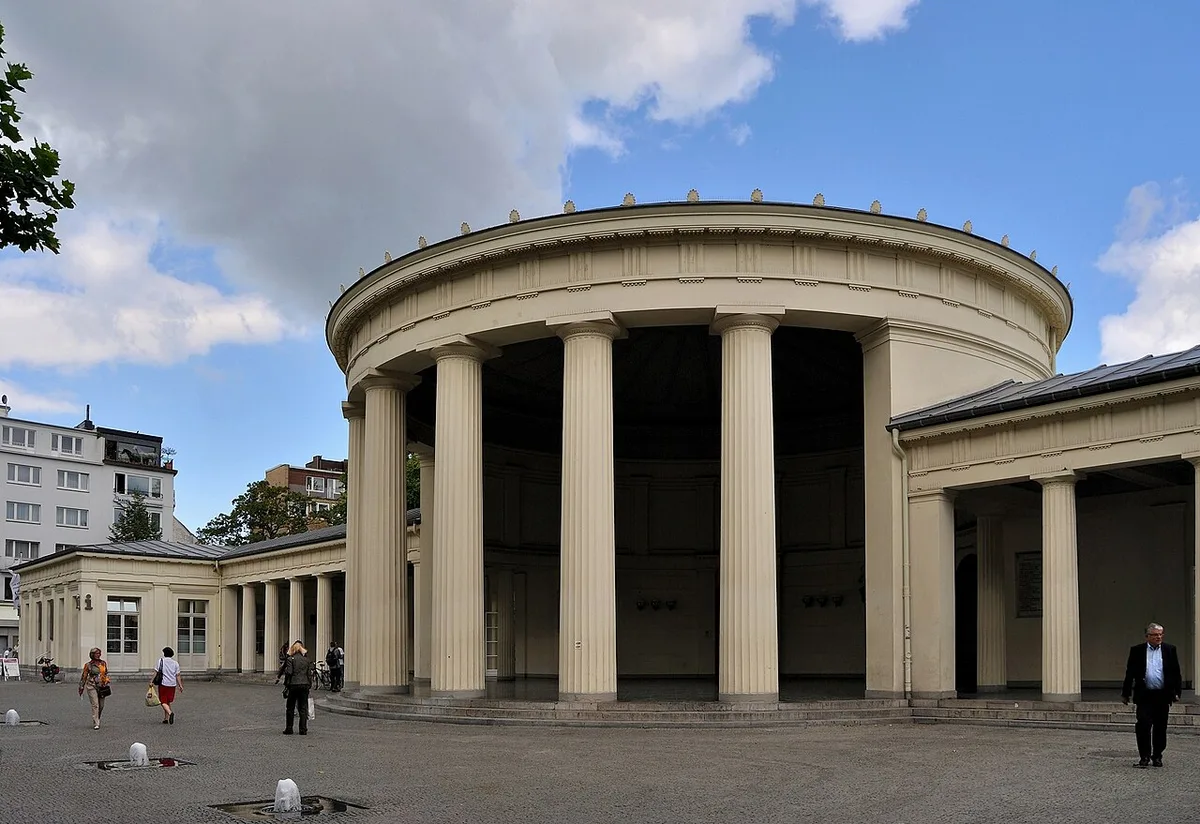
The Elisenbrunnen is a neoclassical pavilion that once served as a pump house for the city's hot springs, and it anchors the square beside the main bus stops. Two sulfurous fountains run warm water, and the smell of sulfur is unmistakable the moment you approach. The fountain plaza costs nothing and doubles as the location of the tourist information office, which makes it a sensible first stop for maps and orientation.
Do not treat the water as drinking water: signage at the pavilion discourages drinking, and sources disagree about whether it was ever intended for consumption. Washing your hands in the warm stream is the practical, zero-cost payoff, and it is genuinely pleasant on a cold day. The pavilion itself is a monument and a spa-culture landmark, not a bath — the paid thermal spa experience sits elsewhere in the city.
Elisengarten and the Archaeological Window
Behind the Elisenbrunnen, the Elisengarten is a small park that locals use for lunch breaks and coffee on the cafe patio. Its main draw is the Archaeological Window, a glass pavilion built over an excavation of Roman-era foundations, with explanations in German and English on the glass. It is a viewing station, not a museum, so there is no ticket desk and no collection to work through.
The pavilion was originally meant to be temporary after public interest in the early-2000s dig, and the permanent structure that replaced it means you can look down into the pit at any time of day. A realistic budget is around fifteen minutes if you read the panels, or five if you simply look and move on. Nearby in the same park sits the Kreislauf des Geldes fountain, whose figures pass money around a circle until it drains away in the middle — an easy, free photo stop on the way through.
Market Squares Circuit: Markt, Münsterplatz, Katschhof, Hof and Hühnermarkt
Aachen's squares are free to wander and each delivers something different. Markt holds the Karlsbrunnen, the city's oldest fountain, with the Gothic Rathaus facade behind it; Münsterplatz is lined with cafes and framed by the cathedral; Katschhof is the wide square between cathedral and town hall where you can see both silhouettes by turning around.
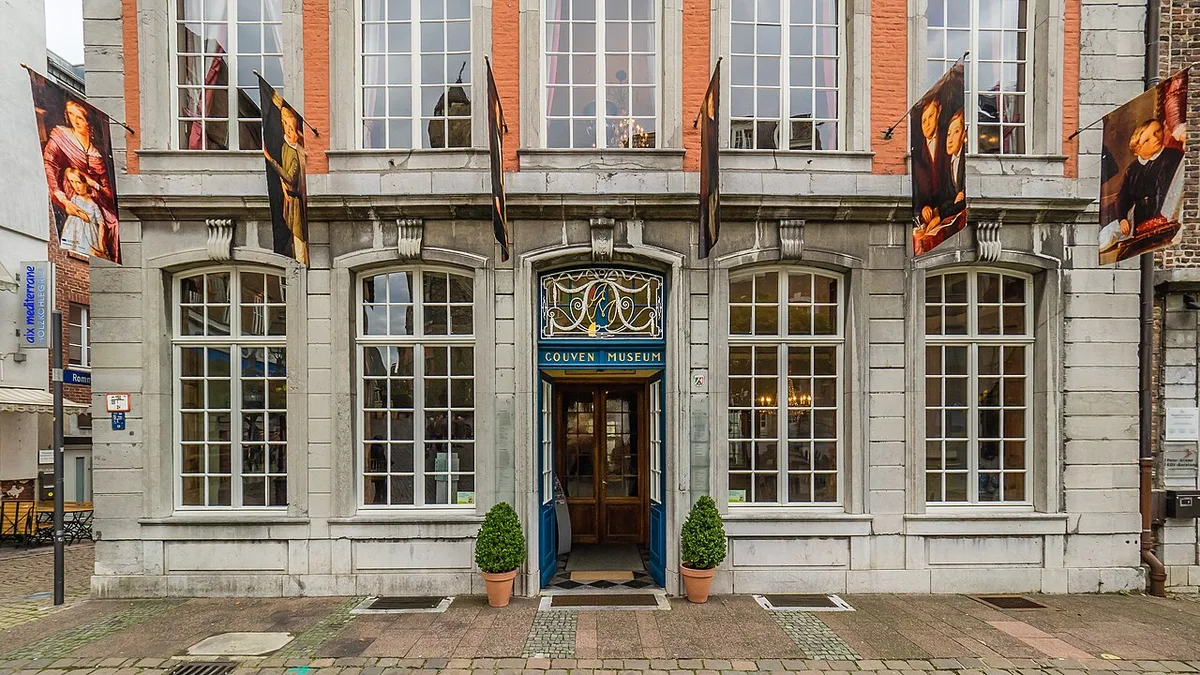
The smaller squares reward slow walking rather than ticking off. Hof is home to a reconstruction of a Roman colonnade and a row of medieval houses, while Hühnermarkt has the Chicken Thief statue and the restored mansion that houses the Couven Museum. The museum is a ticketed, donation-based interior, and it publishes its own opening hours and closures — check its site before you build a plan around it.
The same free-versus-paid split applies across the circuit. The Rathaus interior, the Centre Charlemagne and the Cathedral Treasury all charge admission and must never be counted as free sights. The squares themselves, the facades, the fountains and the cathedral silhouette remain free at any hour, which is why the circuit works as a zero-cost walk even when every building around it is closed.
Fountains and Street Sculpture: A Free Treasure Hunt
Aachen has an unusual density of fountains and figures, and hunting them down costs nothing. The Puppenbrunnen is the crowd-pleaser: its figures can be twisted and bent, so the sculpture changes shape depending on who has been there before you. The Hühnerdieb at Hühnermarkt shows the moment a thief realises he has stolen a rooster, and the Hotmannspief marks a water point that has existed since prehistoric times.
One warning worth having: some fixtures are decorative and may not be running water at all. The bird-covered figure near Münsterplatz is named as a fountain but may be dry when you pass, so do not plan a route around seeing water flow from every single one. Treat each find as a bonus rather than a scheduled stop and the walk stays enjoyable.
Lousberg: The Free Panorama Above the City
The Lousberg is the city's most rewarding free climb, and Aachen sits in a basin, so the payoff is a wide view over the whole region rather than a glimpse between rooftops. At the terrace there are hammocks and a sundeck with swings, both free to use, plus several marked viewpoints facing different directions. The remains of the destroyed Belvedere survive as a set of columns that locals affectionately call the Aachen Acropolis.
The decision rule is simple. If you have a full day and enjoy walking uphill, the Lousberg earns its place; if your day is short or you dislike hill walking, skip it and spend the time on the old town squares instead. The route up passes a statue tied to the local legend of the market woman and the devil, which gives the climb a bit of narrative beyond the view.
Window-Shopping and the Traffic-Calmed Lanes
Adalbertstraße is the main pedestrian shopping street and costs nothing to walk, provided you treat it as window-shopping rather than a shopping trip. The old-town lanes are similarly free to wander, with picturesque passages such as Rommelsgasse and Körbergasse connecting the squares. A wander here is only genuinely free if you decide in advance that you are looking, not buying.
Two surviving medieval gates make free exterior stops: the Marschiertor near the station side and the Ponttor at the north end of the centre, both reachable on foot from the old town. Neither offers tower access, so nobody should plan around a climb — the value is the sheer size of the structures and the old wooden doors still in place. They work best as endpoints to a walk rather than destinations in their own right.
The Honest Free-vs-Paid Breakdown
Genuinely free: entry to the cathedral nave, the Elisenbrunnen fountain plaza, the Elisengarten and its Archaeological Window, all the market squares, the fountains and street sculpture, the Lousberg viewpoints, and the exteriors of both medieval gates. Donation-based or clearly ticketed: cathedral guided tours, the Cathedral Treasury, the Rathaus interior, the Centre Charlemagne, the Couven Museum, the Ludwig Forum and the Carolus Thermen.
Prices for the ticketed items change over time, so this guide deliberately avoids quoting them. The cathedral operator publishes current tour and treasury rates on its visiting page, and the Couven Museum lists its own admission and opening times. Check those pages directly rather than relying on an older guidebook figure.
Practical Notes for a Free Day
Sunday and Monday are the days that catch people out. Many shops in the centre close on Sundays, and several museums close on Mondays, so a free indoor stop can quietly disappear from your plan. The cathedral remains a working church with services that close it to visitors, so check the operator's page for the week you are travelling rather than assuming a fixed schedule.
For a half day, walk the cathedral, Elisenbrunnen, Elisengarten and the market squares in sequence — they sit within a few minutes of each other. For a full day, add the Lousberg climb in the morning and the shopping streets and gates in the afternoon. The city centre is walkable throughout, so the free route needs no transit at all.
Plan Your Visit
Aachen rewards travellers who separate the free shell of the city from its ticketed interiors. The cathedral nave, the thermal fountain, the park with its Roman foundations, the squares, the fountains and the Lousberg panorama together make a genuinely full day out at no entry cost.
If you want to build the free route into a longer stay, pair it with the heavier sightseeing days and let the free morning carry the lighter hours. Check the operator pages for current tours, treasury tickets and any temporary closures before you travel, and treat every timing here as a suggestion rather than a fixed schedule.
Frequently Asked Questions
Is Aachen Cathedral really free to enter?
Yes. The cathedral operator states that admission to Aachen Cathedral is free and that the building is open to everyone as a place of worship. What is not free is access to the Choir and the Hochmünster with the imperial throne, which are only reachable as part of a guided tour. Photography inside involves a paid contribution to the cathedral wardens, and tripods, selfie sticks and flash are not allowed. The cathedral closes to visitors during services and can change its opening times at short notice for concerts and events, so check the operator's visiting page for the week you plan to travel.
What can you do for free in Aachen on a rainy day?
The genuinely free rainy-day options are the cathedral nave, which is sheltered and free to enter, and the Archaeological Window in the Elisengarten, a covered glass pavilion over Roman-era foundations that you can look into at any hour. Both are steps apart in the old town, so you can move between them without getting soaked. The ticketed rainy-day alternatives are the museums and the thermal spa, which charge admission and publish their own opening hours. Note that several museums close on Mondays, and shops in the centre generally close on Sundays, so check before you set out.
Is the Lousberg worth climbing if you only have half a day?
Probably not, unless the view is your priority. The Lousberg gives a wide panorama over a city that sits in a basin, plus free hammocks and a sundeck with swings at the terrace, but the climb takes time out of a short visit. With only half a day, the cathedral, the Elisenbrunnen, the Elisengarten and the market squares deliver more variety for the same walking effort. With a full day and a tolerance for uphill walking, the Lousberg earns its place in the itinerary.
Which Aachen old-town sights charge an entrance fee?
The Cathedral Treasury, the Rathaus interior, the Centre Charlemagne, the Couven Museum, the Ludwig Forum and the Carolus Thermen all charge admission and should never be counted as free. Cathedral guided tours also carry a fee, and photography inside the cathedral involves a paid contribution. Prices change, and this guide deliberately avoids quoting them; the cathedral operator publishes current tour and treasury rates, and the Couven Museum lists its own admission and hours. Check those pages directly rather than relying on an older guide.
Are Aachen's market squares free to wander?
Yes. Markt, Münsterplatz, Katschhof, Hof and Hühnermarkt are public squares and cost nothing to walk through, and they are close enough to link into a single loop on foot. The squares themselves give you the Karlsbrunnen fountain, the Rathaus facade, the cathedral silhouette from the Katschhof, and the smaller medieval lanes around Hof. What costs money are the interiors behind some of those facades, such as the Rathaus and the Couven Museum, so plan the squares as a free walk and decide separately whether any interior is worth the ticket.


