
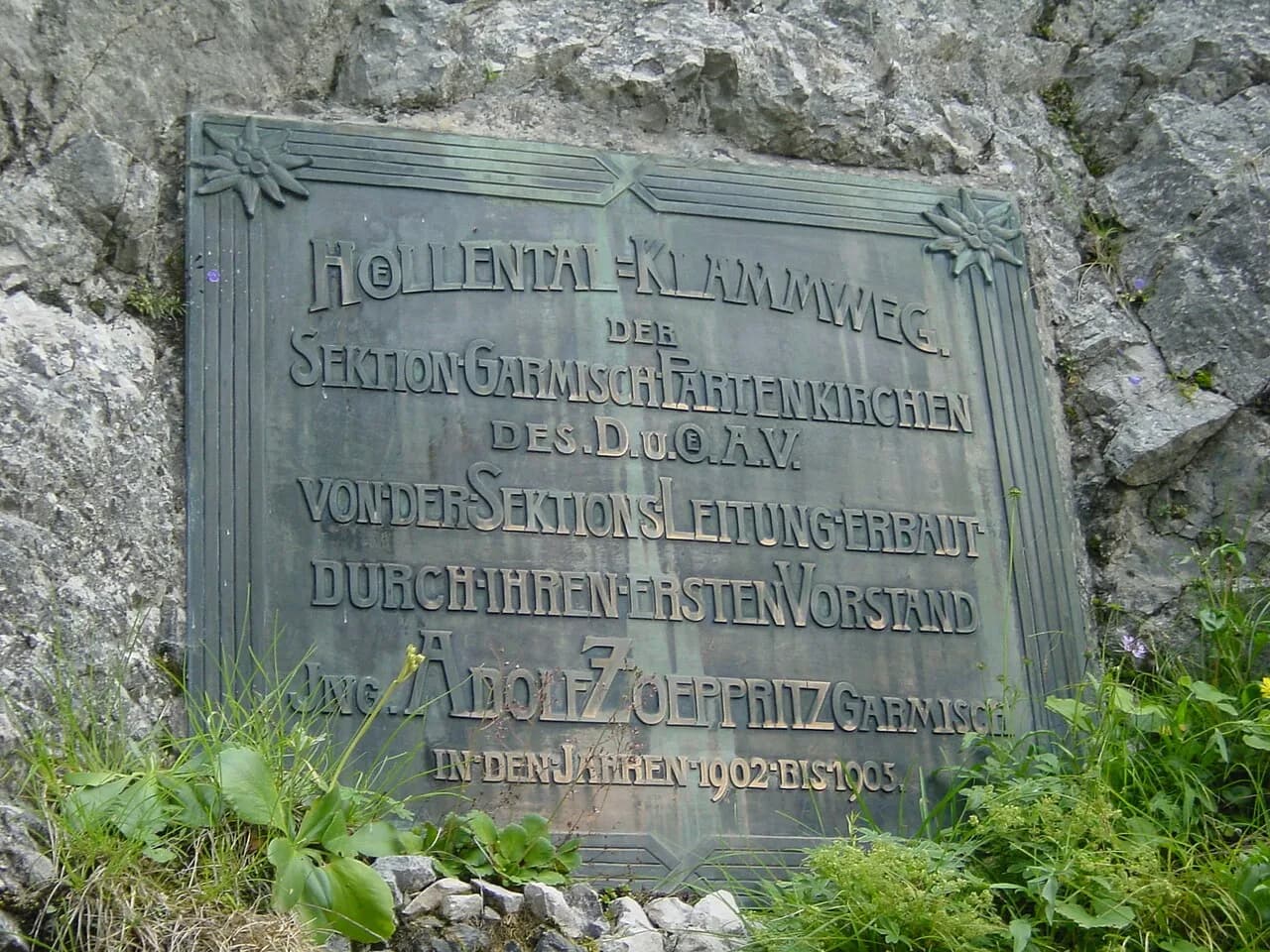
The Höllentalklamm is a narrow, water-carved gorge in the Wetterstein mountains above Hammersbach, a small district of Grainau near Garmisch-Partenkirchen. It works best as a planned half day rather than a spur-of-the-moment detour, because the approach walk climbs in its own right and the gorge itself is a paid, seasonally operated section that does not run year-round. One detailed visitor report describes the walk from Hammersbach station to the entrance hut as taking about an hour, and adds that the floor of the gorge can be very slippery and that you should count on getting wet even in summer. Treat every fee, date and condition as something to confirm on the ground before you commit.
A realistic shape for the day: take the Zugspitzbahn from Garmisch-Partenkirchen to Hammersbach, walk up the valley beside the Hammersbach creek, pay the entrance fee at the gorge hut, thread the gorge, rest at the Höllentalangerhütte, then choose between the Stangensteig descent or the longer Hupfleitenjoch route toward the Kreuzeck area. As a self-labelled suggestion rather than an official timing, budget roughly five to seven hours for the whole outing. For wider route planning, see Garmisch-Partenkirchen Hiking Trails Guide.
Why the Höllentalklamm Deserves a Planned Half Day
Two things separate this gorge from a casual stroll. The first is that the walk in from Hammersbach climbs gradually for about an hour before you even reach the entrance hut, so the gorge is not the start of the effort. The second is that the entrance is ticketed, which means the section beyond the hut exists as a managed facility rather than open terrain. A route planner describes a wider traverse from the Kreuzeck ridge over the Hupfleitenjoch and down through the gorge to Grainau as a moderate hike of roughly twelve kilometres taking around four and a half hours of walking, which gives a sense of scale for anyone tempted to bolt it onto an afternoon.
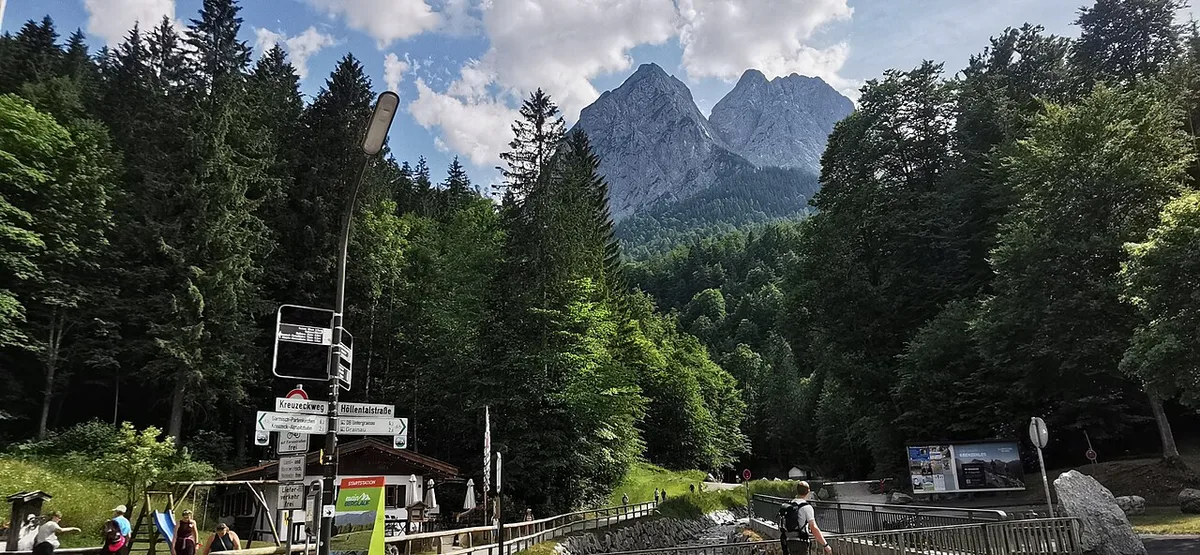
The district tourist office frames Garmisch-Partenkirchen around hiking, cycling, mountain lifts, gorges and family time, and the Höllentalklamm sits squarely in that mix as one of the area's nature attractions. That also means it competes for attention with the Partnachklamm, the Zugspitze and the AlpspiX platform, so a little scheduling thought keeps you from spending the whole trip queuing. Planning ahead matters most on weekends and in high summer, when both the trailhead train and the gorge path fill up.
Getting to Hammersbach: Arriving by Train from Garmisch-Partenkirchen
Hammersbach has its own stop on the Zugspitzbahn line, and reaching it from central Garmisch-Partenkirchen is a short rail hop rather than a major journey. A visitor report notes that the Zugspitzbahn station sits beside the main Deutsche Bahn station, which makes the change simple even with a daypack, and that a Bayernticket is valid as far as Hammersbach. The operator does not publish a current timetable in the material available here, so check the live timetable for departures and journey length on the day rather than relying on any fixed interval.
From the Hammersbach stop, walk in the direction of travel until you meet the creek of the same name, then follow the road and path that run alongside it up the valley. It is a genuine uphill approach on a forest road at first, shaded for much of the way, with the trail leaving the creek and returning to it as the valley narrows. If the climb already feels like hard work in the first half hour, treat that as an honest signal about how far you want to go beyond the gorge.
The Walk Into the Valley and the Gorge Entrance Hut
Visitor accounts put the entrance hut about an hour's walk from Hammersbach, past stretches where the trail leaves the creek and later returns to it, with the rock walls closing in on both sides as you climb. The hut at the entrance is described as a working, welcoming place, and for many walkers it is the natural point to pause before paying and entering. Because path conditions and any work on the route change from season to season, treat the timing as approximate and check locally for the current state of the trail.
The distinction that matters most here is between the free approach and the paid gorge. Everything up to the entrance hut is open walking terrain; the secured section through the gorge itself is what the fee covers, and it is the part that is dismantled and closed in winter. Reading the day that way stops you from assuming the whole valley is ticketed, or that a fee buys you anything beyond the gorge path.
Tickets at the Gorge: What the Fee Covers
A per-person entrance fee is charged at the gorge entrance, and it funds the upkeep of the secured walkway through the ravine. One detailed trip report from September 2018 records a charge of five euros per person, but that figure is eight years old and is not a current price, so treat it as historical context only and confirm the actual amount at the entrance hut on the day. Nothing in the published material indicates advance booking, timed slots or online ticketing, so plan to pay on arrival.
Because the operator's site currently offers no extractable English content on fees, hours or booking, the practical approach is to check the official German page before travelling and to ask at the entrance hut, where staff can confirm the current amount and whether the gorge is open that day. Carry enough cash for a small per-person charge plus hut food and drinks, since card payment is not guaranteed at mountain facilities. If the fee is the deciding factor for a group, price it at the entrance rather than trusting any older figure you find online.
Inside the Gorge: Narrow, Wet, Stepped and Secured
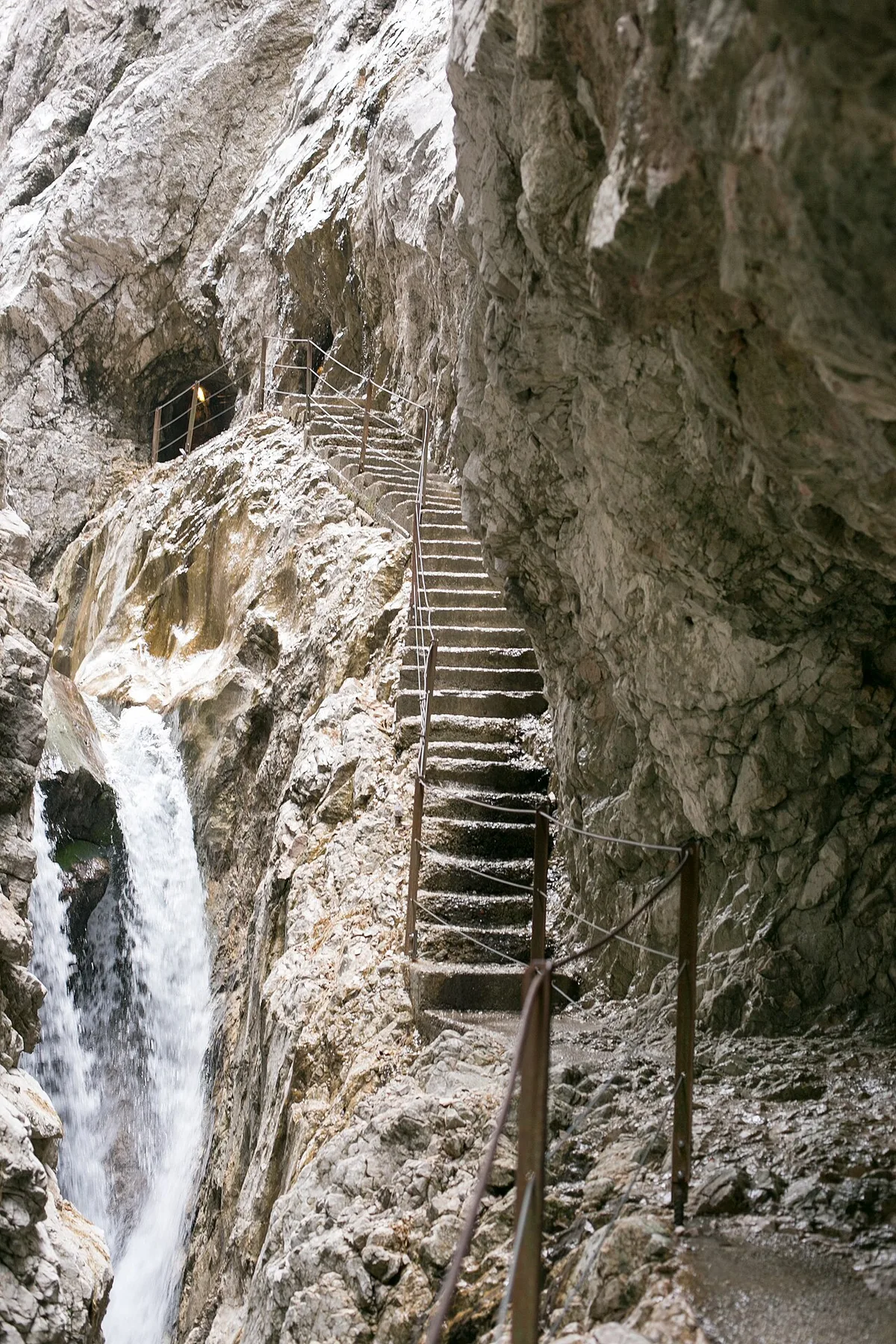
Inside, the path is cut into the rock and runs through a tight, dripping ravine where water presses through narrow gaps into waterfalls and the route passes a tunnel section. Reports describe the gorge path as roughly two-thirds of a mile long with a few hundred feet of climbing, and they consistently note that you get wet even in summer and that the floor can be very slippery. The exposure is real: there are secured stretches with wired rope on the surrounding routes, and people who dislike heights often prefer an alternative approach.
Footwear is the single decision that most changes your experience. Sturdy shoes with grip are the sensible choice, and a light rain shell or waterproof layer belongs in the pack even on a clear forecast, because spray and drips come from above as much as from the creek. Sandals, smooth soles and loose flip-flops are a bad match for wet rock and metal steps, and you should not assume wheelchair or stroller access at any point in the gorge.
Season and Weather: A Summer Experience Only
The gorge is a warm-season walk, not a winter one. Visitor reports explain the closure by the fact that the bridges and racks are taken down before winter, because leaving them up risks them being damaged or missing once the snow melts, and the narrow valley holds snow late into the year. The operator does not publish opening and closing dates in the material available here, so check the official site or ask locally before setting out, especially in late spring and early autumn when the transition can fall either side of your trip.
Weather drives conditions more than the calendar does. Heavy rain raises the water in the Hammersbach creek and makes everything wetter and more slippery, while a late snow year can leave lingering snowfields and cold, damp air in the ravine. Check the forecast the morning you go, and be ready to substitute the Partnachklamm or a lower valley walk if the gorge is closed or conditions look poor.
The Höllentalangerhütte: Rest Stop at the Valley Head
At the far end of the gorge the valley opens into green meadows, and the Höllentalangerhütte sits opposite a small chapel at around 1,387 metres. The current building replaced an older hut that was demolished in 2014 and was rebuilt in an avalanche-safe position, and a visitor report describes it as a managed mountain hut operating through the warm season with food and drink available. It is the natural lunch and turnaround point, but opening periods and services shift year to year, so confirm before you count on a meal there.
Beyond the hut the terrain stops being a gorge visit and becomes a proper mountain day. Ruins and tunnels from the old lead and molybdenum mine stand in the valley, and those tunnels are dangerous and should not be entered. From the hut the Stangensteig drops back toward Hammersbach, while the Hupfleitenjoch route climbs toward the Kreuzeck area and can be paired with a gondola descent if you have the time and legs.
Extending the Day: Stangensteig, Hupfleitenjoch and Kreuzeck
If you continue past the hut, the choice is between a direct descent and a longer high route. A visitor report describes the Hupfleitenjoch option as roughly an hour and a half of climbing from the hut toward the Kreuzeck, with a gondola available from that side back down to the valley, which turns a gorge outing into a full mountain day. The same report notes that the signposted walking times are generous compared with real pace, so add buffer rather than planning to the minute.
The traverse described in the route planner runs from the Kreuzeck ridge over the Hupfleitenjoch and down through the gorge to Grainau, rated moderate with substantial descent. That direction puts the gorge at the end of the day, which suits people who would rather climb in the open and finish with the wet, stepped section. Pick your direction based on whether you want the gorge early with dry energy in reserve or late as a finale.
Who Should Skip the Gorge
The gorge is not a good fit for everyone, and being honest about that saves a wasted day. If steep drops beside the path make you tense, if your balance is unreliable on wet, uneven steps, or if you are managing small children who cannot yet handle slippery footing, look at alternatives with firmer surfaces and less exposure. The published material contains no accessibility information for the gorge, so do not assume wheelchair or stroller access at any point, and ask locally if you need a specific answer.
For travellers who mainly want big views without the wet squeeze, the area offers ridge viewpoints and lift-served platforms that trade the dripping ravine for open panoramas. That is a reasonable swap rather than a consolation prize, particularly on a cloudy or unsettled day. If you do want a gorge but with easier logistics, the Partnachklamm is the more forgiving option in the same region.
What to Pack for a Wet, Cold, Dripping Gorge
Treat this as a wet-weather hike even in high summer. Bring a light rain jacket or shell, grippy shoes with a decent tread, and a dry layer in a waterproof pack liner, because the gorge drips from the walls and spray comes off the water. A hat and thin gloves are worth carrying for the damp, shaded stretches and for the hut terrace if the wind is up.
Cash, water and a snack cover the practical side: the entrance charge is paid at the hut, and mountain huts are not reliable for card payment. Pack light, since the approach climb is steady and you will be carrying everything up and back down. Leave a dry change of footwear in the car or at your accommodation if the day ends with a train ride.
Combining the Gorge with the Rest of Your Garmisch-Partenkirchen Trip
The Höllentalklamm pairs naturally with the rest of the Wetterstein side of the valley, but it deserves its own day rather than a slot between two other stops. If you have limited time, alternate it with the Partnachklamm or a lift-assisted viewpoint instead of trying to do both gorges back to back, since each involves climbing and wet ground. Weekday visits are calmer, and starting early gives you margin for the hut and the descent.
Build the rest of the trip around your energy levels: a recovery day with a lake or valley walk after the gorge, and a lift-served ridge day when you want views without the scramble. The tourist office pages are the place to check current lifts, events and visitor services before you fix a plan. Local conditions and any temporary closures will always beat a printed itinerary, so leave one flexible day in the schedule. For wider planning, see Garmisch-Partenkirchen landmark visitor guides.
Plan Your Höllentalklamm Day
The Höllentalklamm is a memorable half day when you treat it as a small expedition: train to Hammersbach, climb the valley, pay at the entrance hut, walk the wet stepped gorge, and rest at the Höllentalangerhütte before deciding how to come back down. Its season, fee and daily condition are all things you check close to the date rather than months ahead. Read the operator's German page, confirm at the hut on arrival, and keep a wet-weather backup in your pocket.
If the gorge is closed or the weather turns, the wider Garmisch-Partenkirchen area has enough lower, drier options to fill the day well. Plan the gorge as the centrepiece rather than one item on a crowded list, and the rest of the trip will fit around it more comfortably. For city-level planning, see Garmisch-Partenkirchen: Itineraries and City Travel Guides. For related planning, see Schachenhaus & Königshaus Excursion Guide.
Frequently Asked Questions
Is the Höllentalklamm free to enter?
No. The approach walk from Hammersbach up to the entrance hut is open terrain, but a per-person fee is charged at the gorge entrance to maintain the secured path through the ravine. Any figure you read in older trip reports is historical rather than current. The operator publishes no English-language fee information in the available material, so check the official German page before travelling and confirm the amount at the entrance hut on the day, and carry cash since card payment is not guaranteed at mountain facilities.
How difficult is the Höllentalklamm hike?
It is a moderate outing rather than a casual stroll. The approach from Hammersbach climbs gradually for about an hour, and inside the gorge the path is narrow, stepped, often wet and secured in places, with a slippery floor. Sturdy shoes with grip are essential and a rain shell is worth carrying even in summer. If steep drops beside the path make you uncomfortable, consider one of the area's lower valley walks instead, and check current conditions with the operator or locally before you set out.
Do you need to book Höllentalklamm tickets in advance?
There is no published indication of advance booking, timed entry or online ticketing for the gorge. The usual arrangement described by visitors is paying at the entrance hut when you arrive. Because the operator's site publishes no extractable visitor details in the available material, confirm the current process on the official German page or by asking locally before you build your day around it, especially if you are travelling in a group or on a busy summer weekend.
Is the Höllentalklamm open in winter?
No, it is a warm-season walk. Bridges and racks along the secured section are removed before winter, because leaving them in place risks damage or loss under snow, and the narrow valley holds snow well into the year. The operator does not publish opening and closing dates in the material available, so check the official site or ask locally, particularly in late spring and early autumn when the transition can fall either side of your visit.
How long does the Höllentalklamm hike take from Hammersbach?
As a suggestion rather than an official figure, budget roughly five to seven hours for the round trip from Hammersbach including the gorge and a rest at the Höllentalangerhütte. The approach alone is about an hour each way according to visitor reports, the gorge section adds a wet and stepped stretch, and any extension over the Hupfleitenjoch toward the Kreuzeck turns it into a full mountain day. Signposted times in the area are often generous, so add buffer rather than planning tightly.
Can you get food at the Höllentalangerhütte?
The Höllentalangerhütte is a managed mountain hut at the end of the gorge, described by visitors as operating through the warm season with food and drink available. Its current building replaced an older hut demolished in 2014 and was rebuilt in an avalanche-safe position at around 1,387 metres. Opening periods and services change from year to year and the operator does not publish confirmed dates in the available material, so check ahead if a meal at the hut is part of your plan, and carry a backup snack regardless.


