

High above Garmisch-Partenkirchen, a grassy plateau holds two very different buildings. The Königshaus am Schachen is the small villa built for King Ludwig II, while the Schachenhaus is a staffed mountain inn that feeds and beds hikers on the same meadow. Both sit high in the Wettersteingebirge, so this is a full mountain day rather than a short detour from town.
The 2026 season has already narrowed late-year options. The hut operator states that the Königshaus closes for the season on 27 September 2026, that the last overnight stay at the inn is 2 October 2026, and that the final day with catering is Sunday 4 October 2026. Anyone planning around those dates should confirm current status on the operator's own pages rather than relying on second-hand summaries.
This guide covers the two main walking ascents, the practical limits the hut itself publishes, and the differences between the villa and the inn. Prices for food and accommodation are not reproduced here because they change between seasons; the hut publishes its own rates on its site.
Where the Schachen Is and How You Reach It
The Schachen sits in the Wettersteingebirge, the mountain group rising south of the Garmisch-Partenkirchen valley floor. The hut operator publishes ascent descriptions on its own site, which is the sensible starting point because the information comes from the people who live up there. GaPa Tourismus, the local tourism organisation, also maintains route pages and a broader visitor portal for the district.
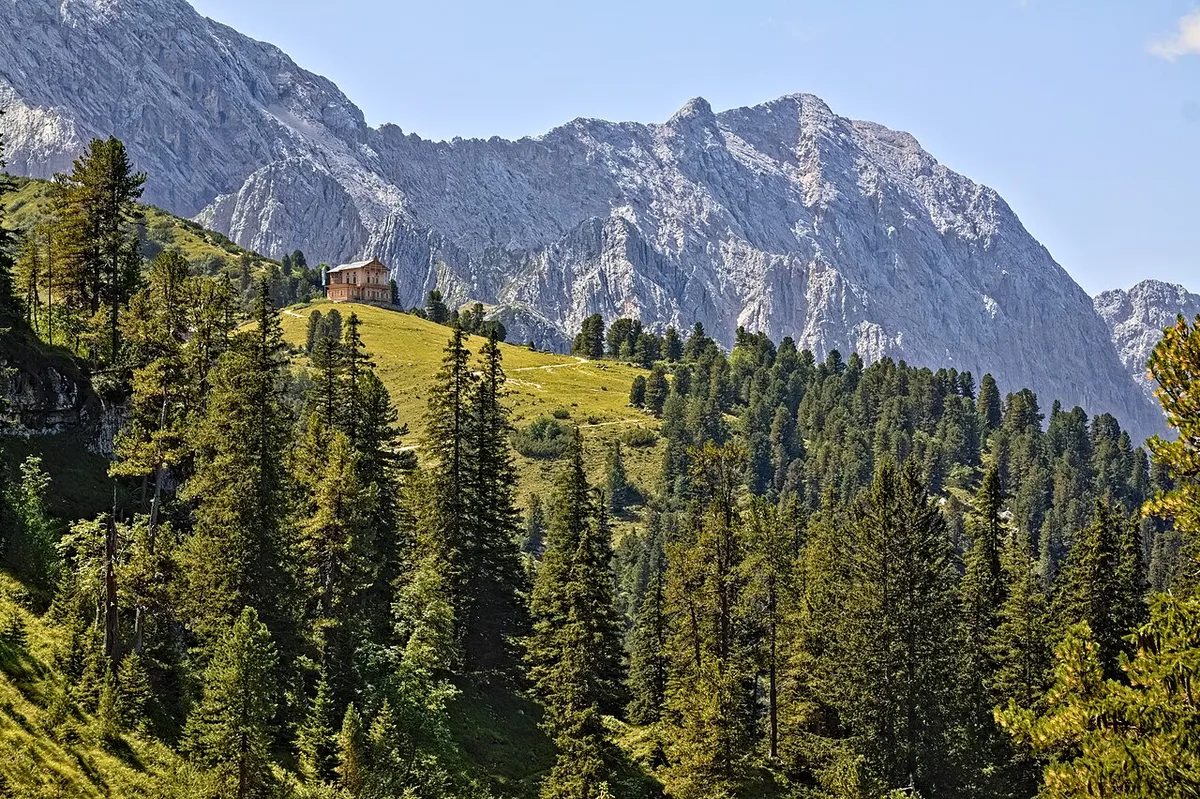
There is no cable car, bus or lift connection to the plateau in the material the operator and tourism office publish, so plan on walking. That shapes the whole day: you need to be on the trail early enough to climb roughly a vertical kilometre and still leave time for the descent. Checking the town's official visitor pages before you travel is worthwhile for local advice and orientation.
If you want to compare this outing with other valley walks and gorge hikes nearby, our Garmisch-Partenkirchen Hiking Trails Guide: Easy Walks & Alpine Routes sets out how the shorter options fit around a big mountain day. Pairing the Schachen with a separate easy day is usually kinder on the legs than stacking two long ascents back to back.
Ascent One: Partnachklamm Gorge and the Kälbersteig
The tourism office describes a mountain hike that starts at the Olympic Ski Stadium, follows the Partnach river upstream past the base terminal of the cable car leading up to Graseck, and enters the Partnachklamm gorge on a steep footpath right beside the water. Beyond the gorge the valley widens, and a signed junction directs walkers straight into the woods towards Schachen via the Kälbersteig. The same description notes that the Kälbersteig itself climbs for roughly three more hours, and that it crosses the Königsweg about halfway up.
GaPa Tourismus classifies the route as difficult and publishes the tour figures as 20.4 km with a stated duration of 9:10 hours, 1,238 metres of ascent, 1,237 metres of descent, a low point of 725 metres and a high point of 1,863 metres. Those numbers belong to this specific gorge-and-Kälbersteig itinerary, not to every way of reaching the plateau. Treat them as the demanding end of the spectrum when deciding whether the day suits your fitness and daylight window.
The gorge adds atmosphere but also commitment, because the enclosed section and the subsequent forest climb leave fewer early exits than a road walk. If you enjoy gorge scenery as a destination in its own right, the Höllentalklamm Visitor Guide: Hike, Tickets & Hut Stop covers a comparable but separate ravine experience in the same district. Doing both in one trip is possible, though not on the same day if you want to reach the Schachen comfortably.
Ascent Two: The Elmau Forest Road in Poor Weather
The hut operator states plainly that in bad weather it recommends the ascent from Elmau via the forest road, adding that with an umbrella the Schachenhaus can be reached comfortably by this route. This is the operator's own wet-weather advice rather than a consolation prize, and it matters because the forest road is easier to follow when cloud sits low on the ridges. A heated drying room at the hut means soaked rain gear can be dealt with on arrival.
For non-official context on the forest road, an independent hiking blog describes the approach as roughly a 10 km forest road with about 1,000 metres of ascent, taking around three hours, from either Schloss Elmau or Garmisch-Partenkirchen. That blog is a personal photo account rather than an operator source, so use it only as a rough sense of scale. Check the hut's own directions page before you commit, since route descriptions and signposting can change.
Choosing Between the Two Routes
The gorge-and-Kälbersteig option suits walkers who want variety, dramatic rock scenery and a longer day, and who are comfortable with sustained climbing on a route the tourism office rates as difficult. The Elmau forest road suits poor visibility, wet ground and anyone who prefers a steadier gradient with a reliable surface underfoot. Both end at the same plateau, so the choice is about conditions and stamina rather than two different destinations.
Weather exposure is the deciding factor on many days. The Kälbersteig and the open plateau above it offer little shelter once you leave the gorge, while the forest road keeps you under trees for much of the climb. Check the forecast on the morning of your walk and be willing to switch plans; the hut's wet-weather recommendation exists precisely because the exposed route is less pleasant when cloud and rain move in.
Whichever way you go up, remember that the descent costs knees and time even when it is faster than climbing. Many hikers find a forest-road ascent and a forest-road descent the most forgiving combination late in the day. A printed map or downloaded track is worth carrying because phone batteries are a known constraint on the plateau.
Königshaus and Schachenhaus: What Each Building Is
The Königshaus am Schachen is the small royal villa associated with King Ludwig II, built in the years around 1870, and it is the reason the plateau draws visitors beyond mountaineers. It is a seasonal sight rather than a permanently open building, and the operator announces its seasonal closure each year. For interior opening hours, ticket arrangements and any guided access, there is no reliable published detail to quote here, so check the official pages directly before building a day around it.
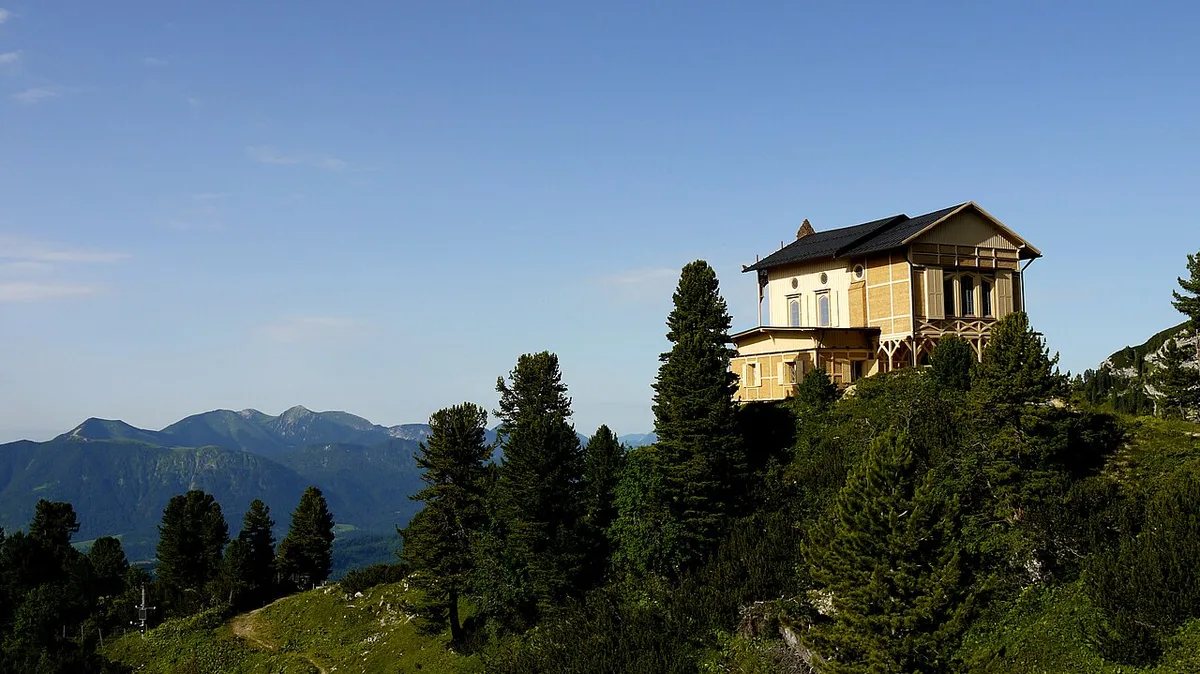
The Schachenhaus, by contrast, is a mountain guesthouse run by the Leitenbauer family, offering food, drink, overnight beds and shelter to walkers. It is not a museum and does not require a sightseeing ticket to enter as a guest, though hut rules on arrival times and behaviour apply. Treating the two as one attraction is the most common mistake: one closes for the season in late September, the other keeps serving into early October.
Hut Logistics: Arrival Time, Kitchen and Drinking Water
The hut asks guests to arrive by 17:30, with the kitchen closing at 18:00, which effectively sets your latest sensible start for a long ascent. This is the operator's guidance, so build your day backwards from it rather than assuming you can drift up in the afternoon. A late arrival on a cold, wet day is unpleasant for everyone and may mean missing hot food.
Drinking water is the point most visitors get wrong. The operator states that the running water at the hut does not have drinking-water quality, because surface water is collected in two cisterns and treated for cooking and washing use only. During your stay, table water is what is available rather than tap water, and for the descent or onward walk the hut will refill bottles with still or sparkling Marchwasser for a stated price per half litre.
Practically, that means you should carry enough drinking water for the ascent rather than planning to top up from a tap at the top. The refill service is best treated as a convenience for the way down, not your primary supply. If the Marchwasser price matters to your budget, confirm it on the hut's site shortly before your trip, since these figures are reviewed by the operator.
Power on the Hut: Generator, Night Shutdown and Devices
Electricity at the Schachenhaus comes entirely from a diesel generator, which the operator switches off overnight, leaving only lighting circuits live. The hut states that there is not enough energy to charge phones and that the number of sockets is very limited. E-bike battery charging is explicitly not possible.
The operator's own advice is to bring a powerbank for your phone and other devices, and a spare battery if you ride an e-bike. Treat that as a hard planning constraint rather than a minor note: navigation, photography and emergency calls all depend on a charged phone, and there is no mains socket to fall back on. Charge everything fully in Garmisch-Partenkirchen before you set off.
Overnighting: Rooms, Dorm Places and Outdoor Camping
The hut distinguishes between rooms and dormitory places. Bed linen is provided in the rooms, so no hut sleeping bag is needed there, while the dorms have woollen blankets and guests who reserved a dorm place are asked to bring their own hut sleeping bag. A hut sleeping bag can also be bought from the hut at a stated price, and the operator notes that only reservations including breakfast are currently accepted.
Dogs are not allowed in the rooms or dorms, which is the only animal rule the operator publishes and does not extend to trail rules. Sleeping outdoors in the surrounding area is not possible and is explicitly forbidden, so a bivouac on the plateau is not an alternative to a bed. The hut states that the landlords alone decide seating and dorm allocation, and its own cancellation rules apply to bookings, so read those before reserving.
Alpengarten and Royal Context on the Plateau
The Botanical Garden Munich Nymphenburg has maintained an outpost on the Schachen for over a century, according to the hut operator, which is what gives the plateau its alpine garden reputation. Opening dates and admission arrangements for the Alpengarten are not published in the material available here, so verify them with the garden or the hut before planning your visit around it.
Taken together with the villa, the garden explains why the plateau attracts more than hikers, and why the buildings close at different times. If your interest is primarily the royal and botanical side, plan the walk for the main season and confirm the villa's status before you climb.
What to Carry for a Thousand-Metre Ascent
A full day in the Wettersteingebirge calls for layered clothing, rain protection, a warm mid-layer and sturdy footwear, even when the valley forecast looks mild. The hut's own wet-weather advice mentions an umbrella for the forest road, which tells you how changeable conditions can be. Water for the ascent, snacks and a headtorch belong in the pack in case the descent runs later than expected.
Leave behind anything that depends on mains electricity, and bring a powerbank instead. Menu prices and overnight rates for the hut are stated on its own site, so check there rather than carrying assumptions from an older trip report. For a wider look at how this walk fits with other days in the area, the Garmisch-Partenkirchen: Itineraries and City Travel Guides hub is a sensible next stop, alongside the Garmisch-Partenkirchen: Landmark Visitor Guides for the wider attractions picture.
A Suggested One-Day Plan
The following timings are a suggestion, not official guidance. Leave Garmisch-Partenkirchen early in the morning, start walking by mid-morning, and aim to be on the plateau well before the hut's requested 17:30 arrival. If you choose the gorge-and-Kälbersteig route, assume a long, sustained day on the order of the published route figures rather than a half-day outing.
Build in a turnaround point based on the weather rather than on reaching the top at all costs. If cloud, rain or fatigue sets in below the Kälbersteig crossing, the forest road or an early descent is the sensible call. Whether you finish at the hut with a drink, stay overnight or simply turn around, the walk is rewarding for the plateau and the views across to the Zugspitze.
Plan Around the Season, Not the Postcard
The Schachen rewards preparation more than most day hikes because water, power and closing dates all work differently up there. The 2026 season end has passed, with the Königshaus closing in late September and the hut's final overnight and serving days in early October. For a future visit, confirm the following season directly with the hut and the tourism office before you commit to a date.
If you would rather compare easier valley days first, our Garmisch-Partenkirchen Hiking Trails Guide: Easy Walks & Alpine Routes covers shorter options, and the Olympic Ski Stadium below the gorge is worth knowing as a trailhead reference regardless of which ascent you pick.
Frequently Asked Questions
How long does the Partnachklamm and Kälbersteig route to the Schachen take?
GaPa Tourismus publishes the route as 20.4 km with a stated duration of around nine hours, 1,238 metres of ascent and a high point of 1,863 metres, and rates it difficult. The same description notes that the Kälbersteig alone climbs for about three more hours after the gorge. Treat these as the official route figures for that specific itinerary and plan generous daylight.
Should you hike the forest road from Elmau in bad weather?
Yes, that is what the hut itself recommends. The operator states that in poor weather it advises the ascent from Elmau via the forest road and notes that the hut can be reached comfortably this way with an umbrella, with a heated drying room waiting at the top. Confirm the current directions on the hut's own site before you set out.
Can you stay overnight at the Schachenhaus?
Yes, the hut takes overnight guests in rooms and dormitory places. Bed linen is provided in rooms, while dorm guests need their own hut sleeping bag, which can also be bought on site. The operator states that only bookings including breakfast are currently accepted, that the landlords decide seating and dorm allocation, and that its own cancellation rules apply, so read those before reserving.
Is there drinking water at the Schachenhaus?
The hut states that its running water does not have drinking-water quality, because surface water is collected in cisterns and treated for cooking and washing. During a stay, table water is what is served. For the descent you can have bottles refilled with still or sparkling Marchwasser at a price the hut publishes, so carry your own drinking water for the climb.
Can you charge a phone or an e-bike at the Schachenhaus?
Only to a very limited extent. The hut generates all its electricity with a diesel generator that is switched off overnight, and it states there is not enough energy to charge phones and very few sockets. E-bike battery charging is not possible. Bring a powerbank for devices and a spare battery if you ride an e-bike.
Can you camp outdoors near the Schachen?
No. The operator states that sleeping outdoors in the surrounding area is not possible and is forbidden. Overnight stays should be arranged through the hut, which takes room and dorm reservations and applies its own booking and cancellation rules.


