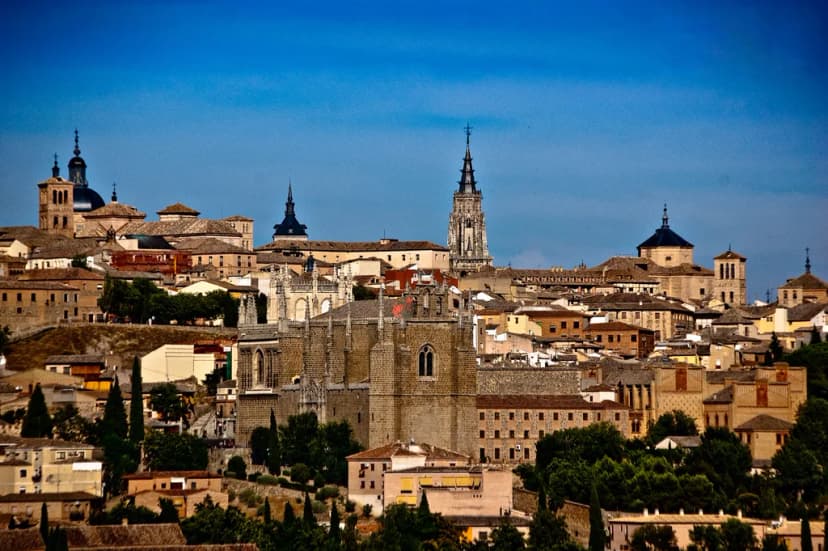

Last updated July 2026. Choosing where to stay in Madrid comes down to one trade-off: proximity to the Prado-Reina Sofía-Thyssen art triangle versus quieter, local streets. This guide compares nine neighborhoods by noise level, walking distance to Puerta del Sol, and trip type, from first visits to family trips and quiet sleep.
Madrid Geography 101: Centro, the Art Triangle, and Gran Vía
Central Madrid radiates outward from Puerta del Sol rather than following a strict grid. The city sits on a flat, open plain with no natural barriers, so it grew in a loose, expanding circle instead of straight blocks. Four streets mark the historic center's rough edges. Most of today's center dates to the Habsburg period in the 16th and 17th centuries, though a few medieval pockets remain. Neighborhoods just outside that core, including Chueca, Chamberí, and Salamanca, are newer, built mostly between the mid-19th and early 20th centuries. The Prado, Reina Sofía, and Thyssen-Bornemisza museums form the Art Triangle along the Paseo del Prado, on the center's eastern side. Gran Vía cuts through the northern half and works as a quick mental axis. Neighborhoods above it, like Malasaña and Chueca, trend younger and louder. Those below it, including Sol, Las Letras, and La Latina, sit closer to the oldest streets. Start with the full Madrid travel guide if your trip length is not settled yet.
- West: Palacio Real and Calle de Bailén.
- North: Calle de Alberto Aguilera, the line between Malasaña and Chamberí.
- East: the edge of Retiro Park.
- South: Ronda de Toledo and Ronda de Atocha.
At a Glance: Best Madrid Neighborhood by Traveler Type
Match your priority to a neighborhood before comparing hotel listings. This table covers the fastest way to narrow down a base.
| Traveler Type | Best Neighborhood | Why |
|---|---|---|
| First-time visitor | Sol & Gran Vía | Closest to Puerta del Sol and Plaza Mayor |
| Foodie | La Latina | Cava Baja tapas route and El Rastro Sunday market |
| Culture and museums | Barrio de las Letras | Walkable bridge to the Art Triangle |
| Nightlife and trendsetters | Malasaña or Chueca | Densest bar and club scene |
| Luxury and shopping | Salamanca | Golden Mile boutiques on calmer streets |
| Families and quiet sleep | Retiro or Chamberí | Residential streets with park access |
| Budget and multicultural | Lavapiés | Lower rates than La Latina or Malasaña |
Madrid Neighborhood Decision Matrix: Noise, Distance, and Local Feel
Noise levels below reflect our editorial assessment, not a measured decibel figure. Distance to center is relative to Puerta del Sol, the city's middle point.
La Latina's medium night noise and Malasaña's high night noise both appear alongside identical €100–€150 rates, so travelers prioritizing sleep should favor the former despite matching prices.
| Neighborhood | Noise at Night | Distance to Center | Local Feel |
|---|---|---|---|
| Sol & Gran Vía | High | Very central | Touristy |
| Barrio de las Letras | Medium | Very central, between Sol and Retiro Park | Historic, mixed local and touristy |
| La Latina | Medium | Central, 15-minute walk to Puerta del Sol | Strongly local |
| Malasaña | High | Central | Trendy, international |
| Chueca | High | Central | Social, nightlife-driven |
| Salamanca | Low | Short metro ride | Upscale, quieter |
| Retiro | Low | Short metro ride | Residential |
| Chamberí | Low | Short metro ride | Residential, local |
| Lavapiés | Medium | Central | Multicultural, edgy |
9 Best Neighborhoods to Stay in Madrid
These nine areas cover the realistic range of trips to Madrid, from a single tourist-heavy night to a quieter week-long stay.
Retiro and Chamberí both offer quiet, but family travelers should know Retiro emphasizes park access and kid-friendly activities, while Chamberí keeps a metro ride under 30 minutes to central sights and attracts longer-staying guests.
- Sol & Gran Vía
- Sol sits at Madrid's literal center, an easy walk to Plaza Mayor and the area covered in our 12 Best Photo Spots in Madrid (2026 Guide) guide.
- Rates run from about €150–€250 at spots like Vincci Capitol up to €300+ at NH Gran Vía, reflecting the location premium.
- Expect street noise into the early hours here; ask for an interior-facing room if you need quiet sleep.
- Barrio de las Letras
- Las Letras is the literary quarter between Sol and Retiro Park, walkable to the Prado, Reina Sofía, and Thyssen-Bornemisza museums covered in our best museums in Madrid guide.
- Hotel Urban sits near €300+ a night, while Catalonia Las Cortes runs closer to €150–€250 for a quieter midrange stay.
- Streets here are calmer than Sol after dark, a fit for travelers who want walkable culture without the loudest nightlife.
- La Latina
- La Latina keeps the most castizo, local feel among these options, with medieval-era streets and a 15-minute walk to Puerta del Sol.
- Hotel Gavinet anchors the budget-to-boutique tier here at roughly €100–€150 a night, and the Cava Baja tapas strip nearby is covered in our 10 Best Restaurants in Madrid: A Local's Guide to Tapas, Tradition & Michelin Stars guide.
- Base here for Sunday mornings at the El Rastro market, but note the streets toward La Latina's southern edge run noticeably hilly.
- Malasaña
- Malasaña is Madrid's alternative, vintage-shopping district, dense with bars and small clubs that run loud into the night.
- Tribu Malasaña represents the budget-to-boutique tier at roughly €100–€150, right in the middle of the nightlife action.
- Check our 9 Best Things to Do in Madrid at Night (2026) guide before booking if you want to walk home instead of taking a taxi.
- Chueca
- Chueca borders Malasaña and is Madrid's LGBTQ+-friendly nightlife hub, with a similar late-night noise profile.
- It shares the after-dark energy covered in our 9 Best Things to Do in Madrid at Night (2026) guide.
- Expect a livelier, more social base than Salamanca or Chamberí, with fewer quiet-street options.
- Salamanca
- Salamanca is the Golden Mile: elegant, safe, and built around the upscale Shopping in Madrid: A Neighborhood Guide for 2026 corridor.
- Rates typically sit above the €150–€250 midrange band found in Sol or Las Letras, reflecting the address.
- It is the quietest of the central options after dark, though it is a longer walk to the Royal Palace than staying in Sol or La Latina.
- Retiro
- Retiro borders Retiro Park and trades nightlife for residential quiet, a fit for families and light sleepers.
- Mornings work well here for 10 Free Things to Do in Madrid in 2026, since the park itself costs nothing to enter.
- It suits Madrid with Kids: A Family Travel Guide for 2026 trips especially well, given the open space and calmer streets.
- Chamberí
- Chamberí is the other quiet, residential pick, sitting north of the Centro core and popular with longer-staying locals.
- It has fewer landmark hotels than Sol or Las Letras, so expect standard city rates rather than the tightly clustered luxury tier.
- Use it as a base for distance from nightlife noise while keeping a metro ride under 30 minutes to central sights.
- Lavapiés
- Lavapiés is Madrid's multicultural, budget-friendly neighborhood, with lower rates than La Latina or Malasaña.
- Streets here run edgier and less polished, with some noticeably hilly stretches similar to nearby La Latina.
- It rewards travelers chasing the same low-key discovery covered in our Hidden Gems in Madrid: 2026 Travel Guide guide.
Getting Around: Metro, Airport, and Booking Timing
Every neighborhood in this guide connects to the others by metro in about 30 minutes, so proximity to a metro stop matters more than proximity to any single landmark. For Barajas Airport (MAD), check the current Metro de Madrid map for the fastest line from your neighborhood, since routes and interchanges get adjusted from time to time. Atocha Station is the hub for Renfe Cercanías trains and works well as a base for Best Day Trips From Madrid: 2026 Guide. Prices climb around Spanish puente long weekends, so book earlier for those dates. Check the best time to visit Madrid before you lock in specific dates.
- One night: pair Sol & Gran Vía with our One Day in Madrid Itinerary: 2026 First-Timer Guide.
- Two nights: La Latina or Las Letras suit our 2 Days in Madrid Itinerary: First-Timer Plan 2026.
- Three or more nights: use our 3 Days in Madrid Itinerary: First-Timer Plan 2026 and consider a quieter base like Chamberí.
- Still deciding on length? Start with How Many Days in Madrid? A 2026 Guide by Traveler Type.
Mistakes to Avoid When Choosing a Madrid Hotel
A few recurring booking mistakes cost travelers both sleep and walking time in Madrid.
- Booking a hotel more than a short walk from any metro stop, which erases the 30-minute citywide connection this guide relies on.
- Underestimating street noise in Sol or Malasaña; ask specifically for an interior-facing or soundproofed room in either area.
- Choosing Salamanca for its Golden Mile shopping while planning daily walks to the Royal Palace, a considerably longer walk than from Sol or La Latina.
- Ignoring elevation in La Latina or Lavapiés if mobility is a concern, since both neighborhoods have noticeably hilly stretches.
- Skipping a rainy-day backup plan; check Madrid on a Rainy Day: Indoor Travel Guide before finalizing a walkable itinerary around your hotel.
Best Neighborhoods for Airport and Atocha Connections
Madrid has no single neighborhood with a direct ride to every airport terminal and major attraction. Choose a hotel near a useful station and expect at least one transfer from most central areas.
- Sol and Gran Vía: Sol serves Metro lines 1, 2, and 3, plus Cercanías trains. Gran Vía station serves lines 1 and 5.
- Malasaña and Chueca: Tribunal serves lines 1 and 10, while Chueca station is on line 5. Both require transfers for Barajas Airport.
- Salamanca: Stations such as Goya and Núñez de Balboa provide useful east-west links. Airport trips usually involve a transfer to line 8.
- Las Letras, Lavapiés, and Retiro: These areas offer the easiest access to Madrid-Puerta de Atocha-Almudena Grandes station. They suit travelers taking high-speed or regional trains.
Metro line 8 serves airport stations at Terminals 1–2–3 and Terminal 4. Cercanías trains also connect Terminal 4 with central rail hubs. Travelers arriving elsewhere must use the airport shuttle between terminals before boarding Cercanías.
Frequently Asked Questions
Which neighborhood is best for first-time visitors to Madrid?
Sol & Gran Vía puts you within walking distance of Plaza Mayor and Puerta del Sol. Expect more street noise and higher rates than in quieter areas. It works best for stays of one or two nights.
Where should foodies stay in Madrid?
La Latina is the strongest base for tapas culture, especially along the Cava Baja strip. It sits about a 15-minute walk from Puerta del Sol. Weekend mornings add access to the El Rastro market nearby.
Is Malasaña or Chueca better for nightlife?
Both sit above Gran Vía and share a similar late-night noise profile. Malasaña leans more alternative and vintage-focused. Chueca is Madrid's LGBTQ+-friendly nightlife hub. Check our guide to 9 Best Things to Do in Madrid at Night (2026) before choosing between them.
Should you stay near the Art Triangle if you plan to use a Madrid discount pass?
Barrio de las Letras is the most walkable base for the Art Triangle museums. If you are weighing a multi-attraction pass, read Is the Madrid Pass Worth It? A 2026 Review before booking tickets separately.
Which Madrid neighborhood has the best views or sunset spots?
Gran Vía and Sol both keep you close to central viewpoints. See our 10 Best Viewpoints in Madrid (2026) guide for specific spots. For evening light, check Where to Watch Sunset in Madrid: Best Spots.
What is the biggest mistake to avoid when picking a Madrid hotel?
The most common mistake is booking too far from a metro stop. Every neighborhood in this guide connects within about 30 minutes by metro, so proximity to transit matters more than proximity to any single landmark.