
Madrid rewards photographers who chase light more than they chase checklists. Its wide boulevards, walled gardens, and stone facades shift character completely between sunrise and blue hour. This guide breaks the city into named spots with practical shooting notes, not vague scenery praise.
Every entry below includes typical hours, entry costs where they apply, and the specific window that produces the best shot. The rooftop terrace at Círculo de Bellas Artes charges roughly 5 to 8 euros and opens through the evening in 2026. Costs and hours shift with season and staffing, so confirm details on the official site before a special trip. For the fuller rundown of what else the city offers, the Madrid attractions guide covers sights beyond photography.
This guide was refreshed for 2026 to reflect current entry fees, seasonal daylight patterns, and a couple of access changes at popular squares. Expect a mix of free public spaces and a handful of paid terraces, plus timing notes for each.
12 Best Photo Spots in Madrid, Grouped by Vibe
The picks below split into four groups: iconic landmarks, rooftop and skyline views, parks and green escapes, and neighborhood or indoor finds. Grouping by vibe makes it easier to build a route instead of zigzagging across the city for one shot at a time. Several rooftops pair well with the best viewpoints in Madrid for travelers who want elevation beyond street level.
Crowd timing matters more than gear at almost every stop on this list. Arriving 30 to 60 minutes before a location's typical peak usually clears enough foot traffic for a clean composition. Weekday mornings consistently outperform weekend afternoons across every square and park included here.
Arrive at sunrise (7am to 8am depending on season) for Plaza Mayor, Puerta del Sol, and Palacio Real. These central squares fill with tour groups and shoppers within an hour of opening, so early arrival is the only real way to dodge crowds.
Some spots, like the rooftop terraces, charge a small entry fee, while several of the most photogenic corners cost nothing. La Latina's Cava Baja rewards slower exploration, and the hidden gems in Madrid guide covers more streets like it. Pack comfortable shoes, since cobblestone streets connect most locations on foot.
- Plaza Mayor at Sunrise
- This 17th-century arcaded square sits in the old city center and anchors most Madrid photo routes.
- It fills with vendors and crowds by mid-morning, so the square is genuinely quiet only right after sunrise.
- Shooting from one of the arched entrances toward the center captures the symmetry that makes the plaza distinctive.
- Metro Sol or Opera both sit within a five-minute walk of the square's main entrances.
- Palacio Real and Catedral de la Almudena
- The Royal Palace ranks among the largest working royal residences in Europe, facing the cathedral nearby.
- Interior tickets run roughly 13 to 15 euros, though the courtyard and exterior views are free to photograph.
- Late afternoon light warms the stone facade and softens the shadows across the plaza's open pavement.
- Sabatini Gardens sit directly behind the palace and add a free, symmetrical foreground for skyline shots.
- Puerta del Sol and El Oso y el Madroño
- Puerta del Sol marks Spain's symbolic center and holds the small bronze bear and strawberry tree statue.
- The square stays busy from mid-morning on, making early arrival the only real way to dodge crowds.
- Shooting the statue slightly from the side, rather than straight on, adds depth a head-on angle misses.
- Several metro lines converge here, so it works well as a start or end point for a route.
- Plaza de España and the Cervantes Monument
- This square holds a monument to Cervantes with statues of Don Quixote and Sancho Panza at its base.
- It sits at the western end of Gran Vía, near the Royal Palace and Templo de Debod.
- Morning light works best here, before tour groups and office crowds pass through at midday.
- The reflecting pool in front adds a mirrored layer to wider shots when the water sits calm.
- Círculo de Bellas Artes Rooftop
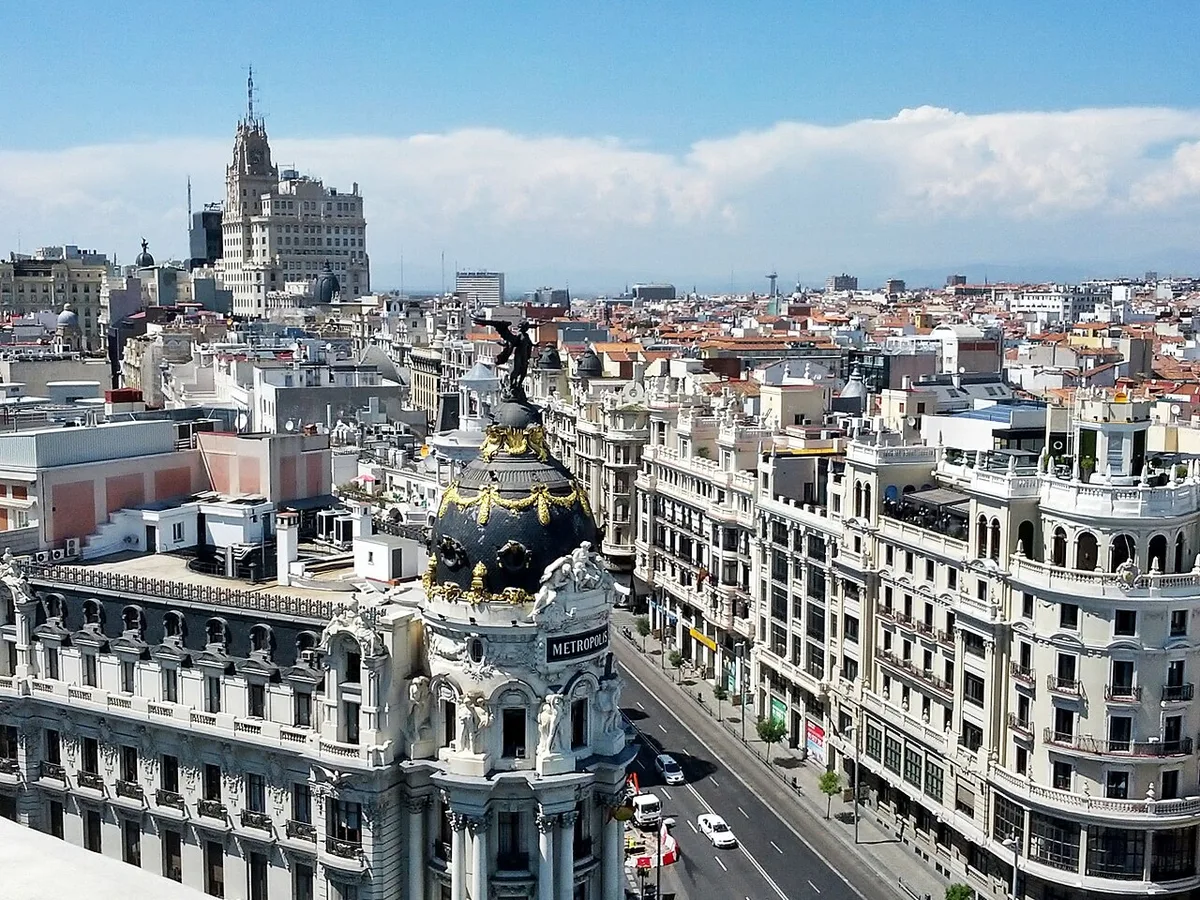
- This cultural center's rooftop terrace, La Azotea, delivers a sweeping view straight down Gran Vía.
- Entry runs roughly 5 to 8 euros, and the terrace typically stays open into the evening for drinks.
- Arriving shortly before sunset lets the golden light hit the rooftops before the city lights take over.
- It gets busy on weekend evenings, so a weekday visit usually means more room to shoot without waiting.
- Riu Plaza España Rooftop
- This hotel's rooftop bar offers a 360-degree skyline view and a glass walkway suspended above the street below.
- Access is generally limited to guests or paying visitors, so check current entry terms before planning around it.
- Earlier visits mean calmer shots, while sunset brings a livelier crowd and warmer light across the skyline.
- The glass floor section makes for a distinctive foreground element that few other Madrid rooftops offer.
- El Corte Inglés Gourmet Experience Terrace
- This department store's top-floor terrace in Callao gives a free elevated view over Gran Vía.
- No entry fee applies, only the cost of a coffee or snack if you choose to sit down.
- It ranks among the most accessible viewpoints in the city, with no reservation or ticket required.
- It fits neatly into a broader no-cost photo day, alongside other free stops around the center.
- El Retiro Park and Palacio de Cristal
- El Retiro forms part of Madrid's UNESCO-listed Paseo del Prado and Retiro landscape, alongside the Prado Museum area.
- The glass-and-iron Palacio de Cristal reflects in its pond and often hosts free contemporary art exhibitions.
- Entry to the park is free, and early morning offers still water and thinner crowds around the pavilion.
- Rowboats on the park's main lake add movement to wider shots taken from the Alfonso XII monument.
- Templo de Debod at Sunset
- This relocated ancient Egyptian temple sits inside Parque de la Montana, a short walk from Plaza de España.
- Sunset turns the sky behind it pink and orange, and the shallow pool can add reflections after rain.
- Entry to the surrounding park is free, though interior temple visits follow separate limited hours.
- This is consistently one of the city's most crowded sunset spots, so arrive at least 30 minutes early.
- Casa de Campo Viewpoints
- This large park west of the city center offers elevated views back toward the Royal Palace and skyline.
- It costs nothing to enter, and a cable car from Parque del Oeste offers an aerial approach.
- Sunset here feels calmer and more spread out than the rooftop terraces closer to the center.
- Bring water and sun protection, since shaded rest points are limited on the open hillside trails.
- Calle de Cava Baja in La Latina
- This narrow, cobblestoned street runs through La Latina and lines up traditional tapas bars behind colorful facades.
- Late afternoon sunlight hits the buildings at a low angle, warming the stone and brick along the street.
- It stays quieter on weekday afternoons, before the neighborhood's dinner and tapas crowd arrives after 8pm.
- No entry cost applies, since the appeal here is street-level architecture rather than a ticketed site.
- Atocha Station Tropical Garden
- Madrid's main train station holds an indoor tropical garden under a preserved 19th-century iron-and-glass roof.
- Free to enter and open during station hours, it works well as a backup plan on rainy days.
- Shooting upward from a low angle captures the palm canopy against the historic ceiling structure.
- Mid-morning light filtering through the glass roof gives the greenery a soft, even glow.
Is Madrid Worth a Dedicated Photography Trip?
Madrid earns its place on a photography itinerary through variety rather than a single postcard shot. Baroque squares, an Egyptian temple, glass-roofed train sheds, and contemporary rooftops sit within a compact, walkable core. Consistent daylight through much of the year also means fewer washed-out or overcast trips compared to northern Europe.
The city center is dense enough that most spots on this list connect by a 20 to 40 minute walk. That density lets a single day cover several themes: grand architecture, green space, and neighborhood texture. Photographers on a tight schedule can prioritize two or three spots rather than rushing all twelve.
Photography also pairs naturally with Madrid's food culture, since many of the best shooting streets double as tapas routes. A guided walking food tour of Madrid covers several of the same La Latina streets between courses. Booking one for an evening leaves mornings free for the quieter, better-lit version of the same neighborhood.
Best Time of Day for Photos at Each Spot
Sunrise, roughly 7am to 8am depending on season, works best for Plaza Mayor, Puerta del Sol, and Palacio Real. These central squares fill with tour groups and shoppers within an hour of opening, so early arrival matters most here. Midday sun can flatten detail on stone facades, making it the weakest window for architecture-focused shots.
Golden hour, roughly the final hour before sunset, suits El Retiro Park, Sabatini Gardens, and Casa de Campo. Warm light at a low angle brings out texture in stone paths and adds depth to the park's tree cover. For sunset specifically, the best sunset spots in Madrid guide covers timing beyond just Templo de Debod.
Blue hour, just after sunset, is when Gran Vía and the rooftop terraces come alive with city lighting. Building lights switch on gradually over 20 to 30 minutes, giving a window for several exposures at different brightness levels. Rainy or overcast mornings suit indoor spots best, since diffused light through glass roofs stays even all day. The free free things to do in Madrid guide lists several no-cost indoor backups for that kind of weather.
What to Skip: Overrated Photo Spots in Madrid
El Rastro's Sunday flea market shows up often on Madrid photo lists, but it underdelivers for most photographers. Narrow aisles packed with stalls and shoppers leave little room for clean composition or a steady tripod stance. It suits candid street photography for those comfortable working fast in a crowd, but it is not a relaxed shoot.
Malasaña's street art is genuinely colorful, but it is scattered across many small streets rather than concentrated in one corner. Visitors chasing a single standout mural often spend an hour wandering for a result that a curated list oversells. It works better as a slow, unplanned wander on a second or third day than as a scheduled photo stop.
Neither spot is a waste of time on foot, but both underperform against the twelve picks above for a focused photo day. Save El Rastro for a Sunday visit built around browsing, not shooting, and treat Malasaña as a bonus stop after dark. Prioritizing the named locations in the main list produces a stronger set of images with far less wasted walking.
How to Plan a Smooth Photo Day in Madrid
Madrid's metro connects nearly every spot on this list, so a day pass covers transport between clusters efficiently. Grouping the central squares in one morning and the parks or rooftops in one evening cuts down on backtracking. A rough route from Sol to Plaza Mayor to the Royal Palace to Debod covers the western half in under a day.
Rain changes the plan quickly, so keep Atocha Station's tropical garden and other covered spots as a backup. The rainy day in Madrid guide lists more indoor options if the forecast turns. Light rain shortly before sunset can even help, since wet pavement adds reflections around Templo de Debod.
Tripods and larger camera bags sometimes require permits or face restrictions in parks and around some monuments. Rules shift periodically, so confirm current tripod and permit policy on the relevant city or site page before a trip built around one. A compact tripod or monopod draws far less attention from staff than full-size gear in busy squares.
Some parks and monuments may require permits for tripods or full-size camera gear. Check current signage or the relevant site page before planning a shoot around equipment. A compact tripod or monopod is less likely to draw attention from staff.
Several rooftop terraces and museum interiors charge separate entry fees that add up across a single day. Travelers visiting multiple paid sights should compare costs against the Madrid Pass before buying individual tickets. Comparing that cost upfront avoids paying full price at each door along the route.
For overnight stays near the historic center, top hotels in Madrid cluster within walking distance of Sol and Plaza Mayor. Staying central cuts the morning commute to sunrise spots down to a short walk instead of a metro ride.
Frequently Asked Questions
What is the most Instagrammable place in Madrid?
Gran Vía, especially the Metropolis Building at Calle de Alcala, is the most photographed spot in Madrid. Templo de Debod is the top pick for sunset drama, and Riu Plaza España offers the widest rooftop skyline view. The best choice depends on the mood you want.
What is the best time of day to take photos in Madrid?
Sunrise works best for busy squares like Plaza Mayor and Puerta del Sol, before crowds arrive. Golden hour suits parks and palace exteriors, while blue hour brings out Gran Vía and rooftop city lights. Midday sun is the weakest window for most shots.
Do parks in Madrid allow tripods for photography?
Casual tripod use is generally tolerated in most parks, but rules can shift and larger setups sometimes need a permit. Always check current signage or the relevant park website before planning a shoot around one. A compact tripod draws less attention than full-size gear.
How many days do you need for a Madrid photography trip?
Two full days cover the highlights on this list comfortably, splitting central squares from parks and rooftops. One focused day works if you prioritize three or four spots instead of all twelve. Add a third day for neighborhoods like La Latina and Malasaña.
Madrid's best photos come from timing as much as location, since the same square can look flat or dramatic within an hour. Sunrise squares, golden-hour parks, and blue-hour rooftops each reward a different part of the day. Building a route around light, rather than convenience, produces noticeably stronger results across all twelve spots.
Start with two or three priorities, confirm current hours and prices before heading out, and leave room for a rainy-day backup. The rest of the list travels well across a second visit once the essentials are covered.