
Paris rewards photographers who plan around light and crowds instead of chasing every landmark at once. This guide narrows the best photo spots in Paris down to ten named locations worth the walk. Editors behind this guide checked each spot against typical crowd patterns and current 2026 access rules.
Climbing the Arc de Triomphe costs about €16 for an adult ticket in 2026, per the monument's official rate. The terrace stays open daily from 10am to 10:30pm outside the summer peak, with last entry 45 minutes before close. That kind of timing detail runs through every entry on this list, not just the headline stops.
This roundup was refreshed for the 2026 season, with hours and ticket ranges checked against official sources. For the wider set of landmarks nearby, the Paris attractions guide covers the full sightseeing list.
Planning a Paris Photography Walk
A useful photo walk starts with a plan for light, not just a list of names. Morning haze off the Seine and late golden hour both flatter the city's pale stone facades. Midday sun flattens most wide shots and pushes crowds onto the same handful of viewpoints.
Off-the-beaten-path corners reward anyone willing to wander past the headline monuments for a few blocks. The hidden gems in Paris guide lists quiet streets that pair well with a longer shoot. Mixing one of those into the route below keeps the day from feeling like a checklist.
A tripod works at most spots on this list, though a few sites restrict them without a permit. Museums and paid monuments often ban flash and selfie sticks.
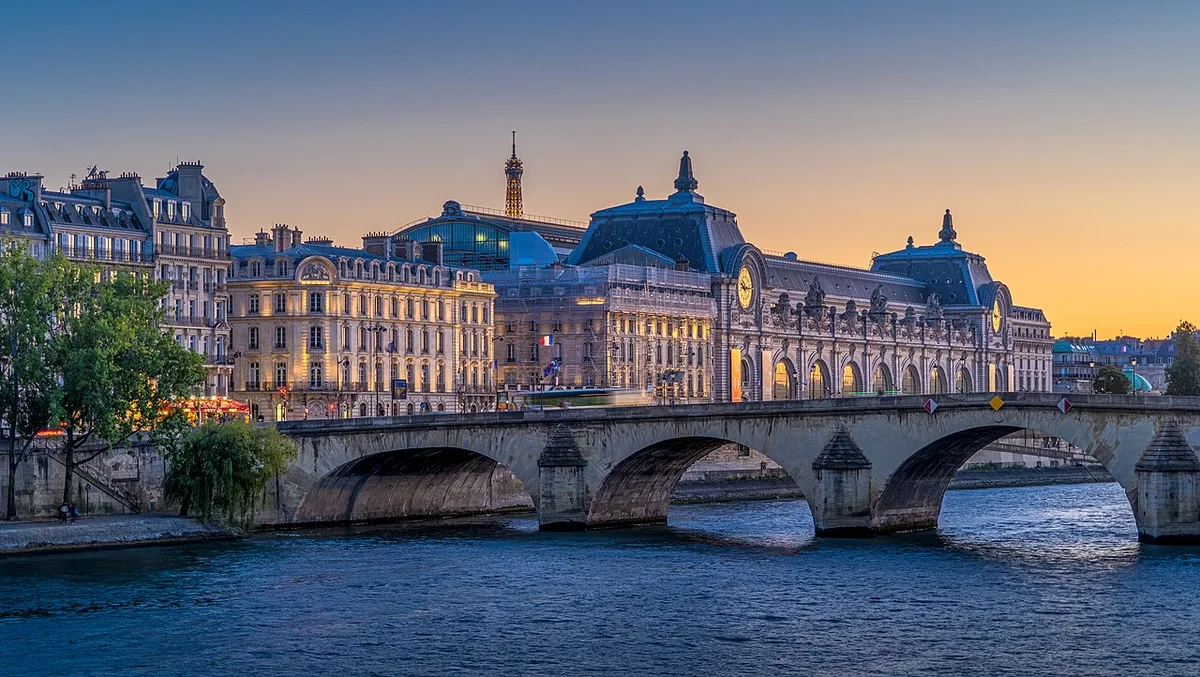
Left Bank streets near the Musée d'Orsay hold some of the city's least-photographed architecture. The stretch around Rue de l'Université shows mansard roofs with barely a tour group in frame.
A tripod works at most spots on this list, though a few sites restrict them without a permit. Museums and paid monuments often ban flash and selfie sticks, so check the rules before arriving. A light zoom lens covers wide street scenes and tighter architectural details from one bag.
10 Best Photo Spots in Paris
The ten spots below mix icons, quiet viewpoints, and names most first-time visitors skip. Several also show up on the best viewpoints in Paris guide, which covers sunset timing in more depth. Each entry lists roughly what it costs, when it opens, and one practical tip.
Icons like the Eiffel Tower and Notre-Dame anchor the list, since no photo trip skips them entirely. Alongside them sit a market, a metro entrance, and a garden that rarely make a rushed itinerary. That mix covers a full day of shooting without repeating the same type of frame twice.
Order below runs roughly west to east across the city, easing transit between stops. Splitting the list across two mornings works better than covering all ten in a single day. Weather changes the priority list fast, so keep an indoor backup like the Louvre courtyard in reserve.
- Eiffel Tower from the Trocadéro Esplanade
- This wide plaza across the Seine frames the full tower against open sky.
- The esplanade is free and open all day, and tower tickets run about €19 to €35 in 2026.
- Crowds pack the railing by 9am on weekends, so an earlier start pays off.
- The Trocadéro Métro station sits right at the esplanade, and most visitors spend 20 to 30 minutes here.
- Notre-Dame Cathedral along the Seine quays
- The cathedral reopened its restored interior in December 2024 after the 2019 fire.
- General entry stays free, and doors typically open daily from 8am to 6:45pm.
- A timed slot booked online avoids the longest queue at the main entrance.
- The closest stop is Cité or Saint-Michel, and a quick photo stop takes about 20 minutes.
- Arc de Triomphe rooftop terrace
- Twelve avenues radiate from this traffic circle, a pattern only visible from the roof.
- The terrace opens daily, with adult tickets running about €16 in 2026.
- Sunset draws the thickest crowd, so a midweek morning slot cuts the wait.
- Charles de Gaulle–Étoile Métro station sits right at the base, and the climb takes about 30 minutes.
- Louvre Pyramid courtyard at the Cour Napoléon
- The glass pyramid sits inside a stone courtyard, good for wide shots and reflections.
- Viewing the courtyard is free, while full museum entry runs about €22 in 2026.
- The museum closes on Tuesdays, and morning light around 9am avoids most daytime glare.
- Palais-Royal–Musée du Louvre Métro station opens right onto the courtyard, and a quick shoot takes 20 minutes.
- Montmartre's Rue de l'Abreuvoir and Sacré-Cœur steps
- This narrow lane holds the pink Maison Rose café a few streets from the main square.
- Walking the district costs nothing, and the basilica keeps free general entry.
- The steps below the basilica fill with street performers and tour groups by late morning.
- Abbesses or Anvers Métro stations sit closest, and a slow wander through the lane takes about 45 minutes.
- Jardin du Luxembourg fountains and chairs
- The octagonal basin near the palace draws students, chess players, and toy sailboats.
- Entry is free, with gates open roughly 7:30am to dusk depending on the season.
- Weekday mornings feel far calmer than weekend afternoons, when local families fill the lawns.
- RER B stops right at Luxembourg station, and most photographers linger 30 to 45 minutes near the basin.
- Place Vendôme's arcaded square
- Jewelry houses and a central column give this octagonal square a formal layout.
- The square sits a short walk from the Tuileries and stays open at all hours.
- Even light under the arcades works well on overcast days, when direct sun gets harsh.
- Tuileries or Opéra Métro stations are both a short walk away, and 15 minutes covers the square.
- Marché aux Fleurs Reine Elisabeth II
- This flower market on the Île de la Cité has traded blooms since 1808.
- Browsing the stalls costs nothing, and vendors rarely mind a quick photo of the displays.
- A bird market joins the flower stalls on Sundays, drawing a different crowd.
- Cité Métro station sits directly beside the market, and a slow browse rarely takes more than 20 minutes.
- Pont Alexandre III at golden hour
- Gilded statues and Art Nouveau lamps line this bridge, built for the 1900 World's Fair.
- Crossing the bridge is free and open 24 hours, with no ticket needed.
- Lamps switch on around dusk, adding a warm glow that outlasts the last daylight.
- Invalides or Champs-Élysées–Clemenceau Métro stations sit closest, and crossing slowly for photos takes about 20 minutes.
- Abbesses Métro station's Art Nouveau entrance
- One of the few surviving Hector Guimard glass canopies covers this station entrance.
- Reaching it costs a standard metro fare, about €2.15 for a single ticket in 2026.
- Most Paris photo guides skip this stop, which keeps it far quieter than the basilica above.
- Line 12 stops directly here, and a quick photo of the canopy takes barely five minutes.
When Is the Best Time to Shoot Paris?
Golden hour in Paris runs roughly 45 minutes after sunrise and before sunset, shifting with the season. Full seasonal timing for each viewpoint sits in the where to watch sunset in Paris guide. Winter light stays low and warm for most of the afternoon, which suits street scenes too.
Weekday mornings beat weekend afternoons at nearly every spot on this list, from Trocadéro to Montmartre. School holidays and major French public holidays add noticeably thicker crowds at the paid monuments. Rain rarely ruins a Paris photo trip, since wet cobblestones make their own kind of shot.
Weekday mornings offer far fewer crowds than weekend afternoons at nearly every spot on this list, making them ideal for cleaner shots.
Not every famous name earns its reputation, and two spots deserve a lowered expectation. Pont des Arts still gets listed as a love-lock bridge, though the city removed the padlocks in 2015. Rue Crémieux, the pastel row near Gare de Lyon, now restricts weekend photography after noise complaints.
Plenty of free things to do in Paris double as strong photo stops, which keeps a shooting day on budget. Building a route around free spots, like Trocadéro esplanade and Pont Alexandre III, cuts costs without cutting frames. Save ticketed climbs like the Arc de Triomphe for the one or two views that need the height.
How Many Days Do You Need for a Paris Photo Trip?
Two focused mornings cover most of this list without rushing between stops or fighting midday crowds. A single dedicated day works if the goal is five or six spots rather than the full ten. Spreading shoots across a longer trip leaves room to wait out a cloudy sunset and try again.
Pairing photo stops with sightseeing keeps a short trip efficient rather than splitting the day in two. Landmarks already on most itineraries, like the Louvre and the Arc de Triomphe, need no extra routing. Markets and side streets fit best in gaps between bigger stops, not as separate outings.
On a rainy afternoon, the Louvre Pyramid courtyard makes a strong indoor-adjacent stop. The Paris on a rainy day guide lists more covered options nearby.
Covered arcades near Place Vendôme also hold up well under light rain. Public transit connects nearly every spot on this list, so a rental car adds cost without saving time. A carnet of metro tickets or a Navigo Easy card covers the whole route for a few euros a ride. Comfortable shoes matter more than any lens choice, since most of these shots reward slow walking.
Frequently Asked Questions
How much time should a Paris photo walk take?
Budget one focused morning for five or six stops, or two mornings for the full list of ten. Add extra time near sunset spots, since good light windows there run short. A rushed schedule tends to produce weaker, hurried frames overall.
Which Paris photo spots suit first-time visitors best?
Trocadéro, Notre-Dame, and the Arc de Triomphe rooftop cover the classic skyline shots most first-timers want. All three sit within a short metro ride of central Paris. Pairing them with a market or side street adds variety without extra travel.
What should photographers avoid when shooting in Paris?
Skip Pont des Arts if the goal is love-lock photos, since the city removed them years ago. Midday light at open squares like Trocadéro washes out most wide shots. Arriving after 9am at popular spots usually means shooting around a crowd.
Is a dedicated photo walk worth it on a short Paris trip?
Yes, if the route pairs photo stops with sights already on the itinerary rather than adding a separate day. The one-day Paris itinerary shows how to slot two or three photo stops around major sights. A tight two-hour loop still covers three or four strong locations.
The best photo spots in Paris rarely fit into a single rushed lap around the main landmarks. Pairing icons like the Eiffel Tower with quieter picks, such as the flower market, rounds out a stronger set of frames. Timing matters as much as location, since the same square can look flat at noon and striking at dusk.
Start with two or three spots that match the light and season, then build the rest of the walk around them. Paris keeps rewarding photographers who slow down, whichever ten stops make the final list.