
Lisbon spreads across seven hills, and most of its best views cost nothing to reach. The Museu do Dinheiro, the city's free money museum, is open Tuesday to Sunday from 10am to 6pm with no admission fee. That single fact surprises a lot of first-time visitors who assume every indoor stop in the city needs a ticket.
This guide groups the strongest no-cost options into one practical list, sorted by neighborhood rather than hype. It was refreshed for the 2026 travel season, with current hours, transit routes, and one honest section on what to skip.
Several entries below rarely make the standard "top things to do" roundups, including a free viewing platform tucked behind a ruined convent. Others are the same miradouros and markets every guide mentions, just with sharper timing advice.
The 11 Best Free Things to Do in Lisbon
The list below mixes iconic viewpoints, a free museum, working markets, and a couple of self-guided experiences. Each entry notes the neighborhood, typical hours, and how to reach it without a car. None of these charge an entry fee, though a few sit next to paid attractions worth knowing about. The Money Museum entry links out to more background on the exhibit for anyone who wants extra reading before visiting.
Alfama and Baixa cover most of the walkable core, so pairing two or three nearby stops into one loop saves time. For more sunset-friendly viewpoints beyond the pick below, the guide to where to watch sunset in Lisbon rounds up rooftop and hillside options. Belem sits further out and works best as its own half-day outing rather than a rushed add-on.
Street performers, small local markets, and pop-up stalls shift by season, so treat exact days as a starting point. Where hours or prices change often, there is a note to confirm details on the official site before heading out.
Booking the free two-hour walking tour a day ahead locks in a morning slot before the busiest departures fill up. That single booking step covers the walking tour entry further down this list.
- Miradouro de Santa Luzia and Portas do Sol
- This pair of Alfama viewpoints delivers red-roof, river, and castle views without a ticket booth in sight.
- The terrace stays open around the clock, with no entry gate or closing time to plan around.
- Tour groups tend to arrive by mid-morning, so an early visit means a quieter railing to lean on.
- Reach it on tram 28 or with a steady twelve-minute climb from Se Cathedral.
- Free walking tour of Alfama
- Guides from companies like Sandemans and Civitatis lead tip-based tours through Lisbon's oldest district most days.
- Typical departures run around 10:30am and 2pm, covering roughly two and a half to three hours.
- There is no fixed ticket price, though a tip of five to ten euros is the local norm.
- Reserve a spot online a day ahead, since free slots fill faster than paid ones in summer.
- Museu do Dinheiro, Lisbon's Money Museum
- Housed inside a former church near Praca do Comercio, this Bank of Portugal museum offers free entry year-round.
- It typically opens Tuesday through Sunday, roughly 10am to 6pm, and stays closed on Mondays.
- The standout feature is a stretch of the medieval D. Dinis city wall, preserved beneath the exhibition floor.
- It is a solid rainy-day pick, just a five-minute walk from the Terreiro do Paco metro stop.
- LX Factory creative complex
- A former industrial site under the 25 de Abril bridge now holds studios, galleries, and a well-known bookstore.
- Wandering the complex costs nothing, though the cafes and shops inside charge their own prices.
- A Sunday flea market adds extra stalls worth timing a visit around if browsing matters to you.
- Trains from Cais do Sodre reach the nearby Alcantara-Mar stop in about five minutes.
- Jardim da Estrela gardens
- This shaded park near the Basilica da Estrela offers a small lake, benches, and a genuinely local pace.
- Gates generally stay open from around 7am until 9pm in summer, and earlier once days shorten.
- Families gather here more than tourists do, making it a good midday reset between busier sights.
- Tram 25 stops right outside, or it is a flat fifteen-minute walk from Principe Real.
- Rossio Square and Praca do Comercio
- Rossio was renamed Pedro IV Square in 1874, though most residents still use its older name.
- Both squares stay open at all hours and cost nothing to sit in, photograph, or pass through.
- The wave-patterned cobblestones underfoot are a small detail most visitors walk straight over.
- Connect the two on foot in about ten minutes down Rua Augusta, Lisbon's main pedestrian street.
- Feira da Ladra flea market
- This long-running market fills Campo de Santa Clara every Tuesday and Saturday with secondhand goods and crafts.
- Stalls generally run from around 9am to 6pm, though earlier sellers tend to pack up first.
- Browsing is free, and haggling over a small purchase is expected rather than awkward here.
- Tram 28 stops at Voz do Operario, a short walk from the market's edge.
- Self-guided street art hunt
- Lisbon's city council formally licenses murals, so the collection changes year to year rather than staying fixed.
- Bairro Alto, Amoreiras, and the Marvila district all hold dense clusters of large-scale pieces.
- A loop covering two or three neighborhoods usually takes about ninety minutes on foot.
- Start at Praca Luis de Camoes and follow the side streets downhill toward Cais do Sodre.
- TimeOut Market Lisboa food hall
- Opened in 2014, this converted market hall mixes a produce market with stalls from well-known local chefs.
- Walking through and browsing the stalls is free, though food and drink are priced individually.
- It typically runs from mid-morning until late, with exact closing times posted on the official site.
- Arrive before noon to browse without a queue, and use the upstairs restroom to avoid lines.
- Belem Tower and Jeronimos Monastery waterfront walk
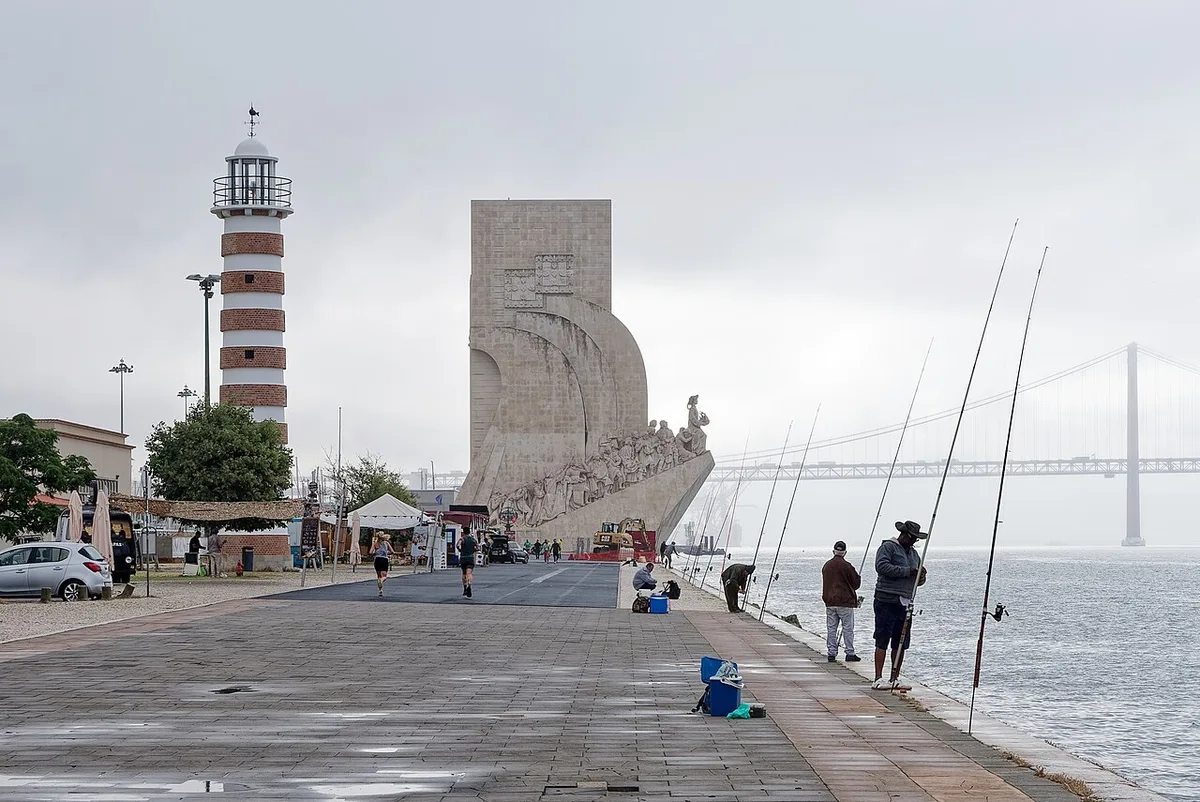
- Belem Tower, Jeronimos Monastery, and the Padrao dos Descobrimentos monument sit within a fifteen-minute walk of each other.
- Viewing all three from outside costs nothing, though stepping inside the tower or monastery needs a paid ticket.
- Budget around two hours to cover the full riverside stretch at a relaxed pace.
- Take tram 15 from Praca da Figueira, or ride the train from Cais do Sodre to Belem station.
- Free Santa Justa viewing platform
- Most visitors queue and pay around 5.50 euros to ride the Santa Justa Elevator to its rooftop platform.
- A walkway behind the Convento do Carmo ruins reaches that very same platform without any ticket at all.
- The view over Baixa's rooftops and Castelo de Sao Jorge matches what paying riders see from the elevator.
- Follow signs toward Carmo Convent, then cross the small bridge instead of walking to the elevator's base.
What to Skip: Two Overrated "Free" Traps
Not everything marketed as a free Lisbon experience actually is one, and two overrated picks deserve a closer look. Riding tram 28 tops the list, since a single fare costs the same as any other city tram and is not free at all. Carriages get packed by mid-morning, and the route is a known spot for pickpockets during peak hours.
Tram 28 is not free and charges a standard transit fare. It gets crowded by mid-morning and is a known pickpocket target during peak hours — walking the same route covers similar views at no cost.
Walking the same route on foot, from Graca down through Alfama, covers nearly identical scenery at no cost and on your own schedule. "Free" fado dinner shows are the second trap, often advertised with no cover charge that turns into an inflated food and drink bill. A small, clearly priced cover charge at a neighborhood fado bar is usually the more honest option.
None of this means skip Alfama or skip fado altogether, since both are worth experiencing the right way. It just means picking the self-guided walk over the tram, and a transparent venue over a vague "free" promise.
How Many Days Do You Need for Free Sightseeing?
Two full days cover the free highlights above at a comfortable pace, without feeling rushed between neighborhoods. Day one works well for Alfama, its miradouros, and a walking tour, since those sit close together. Day two suits Baixa, Belem, and the LX Factory, which are more spread out and need transit between stops.
Tour groups tend to arrive by mid-morning, especially at popular miradouros. Visiting before 10am means quieter railings, less crowded photos, and a more authentic experience of Lisbon's viewpoints.
Travelers with only one day should anchor around Alfama and Baixa, skipping the Belem waterfront to avoid rushing. A single-day plan built around that pace is mapped out in the one-day Lisbon itinerary for anyone working with tighter time.
Those with more room to spare can spread the same stops over two calmer mornings and afternoons instead. The two-day Lisbon itinerary lays out a paced version of that same route, hour by hour.
Visitors staying three days or longer often add a paid day trip once the free-city list is done. The guide to day trips from Lisbon covers Sintra, Cascais, and other options within easy reach by train. Pace matters more than the total number of stops, especially with Lisbon's steep hills factored in.
How to Stretch a Free Lisbon Itinerary Further
A handful of state museums in Portugal, including some in Lisbon, waive admission on the first Sunday of the month until 2pm. That window turns an otherwise paid stop into a free one, though it also draws the largest crowds of the month. Check each museum's own site before planning a trip around this, since the schedule shifts periodically.
Anyone weighing a paid sightseeing pass alongside these free stops should compare the math first. The guide to whether the Lisbon Pass is worth it breaks down which paid attractions actually justify the cost for a typical stay.
For quieter alternatives to the busiest free spots on this list, fewer crowds are usually just a short walk away. The hidden gems in Lisbon guide covers less crowded options that sit close to the stops above.
Evenings offer a free social option too, built around meeting locals rather than sightseeing alone. SPEAK runs regular language-exchange meetups where locals and visitors trade conversation over drinks.
Getting around by bike also comes at no cost through a handful of free bike tours offered around the city. Pairing an evening ride with a hillside view works well, since traffic thins out after sunset. None of these additions cost more than a tip or a drink, keeping a two-day plan close to free.
Frequently Asked Questions
Is Lisbon expensive if you stick to free activities?
Lisbon stays affordable even on a tight budget focused on free stops. Viewpoints, squares, the Money Museum, and most markets cost nothing, and a daily transit pass runs only a few euros. Food and paid attractions remain the main variable costs to plan a budget around.
Are Lisbon's miradouros really free to visit?
Yes, every public miradouro in Lisbon is free and open around the clock, with no ticket booth or entry gate. Santa Luzia, Portas do Sol, and Graca all fall into this category year-round. Only privately run rooftop bars nearby charge, and that is for drinks rather than the view itself.
Is riding tram 28 a free thing to do in Lisbon?
No, tram 28 charges a standard transit fare like any other city tram, despite how often it gets marketed as a free experience. It also gets crowded fast and is a known pickpocket target during peak hours. Walking the same hillside route on foot covers similar views for free.
What's the best day to visit Feira da Ladra?
Feira da Ladra runs every Tuesday and Saturday in Campo de Santa Clara, rain or shine. Saturdays tend to draw more stalls and a livelier crowd than the quieter Tuesday session. Arriving before 10am gives the best pick of the goods before the afternoon crowds thin out the selection.
How many days do you need for free sightseeing in Lisbon?
Two full days comfortably cover the main free spots on this list without rushing between neighborhoods. One day still works if you focus only on Alfama and Baixa and skip Belem. Add a third day for a paid day trip once the free-city list is checked off.
None of the eleven stops above require a ticket, and several, like the Santa Justa viewing platform, save real money over their paid equivalents. Pairing a free walking tour with a couple of miradouros already fills a satisfying first day in the city.
Save the paid extras, Sintra day trips, museum interiors, and the Lisboa Pass math, for whatever time and budget remain. Check the full Lisbon attractions guide for paid sights worth adding once the free list is checked off.