Lisbon's postcard viewpoints get crowded fast, but the city hides quieter corners just steps away. This guide to hidden gems in Lisbon moves past the well-worn Lisbon attractions circuit toward tucked-away terraces, small museums, and one overlooked train station. Every pick below sits within a short walk or tram ride of the historic center.
The rooftop terrace at Basílica da Estrela costs about 4 EUR per person and typically opens daily through 2026. Convento da Graça charges roughly 5 EUR for its terrace, a price that includes a glass of wine or juice. Both hours and fees can shift, so confirm details on-site before planning a visit.
Hours and fees can shift seasonally, so confirm details on-site before planning your visit, especially for rooftop terraces and small museums.
Quick Picks: Hidden Gems in Lisbon at a Glance
This quick-reference roundup covers the hidden gems in Lisbon featured in the sections below. Many of these spots also appear on the wider list of free things to do in Lisbon, since several cost nothing to visit.
- Window of Lisbon at Santa Luzia
- Type: Hidden viewpoint corner
- Cost: Free to visit
- Where: Below Miradouro de Santa Luzia
- Best for: Quiet tile-wall photos
- Miradouro do Jardim do Torel garden
- Type: Enclosed garden viewpoint
- Cost: Free to visit
- Where: Above Avenida da Liberdade
- Best for: Shaded daytime views
- Basílica da Estrela rooftop climb
- Type: Church dome climb
- Cost: About 4 EUR
- Where: Estrela neighborhood
- Best for: Panoramic city views
- Convento da Graça rooftop terrace
- Type: Rooftop bar with drink
- Cost: About 5 EUR
- Where: Graça hill
- Best for: Sunset with a drink
- Amoreiras Water Reservoir rooftop
- Type: 18th-century reservoir roof
- Cost: Small entry fee
- Where: Amoreiras district
- Best for: Aqueduct views, few crowds
- Ler Devagar bookstore at LX Factory
- Type: Two-story bookshop cafe
- Cost: Free to browse
- Where: LX Factory complex
- Best for: Photos under the flying bicycle
- Museu da Água industrial museum
- Type: Water pumping station museum
- Cost: Low entry fee
- Where: Near Praça de Espanha
- Best for: Quiet weekday mornings
- Rossio railway station facade
- Type: Neo-Manueline train station
- Cost: Free to view
- Where: Rossio square
- Best for: Overlooked architecture photos
Quiet Viewpoints Locals Actually Use
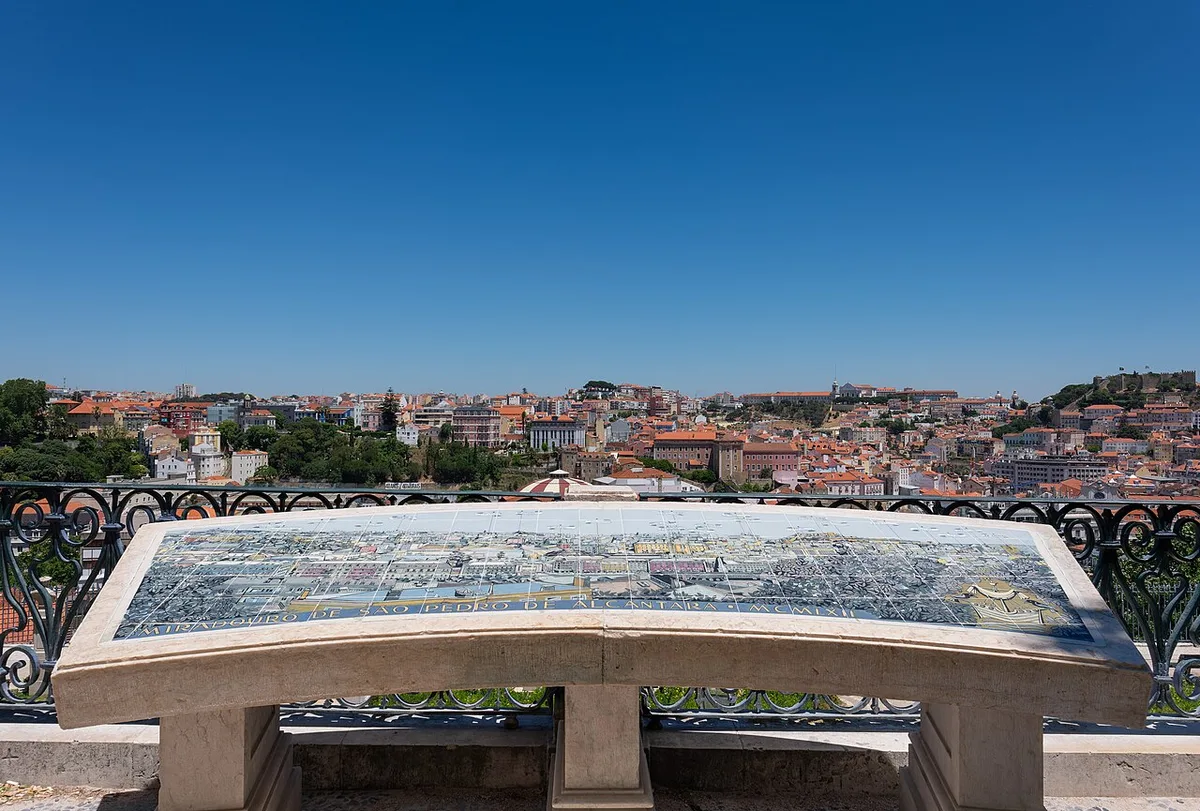
Miradouro do Jardim do Torel sits inside a shaded garden above Avenida da Liberdade, away from the tour-bus lookout points. Benches line the edges, and the enclosed setting keeps the space calmer than Lisbon's more famous miradouros. The garden gates close around 8 PM, which makes it a better daytime stop than a sunset spot.
Miradouro de Santa Luzia draws steady crowds, but few visitors climb down the stairs beside it. That lower level hides the Window of Lisbon, a small terrace with a tiled mural and two round windows facing the Tagus. It sits only a few steps from the main lookout, so the detour costs almost no extra time.
Miradouro da Senhora do Monte sits at the highest point in the city, a steep climb past Alfama's rooftops. The extra elevation earns wider views over the castle, the river, and the tiled roofs below. Locals treat it as one of the better spots for watching the sunset in Lisbon, especially on clear evenings.
Right beneath Miradouro das Portas do Sol, a small passage holds the Tunnel of the History of Lisbon. Comic-style panels along the walls trace major events in the city's past, from early settlement to the 1755 earthquake. Many people walk straight past the entrance, so the tunnel usually stays quiet even during peak hours.
Rooftops and Terraces Worth the Climb
The 18th-century Basílica da Estrela holds the tomb of Queen Maria I and a rooftop most tourists skip entirely. A narrow interior stairway leads to the dome, where the twin bell towers frame open views of western Lisbon. The climb costs about 4 EUR per person, making it one of the cheaper rooftop viewpoints in the city.
Convento da Graça, founded in the 13th century, survived the 1755 earthquake and still crowns the city's highest hill. Its rooftop terrace charges roughly 5 EUR, a price that includes a glass of wine or juice. The area near the bell tower makes one of the better photo spots in Lisbon at golden hour.
Popular rooftop terraces fill up quickly at sunset—avoid visiting Convento da Graça and other small rooftop spaces during peak golden hour if you prefer a quieter visit.
Amoreiras Water Reservoir, an 18th-century structure built to hold water from the Águas Livres Aqueduct, offers a different rooftop view. Its terrace looks out over the aqueduct itself, an 18-kilometer feat of engineering from before running water reached most homes.
Small Museums That Skip the Crowds
Museu da Água occupies a 19th-century pumping station near Praça de Espanha, filled with the machinery that once supplied the city. Weekday mornings tend to be nearly empty, leaving plenty of room to study the pipes and pressure systems up close. It rarely makes lists of the best museums in Lisbon, despite its low entry fee and unusual setting.
Ler Devagar, a two-story bookstore inside the LX Factory complex, fills a former textile printing hall with floor-to-ceiling shelves. A bicycle sculpture hangs from the ceiling above a small café on the upper level. Weekend afternoons draw a small crowd, but weekday visits usually feel calm and unhurried.
Casa do Alentejo hides a Moorish-style courtyard behind an unremarkable doorway on Rua das Portas de Santo Antão. The cultural association serves traditional Portuguese lunches and dinners, with the entrance included in the meal price. Weekday afternoons tend to be quiet, giving diners time to notice the tiled walls and painted ballroom ceiling upstairs.
The Rossio Railway Station Everyone Walks Past
Rossio railway station sits beside the busy Rossio square, yet most travelers rush past its 19th-century facade. Built in the Neo-Manueline style, the entrance frames two intertwined horseshoe-shaped portals with ornate stone carving. A small statue of King Sebastian of Portugal stands between them, a detail few passersby stop to notice.
The current statue is actually a replica, since the original was accidentally broken back in 2016. Inside, the station still functions as one of Lisbon's busiest commuter hubs, connecting the city to Sintra. A brief stop here costs nothing and pairs naturally with a walk through the surrounding Baixa district.
Rua Verde: A Quiet Answer to Pink Street
Pink Street draws crowds for its painted pavement and late-night bars, but a newer street nearby stays far calmer. Locals call it Rua Verde, or the Green Street, named for the plants and lanterns strung along its length. Small cafés, restaurants, and boutique shops line the block, with a mix of cuisines from several countries.
Mornings on Rua Verde tend to be quiet, with the street filling gradually as lunch service begins. It works well as a lunch stop between waterfront sightseeing and an afternoon in the Cais do Sodré area.
Skip the Pastéis de Belém Line for Alternatives
Pastéis de Belém draws long lines for its version of the pastel de nata, Portugal's signature custard tart. The recipe dates back to 1837, but the wait can eat up half an hour or more during peak season. Several bakeries across the city serve pastries just as fresh without the queue.
Manteigaria, with several locations around the city, bakes fresh batches throughout the day and serves them warm. Casa São Miguel in the Alfama neighborhood pairs its pastel de nata with a small, tile-covered terrace. A Brasileira, open since 1905 near Chiado, offers a historic setting alongside its coffee and pastries.
Plan More of Your Lisbon Trip
Use these new planning guides alongside the established Lisbon landmark cluster.
Explore hidden gems in other cities
Frequently Asked Questions
Which hidden gems in Lisbon suit a first-time visitor?
Start with two or three spots close together, such as the Window of Lisbon and the tunnel near Miradouro das Portas do Sol. Both sit inside Alfama and add only a short detour to a normal sightseeing walk. Save the Rossio station facade for whenever a Baixa walk is already planned.
How much time should visitors set aside for these spots?
Budget one to two hours to cover three or four nearby picks on foot, including photo stops. Rooftop climbs like Basílica da Estrela or Convento da Graça each take about 20 to 30 minutes, including the wait. Spread visits across a trip instead of rushing them into one afternoon.
Is hidden gems in Lisbon worth including on a short itinerary?
Yes, most of these hidden gems in Lisbon sit inside or near the historic center, so they fit easily into a short trip. A single afternoon can cover a viewpoint, a rooftop, and one small museum without much backtracking. They also work well as breaks between longer, busier attractions.
What should travelers avoid when planning hidden gems in Lisbon?
Avoid visiting popular rooftop terraces right at sunset, when small spaces like Convento da Graça fill up quickly. Skip the Pastéis de Belém line during peak lunch hours if a nearby bakery works just as well. Always confirm opening hours in advance, since several sites keep limited schedules.
Is the Lisbon Pass useful for visiting these hidden gems?
The Lisbon Pass mainly covers major paid attractions and transit, so it rarely applies to free viewpoints or low-cost rooftops. It can still help if a trip also includes several ticketed museums or monuments. Compare the pass price against planned entries before buying one.
Hidden gems in Lisbon reward travelers willing to take a longer staircase or a quieter street. Pair two or three picks from this guide with a walk through Alfama or Graça for an easy half day. For a fuller schedule, work a few of these stops into a one-day Lisbon itinerary. Confirm hours and prices before visiting, since small museums and rooftops can adjust schedules with little notice.