
Athens rewards photographers who look past the postcard angle and study the light, crowds, and marble underfoot. The best photo spots in Athens span sunrise ruins, quiet hillside viewpoints, and one candy-colored cafe that photographs like a film set. Local photography guides return to the same dozen locations again and again, because timing and angle matter more than the destination itself.
This guide was refreshed in July 2026, with current entry prices and seasonal hours checked against each site's official listings. Acropolis general admission runs about €20 in peak season and drops to roughly €10 in winter. Opening hours shift with the season, running roughly 8am to 8pm in summer and 8am to 5pm in winter.
The dozen spots below mix free viewpoints with ticketed sites, so budget both time and a little cash for entry fees. Expect crowds to build steadily after 9am at the most popular ruins, especially near the Acropolis's main entrance. A wide-angle lens helps at cramped spots like Little Kook's doorway and Anafiotika's narrow lanes.
Planning Your Athens Photo Walk
Golden hour photography works best about an hour after sunrise or before sunset, when the marble ruins take on a warm glow. Midday sun flattens detail and casts hard shadows under the Parthenon's columns, so many photographers skip that window entirely.
The Acropolis and its surrounding sites get busiest between 10am and 2pm, when cruise groups and tour buses arrive together. A combined ticket covering the Acropolis, Ancient Agora, and several other ancient sites costs around €30 and stays valid for five days. Travelers weighing whether that bundle is worth it can compare the math in this breakdown of the Athens Pass.
Spring and early autumn bring the clearest skies and the mildest crowds for outdoor shooting. Hillside viewpoints like Lycabettus and Filopappou also appear in this broader guide to the city's best viewpoints. Summer heat past 11am can wilt both the light and the photographer, so an early start matters more than expensive gear.
The Acropolis and its surrounding sites get busiest between 10am and 2pm, when cruise groups and tour buses arrive together. Arriving right at opening (roughly 8am in summer) beats the crowds and gives the clearest light for photography.
Photographers building a tight schedule often pair this list with a broader sightseeing plan. Those short on time can pair this list with a one-day Athens itinerary that groups several stops into one loop. Families or slower travelers can spread the same stops across a longer stay instead.
Travelers wanting a guaranteed sightline without hiking a hill can pay for a rooftop instead. The terrace at Athens Gate Hotel looks directly over the Temple of Olympian Zeus and the Acropolis beyond it. This option suits travelers short on time or mobility more than budget-focused visitors.
Marble underfoot at Areopagus Hill and other ancient sites gets slippery when wet. Wear rubber-soled shoes if rain is in the forecast or right after rainfall.

12 Best Photo Spots in Athens
The dozen spots below cover ancient ruins, hillside viewpoints, and one theatrical cafe, arranged roughly from must-see to hidden gem. Every entry lists typical hours and price, so a shoot list turns into a real schedule.
Several of these locations sit close enough to walk between in one morning, especially the cluster around the Acropolis. Others, like Little Kook and Anafiotika, sit in neighborhoods worth wandering slowly rather than rushing through. Many of the free stops above also appear in this list of free things to do in Athens.
| Photo Spot | Entry Fee | Hours (Summer) |
|---|---|---|
| Acropolis and Parthenon | €20 (peak) / €10 (winter) | 8am - 8pm |
| Areopagus Hill | Free | Open 24/7 |
| Lycabettus Hill | €10 funicular / Free to walk | Early evening best |
| Filopappou Hill | Free | Early morning - after dark |
| Acropolis Museum | €10-15 | 9am - 5pm |
| Ancient Agora | €10 (or pass) | 8am - 8pm |
| Panathenaic Stadium | €10 | 8am - 7pm |
| Temple of Olympian Zeus | €8 | 8am - 8pm |
Prices below reflect typical 2026 rates and shift with season, so always confirm current figures before a visit. Free spots are marked clearly, since several of the most photogenic corners in Athens cost nothing beyond a metro ticket.
- Acropolis and the Parthenon at Sunrise
- The hilltop citadel is Athens's most famous sight, with golden light striking the columns just after opening.
- Entry costs about €20 in peak season and near €10 in winter months.
- Hours run roughly 8am to 8pm in summer and 8am to 5pm in winter.
- The site sits above Plaka, a short walk from the Acropoli metro station.
- Arriving right at opening beats the tour-bus crowds that build by mid-morning.
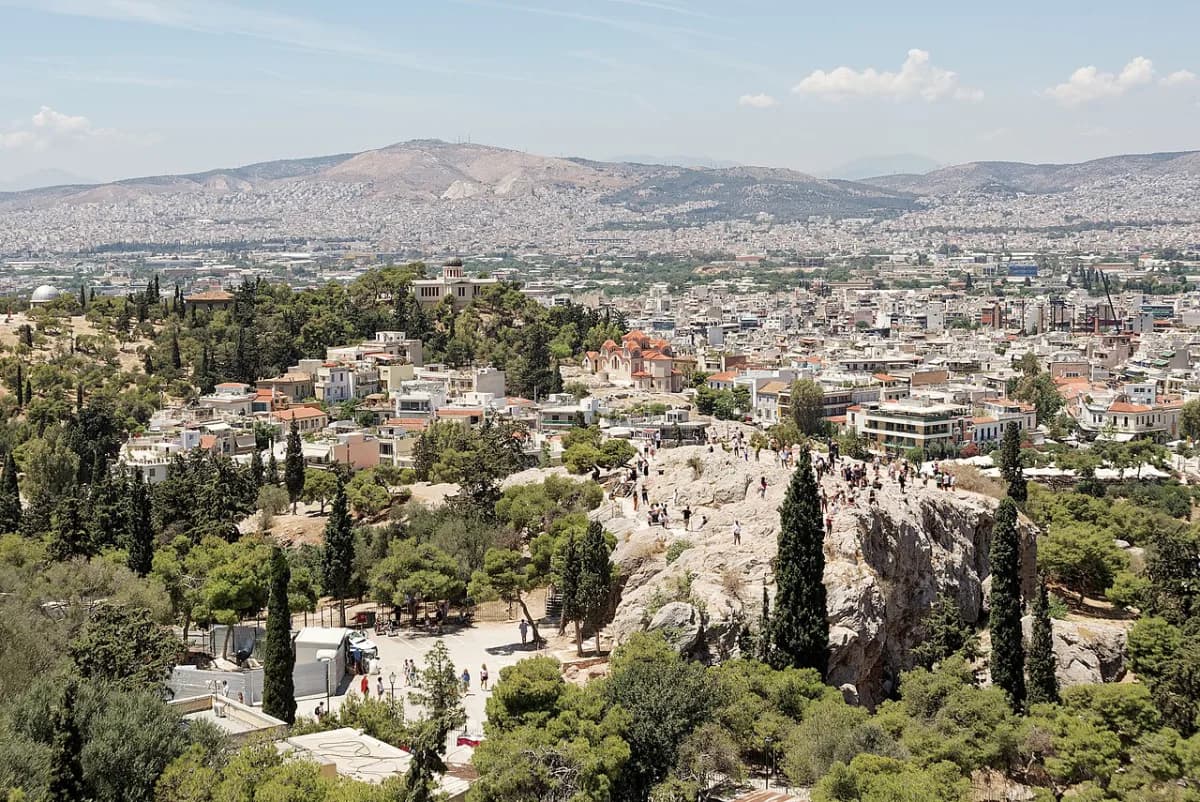
- Areopagus Hill (Mars Hill) at Sunset
- This bare rock outcrop sits just below the Acropolis entrance and faces the Parthenon almost head-on.
- It costs nothing to climb and stays open with no gate or fixed hours.
- Marble underfoot gets slippery when wet, so rubber-soled shoes help on the climb.
- Photographers gather here around sunset, when the ruins glow orange against the sky.
- The short walk from the Acropolis takes about five minutes past the main ticket booths.
- Lycabettus Hill for a City Panorama
- Athens's highest point gives a wide view over the city, the Acropolis, and the sea beyond Piraeus.
- A funicular railway runs from Kolonaki up to the summit for about €10 round trip.
- Walking the path instead takes roughly 30 to 40 minutes and costs nothing.
- Early evening light works best, before haze settles over the city later at night.
- The chapel terrace at the top gets crowded near sunset, so arrive with time to spare.
- Filopappou Hill's Quiet Acropolis View
- This wooded hill across from the Acropolis offers a wide, uncrowded angle on the citadel.
- Entry is free and the paths stay open from early morning until after dark.
- The climb to the monument at the summit takes about 20 minutes on a shaded path.
- Photographers favor this spot because it draws far fewer visitors than Areopagus Hill.
- Bring water in summer, since shade thins out near the exposed hilltop marker.
- Acropolis Museum's Glass Floor and Top Terrace
- Glass floor panels near the entrance reveal excavated ruins beneath the modern building.
- General admission runs around €10 to €15 depending on season, per the museum's official pricing.
- Hours typically run 9am to 5pm, with later Friday closing in some seasons.
- The top-floor gallery lines up its windows directly with the Parthenon on the hill above.
- This indoor option works well on a rainy day, when outdoor light is flat anyway.
- Ancient Agora and the Temple of Hephaestus
- This former marketplace sits below the Acropolis and holds one of Greece's best-preserved ancient temples.
- Tickets run about €10 alone or are included in the multi-site combined pass.
- Hours generally follow the Acropolis schedule, roughly 8am to 8pm in summer.
- Fewer crowds pass through here than at the Acropolis itself, even at midday.
- Olive trees and wildflowers frame the temple columns for a softer, greener shot.
- Panathenaic Stadium's All-Marble Track
- Built entirely of white marble, this stadium hosted the first modern Olympics in 1896.
- Entry costs around €10, with an audio guide included in that ticket price.
- Hours run roughly 8am to 7pm in summer and shorter hours in winter.
- Standing at the curved end of the track frames the full horseshoe shape in one image.
- It sits a short walk from the National Garden, easy to combine in one stop.
- Temple of Olympian Zeus and Hadrian's Arch
- Fifteen towering columns are all that remain of what was once Greece's largest temple.
- Entry costs about €8, and the site usually opens 8am to 8pm in summer.
- Hadrian's Arch stands just outside the fence and can be photographed for free from the street.
- Midday sun leaves the columns starkly lit, so early morning shots show more texture.
- The site sits a short walk from the Acropolis Museum and Plaka's edge.
- Anafiotika's Whitewashed Cycladic Lanes
- Tucked below the Acropolis, this pocket of whitewashed houses looks transplanted from a Greek island.
- Bougainvillea and potted geraniums spill over narrow stone steps through the warmer months.
- There is no entry fee, and the lanes stay open at any hour as a residential quarter.
- Morning light works best here, since the tall walls block direct sun by midday.
- Keep voices down and cameras respectful, since people actually live behind these doors.
- Monastiraki Square and Its Sunday Flea Market
- This busy square frames the Acropolis behind the old Tzistarakis Mosque and metro entrance.
- The flea market spreads out for free every day, but Sunday mornings bring the fullest stalls.
- Rooftop cafes around the square charge for a drink but offer an elevated wide shot.
- Crowds peak in the early afternoon, so a 9am visit gives clearer sightlines.
- Vintage shops and street performers add color to close-up, candid frames.
- Little Kook's Fairy-Tale Cafe Facade
- This themed cafe in Psiri changes its wildly decorated exterior with the season, several times a year.
- Photographing the storefront is free, though a coffee runs roughly €4 to €7 inside.
- The cafe generally opens late morning and stays busy through the afternoon and evening.
- Crowds cluster right at the doorway, so a few steps back across the street clears the frame.
- Past themes have included giant butterflies, oversized teacups, and character figures suspended overhead.
- National Garden's Shaded Paths and Ponds
- This green park behind the Greek Parliament offers duck ponds, turtles, and shaded paths.
- Entry is free and the garden generally opens from sunrise until sunset year-round.
- Dappled light through tall trees makes it a strong midday option when ruins turn harsh.
- Families often stop here between ruins, since benches and a small playground sit inside.
- The garden connects directly to the Zappeion building, adding a formal facade to the same walk.
What to Skip for Photos in Athens
Not every popular photo tip in Athens earns its reputation, and a few widely shared spots disappoint in person. The main Acropolis entrance around midday tops that list, since queues and flat light both work against a clean shot.
Rooftop bars marketed purely for their Acropolis view often require a minimum drink purchase and a wait for a rail-side table. The same framing is usually available for free from Areopagus or Filopappou Hill instead, just without the cocktail.
Generic Instagram-wall murals that circulate on social media change often and rarely match the photos people expect to recreate. Checking a location's current status before a special trip out saves a wasted stop on short visits.
Travelers who want less-obvious alternatives can browse this list of hidden gems in Athens for quieter stand-ins to the overrated stops above.
Is Athens Worth Visiting for Photography?
Athens rewards a camera more than most European capitals, mixing 2,500-year-old ruins with modern street life in a single frame. Few cities let a photographer capture an ancient temple and a graffiti-covered alley within the same afternoon.
The mix of free viewpoints and modestly priced ticketed sites keeps a full day of shooting affordable for most budgets. Even a tight one-day visit can cover several list entries above without feeling rushed. Travelers weighing a longer stay can compare options in this two-day Athens itinerary that pairs sightseeing with photo stops.
Night photography adds another layer once the ruins are lit after dark, though most ancient sites close to visitors by evening. For after-dark options, this guide to Athens at night covers where the city stays lively for evening shots.
Frequently Asked Questions
What is the best time of day to photograph the Acropolis?
Early morning, right at opening, gives the clearest light and the smallest crowds around the Acropolis and Parthenon. Sunset works nearly as well, especially shot from Areopagus Hill or Filopappou Hill nearby. Midday sun tends to flatten detail across the marble columns, so most photographers avoid that window.
Do you need to pay to photograph the Acropolis and other ruins?
Photographing the Acropolis from outside its gates is free, but entering the site costs about €20 in peak season and roughly €10 in winter. Several other spots on this list, like Areopagus Hill and Anafiotika's lanes, cost nothing at all. Ticketed sites are the exception rather than the rule.
Is Little Kook free to visit and photograph?
Yes, photographing Little Kook's decorated exterior in Psiri costs nothing at all. Stepping inside for a coffee runs roughly €4 to €7 depending on the drink. The cafe changes its elaborate theme several times a year, so the scene looks different with each visit.
How many days should you plan for Athens's best photo spots?
Two full days cover the twelve spots above at a relaxed pace, with one day for central ruins and one for neighborhoods. A single rushed day can still capture the highlights near the Acropolis. Travelers adding day trips should budget extra time beyond this list.
Athens packs a rare mix of ancient stone, hillside views, and unexpected color into a compact city center. None of the twelve spots above require special access or expensive gear, just the right hour of the day. A little planning around light and crowds turns an ordinary walk into a full memory card.
Start with sunrise at the Acropolis, then let the rest of the list fill in around it. Whichever route gets chosen, Athens keeps rewarding photographers who slow down and look up at the details overhead.