Two days in Trier is enough to walk the Roman core at an unhurried pace and still give the cathedral quarter a full morning, which is why the city rewards an overnight stay over a rushed single-day dash. Trier Tourism and Marketing, the city's tourist-information organisation, publishes visitor information, event listings and a set of ready-made city itinerary formats covering 8, 24, 48 and 72 hours on its site, so you can cross-check this plan against official material. The Roman core is genuinely compact: Porta Nigra anchors the northern edge of the pedestrian centre, and several monuments sit within a walkable radius of it.
This itinerary is an editorial suggestion, not an official Trier programme, and every timing below is a suggested block rather than a fixed schedule. Trier was founded as Augusta Treverorum, and its Roman monuments are the reason the city holds UNESCO World Heritage status; a blogger's count of nine separate UNESCO World Heritage Sites in Trier should be treated as unverified, and you should confirm the ensemble's composition with the tourist information rather than rely on second-hand counts. Pair this plan with the broader Trier: Itineraries and City Travel Guides hub if you want to compare durations before committing to two days.
How to Structure Two Days in Trier
A workable structure is one Roman-monument day concentrated in the compact centre and one cathedral-quarter and Moselle day that pulls you east and then down to the river. As a rough suggestion, give the first day to Porta Nigra, the Aula Palatina and the Kaiserthermen, with a late-afternoon loop through Hauptmarkt. Give the second day to Trier Cathedral, the Liebfrauenkirche area and a museum decision, then let the afternoon drift toward the river.
Keeping the days geographically distinct matters more than ticking off monuments, because Trier's centre is small enough that a poorly structured plan sends you across the same square three times. Treat any hour-by-hour schedule you find online as a template and adjust it to your own pace and the weather. If you only have a single day, the city's shorter formats and the one day in Trier itinerary cover the same ground in a compressed form.
Day 1 Morning: Porta Nigra and the Pedestrian Centre
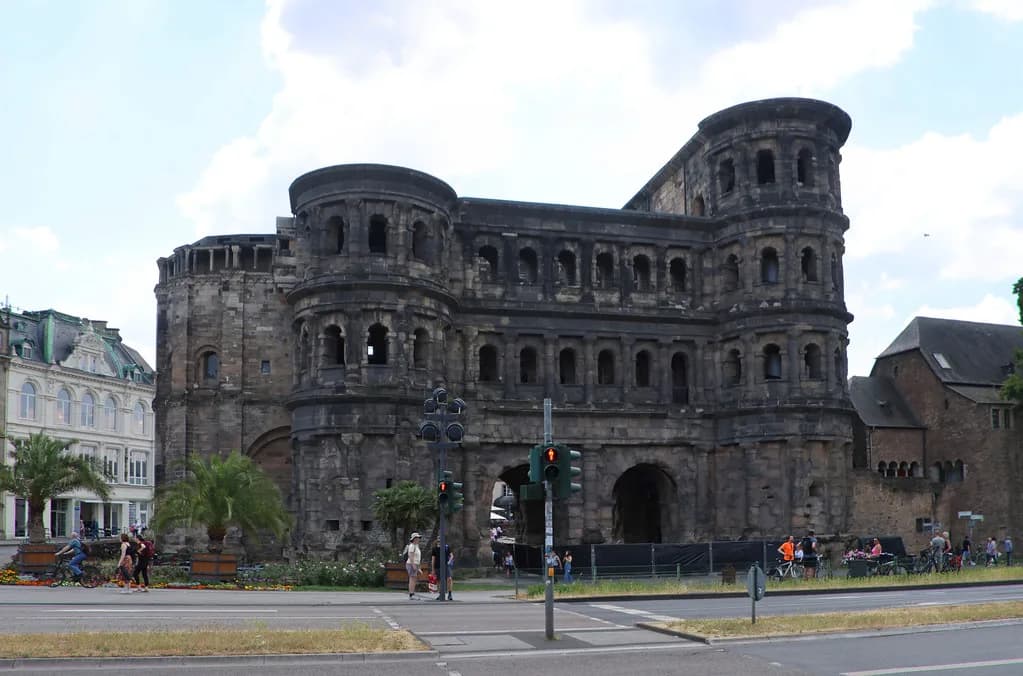
Porta Nigra, the great Roman city gate, is the natural orientation point for a first morning, and the tourist information office sits on Simeonstraße just off it. Start outside for scale and context, then decide whether to go inside and climb; the gate is the best-preserved Roman city gate north of the Alps, and the interior view over the city is the reward. Whether interior access is ticketed and what it currently costs are things to check at the counter or in advance, since published figures change and this plan does not quote them.
From the gate, walk south into the pedestrian zone rather than plotting a route to the next monument immediately, because the shopping streets and squares between Porta Nigra and Hauptmarkt are part of the experience. This is where a two-day visit starts to feel different from a day trip: you can pause without calculating whether you will miss a train. Keep an eye on signs for the Aula Palatina to the east, which sets up your midday stop.
Day 1 Midday: Aula Palatina and the Electoral Palace
The Aula Palatina, also called the Konstantin-Basilika, is a Roman palace basilica built as an imperial throne room and now used as a Protestant church, with free admission according to a widely cited visitor account. Its surviving hall is famously vast and column-free, which is easier to appreciate inside than from the street, so check the current opening arrangement before you count on going in. The building's own visitor rules apply here, and they are not the same as the rules for the palace next door.
Connected to the basilica is the Kurfürstliches Palais, the Electoral Palace, an eighteenth-century residence now used as an administrative building. Visiting the courtyard, foyer, staircase and Baroque hall is only possible on certain days, while the exterior and the palace garden with its replica sculptures can be admired freely at other times. Do not assume one ticket or one opening time covers both buildings: they are separate entities with separate access rules, so verify each before building your day around a combined visit.
Day 1 Afternoon: Kaiserthermen and the Grounds vs. Interior Decision
The Kaiserthermen, Trier's Imperial Baths, began construction in the third century as a planned imperial gift to the city, though the public baths were never completed and the site later served as a parade hall, a barracks, a castle and a convent. The above-ground ruins and the subterranean passageways are the draw, and the underground network is the part most visitors remember. Read the site as two layers: the grounds you can see at a glance, and the passages that may require a ticket.
Treat this as a decision rather than a fixed stop. If underground passages and site interpretation appeal, budget a fuller block here; if you mainly want photographs of Roman brickwork against the sky, a shorter look from outside may be enough and frees time for a museum later. Confirm current admission and opening arrangements on site or through the tourist information rather than relying on older blog posts, since those details change. A tour that bundles several monuments can also change the maths, and the landmark hub lists the individual sites worth reading up on first.
Day 1 Evening: Hauptmarkt, Liebfrauenkirche and Seasonal Timing
Finish the first day around Hauptmarkt, the medieval market square that acts as the city's living room, with the Liebfrauenkirche area a short walk away. This is the right place to slow down rather than add another monument, because the square is where the Roman day and the everyday city meet. Evening light on the surrounding facades is one reason to time your arrival here late rather than at midday.
In the run-up to Christmas, Trier's Christmas market sets up wooden booths at Hauptmarkt and in front of the cathedral, which changes the character of both squares and can slow your walking pace considerably. If your visit falls in that window, check the market dates on the tourist information site before planning evening stops, because the configuration of the square shifts around the stalls. Outside the season, the same squares are quieter and easier to cross quickly.
Day 2 Morning: Trier Cathedral and the Guided-Tour Option
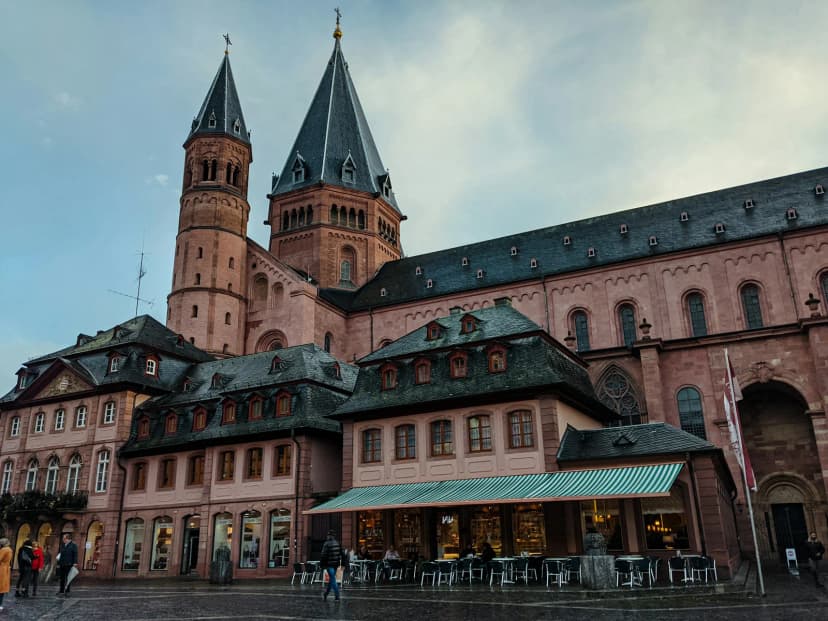
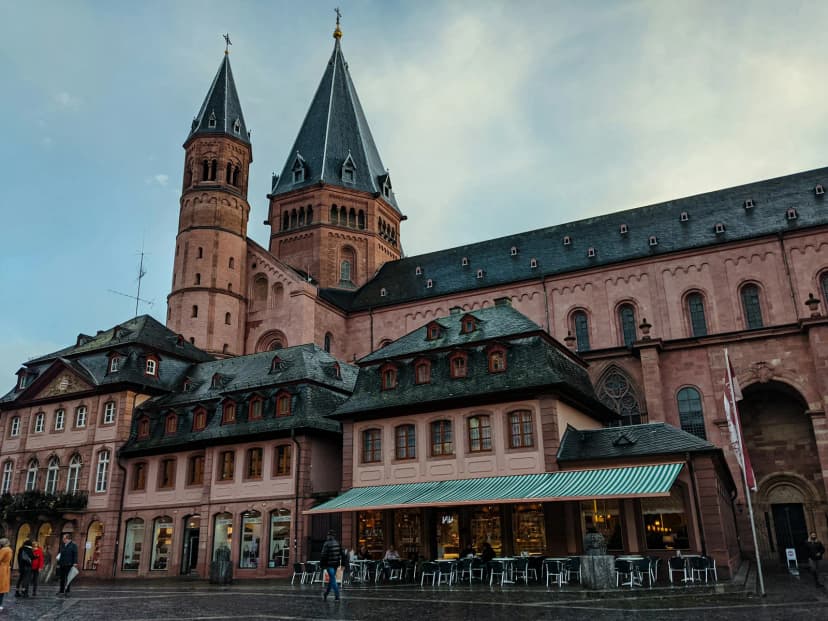
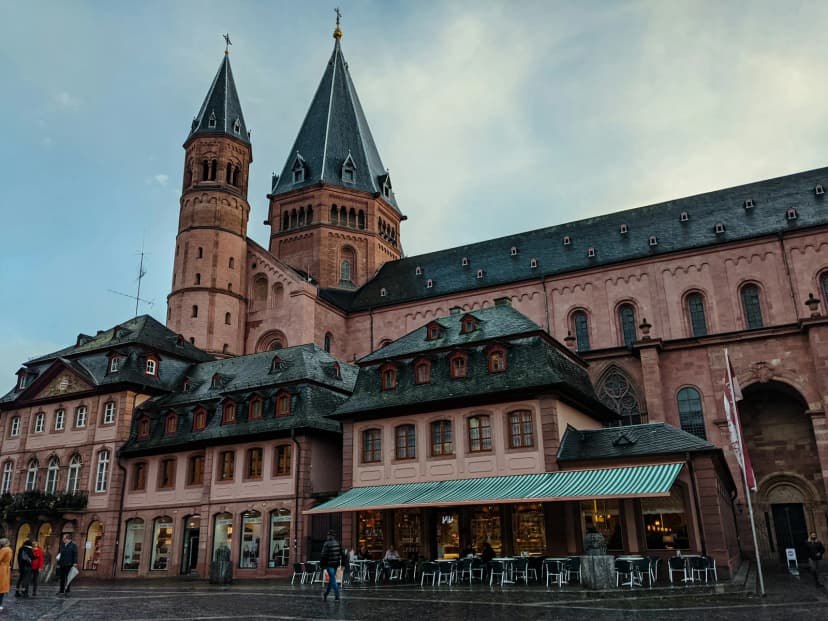
Trier Cathedral, the High Cathedral of St Peter, is the oldest cathedral in Germany and has served continuously as a bishop's church, with Roman fabric visible in the nave walls and a large granite column fragment near the entrance. Admission to the cathedral itself is free, which makes it an easy anchor for the second morning. That free entry applies to the cathedral, not automatically to every monument or museum nearby, so keep the distinction in mind as the day goes on.
The tourist information publishes a guided tour through Trier Cathedral with a stated duration of 75 minutes, which makes it an optional decision point rather than a mandatory stop. If you want the commentary and a structured route through the building, book or check times through the tourist information; if you prefer to wander, the free entry lets you do that. Group size, language and availability are things the organiser controls, so confirm them directly rather than assuming a slot will be free on the day.
Day 2 Midday: The Museum Question
The Landesmuseum Trier is the natural museum choice for a two-day visit, and its own site is the place to check current exhibitions, opening arrangements and admission details before you go. Decide between a museum block and more outdoor time honestly: two days is not enough to absorb both a full collection and every Roman site at a relaxed pace. If the weather is poor, the museum becomes the better value; if it is clear, the river and the remaining city sights usually win.
Do not assume a single ticket covers the Landesmuseum, Porta Nigra, the Kaiserthermen and the cathedral; these are separate institutions and sites with their own arrangements. Check each one's own page rather than relying on a bundle that may not exist. If you decide to skip the museum entirely, use the freed hours for the river walk below or for a slower pass through the cathedral quarter.
Day 2 Afternoon: A Suggested Moselle-Side Walk or Short Excursion
This is an editorial suggestion, not an official recommendation: spend the second afternoon on the Moselle rather than adding a third monument. A riverside walk gives you vineyards, water and a change of scale after two days of stone, and it costs nothing but time. The trade-off is real, because every hour on the river is an hour not spent in the remaining city sights, so decide before you leave the centre rather than after.
If you want more than a walk, the region offers larger excursions including Luxembourg City, which is reachable as a cross-border trip rather than a local stroll. That kind of outing consumes most of an afternoon and should be treated as an alternative to the river walk, not an addition to it. Which option suits you depends on whether you value depth in Trier or a change of country, and both are defensible ways to close two days.
Getting Around: Walkability and Orientation from the Station
The central area of Trier is very walkable, with historic sites, restaurants and shops concentrated in a compact core, so you can plan most of two days on foot without needing local transport. Arriving by train, orient yourself toward the centre and Porta Nigra rather than trying to memorise bus or tram numbers, because specific lines, fares and journey times are not fixed enough to plan around from a distance. Allow a buffer on arrival day for finding your accommodation and getting your bearings.
Keep the two days distinct by theme: day one is Roman and central, day two is ecclesiastical and river-facing. If you find yourself repeating the same square, you have drifted off the structure, which is usually a sign to pick one remaining sight and drop another. A little planning the night before is more useful in Trier than a minute-by-minute schedule.
Simplifying the Plan: Official City Time Formats
Trier Tourism and Marketing publishes ready-made city itinerary formats covering 8, 24, 48 and 72 hours, alongside suggestions for guided tours, museums and activities, which is useful if you would rather follow an official structure than assemble your own. Think of these formats as scaffolding: they tell you what the city itself considers combinable within a given window. If your two-day plan slips, a shorter official format can absorb the overflow without forcing you to abandon a whole day.
If you later decide two days was not enough, the 3 days in Trier itinerary extends the same logic with more breathing room around the monuments. The honest answer to whether two days suffices is that it covers the essentials well and leaves obvious gaps, which is a good reason to plan a return rather than overstuff the first visit.
Who This Two-Day Plan Suits, and How to Adapt It
This plan suits travellers who want the Roman core and the cathedral quarter without racing, and who are happy to walk a few kilometres a day on cobbles and slopes. Families may prefer to trim the museum block and lengthen the river afternoon, because outdoor time gives children more room to move. Slow travellers can stretch the same two days across three by treating each day's blocks as half-days.
In winter, the cathedral quarter holds up well because so much of it is indoors, while the Moselle walk is the first thing to drop in bad weather. In summer, reverse that: do the river in the cooler hours and save interiors for the middle of the day. Either way, check seasonal opening patterns and any event-related changes through the tourist information before you finalise the order.
Plan Your Two Days in Trier
Two days in Trier works because the city is compact: one day for the Roman monuments in the centre, one for the cathedral quarter with a river afternoon at the end. The most useful habit is to separate what is free from what is ticketed at each stop, and to check current times, tour slots and admission directly with the site or the tourist information rather than trusting an old itinerary. Walk it, keep the days distinct, and you will see why Trier rewards an overnight stay.
If you want to compare durations before booking anything, the one day in Trier itinerary shows the compressed version and the 3 days in Trier itinerary shows what extra time buys you. Either way, decide your two or three must-sees first and let the rest flex around weather and energy.
Frequently Asked Questions
Is two days in Trier enough to see the main sights?
Two days is enough to cover the Roman core and the cathedral quarter at a reasonable pace, including Porta Nigra, the Aula Palatina, the Kaiserthermen, the cathedral and Hauptmarkt. It is not enough to add a full museum collection, a long river excursion and every remaining church without rushing. If you want a slower visit, three days is a more comfortable frame.
Is Trier walkable for a two-day visit?
The central area is very walkable, with the monuments, squares, shops and restaurants clustered closely enough that most of a two-day plan can be done on foot. Arriving by train, orient yourself toward the centre and Porta Nigra, and allow a little extra time on the first day for finding your accommodation. Specific bus, tram and fare details change, so check them locally if you need them.
Should I do the Moselle as a walk or a short excursion on day two?
A riverside walk is the lower-commitment option and leaves time to return to the centre; a longer excursion such as Luxembourg City consumes most of an afternoon and replaces the walk rather than adding to it. Both are editorial suggestions rather than official recommendations. Decide based on whether you want depth in Trier or a change of scenery, and check transport options for any cross-border trip in advance.
Do I need to book the cathedral guided tour in advance?
The tourist information publishes a guided tour through Trier Cathedral with a stated duration, but availability, language and booking arrangements are controlled by the organiser and can change. Check the tourist information site or ask at the office near Porta Nigra before you plan your morning around a specific slot. Entry to the cathedral itself is free, so the tour is an optional addition rather than a requirement.
Does one ticket cover Porta Nigra, the Kaiserthermen and the Landesmuseum?
Do not assume a single ticket covers all of them. Porta Nigra, the Kaiserthermen, the cathedral and the Landesmuseum are separate sites and institutions with their own admission arrangements, and the Landesmuseum publishes its own visitor information. Check each site individually before you travel rather than relying on a combined pass that may not exist.