Mainz is compact enough that a satisfying day can be built almost entirely from streets, riverbank and public green space. The city sits on the west bank of the Rhine opposite Wiesbaden, and its old town, cathedral square and promenade sit within comfortable walking distance of each other. That geography makes it easy to treat the paid attractions as optional add-ons rather than the backbone of your visit.
The practical catch is that free and paid elements often sit side by side. A cathedral exterior, a church interior, a museum collection and a viewing tower can each follow different rules, and those rules change with renovation work, religious use and seasonal staffing. Mainz Tourismus runs a tourist information point at Markt 17 by the cathedral, with published opening times Monday to Saturday and closure on Sundays and public holidays, which is the sensible first stop for confirming what is currently accessible.
If you want a wider framework before committing to a route, the city's landmark guides cover individual sights in more depth. Use this article as a decision tool: it explains what you can reasonably expect to enjoy without buying a ticket, and where you should check with the operator instead of assuming.
Ground Rules: Free Grounds Versus Paid Interiors
A reliable way to budget a Mainz day is to separate the ground from what stands on it. Public squares, the riverbank, park lawns and the exterior of the cathedral cost nothing to walk through or around, while interiors, towers, treasuries and special exhibitions usually have their own arrangements. The Mainz State Museum, for example, is a ticketed institution housed in a historic building complex, so the courtyard setting is not the same thing as the collection.
Do not assume that neighbouring institutions share one ticket. The Gutenberg Museum has been operating from an interim home inside the Natural History Museum building at Reichklarastraße 1 since late November 2024, after its long-standing Liebfrauenplatz location closed in early October 2024 for rebuilding work. Visitors describing the current arrangement note that a Gutenberg Museum ticket is separate from the Natural History Museum rather than a combined entry, but confirm this on arrival because admission structures can change.
The mainzcardplus is worth understanding even on a free-focused trip, because Mainz Tourismus lists free museum admission and a city tour among its benefits. That means a card can convert a partly paid day into a cheaper one if you plan to enter several collections. Check the current inclusions and price directly with Mainz Tourismus before buying, since benefit lists are revised.
The Rhine Promenade: Mainz's Best Free Walk
The Rhine bank is the single easiest no-cost experience in the city and the one most locals use daily. The riverside route runs along the water without traffic interruptions, which makes it suitable for a slow stroll, a run or simply sitting and watching river traffic. Views back towards the old town and across to the Wiesbaden side change constantly with the light.
For orientation and route options, the Mainz Rhine promenade visitor guide explains how the bank connects to the rest of the centre, including where the path links to bridges and districts. Treat any suggested walking time as your own estimate rather than an official figure; pace, stops and detours will change it substantially. A short loop near the old town is a different outing from an end-to-end walk. For wider planning, see Visiting St. Stephan in Mainz for the Chagall Windows.
Nearby, the Electoral Palace stretches along the riverfront and is described by Mainz Tourismus as a landmark of German late Renaissance architecture, restored after severe wartime destruction. Its exterior and riverside position are part of the free walk; the building also functions as a cultural venue and concert location, so interior access depends on events rather than casual visiting.
Old Town Wandering: Squares, Lanes and the Cathedral Exterior
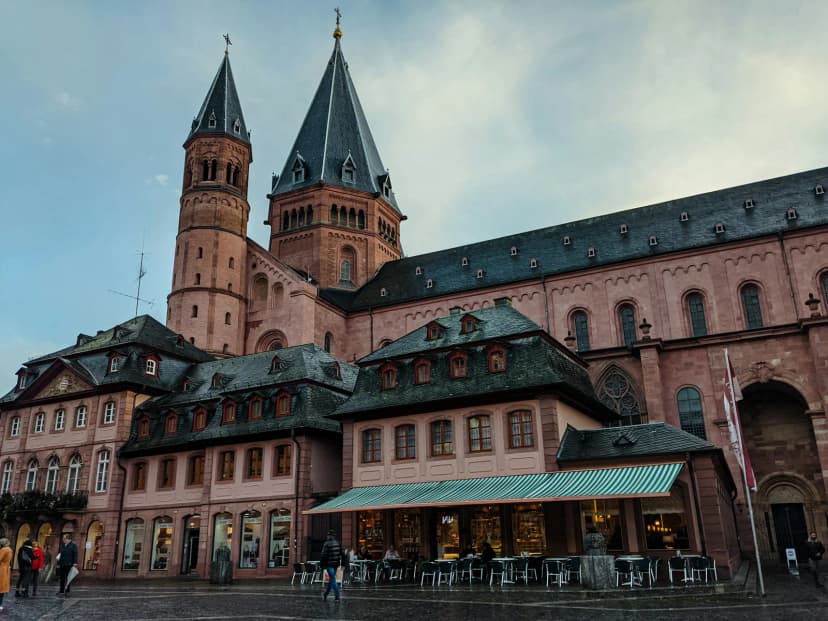
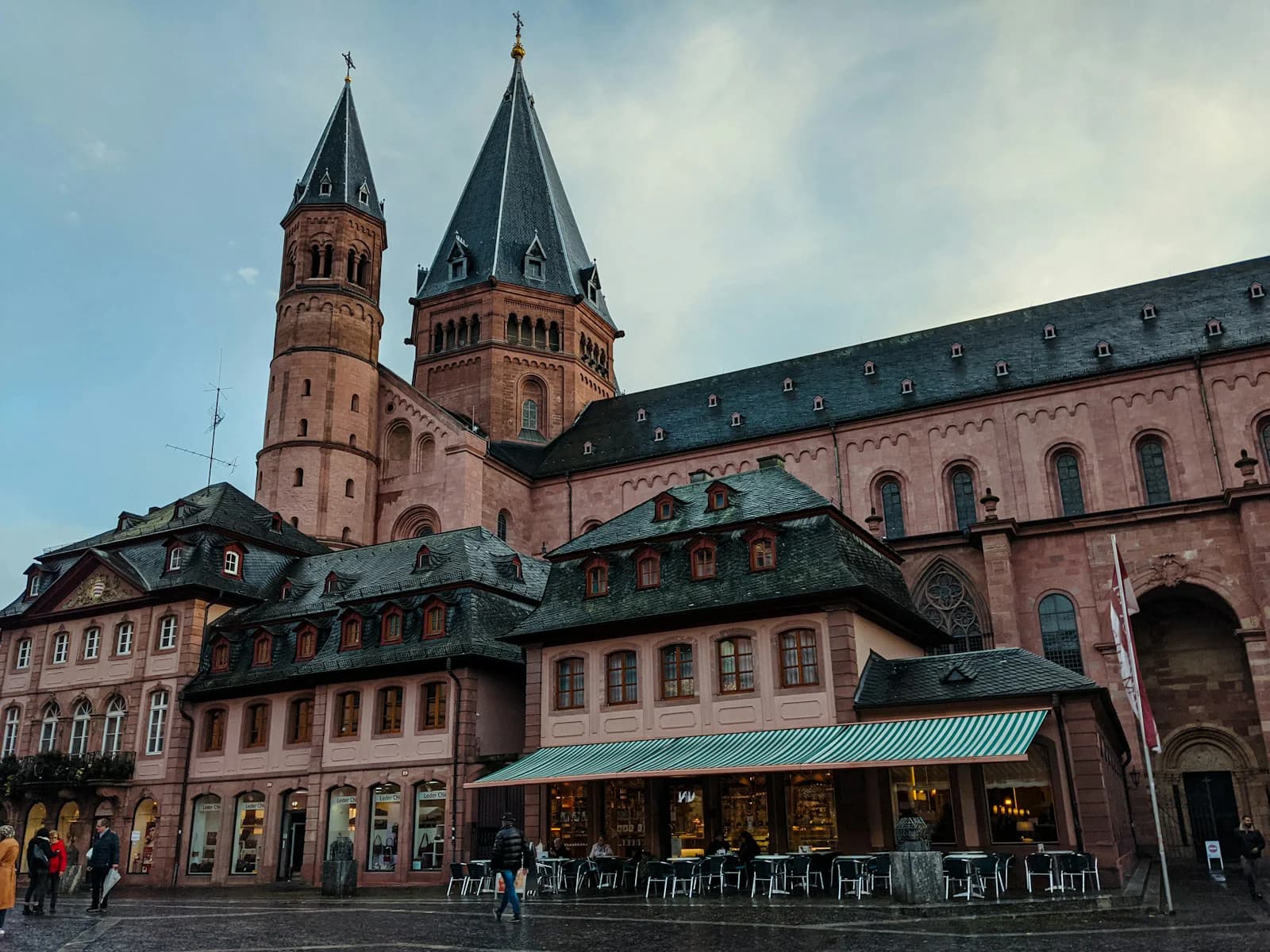
The Altstadt is free to explore and rewards unstructured wandering more than a checklist. Narrow lanes open onto small squares, wine taverns and church towers, and the rebuilt market square beside the cathedral is a natural pause point with cafés spilling into the open. Schillerplatz, with the Fastnachtsbrunnen carnival fountain, is another no-cost stop that gives a quick introduction to the city's carnival identity.
Mainz Cathedral dominates the centre with its red sandstone mass and six towers, and its exterior and surrounding square can be admired without a ticket. Official sources have not published a clear, current statement confirming that interior entry is free with fixed daily hours, so check the cathedral's own information or ask at the tourist office before planning your day around going inside. Cathedral museums, crypt areas and treasury spaces sit in a separate category and may charge.
For a broader sense of how the old town fits together with other districts and sights, the Mainz landmark guides are a useful companion while you walk. Keep an eye on church notice boards as you pass: service times, concerts and restoration work all affect whether a building is open when you arrive.
Parks and Green Space: Stadt Park and Other Public Areas
Stadt Park is the classic local green escape, combining lawns, wooded sections, a rose garden and small animal enclosures on ground that once formed part of the Roman city. It is a public park rather than a ticketed attraction, so the main cost is time. Families often spend longer here than expected because the mix of paths and open grass suits lingering.
The Volkspark along the Rhine is another large public area used for recreation, with lawns and play facilities. Neither park has published a simple, current statement of fixed free admission hours, so treat access as governed by normal public park rules and check the city's leisure pages if you are planning around a specific facility. The Citadel area above the Roman Theatre also functions as an open historic site with city views, and the Mainz Citadel visitor guide covers what the grounds offer.
Roman Remains You Can View From the Outside
Mainz was Roman Mogontiacum, founded as a military camp and later a provincial capital, which is why ancient fragments appear across the modern city. The Roman Theatre near the Citadel is the most substantial ruin, and although close-up access to every part may be limited, surrounding viewpoints convey the scale of the structure and its setting. Informational panels help interpret what you are looking at.
The aqueduct fragments known locally as Römersteine survive in a park-like setting, and the Sanctuary of Isis and Magna Mater is displayed beneath the Römerpassage shopping complex with a glass walkway over the remains. Because these sites depend on public access arrangements that can change, verify current conditions locally rather than assuming unrestricted entry. Plan them as sights to view on a walk, not as guaranteed interior visits.
For a fuller picture of how Roman, medieval and modern layers overlap, the city's landmark guides and the regional travel overview pair well with an old-town walk. The 2021 UNESCO recognition of the ShUM cities, including Mainz's Jewish heritage alongside Speyer and Worms, is free context you can absorb from street-level information and monuments.
Churches: Free Entry Is Common but Not Guaranteed
Church visiting in Mainz is often free in practice, but access is not a promise. St. Stephan, up the hill from the old town, is best known for the blue stained-glass windows created by Marc Chagall and, after his death, his student Charles Marq. Whether the windows are fully visible depends on light, restoration and service schedules, so the honest approach is to check before climbing the hill.
The St. Stephan Mainz Chagall windows visitor guide explains what makes the windows distinctive and how visitors typically experience the interior. Other inner-city churches such as St. Ignaz, St. Christoph and the Karmeliterkirche are part of the free wandering landscape, and their exteriors always are. Interiors, cloisters and raised areas within church complexes may fall under separate rules or charges.
Two practical habits help here: go when a building looks visibly open rather than assuming it will be, and check the notice board or parish website rather than a third-party listing. Religious buildings prioritise worship, weddings and funerals over tourism, and temporary closures for restoration are routine.
What Still Costs Money, and How to Keep It Down
Museums are where a free day can quietly become an expensive one. The Gutenberg Museum, the Mainz State Museum and the Episcopal Cathedral and Diocesan Museum all sit in the paid category, and each has its own admission. Mainz Tourismus publishes opening hours for the Gutenberg Museum's interim site, but treat any hours you find on secondary sites as out of date until you confirm them with the museum.
The Gutenberg Museum has also published temporary closures for maintenance, showing why event-day planning matters. Its regular programme includes hourly printing demonstrations on a historic press and family-oriented sessions, so check the current programme before travelling if a demonstration is the reason for your visit. If you plan several paid entries, compare that total against the mainzcardplus, which Mainz Tourismus says includes free museum entry and a city tour.
Practical Caveats: Relocation, Closures and Verification
Mainz is mid-way through several long building projects, so fixed assumptions age badly. The Gutenberg Museum's move into the Natural History Museum building is the clearest example, but individual sights can also close at short notice for events, maintenance or private use. Build one or two flexible alternatives into each afternoon rather than a tightly chained schedule.
The most reliable verification route is the operator or the city itself. Mainz Tourismus maintains a tourism information point at Markt 17 by the cathedral with published weekday and Saturday hours and Sunday closure, and its website carries sight and museum information. For churches and the cathedral, use the institution's own channels; for parks and Roman remains, use the city's pages. If a page says nothing about current free entry, assume it needs checking rather than assuming the answer.
Plan Your Visit
A genuinely cheap day in Mainz is built from the river, the old town, parkland and the city's Roman layers, with paid interiors chosen deliberately rather than by default. Walk the Rhine bank, loop through the Altstadt, climb towards St. Stephan and Stadt Park, and treat each museum as a separate decision.
Before you go, confirm the handful of facts that change: whether the Gutenberg Museum's interim site is open on your dates, what the cathedral is currently permitting inside, and how the mainzcardplus benefits compare with your plans. If you are extending your stay, the 2 days in Mainz itinerary shows how to spread these free anchors across two days instead of cramming them into one. For a wider German comparison, free things to do in Berlin and free things to do in Munich apply the same ground-rules approach in cities with very different geography.
Frequently Asked Questions
What can you see in Mainz for free?
The strongest no-cost experiences are outdoors and street-level: the Rhine promenade, the old town lanes and squares, the cathedral exterior and surrounding square, the Fastnachtsbrunnen at Schillerplatz, and public parks such as Stadt Park. Roman remains including the theatre area and aqueduct fragments can usually be viewed from surrounding ground. Church entry is often free in practice but is not guaranteed, so check locally on the day.
Is Mainz Cathedral free to enter?
Mainz Cathedral is one of the city's defining sights and its exterior and square are freely accessible. Current official information does not clearly confirm free interior entry with fixed daily hours, so verify with the cathedral or at the tourist information point at Markt 17 before planning your visit around going inside. Cathedral museum and treasury spaces are separate and may charge.
Which Mainz museums charge admission?
The Gutenberg Museum, the Mainz State Museum and the Episcopal Cathedral and Diocesan Museum are ticketed, and each sets its own admission. The Gutenberg Museum has been running an interim exhibition inside the Natural History Museum building at Reichklarastraße 1, where a Gutenberg ticket is understood to be separate from the Natural History Museum rather than combined. Confirm current entry terms with each museum directly.
How long does it take to walk the Rhine promenade in Mainz?
There is no official fixed duration, and any figure depends on how far you go and how often you stop. A relaxed loop near the old town takes far less time than a full end-to-end walk towards the harbour areas. Treat the promenade as flexible rather than a timed route, and decide your turnaround point based on how much of the old town you still want to cover.